Taylor, Burton, Wilderness

Taylor, Burton: Wilderness

Guest writer: Larry Burton

"Popular religion focuses so hard on spiritual success that most of us do not know the first thing about the spiritual fruits of failure. When we fall ill, lose our jobs, wreck our marriages, or alienate our children, most of us are left alone to pick up the pieces. Even those of us who are ministered to by brave friends can find it hard to shake the shame of getting lost in our lives. And yet if someone asked us to pinpoint the times in our lives that changed us for the better, a lot of those times would be wilderness times."
~Barbara Brown Taylor,  An Altar in the World

wilderness.jpeg

After all these years, one would think that my skin would have gotten thicker.  Lord knows I’ve been enough battles.  But the sad fact is that I am just as prone to having my feelings hurt, to feeling ashamed, and to wanting to hide as anyone else.  Often I was not actually responsible for what happened, but there were (and are) times when I contributed or even caused my own suffering.  Given that people in my profession (priest and professor) are supposed to be models of spiritual maturity and self-control, you can imagine what a failure I have often felt myself to be.  And it is just here, amid not-quite-despair, that I have found the fertile soil of spiritual growth.

Of course, this is not something that has happened all by itself.  I most definitely have not pulled myself up by my spiritual bootstraps.  It is all about grace.  I am convinced that healing is always about relationship, and the love and acceptance of my family and closest friends has enlarged my vision and opened my heart.  The patience of my spiritual director is unwavering. 

Barbara Brown Taylor, the wise teacher, preacher, and writer, says, “Even those of us who are ministered to by brave friends can find it hard to shake the shame of getting lost in our lives.”  And yet it is exactly that ministering that offers light, that lifts the weight, that offers hope.

Spiritual growth is not something that happens in a vacuum.  We can’t somehow make it on our own. 

I am the designated leader of a group of spiritual friends who meet once a week.  I say “designated” because we are all equal.  I call us together and offer a blessing at the end.  Other than that, we are all on a spiritual journey which we share with these whom we trust.  Recently, I shared that I was working on the difference between vulnerability and powerlessness.  I am coming to understand that when I feel powerless—like so many folks who have experienced major losses or betrayals—I become angry and resentful.  I know some people who blame God in times like these and who drop out of the faith journey altogether.  The revelation—and it can only be called that—is that when I choose to live consciously vulnerable, vulnerable because my trust in in God revealed in Jesus Christ, then that sense of powerlessness seems to evaporate, and the anger is gone.  In sharing this with our group, trusted companions, something shifted, and it was like walking out of the wilderness and into a new openness.

We all have wilderness times.  Perhaps it is through conscious vulnerability among trusted companions, that those times become not just bearable, but holy growth.

Larry Burton

Joanna  joannaseibert.com


Owensby: Changing our perspective

Owensby: Changing our perspective

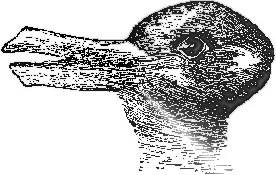
“A gestalt shift is a visual switch of perspective. While looking at an unchanging image we see first one thing and then another. For instance, in the picture below you can see a duck. Or a rabbit..” Jake Owensby, Looking for God in Messy Places, https://jakeowensby.com, March 3, 2018.

rabbit or duck.jpeg

In his weekly blog, Looking for God in Messy Places,  the fourth bishop of the Episcopal Diocese of Western Louisiana, talks about how we make on interpretation of what we are seeing before we see it. He challenges us to look at some things we think are familiar in another way. His story is about how through Jesus he changed his ideas about God.

Gestalt shifts involve changing our mind about something.

I see Gestalt shifts in spiritual direction as well. Spiritual direction is about caring for the soul. Spiritual friends help  us put on a new pair of glasses so we can see  God at work in their lives at times when we did not perceive God before. Spiritual friends  ask questions like, “how is your heart” instead of “how are you doing.”  Spiritual friends follow a rule of life where we “bend the knee of the heart”1 and “listen with the ear of the heart.” 2 Spiritual friends help us find our own sacred space inside of each of us as well as finding  sacred spaces outside of us in the world. We begin to see what  Barbara Brown Taylor describes in her book,  An Altar in the World.

The Gestalt shift of spiritual friends is that we look beyond the surface and see the Christ in each other, especially in the person we previously were having difficulty with. We begin to see them in a new light, often very wounded just like the rest of us.

1 Prayer of Manasseh, Book of Common Prayer p. 91.

2 Prologue to Rule of Benedict.

Joanna joannaseibert.com

Bourgeault: Third Force, a New Way of Seeing

Bourgeault: Third force, A New Way of Seeing

“Humans tend to be third-force blind. “Either/or” thinking is the most obvious manifestation of this…An example of this third force midwifing comes from a member of our Canadian Wisdom circle. As the director of a small government-subsidized service agency, she had to appear before a provincial board to orally defend her budget…She threw away her prepared speech, smiled warmly, and began, ‘I want to thank you all for the generous funding we received from you last year. Here’s how we spent it.’ She then went on to detail all the good work they had managed to accomplish on what was actually a very small subsidy. As she spoke, she could sense the board members visibly relaxing and her colleagues staring in amazement. She concluded, ‘We are not asking you for a single additional penny this year, and if we need to cut back, this is the strategy we’ve put in place to do so with minimal impact on our service.’ By introducing gratitude as the missing third force, she managed to shift the energetic field from a sense of scarcity to a sense of abundance.”  Cynthia Bourgeault, The Holy Trinity and the Law of Three (Shambhala Publications, Inc.: 2013), 44-47, from Center for Action and Contemplation Richard Rohr Meditation

grateful-2940466_1920.jpg

Cynthia Bourgeault’s writing of a third force is an “out of the box” spiritual practice for our daily life which presently seems to be so polarized now more than ever. This can change the way we deal with any interaction personally, publicly, internally and externally. It  brings into a situation another diminution, a third side rather than just two sides, pros and cons, them and us, for and against, either/or. It must be as void as possible of attachment or judgment. It is more than compromise or consensus.

A major component is  gratitude which can change a situation from scarcity to abundance, away from a zero-sum view.  It involves seeing similarities, being as objective as possible, being open to the present moment, not being combative, trying not to take sides, trying not to win an argument.

Gratitude is the corner stone  of so many other spiritual disciplines as well. In 12 step programs, gratitude is a major factor keeping people clean and sober. Whenever those in recovery are in difficulty, they are told to write a gratitude list daily. Again, it moves them from scarcity to abundance.

 In some ways, using a third force seems also to involve practicing the family systems principle of being the “least anxious presence.”  This brings the energy of a situation to a whole new level. It involves the mystery of what can happen when we live in the present moment, not the past or future, which makes me believe we are in some way inviting and bringing the divine into the situation, for God most often connects to us in the present moment.

Joanna joannaseibert.com