Sprouting, Strugging, Community

Sprouting, Struggling

“For every new way of being, there is a failed attempt mulching beneath the tongue. For every sprig that breaks surface, there is an old stick stirring underground. For every moment of joy sprouting, there is a new moment of struggle taking root.” Mark Nepo, The Book of Awakening. Inwardoutward.org, Daily Quote, May 24, 2018.
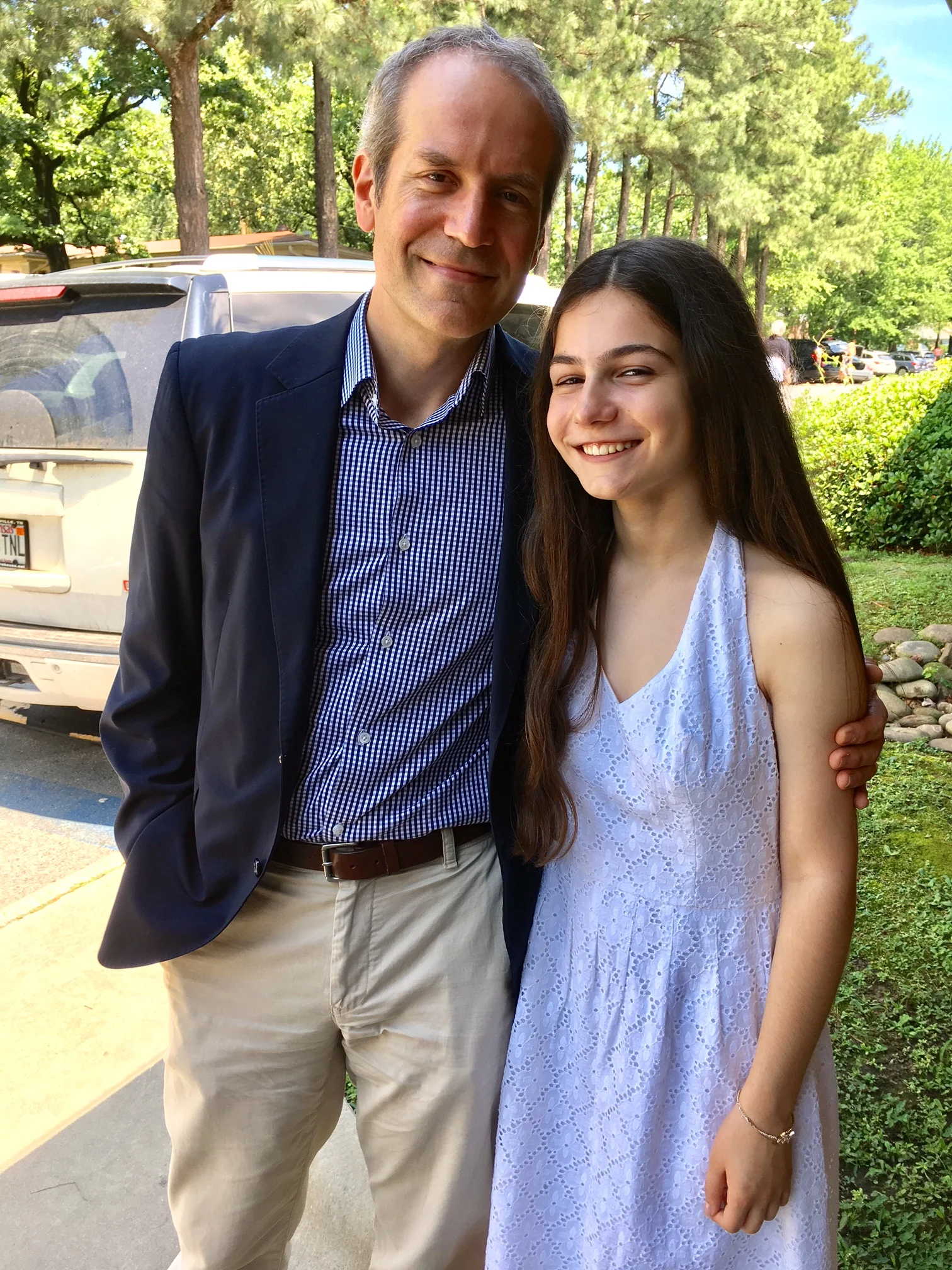
Two Anthony School Graduates

Two Anthony School Graduates

 I have a friend who has recently had surgery and has gone through weeks and hours of difficult physical therapy to recover. I still remember what this was like. Multiple failed attempts before we can see any movement. Pain. Improvement by inches. Dependence on others. Sometimes the only person who thinks we can make it is the therapist and our experienced physician.

This reminds me of the importance of spiritual friends. Sometimes our spiritual friends and a spiritual director are the only ones who know we will connect to God while all we can see is separation.

I saw this today at the graduation of our granddaughter Zoe from the school she had attended since she was in pre-kindergarten. It was also the school her father attended from the first grade and graduated from thirty-four years ago. All of the speakers were the eighth-grade graduates. They did not just talk about joyous times which indeed were abundant. They also talked about struggles and how they overcame them or worked through them because of their fellow students and the support of their teachers. I remember the articulate student body vice president boasting that he knew he could not have put the sentences together for his speech if it had not been for his English teacher, Carolyn Caig. What an unusual and appreciative tribute to remember a grammar teacher! What a gift she must have to instill in students the value of grammar. 

All of the student speakers remembered the importance of their friends. They cried when their friends spoke and enthusiastically applauded after each presentation. It was not a competitive event.  It was a lesson in what community and caring for others through good and difficult times is like. Gratitude filled the hall. There also was great diversity which made this community even richer.

The struggle was the leaving behind of teachers and friends as all go off to several different high schools, some public, some private, some all-girls, some all-boys. The answer of course is now they are so well immersed in the need and desire for a diverse community that they will make new communities and take the love for each other they have learned out into a larger world.

 I am counting on these teenagers to teach us what spiritual friends can be like, those who see love and lend love even when the air seems loveless. I want to cry and applaud again without shame or competition.  

Losing this need and joy for a  connection to a varied community should not be a part of matriculation or maturation.

Joanna  joannaseibert.com


Rohr: Scapegoating

Rohr: The Scapegoat Mechanism

“Humans have always struggled to deal with fear and evil by ways other than forgiveness, most often through sacrificial systems. If your ego is still in charge, you will find a “disposable” person or group on which to project your problems. People who haven’t come to at least a minimal awareness of their own dark side will always find someone else to hate or fear. Hatred holds a group together much more quickly and easily than love and inclusivity. Sacrificial systems create religions and governments of exclusion and violence. Yet Jesus taught and modeled inclusivity and forgiveness!”  Adapted from Richard Rohr, Things Hidden: Scripture as Spirituality (Franciscan Media: 2008), 193-194, Center for Action and Contemplation, Richard Rohr Meditation.

goat-2905055_1920-1.jpg

Richard Rohr is calling us to a radical new way of life, not projecting our own sins and fears on to others. Those in 12 step recovery would say this is “trying to clean up your side of the street.” I have been taught that when I start scapegoating, seeing evil so blatantly living in someone or something else, after searching for the fear in myself, that I am to try to see the light of Christ in that person or situation and work toward offering forgiveness as Jesus did from the cross. I need reminders because the evil in others sometimes seems so obvious to me while I am so blind to that darker side of myself. This is no better demonstrated than in the political climate in our country before and after the recent presidential election and in my state of Arkansas last year with its multiple executions. Most days I don’t think I am anywhere close to seeing a darker side of myself or the Christ in the other side or even considering offering forgiveness.

Looking back in history, we can see so clearly the most obvious scapegoating where we projected our fears onto others. We remember the Holocaust, the Armenia Genocide, slavery, Jim Crow laws, and so many others. What about today? What about how we view immigrants, how we failure to recognize women’s, children’s rights, rights for gays, lesbians and those who are transgender?

My experience is that awareness of the facts of each situation is our first step towards some change of heart. Then comes the inventory of ourselves, the search for the evil in ourselves that we only see on others.  Next comes the difficult assignment of looking deeper, looking deeper, trying to see Christ in the other person. Next comes the even harder search to be able to offer forgiveness.

Richard Rohr teaches that we do not have a choice if we want to care for our soul. Someone else mentioned the speck in our neighbor’s eye that we are trying to take out as we have not been able to see the boulder in our own eye.

Adapted from Richard Rohr, Things Hidden: Scripture as Spirituality (Franciscan Media: 2008), 193-194.


Joanna  joannaseibert.com


Faith

“Each person defines faith for themselves. Part of that definition is received, imparted to us by culture and community. Part is internally developed over time and through experience. Faith, therefore, is a process. It can solidify or liquefy depending on the situation. Being conscious of what faith means to us is being aware of how life works for us. As Socrates is supposed to have said: the unexamined life is not worth living.” Steven Charleston Daily Facebook Message

still.jpg

In her weekly message to her church today, Mary Vano, rector of St. Margaret’s Church, Little Rock, reminds me about Lauren Winner’s spiritual memoir, Still, Notes on a Mid-Faith Crisis, fifty-four short meditations about Winner’s two-year sojourn which she describes as the “middle” of her spiritual journey after the initial “glow.” Winner invites us to travel with her into the times of her unbelief when her spiritual life feels dry and God becomes an abstraction or absent. It is a time when awareness of God’s daily presence may be more difficult, especially in hard times such as the death of a loved one or difficulty in a marriage as Winner was experiencing. Dryness also may come when work or problems with children become overwhelming and there is no time left to try to find a spiritual connection, as well as when all the things you once did like praying, reading, going to church, no longer seem to make a connection to God.

Winner stops praying, but she still feels surrounded by prayers of other people. Slowly Winner finds God in the most unlikely and ordinary places and people like a group of believers watching a video in the parish hall during a pie social. Other writers such as Emily Dickinson, John Updike, and Julian of Norwich reconnect her and hold her still with a “loose stitch.”  Harper, the publisher of Still, also provides an online  book discussion and reflection guide of the book formatted for forty days of Lent, though it could be used at other seasons like forty days of summer!

So many people come for spiritual direction who are in this “middle” sojourn of their spiritual journey.

Joanna  joannaseibert.com