Myrrh bearers

Myrrh bearers

“But on the first day of the week, at early dawn, they came to the tomb, taking the spices that they had prepared.” Luke 24:1.
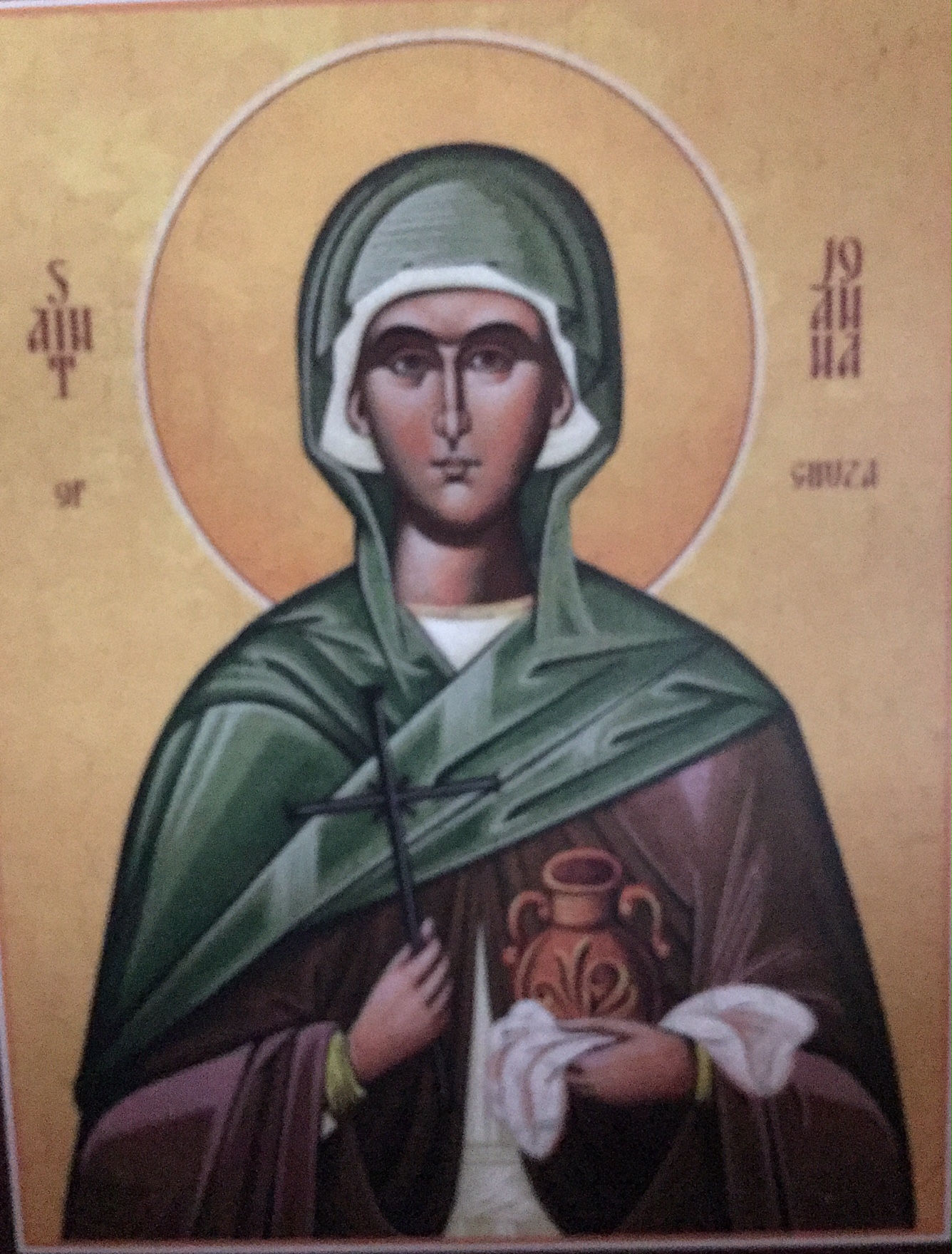
Myrrh bearer

Myrrh bearer

I am preparing for a workshop for the International Community of Hope conference this summer in Texas. Community of Hope began out of a need to train those who are not ordained to be hospital chaplains at St. Luke’s Hospital in Houston. The training is now used all over the world for people interested in visiting the sick and homebound. I have been involved in the Community of Hope in our diocese for over twenty years and continue to see it as outstanding preparation and study for people who are called to any ministry that involves pastoral care. One of the hallmarks of the training is that it is steeped in Benedictine spirituality.

The image of the Community of Hope Chaplains that keeps coming to me is that of the myrrh bearers, the women who brought spices to the tomb of Jesus on that early Easter morning. They brought their most precious possessions to honor the one who had cared for them. My experience is that this has also been the story for many of the people who are called to the ministry of pastoral care. They know what it is like to be wounded, and they have been ministered to by other healers. They know what it is like to be loved and cared for by others. Their only way of sharing and continuing and keeping that love is to carry what they have learned to someone else.

What happens with their visit is something totally unexpected. They go to honor their friend and teacher and instead they are promised a new life, a resurrection in this life and the next.

 I have never experienced a visit where I did not receive resurrection. We are touched and healed by those we go to visit. We take our most precious possessions, ourselves, our time, our presence and make an offering. In return we always meet the resurrected Christ in so many forms.

Joanna  joannaseibert.com  


Spirituality at the work place

 “LOAVES AND FISHES 

This is not
the age of information.

This is not
the age of information.

Forget the news,
and the radio,
and the blurred screen.

This is the time
of loaves
and fishes.

People are hungry
and one good word is bread
for a thousand.”

 David Whyte, The House of Belonging, ©1996 Many Rivers Press

An amazing group of pediatric radiologists to have worked with at a Children's Hospital

An amazing group of pediatric radiologists to have worked with at a Children's Hospital

In his book, The Heart Aroused, poet David Wythe writes about taking our spirituality with us to the workplace where it is so desperately needed by ourselves and others. He believes that preservation of the soul means giving up our desire in the scheduled workplace not to have the unscheduled meeting. My experience as well is that God drops into my life into the interruptions not on my agenda.

Whyte believes we must relinquish a belief that the world owes us a place on a divinely ordained career ladder. We have a place in the world but it is constantly shape-shifting.  Our deeper struggles can be our greatest spiritual and creative assets and the doors to creativity. The Greeks said that if the gods really wanted to punish someone, they granted that person everything they wished for. The soul’s ability to experience joy in the workplace is commensurate with our ability to feel grief. We walk into corporate offices looking like full-grown adults but many parts of us are still playing emotional catch-up from the grief and traumas of childhood which unconsciously refuse to grow any older until the trauma is resolved.  

The most dangerous time for a male is around nine o’clock on Monday morning and then the few months following his retirement when more injuries and illnesses occur. One is a death caused by carrying the burden and the other the ability to live without the burden. Work almost always becomes a platform for self-righteous moralizing. Hurrying from one workstation to another, we hope the hurrying itself can grant us importance we seek. Wythe suggests that slowing for a moment, we might open up to the emptiness at the center.

Wythe reminds us how astonishing it is to see how we shrink from the things that nourish our soul and take on every possible experience to quit it. I personally did this for dream work as I became too busy in my “church work” to go to my longtime dream group. I also see this continually in spiritual direction where I have a hard time fitting my  own spiritual director into my own “busy schedule.”

Joanna  joannaseibert.com


Kelsey: Spiritual path

Kelsey: spiritual journey

“There are two quite different ways of leading people on the spiritual pilgrimage, which have often been seen as opposed to each other.” Morton Kelsey, Companions on the Inner Way, The Art of Spiritual Guidance, pp. 7,8.

Fork in the road

Fork in the road

 Kelsey is describing first the sacramental method of spiritual direction where we use spiritual practices such as concrete matter, music, pictures, beads, rituals, symbols to connect to God. The downsize is that these can lead to idolatry, worshipping the means we use to reach God instead of worshipping God. For Episcopalians, it has always been the Book of Common Prayer as illustrated by the difficulty when our tradition tries to revise the book. Droves of people leave the church. The same thing may happen in churches when the altar is moved or the order of service or even the prayers are changed. Kelsey calls this method the kataphatic way from the Greek meaning “with images.”

Kelsey describes the second path based on the belief that we best connect to God by emptying ourselves of all images, remembering that there is no way to describe or represent the holy. In silence and emptiness, we connect to the God within. The is the apophatic way from the Greek meaning without images. This has been the way of Hinduism, Buddhism, and Christian contemplative forms such as Centering Prayer. Kelsey believes that the downside is that this inner work can occasionally lead to a lack of reaching out to others even though the true result should be connecting the Christ we find within to the Christ in others.

Kelsey encourages us to practice both methods. The two are a necessary part of a well-developed and informed spirituality.

Joanna  joannaseibert.com