God's Politics

God’s Politics

“ “The Gospel is not partisan, and God is neither a conservative nor a progressive. As Christians, we must not begin with our secular political beliefs, convictions, and commitments and to use the Gospel to prop them up. Rather, we must begin with the Gospel and allow the Gospel to shape our politics whole-cloth.” Barkley Thompson, In the Midst of the City, p. 21-22.
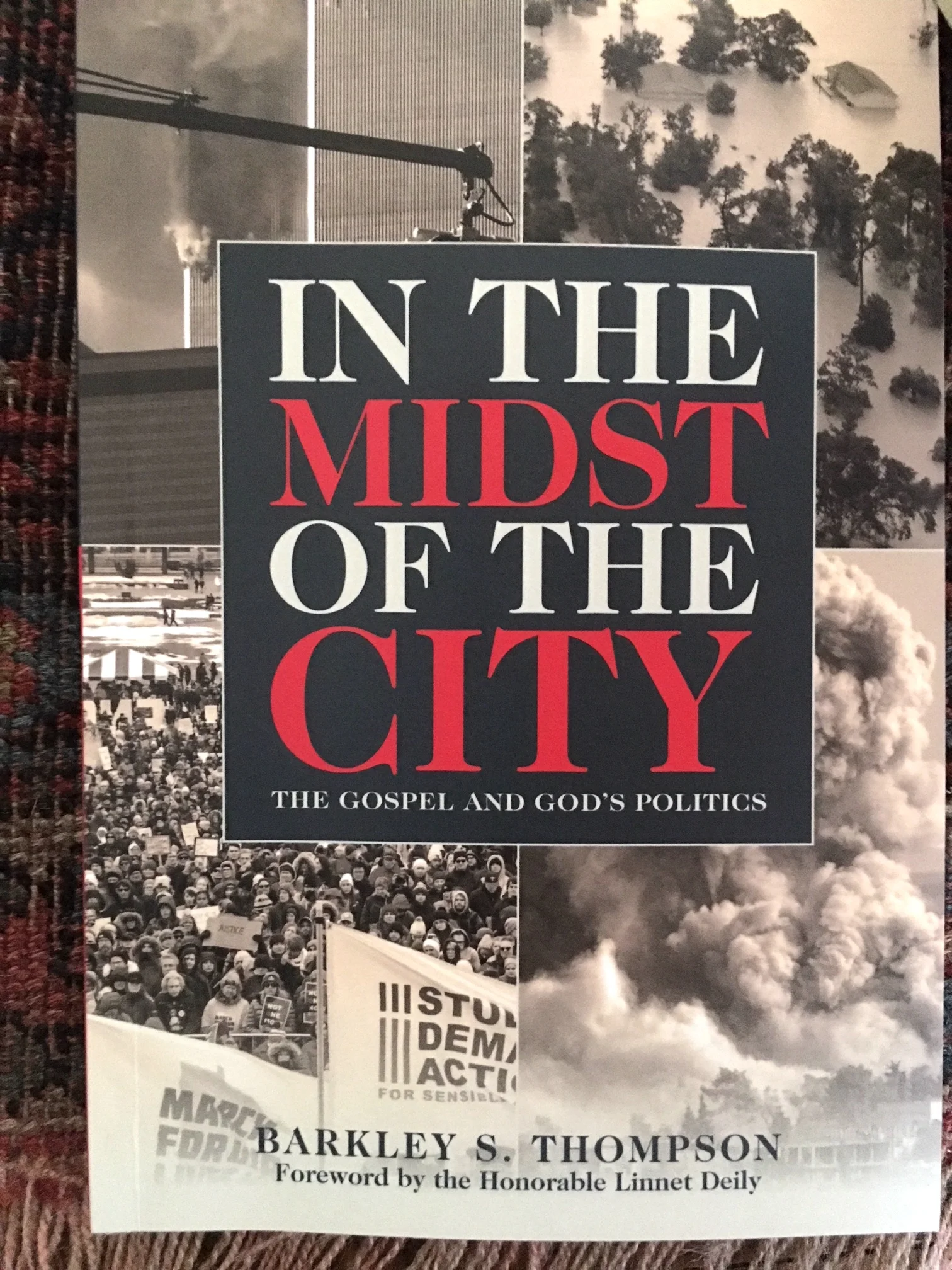
barkley god in poiitics.JPG

Yesterday was the first day of early voting in Arkansas. Robert and I went to two polling places to try to vote. In one civic center there was not a parking place to be found. In the second venue, a library, the line was out of the building and around the block and again no place to park. We both had never seen anything like it even for the presidential election of Arkansas’ native son. Today is two weeks until the election. We plan to try again in a few days. I hear from friends all over the country about the same situation. It is encouraging that so many people want to have a voice in the direction for this country.

A frequent question among spiritual friends is “what is the relationship between politics and religion?” I am reading Barkley Thompson’s new book, In the Midst of the City, the Gospel and God’s Politics. Barkley reminds us that the great theologian, Karl Barth told us to read with the Bible in one hand and the newspaper in the other. However, what is often left out is Barth’s mandate to interpret what the newspaper tells us is going on in the world in light of our knowledge of the Bible, not the other way around. We are not to use the Bible to support our political views but to support our politics according to our knowledge of God’s politics as presented to us in the gospels.

Thought for the day and perhaps the next two weeks. The gospels are political but not partisan.

Barkley will be at St. Mark’s April 27, 2019, at the Literary Festival to speak more about how we can discern God’s politics in view of the political situation in our world.

Joanna joannaseibert.com
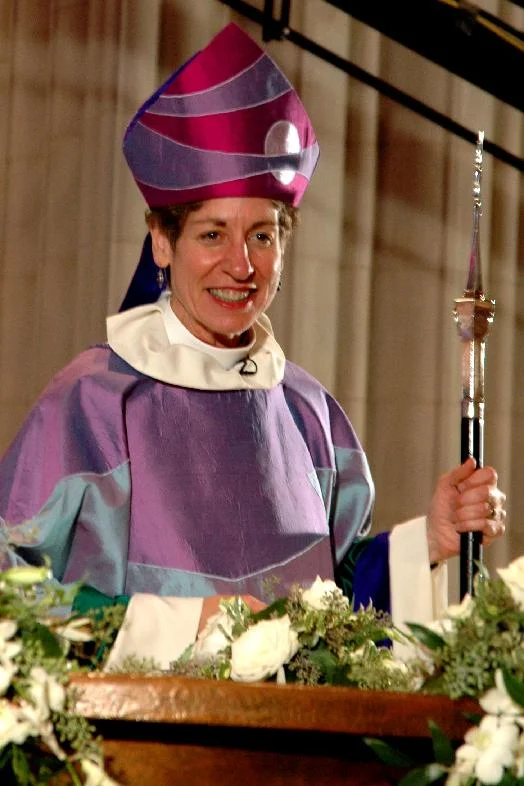
Jefferts Schori: Fear

Jefferts Schori: Fear

“If we're going to keep on growing into Christ-images for the world around us, we're going to have to give up fear. When we know ourselves beloved of God, we can begin to respond in less fearful ways. Our invitation.. is to lay down our fear and love the world. Lay down our sword and shield and seek out the image of God's beloved in the people we find it hardest to love.. Lay down our need for power and control and bow to the image of God's beloved in the weakest, the poorest, and the most excluded.” The Right Rev. Katharine Jefferts Schori, first woman presiding bishop in the Episcopal Church of the United States, Homily preached at the General Convention's Closing Eucharist, Wednesday, June 21, 2006 after her election.

schori copy.jpeg

Recently we made a stop on our way to the gulf at a predominately white town in Mississippi for some supplies we had forgotten. As I walk through Walmart looking for the items we need, I look into the faces of those wandering the massive store as we are. What I see is fear. I see a little love and kindness but mostly fear, fear written in the tattoos on their bodies. Fear in the headlines in the magazines they are reading. Fear in the eyes of the children being pulled beside them. This is a segment of our country that has felt neglected, the working poor, those who worked and lost their jobs and never found another skill, those who were not taught or were not given the opportunity to the education which can be the key to life.

When we arrive at the gulf in Alabama, we go to a favorite restaurant. Those who are doing well are eating here. I hear talk of individualism, isolation, and nationalism. People here are also fearful. They have worked hard and fear they will lose what they have because of people who are different than they are. I hear them say that if others worked hard, they would be able to care for themselves as they did. They may be here to forgot about their fears. They may have been taught a zero-sum outlook, that there is only so much abundance to go around.

It’s getting more complicated. Fear is at every level of our society. We have lost our connection to each other. As I see myself becoming more “political,” I wonder how can I not be when every spiritual writing I read and hear in my lifetime has been about Christ’s call to us to serve others, and I fear our country is beginning to stop serving those in need.

Is this what Dietrich Bonhoeffer is talking about in The Cost of Discipleship? I think of Karl Barth telling us to preach with the Bible in one hand and the newspaper in the other. I am trying to stay informed, be active, but stay true to my connection to God. It is too complicated. My experience in spiritual direction reminds me that our fears block us from that connection to God. My previous spiritual readings remind me that I must at some point stop looking outside of myself and start looking inside at my own fears in order to consider making changes.

As we are called to discern, pay attention, and respond to the fears of others, we also need to become aware of what and where are our own individual fears.

We actually can more easily see fear in others, but the harder task is to see what is the core of fear in ourselves which we have so masterfully disguised. This is where having spiritual friends to talk to can make all the difference.

Joanna joannaseibert.com

How we are remembered

How we are remembered

“Not many of us will be remembered for what we have done, though we may have accomplished a lot. As important as we once were, what remains is not what we have built, but who we have inspired. The lives we touched will go on. The minds we opened, the hearts we cherished, the spirits we set free, It is in relationship that our names are remembered. It is in how well we shared our love that will live on in ways unchanging.” Bishop Steven Charleston Daily Facebook Meditation

grandmother whaley.JPG

My Grandparents, Joe and Annie Whaley, whom by the way I am named after, mostly raised me. They nurtured me and cared for me and loved me without conditions. My greatest memory of my grandmother, however, is one single event occurring one of the days I went back to college in another state.

I always go to say goodbye to my grandparent at their nearby home on my way out of town. I only stay a few minutes. This day my grandmother is playing canasta with her sisters. I kiss her goodbye and leave. Then I remember I have forgotten something. I go back to their house and my grandmother is not at the card table. I ask her sisters, “Where is she?” After a pause my Aunt Julia whispers, “She went upstairs to her bedroom to cry. She misses you so much when you are gone.”

I suddenly realize how little time I spend with my grandparents on these infrequent visits home from college. I am usually absorbed with my friends or schoolwork I bring home. I become acutely aware of how much my grandmother loves me. I run up the stairs, hug her one more time, and witness her love embarrassed by her tears. I can still feel today that love my grandmother showed me with her secretly concealed bedroom tears.

Are there tears of love by which we will be remembered?

It is possible that we may be most remembered like my grandmother for just one small act of love?

Joanna. Joannaseibert.com