Crafton: Praying for Others

Crafton: Praying for Others

“I can compare prayer to a river—strong, clean, swift, carrying everything along in its powerful current. When I pray, I have stepped into the river and allowed it to carry me. When I pray for you, I have taken your hand and together we step into the river and let it carry us with power.” —Barbara Crafton in The AlsoLife (Morehouse, 2016), p. 128.

the alsolife copy.jpg

Episcopal priest and well-known speaker and writer, Barbara Crafton, teaches us a different view of prayer. It is surrender prayer, prayer of few words, feeling the power of prayer as we pray, bringing others with us into prayer. It is prayer that comes with sitting, swimming, or walking in silence and simply waiting for the Spirit’s lead.

Swimming is still a favorite exercise of mine. I can indeed visualize those in my prayers swimming or walking in the water with me. This is an even more powerful image: swimming in a river or the ocean where we surrender to let the current move us.

Crafton also writes about prayer as connecting ourselves to God, aligning ourselves with the energy of God’s love. Prayer is loving—loving God, loving ourselves, loving our neighbor. Some people imagine Jesus in prayer, and walk with or carry friends to Jesus, leaving the person they are praying for in Jesus’ arm. I so often have used this prayer image when praying for my children, and now my grandchildren.

For some, kneeling at the rail for Eucharist is an image used in prayer. We can imagine walking with or bringing friends in need along with us, in prayer, to that rail, and then kneeling with and beside them. This image also helps me in praying for enemies or those with whom I am having difficulty. It is hard to keep hate in my heart when my enemy is kneeling beside me, waiting as I am for the body and blood of Christ.

Joanna joannaseibert.com

small.jpg

Purchase a copy of a Spiritual Rx for Lent and Easter from me joannaseibert@me.com, Wordsworth Books in Little Rock or on Amazon. Proceeds go for Hurricane relief in the Diocese of the Central Gulf Coast.
Merton: Prayer as Distraction

Merton: Prayer as Distraction

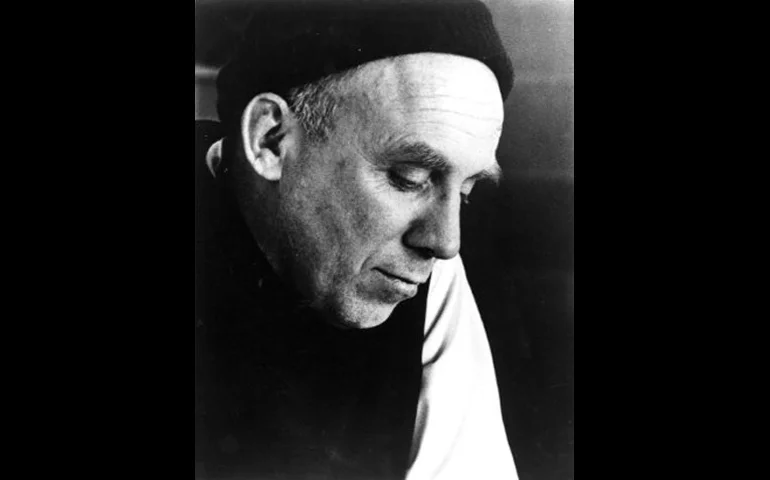
“If my prayer is centered in myself, if it seeks only an enrichment of my own self, my prayer will be my greatest potential distraction. Full of my own curiosity, I have eaten of the tree of Knowledge and torn myself away from myself and God. I am left rich and alone and nothing can assuage my hunger: everything I touch turns into a distraction.” —Thomas Merton in Thoughts in Solitude (Farrar, Straus and Giroux, 1999).

Merton001.jpeg

What a great gift from Merton to remind us of what may be the problem if our prayer life is no longer meaningful and rich, if we seem to lose the connection. Our first question should be, “Is my prayer life centered around myself?” Unfortunately, it is rare that we can actually see that in ourselves. It often takes talking to someone else about their stale prayers and seeing that loneliness and isolation and self-centeredness in them. Then the “Aha!” moment comes internally. “The same is also true for me!” We constantly learn from each other, consciously or unconsciously.

We also so often realize our egocentricity in community as we see it and abhor it in others—and then by Grace realize it is also in ourselves. The change for ourselves, however, so often comes as we withdraw from community in silence, contemplation, meditation, or centering prayer—so many avenues for change—to again become aware of that connection to God that was always there. Instead of trying to change the other, we see the gold in the difficulty and recognize the call to change ourselves, which paradoxically calls us to place our center on love of God and others instead of only on ourselves.

Joanna. Joannaseibert.com

small.jpg

Phyllis Tickle: Divine Hours

Phyllis Tickle: Divine Hours

“Prayer is a nonlocative, nongeographic space that one enters at one’s own peril, for it houses God during those few moments of one’s presence there, and what is there will most surely change everything that comes into it.”

Phyllis Tickle, Phyllis Tickle: Essential Spiritual Writings. Church Publishing, 2018.

IMG_1004-1.JPG

Phyllis Tickle was a prolific writer, amazing lecturer, rarely speaking from notes, and founding religion editor for Publishers Weekly as well as a great mentor and friend. My thank you to her would be to attempt to continue the kindness and encouragement she showed to me. She may be remembered for her analysis of The Emergent Christian Church, but I most treasure her Divine Hours, a series of books of observance of the fixed-hour of prayer for spring, summer, fall, and winter. I know she not only wrote about it, she practiced it. I remember seeing her slipping away at meetings for a few minutes to pray at one of the fixed hours of morning, midday, vespers, or compline.

Phyllis’ books allow us to follow a fixed time of prayer no matter where we are in time or place. She brought back an ancient rule of life to modern times and reminded us how this would change our lives, teaching that we would never be the same after experiencing the practice. I am not as faithful as Phyllis, but instead practice the fixed hours of prayer at certain seasons of the year, sometimes for only a week or a month, sometimes for a whole season. She also wrote an entire book of fixed prayers for night offices for those who have difficulty sleeping or who work at night, prayers at midnight, night watch, and dawn. Phyllis has written prayer books for Christmastide, Eastertide, as well as a convenient pocket edition of The Fixed Hours. There can be no more trusted or beloved friend to keep close by or carry with you during the day or night or during the earth seasons of the year than Phyllis Tickle.

Joanna. joannaseibert.com

small.jpg

Purchase a copy of A Daily Spiritual Rx for Lent and Easter from joannaseibert@me.com or from Wordsworth Books in Little Rock or from Amazon. Proceeds from the book go for hurricane relief in the Diocese of the central Gulf Coast.