Labyrinths

Labyrinth

“Labyrinths are usually in the form of a circle with a meandering but purposeful path from the edge to the center and back again. Each has only one path, and once we make the choice to enter it, the path becomes a metaphor for our journey through life, sending us to the center of the labyrinth and then back out to the edge on the same path.” —Lauren Artress in Walking a Sacred Path: Rediscovering the Labyrinth as a Spiritual Tool (Riverhead Books, 1995).

labyrinth books.JPG

Walking the labyrinth is one of the most ancient of spiritual practices, first documented in 324 on the floor of a church in Algiers, Algeria. One of the most famous labyrinths of medieval times is on the church floor of Chartres Cathedral, France. Christians who could not go on the Crusades in the 12th century went to the church to walk its eleven-circuit labyrinth pattern as a pilgrimage.

Walking the labyrinth is a form of surrender to a certain path that we trust will lead us in to the center and then back out. As we concentrate on our paces, the committee in our head becomes quiet as all our energy goes to staying on the path. As our body becomes quiet as well, we reconnect to our soul, to the God within. We are now on the path of healing and love and wholeness. This meditative walking spiritual exercise is especially helpful for the person who has difficulty meditating and sitting still, as is necessary in Centering Prayer.

Labyrinths are winding paths that double back before reaching a center. A labyrinth is different from a maze in that there is only one way to go, and you cannot get lost. Walking the labyrinth can be a time for meditation on sacred words, Scripture, or discernment as you move. You can walk, crawl, or skip as you proceed, but you must be considerate of other pilgrims walking the path.

The Episcopal priest, Lauren Artress, was a pioneer at Grace Cathedral in San Francisco when she introduced this spiritual practice in the 1990s. There are books about praying and meditating while walking the labyrinth (see Camp and Geoffrion, below), and how to make your own labyrinth (Welch). A friend, Twyla Alexander, has written a book about her pilgrimage of walking labyrinths in fifty states and hearing the stories of the women who created them.

Choose one of these books or others, or talk with a friend who has walked the labyrinth. Then try this ancient practice, especially if you are one who cannot sit still and meditate. I would also like to hear from you about your experience walking the labyrinth and of any books you have found helpful.

Lauren Artress, Walking a Sacred Path: Rediscovering the Labyrinth as a Spiritual Practice. Riverhead Books, 1995.

Jill Kimberly Hartwell Geoffrion, Christian Prayer and Labyrinths and Praying the Labyrinth. Pilgrim Press, 2004.

Carole Ann Camp, Praying at Every Turn: Meditations for Walking the Labyrinth. Crossroad, 2011.

Sally Welch, Walking the Labyrinth: A Spiritual and Practical Guide. Canterbury, 2010.

Twyla Alexander, Labyrinth Journeys: 50 States, 51 Stories. Spring Hill, 2017.

Joanna. Joannaseibert.com

lent easter.jpg

Purchase a copy of A Spiritual Rx for Lent and Easter from me, joannaseibert@me.com, from Wordsworth Books in Little Rock, or from Amazon.
Jesus Prayer

Jesus Prayer

“Lord God, Lamb of God, that takest away the sins of the world, have mercy on me.”

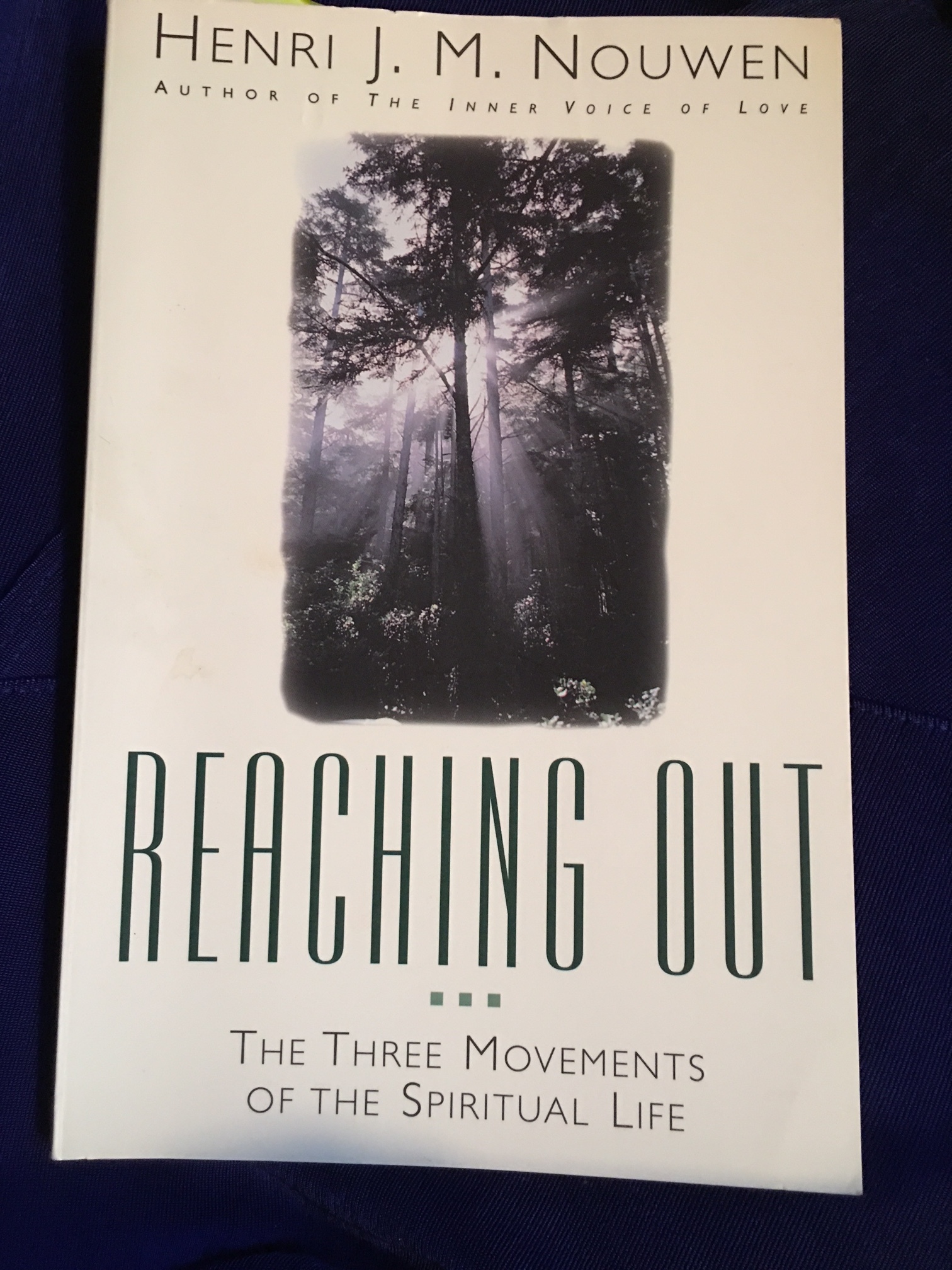
reaching out.JPG

This prayer is a modification of the Agnus Dei recited or sung in the Eucharist or Communion service at what is called the Fraction, as the celebrant breaks the consecrated bread. The prayer is also a modification of the ancient Jesus Prayer: “Lord Jesus Christ, Son of God, have mercy on me.” I have used this modification for years, on awakening, during the day—especially during difficult times, and as I fall asleep. When the Jesus Prayer or a modification is repeated continually, it is considered a Prayer of the Heart: opening the heart, with unceasing prayer, as called for by Paul in Romans 12:12 and 1 Thessalonians 5:17.

I have been to only one General Convention of the Episcopal Church. What I remember most is attending a special lecture by Henri Nouwen. I continually give thanks that I took time out of a busy day to go. I do not remember a word Nouwen said; but I do remember his presence. It was loving, accepting, not centered on himself, at peace with himself, the closest thing I have experienced to a holy presence. I can still feel that holiness in his writings.

Nouwen’s theme of praying the Jesus Prayer or Prayer of the Heart is found in Reaching Out: The Three Movements of the Spiritual Life. Nouwen contends that this practice moves our prayers from the head to the heart, as we realize that the answers to questions and the presence of God are in our heart. Nouwen’s thoughts remind me of the spiritual exercises of Anthony de Mello, who also recommends imaging our body and breath to move from our head to our heart and body.

The Jesus Prayer has been a part of my being, most particularly when I find myself living in fear. I have never said it unceasing 3000 times a day, then 6000, then 12,000 times a day, as was recommended by the 5th-century Egyptian Desert Fathers and by the 19th-century Russian monk to the anonymous Russian peasant in The Way of the Pilgrim. I confess that I do pray the Jesus Prayer more often when I feel my human limits are reached, indicating my powerlessness, rather than using the prayer on God’s terms.

Nouwen teaches about the paradox of prayer, learning to pray when we can only receive prayer as a gift. It is God’s Spirit, God’s breath, that prays into and with us. Instead, I so often use prayer, especially the Jesus Prayer, in times of weakness, as a support system, as a foxhole prayer, or when I no longer can help or control the situation and am desperate. Nouwen reminds us to pray the Jesus Prayer at the point when we are able to reach out to God, not on our own terms and needs, but on God’s terms. This kind of prayer then pulls us away from self-preoccupations, and challenges us to enter a new world, a great adventure, praying to our God who has no limits.

Nouwen’s book Reaching Out, about the spiritual journey and union with God using the Jesus Prayer, is one I keep readily available by my bed. I recommend it to those who come to me for spiritual direction if they are experiencing the absence of God. Nouwen writes that God is present, but God’s presence is so much beyond our human experience of being connected to another that it may be perceived as absence. Paradoxically, God’s absence is often so deeply felt that it can lead to a new sense of God’s presence.

This is also a good book to use in adult studies, especially in Advent or Lent.

The Way of the Pilgrim and The Pilgrim Continues His Way, a new translation by Helen Bacovin. Image, 1978.

Henri Nouwen, Reaching Out: The Three Movements of the Spiritual Life. Image, 1975.

Henri Nouwen, Desert Wisdom: Sayings from the Desert Fathers. Orbis, 1982.

Joanna. Joannaseibert.com

lent easter.jpg

Purchase a copy of A Spiritual Rx for Lent and Easter from me, joannaseibert@me.com, from Wordsworth Books in Little Rock, or from Amazon.

Centering Prayer: A New Heart

Centering Prayer: A New Heart

“A new heart I will give you, and a new spirit I will put within you; and I will remove from your body the heart of stone and give you a heart of flesh.” —Ezekiel 36:26.

open mind open heart.jpg

Thomas Keating and those who practice Centering Prayer, a contemporary form of contemplative prayer, believe that the daily twenty minutes of silence is not just prayer with God, but also divine therapy. During that time of quiet, God, the Holy Spirit, slips in and heals us of old and new wounds. Practitioners believe that silence may be the language of God, through which God can perform “open heart” surgery. During this time of silent prayer, God is transforming us into our true self, as we unload our over-identification with the “false self” that developed since birth, which enabled us to survive in an imperfect world.

Keating has written extensively about Centering Prayer. Best known among his works is the trilogy: Open Mind, Open Heart (Continuum, 1986), which is considered the handbook for his method of Centering Prayer; Invitation to Love (Bloomsbury Academic, 1994), about the stages of spiritual growth; and third, Intimacy with God: An Introduction to Centering Prayer (Crossroad, 2009), which describes more deeply what goes on psychologically during Centering Prayer and Lectio Divina. It also addresses the theological basis for Centering Prayer.

Joanna. Joannaseibert.com

small.jpg

Purchase a copy of A Spiritual Rx for Lent and Easter from me, joannaseibert@me.com, from Wordsworth Books in Little Rock, or from Amazon.