Prayers for Mothers

Mothers

“On this Mother’s Day, we give thanks to God for the divine gift of motherhood in all its diverse forms. Let us pray for all the mothers among us today; for our own mothers, those living and those who have passed away; for the mothers that loved us and those who fell short of loving us fully; for all who hope to be mothers someday and for those whose hope to have children has been frustrated; for all mothers who have lost children; for all women and men who have mothered others in any way—those who have been our substitute mothers and we who have done so for those in need; and for the earth that bore us and provides us with our sustenance. We pray this all in the name of God, our great and loving Mother. Amen.” —Leslie Nipps in Women’s Uncommon Prayers (Morehouse, 2000), p. 364.
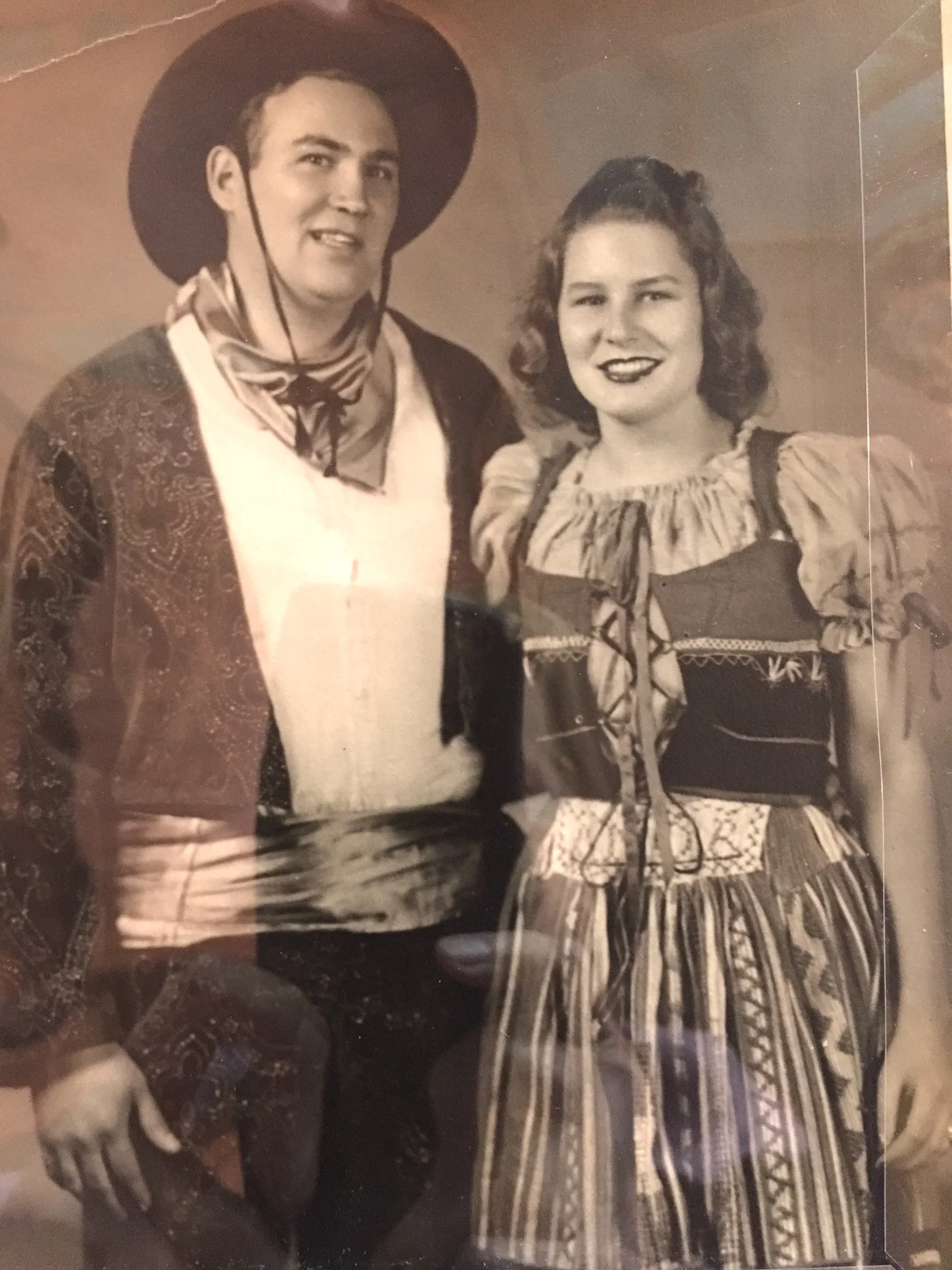
My parents in costume

My parents in costume

Sarah Kinney Gaventa wrote an excellent piece in GrowChristians.org called “Liturgical Trapdoors: Preparing for Mother’s Day” about how difficult secular holidays such as Mother’s Day and Father’s Day can be for some people, and how the Church can compound their pain. Having all the mothers stand up in church can be painful for those in the midst of fertility procedures. Those with painful childhoods also may have difficultly if there is a comparison made between the love of a mother or father and the love of God. So many people come to spiritual direction to grapple with these very issues.

Gaventa offers this more universal prayer for mothers from Women’s Uncommon Prayers as a start. We know the love of God through other people; but when there is a standard presented for a certain role such as mother or father, and ours did not fit it, we can become even more wounded.

Gaventa suggests we talk more about the feminine aspects of God and Jesus. We can discuss their caring for us as a Mother without criticism of those human mothers who have fallen short.

She also reminds us that Ann Jarvis, the woman who started the Mother’s Day movement during the Civil War, was a peace activist. Perhaps one way of honoring all mothers might be to suggest an outreach project for peace, so that mothers would never again have to send their fathers and husbands and sons to war.

Joanna joannaseibert.com

Act Justly, Love Mercy and Walk Humbly

Act Justly, Love Mercy and Walk Humbly
“He has shown you, O mortal, what is good. And what does the Lord require of you? To act justly and to love mercy and to walk humbly with your God.” Micah 6:8.

“The opposite of poverty is not wealth, the opposite of poverty is justice.” Bryan Stevenson in Just Mercy.

just mercy.jpg

Guest Writer: Carole Kimmel

Although I have never met him, I can tell from his writing and his TED1 talk that Bryan Stevenson is a brave, strong, compassionate man who lives according to what the Lord requires of him (Micah 6:8). He was greatly influenced by his grandmother, a strong, good, compassionate African American woman who passed on her influence to all her grandchildren. She made a big impression on Bryan who became a wonderful writer and a lawyer who works on behalf of the poor and people of color who have been wrongly convicted or sentenced to life in prison as minors.

The fact that so many innocent people are on death row because of an inadequate defense, or that thousands are rotting in prison with no chance of parole, having been put there in their teens, may not be what you want to read or hear about. Bryan will make you sit up and listen because he himself was so outraged at how badly people in prison, especially the poor, black and other minorities, are treated. Basically, he found that if you are white and have money, you can buy your way out of such a fate, or at least have your sentence reduced to what amounts to a slap on the wrist.

Bryan has won a number of awards for his work and successfully argued a case in the Supreme Court in 2010 that minors under the age of 17 cannot not be sentenced to life imprisonment without parole. He established the Equal Justice Initiative (EJI)2 in Mobile, Alabama, where so many are unjustly confined to prison. The “lynching museum” (The Legacy Museum: From Enslavement to Mass Incarceration) and memorial (The National Memorial for Peace and Justice) built by EJI are stark reminders of how we have treated our fellow human beings. Unfortunately, what happened in the past continues to affect the way people treat each other today. I urge you to read the book or at least watch the TED talk and hear Bryan’s compassionate story about the people with whom he works. This is a legacy that we must acknowledge. We are called to see God in each other, no matter the differences in color, poverty, or life circumstance. What does the Lord require of you?

1https://eji.org/videos/bryan-stevenson-ted-talk

2http://eji.org

Carole Kimmel

Charleston: Learning to Read Spiritual Signs

Charleston: Learning to Read Spiritual Signs

“You have seen the signs around you for some time now. You are beginning to understand which way the wind is blowing. The spiritual life is not an exercise of imagination, but of interpretation. We see the signs. It is understanding them as a coherent message that takes skill. The handwriting on the wall tells us nothing unless we have learned to read.” —Bishop Steven Charleston, Facebook page.

signs at beach.JPG

“Learning to read the signs on the wall.” Bishop Charleston is indeed giving us a good metaphor for living and discerning the spiritual life. As spiritual friends, we help each other see where God is working in our lives. We have friends helping us connect the dots, suggesting that a storm may be coming when we miss the signs. We are called to remember how God led us in our past. We have seen the signs in the past. When one of us cannot presently see the signs of God alive in our lives, those of us who can see help out each other.

This is why God calls us to community. We cannot do this alone. All of our spiritual exercises, prayer, contemplation, study, Centering Prayer, the labyrinth, praying the Rosary, intentional walking, are all tools to help us interpret the handwriting on the wall—the hand of God caring for us, leading us, never abandoning us. Some spiritual disciplines we practice by ourselves; others, such as corporate worship, we do together. Whether we experience these disciplines alone or together, we are called to share what we learn with each other. Discernment as to where we should go or the action to take next is most effectively realized in community.

I do have friends who sit alone and meditate and who say they perceive the points at which God is working in their lives. By listening, they find out what they should do. All the better for them. I could never do this except on very rare occasions. My experience is that others can see signs I have missed, and often the course of action I should take is readily apparent to them. All of this, of course, does involve a great deal of trust.

Joanna joannseibert.com

small.jpg

Purchase a copy of A Spiritual Rx for Lent and Easter from me, joannaseibert@me.com, from Wordsworth Books in Little Rock, or from Amazon.