The Day After July 4th, 2019

“America! America! God mend thine every flaw,

confirm thy soul in self-control, thy liberty in law.”

Katherine Lee Bates

snow on tulips tahoe copy.jpeg

This coming Sunday nearest the fourth of July we will have a patriotic hymn sing along after church. One of my favorites is the music to Katherine Lee Bates poem, “America the Beautiful.” “O beautiful for spacious skies for amber waves of grain.” Bates wrote the hymn after she arrived in a prairie wagon on top of the 14,000-foot Pike’s Peak near Colorado Springs in the summer of 1893.

I became connected to the poem and the hymn when I helped plan a pediatric radiology meeting at nearby Colorado Springs in 1994. I took a sabbatical from Children’s Hospital for six months in order to plan the international pediatric radiology meeting. I had much help from people all over the world, but I also had a touch of what Parker Palmer calls “functional atheism,” believing I was the “only” one who needed to get most of the work done.

After a year of planning and everything was ready, I vividly remember sitting in a board meeting in May at the event hotel just before the conference was about to begin. I looked out of the adjacent large bay window, and saw to my horror, the beginning of the last snow of winter, in May! I had planned in detail a multitude of outdoor activities that now would never see the light of day. I now keep a beautiful picture of snow on the tulips in front of the hotel to remind me of how little in life I can control.

There were a multitude of other hiccups. We recorded speakers for a meeting video. One speaker did not like his recording and required us to redo his filming at least five times. I will always be indebted to Marilyn Goske whom I had casually asked to watch over the videoing of the speakers. She patiently stayed with the speakers and missed the whole meeting to get this done. Another hiccup was our evening entertainment after dinner. We had scheduled the Air Force Academy Cadet Choir. Then without warning they were called to maneuvers. Our meeting planner booked a local children’s chorus. I was embarrassed that this would be amateurish and poorly performed. As you might expect, they were some of the most charming, talented and poised children performers I have ever seen. They ended their concert by going to individual members of the highly-educated, sophisticated audience and held their hands and sang directly to them. We all gave them a standing ovation through our tears, remembering that the children we serve as physicians can teach us so much about life as well as “American the Beautiful.”

I also learned from this meeting that no matter how hard I try, I am not in charge, that God provides amazing people around me who will take over situations that are overwhelming, and I especially learned after dinner that when a door unexpectedly closes, the next door that opens often is surprisingly magnificent.

Joanna joannaseibert.com

Daily Protection Prayer

“May the guiding hands of God be on my shoulders,
may the presence of the Holy Spirit be on my head,
may the sign of Christ be on my forehead,
may the voice of the Holy Spirit be in my ears,
may the smell of the Holy Spirit be in my nose,
may the sight of the company of heaven be in my eyes,
may the speech of the company of heaven be in my mouth,
may the work of the church of God be in my hands,
may the serving of God and my neighbor be in my feet,
may God make my heart his home,
and may I belong to God, my Father, completely.”

—Lorica of St. Fursa (Fursey), 7th Century, Translation composite, from Facebook Page of the Rev. Dr. Frederick Schmidt.

clay banks unsplash

clay banks unsplash

Fred Schmidt puts a prayer on his Facebook page almost every day. I cannot get this one out of my mind. St. Fursa was an Irish monk who was among the first to spread Christianity to Anglo-Saxon England in the seventh century. A “Lorica” is a protection prayer in the Irish Celtic tradition, often used before going to battle. It may have come from the original Latin word lorica, meaning breastplate or armor. It is suggested to have been inspired by Paul’s writing in Ephesians 6:11 to “put on the whole armor of Christ.”

As modern Christians, we stand to learn much from the Celts. We have a treasury of their wisdom, because writing and education were so important to them. I think of others who worshiped God, but of whose traditions we know nothing, because their experience—and not the writing—was primary to them. We need both.

This is the kind of prayer that should meet us as we wake up in the morning, maybe with that first cup of coffee or tea, or even before.

We may need to go back to it during the day, leaving a copy of it in a convenient place so as not to miss putting on “the whole armor of God.” Sometimes life does seem like going into battle especially in times like this.

On this 4th of July I wonder if any of the men and women during the American Revolution said Celtic prayers like this one. I wonder if their experience was like ours. When prayers such as this one become part of our being, we recognize that the battle is over and that love has already won.

Joanna. Joannaseibert.com

Practicing andPreaching and Fear

“If mainstream Christianity has steadily lost force and credibility, I wonder how much might be attributed to that we preach one gospel and live another. We preach the Good Samaritan and lock our church doors. We preach the lilies of the field and allocate large amounts of our monthly paychecks to pension and insurance plans.” —Cynthia Bourgeault in Mystical Hope (Cowley, 2001).

sunrise.JPG

This is the old story of practicing what we preach. We talk one way, but act another. My experience is that much of what we do is unconscious. We see ourselves as good and caring people. We know a certain belief is part of our core values; but our society speaks against it or does not value it. This gives us excuses or wiggle room so that we don’t have to follow through.

My experience is that fear and the scarcity/zero-sum mentality most often keep us from being this person God created us to be, not being able to act on what we know at our core is true. We fear we will not have enough money. We worry that someone will break in and steal what we already have. We fear our health will fail. We experience anxiety over the thought of being left alone and abandoned.

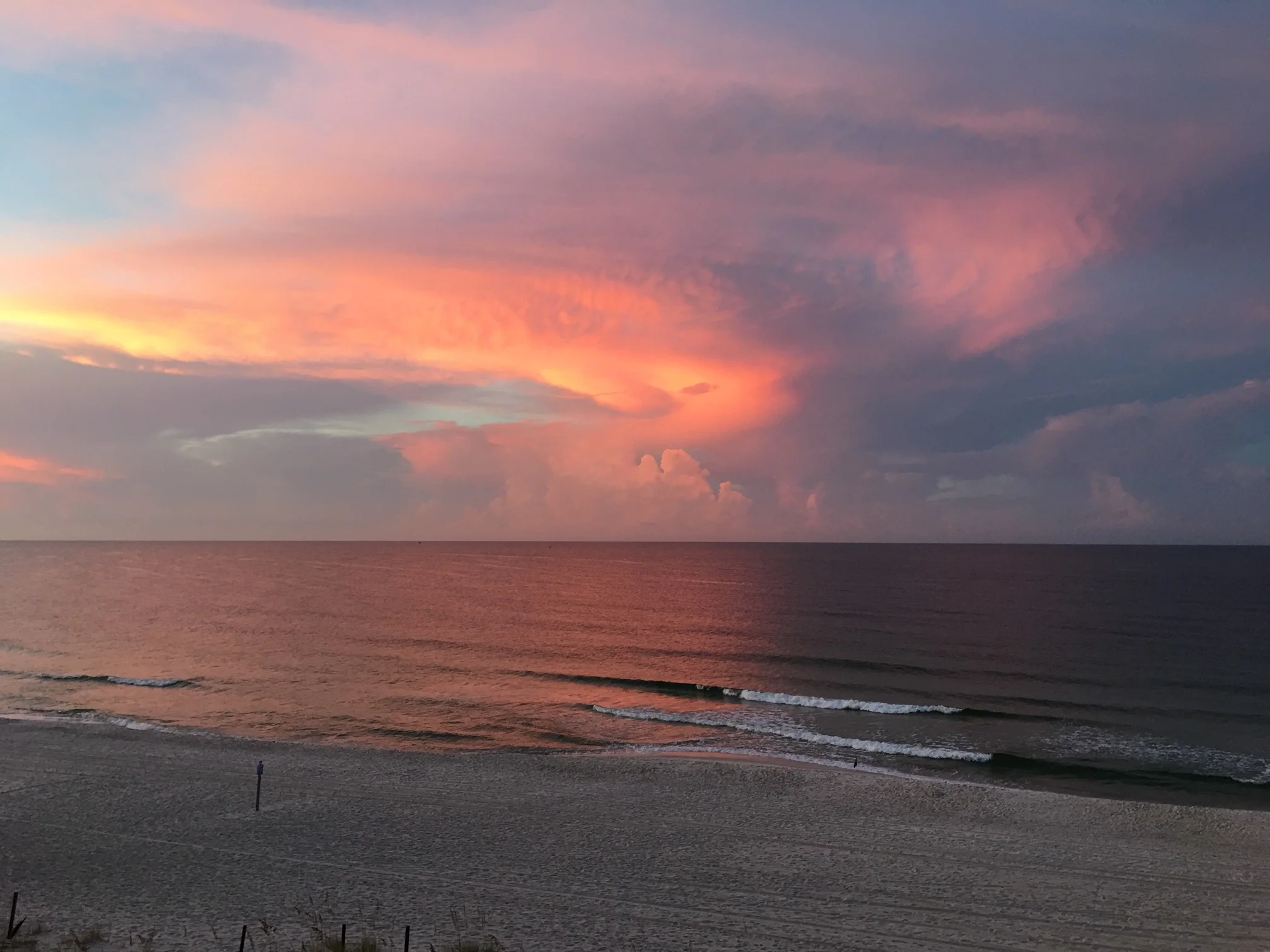
Being grateful, expressing thanks for what we have, is one of the best ways to journey out of a fear-based life. We have been given a daily reminder of how much we are cared for and loved. When I am most fearful, I rise early in the morning and watch the sunrise. Out of deep darkness comes overwhelming light. We are given a new hope, a new start, each day. Out of our darkness comes resurrection.

Joanna joannaseibert.com