MLK: Finding Image of God

“Within the best of us, there is some evil, and within the worst of us, there is some good. The person who hates you most has some good in him; even the nation who hates you most has some good in it; even the race that hates you most has some good in it. And when you come to the point that you look in the face of every person and see deep down within what religion calls ‘the image of God,’ you begin to love in spite of. No matter what the person does, you see God’s image there.” —Martin Luther King, Jr., in “Loving Your Enemies,” sermon at Dexter Ave. Baptist Church, Montgomery, Alabama, 1957.
shoes.JPG

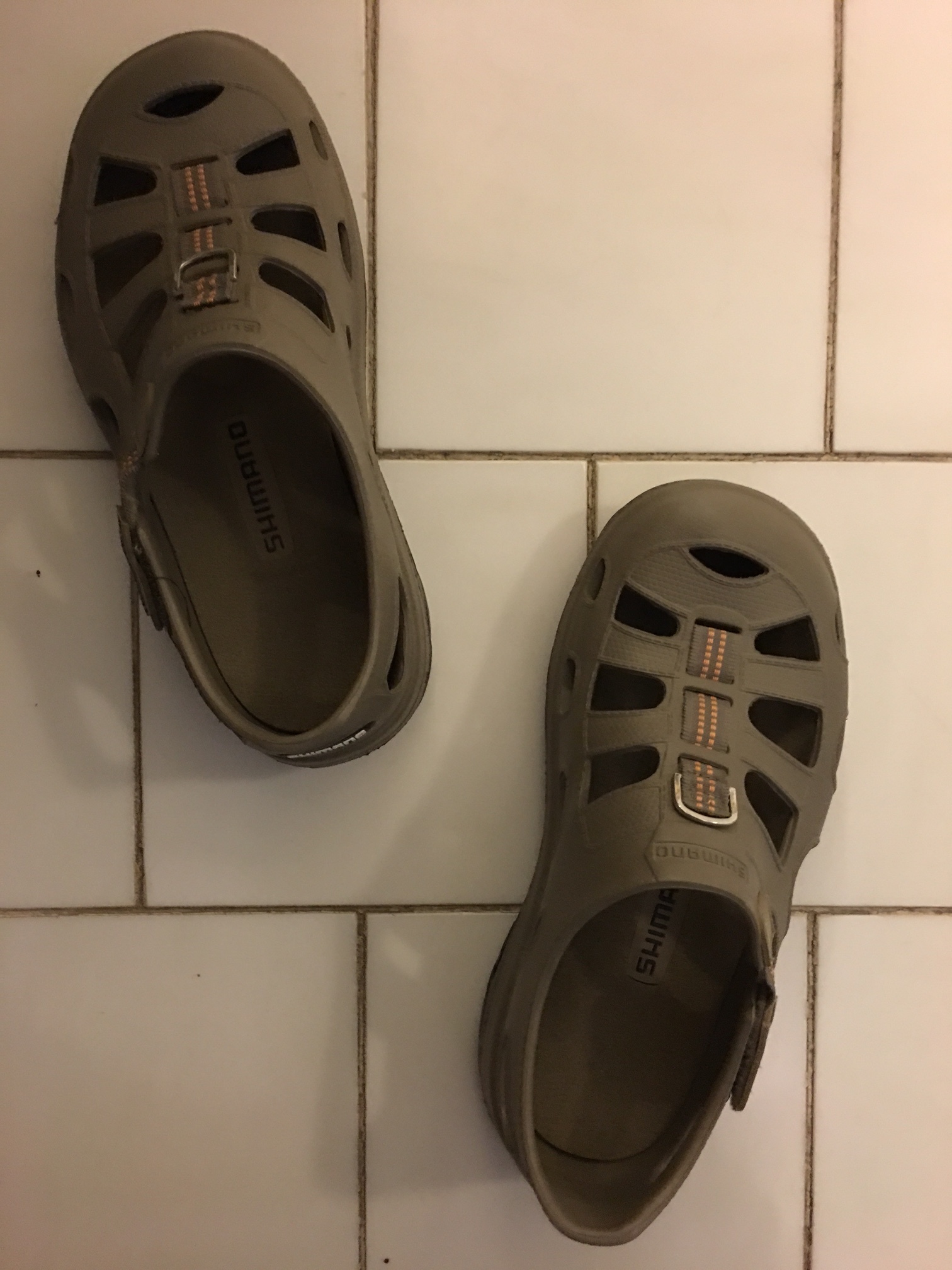
I once worked with another physician whom I thought totally incompetent. I thought the decisions she made did not make any sense and were not helpful. She often talked almost in riddles, trying to look at many sides of a question—while I already thought there was an obvious answer that, beyond question, was right. She was amazingly slow to make any changes.

Then one weekend I had to do her job when she was on vacation. Overnight I realized why she behaved as she did, the magnitude of her responsibility, and the constant number of real and imagined problems presented to her. I walked in her shoes, and it made all the difference.

Putting myself in her place did lead me to see God’s image in her as well as in so many others I was having difficulty understanding.

Joanna. Joannaseibert.com

New Day

“Waking up this morning, I smile.
Twenty-four brand new hours are before me.
I vow to live fully in each moment
and to look at all beings with eyes of compassion.”
—Thich Nhat Hanh in The Heart of the Buddha’s Teaching (Broadway Books, 1998), p. 102.

caterpillar becoming pupa.   sally klein

caterpillar becoming pupa. sally klein

Richard Rohr in his daily email compares Christians and Buddhists. “Christians are usually talking about metaphysics (‘what is’) and Buddhists are usually talking about epistemology (‘how do we know what is’). In that sense, they offer great gifts to one another.” 1

All I know is that the writings of the Buddhist monk Thich Nhat Hanh so often speak to me. What a marvelous idea to wake up in the morning and say to ourselves, “We have twenty-four brand new hours before us. I don’t want to waste a second, a minute, an hour. It is a new day.”

Yesterday is past. We went over what we had done and left undone the night before when we prayed that God would forgive us of wrongdoing, also called sins. We remembered where we found joy, often where we least expected it. We recalled where we found love. We remembered the day’s experiences in which we saw God working in our life.

This is a new day, a new beginning. We can no longer regret the past. If we have harmed others, we will make living amends where we need to; but today we are offered a new start. We hope we have learned from the past. We will not keep doing the same thing every day and expect different results. We will look for synchronicity or moments or serendipity in which we make connections, see how events are related.

I write about the Eucharist one morning and someone not aware of that confides later that same morning about how important the Eucharist is in his life. We receive a message from a friend we have been thinking about that day. We think about someone we have not seen for some time, and then that person calls. The person tells us that what we did or said was exactly what was needed at the time. That is synchronicity. These are God connections, and they are all around us in each new day.

1 Richard Rohr, Center for Action and Contemplation, Meditation: Mindfulness, cac.org, August 24, 2018.

Joanna. Joannaseibert.com

Faith

“Faith means receiving God, it means being overwhelmed by God. Faith helps us to find trust again and again when, from a human point of view, the foundations of truth have been destroyed. It gives us eyes to see what cannot be seen, and hands to grasp what cannot be touched, although it is present always and everywhere.”

—Eberhard Arnold in Why We Live in Community (Plough, 2014).

casey horner  unsplash

casey horner unsplash

Faith is believing in something we cannot see or understand. The mind takes us to a certain level of belief; but then faith must be present for us to take the leap from there. My favorite quote about faith, attributed to a multitude of people, is: “The opposite of faith is not doubt, but certainty.” If we are so certain about something, we have crossed back over that line, away from the place where faith abides.

This gives all of us doubters great comfort. In fact, we have come to know that our doubts lead us into a deeper faith—across the line, down new pathways, sometimes even onto major highways. We may take a wrong turn, or run a red light and hit someone, or just become completely lost. Then that stranger who met us on the road to Emmaus shows up. He may remind us of a quote from Scripture that had been meaningful to us in the past. He may ask us if we remember how we have been cared for continually by the God of our understanding, as well as by God’s stand-ins, our community and friends. He always feeds us exactly what we need to continue the journey; and before he disappears, he leaves on the dinner table a GPS.

Joanna. Joannaseibert.com