God Callings

“The many things we have to do, the hundred and one calls on our time and attention, don’t get between ourselves and God. On the contrary they are to us in very truth his Body and his Blood.”

—H. A. Williams in The Joy of God (Templegate, 1992).

Johannes_Vermeer_Christ_In_The_House_Of_Mary_And_Martha_400.jpg

Well, this is a novel idea! We anticipate during the day the quiet time that we will have writing or walking or practicing Centering Prayer; but the interactions we have with people during the day and at work are just as much a part of our relationship with God!

The God within us is meeting with the God in our neighbor or the patients we work with, or our co-workers or our partners, or the children we teach or our fellow students. This is like turning on a switch in our brain. Our life is not divided into parts. Every part of our being is an offering. Every second, every hour is an opportunity to share the love we have been so freely given. We should tape this Williams quote to the back of our cell phones to read whenever we get that last-minute phone call just as we are leaving our office.

My experience actually has been that such calls turn out to be some of the most important ones we get. It could be a novel idea to imagine each time that it is God calling.

Such awareness is a blending of the doing and the being aspects of our lives, our Martha and Mary parts. Perhaps at times we are called into a state of being; and at other times we’re led to concentrate on doing. I think Williams is asking us to consider both of these states as offerings to God.

I wonder if Jesus’ story of his visit to Mary and Martha would have been different if Martha had believed her doing was just as important, but not more important, than Mary’s being?

Joanna. Joannaseibert.com

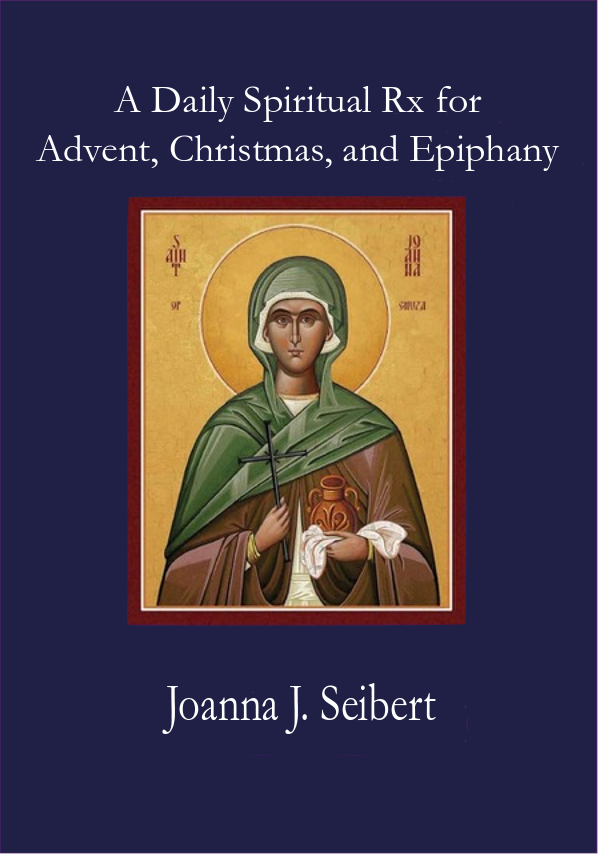
adventfront copy.png

Release party!!!!!!!!!!!

Come and get a signed copy of the new book

Just in time for the holidays

A Spiritual Rx for Advent Christmas, and Epiphany

The Sequel to A Spiritual Rx for Lent and Easter

Both are $18

All Money from sale of the books goes either to Camp Mitchel Camp and Conference Center in Arkansas or Hurricane Relief in the Diocese of Central Gulf Coast

Seibert’s, 27 River Ridge Road, Little Rock, Arkansas 72227

10 to noon, this Saturday September 14, 2019

RSVP joannaseibert@me.com

Lewis Hines

“He arrived at the coal mines, textile mills and industrial factories dressed in a three-piece suit.. He was just a humble Bible salesman, he claimed, who wanted to spread the good word to the laborers inside. What Lewis Hines actually wanted was to take photos of those laborers—and show the world what it looked like when children were put to work.” —Jessica Contrera, “The Searing Photos That Helped End Child Labor in America” in The Washington Post (9/3/2018).

oyster sucker copy.jpg

This important article by Jessica Contrera in The Washington Post reminds us how art can change the world. Most of us know the story. Hines was a photographer in the early 1900s and who photographed the horrendous working conditions of young children laboring in mines, in factories, and in any business that employed unskilled workers.

Our hearts break when we see these young girls and boys just slightly older than toddlers working long shifts in dangerous conditions. Their faces are dull. There are few smiles. They were in essence slave labor.

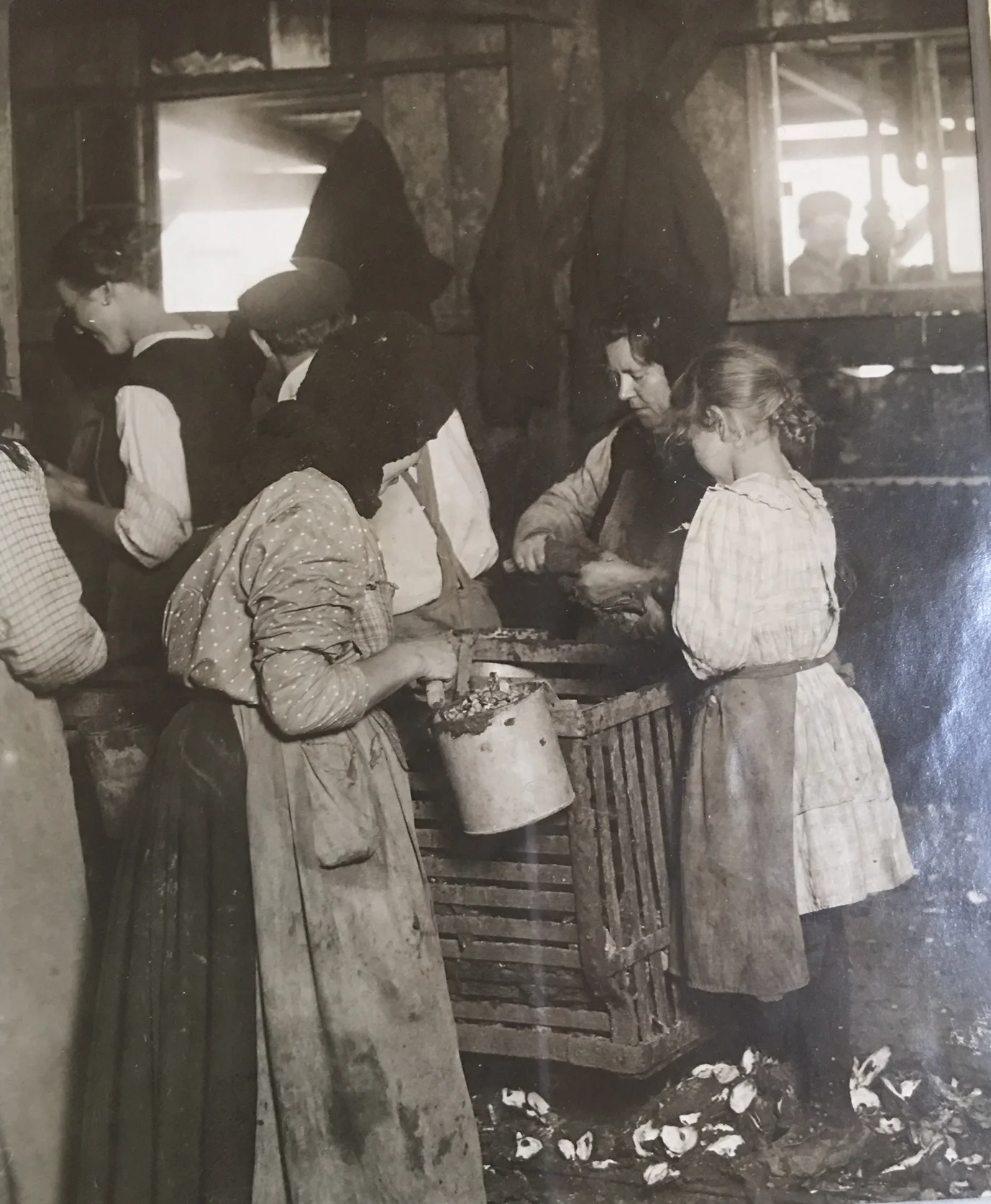
I love seafood, but almost every time I eat oysters now I see this young girl photographed by Hines of maybe six or seven, with her yellow hair pulled back, standing on a stool to reach the table to shuck oysters with the older women. If you have ever shucked oysters, you know it is a dirty task that sprays mud all over you and includes the hazard of cuts from a slip of the oyster knife. It is not an easy job for adults, much less for children.

Oyster shells form the floor of the dark room. The young girl’s apron is almost as big as she is. We do not see her face. That might be too much to bear. We do see the faces of the women—perhaps relatives—working beside her. They look older than their presumed ages, with hapless expressions on their faces.

Photographic exposure to such scenes mobilizes our country and leads to labor laws for children. Hines not only shares these dramatic pictures of children doing tasks dangerous even for adults, he reveals the children’s ages and tells us their stories. Hines’ story to accompany this image is of “seven-year-old Rosie. Regular shucker. Her second year at it. Illiterate. Works all day. Only shucks a few pots a day. Varn & Platt Canning Co., Bluffton, South Carolina, published February, 1913” (Library of Congress Photographs Online Catalog).

Hines’ work is a reminder that art, photography, music, writing, and stories are as powerful as guns and cannons to the revolutions of history. When I talk with people about how they want to change the world, I remind them of how this one person with one camera and maybe a Bible in hand made a difference.

We are not all Lewis Hines, but we have been created with talents that can make differences in others’ lives just as he did—without any threat of violence.

We discover and activate the difference we can make by connecting to the Christ within us. We become the person God created us to be and discern and share each important gift.

Joanna. Joannaseibert.com

adventfront copy.png

Release party!!!!!!!!!!!

Come and get a signed copy of the new book

Just in time for the holidays

A Spiritual Rx for Advent Christmas, and Epiphany

The Sequel to A Spiritual Rx for Lent and Easter

Both are $18

All Money from sale of the books goes either to Camp Mitchel Camp and Conference Center in Arkansas or Hurricane Relief in the Diocese of Central Gulf Coast

Seibert’s, 27 River Ridge Road, Little Rock, Arkansas 72227

10 to noon, this Saturday September 14, 2019

RSVP joannaseibert@me.com

Nouwen: Beloved for All Eternity

“God loved you before you were born. God will love you after you die. God says, ‘I have loved you with an everlasting love.’ .You belong to God from eternity to eternity. Life is just a little opportunity during a few years to say, ‘I love you, too.’” —Henri Nouwen in You Are the Beloved: Daily Meditations for Spiritual Living (Convergent Books, 2017).

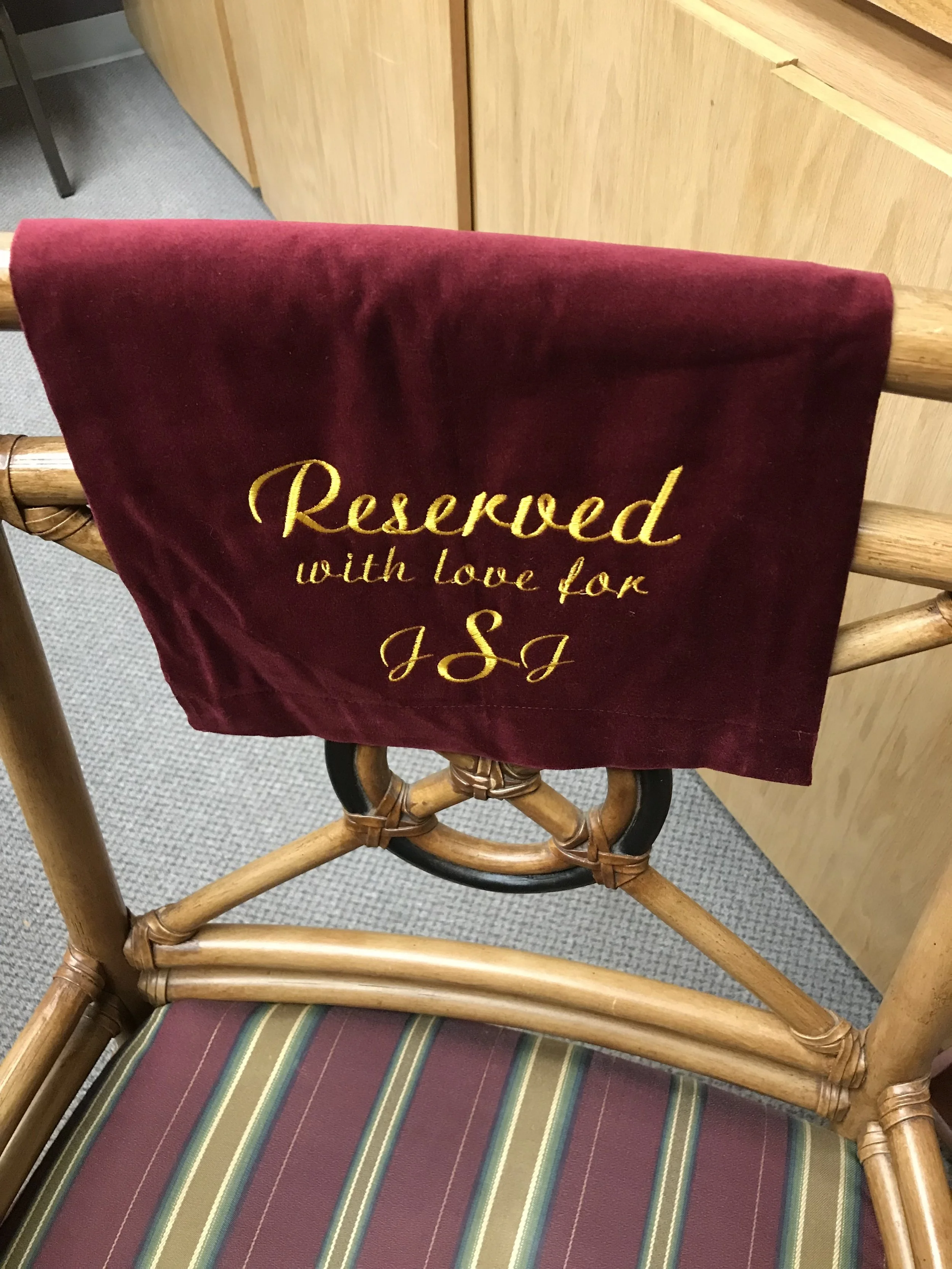
reserved.jpg

Nouwen is reminding us that we were loved before we were born and will be loved after we die. Love never dies. We brought love into the world and we have the opportunity to enlarge and multiply it and give thanks for it. We also in some mysterious way leave part of love behind and take some part of love with us as well when we die.

Love is the inheritance, the legacy we leave behind in the world. Death has no power over love. If only we could keep remembering that our true vocation on this earth is to love: to let members of our family know they are loved; to let our neighbor know he or she is loved; to let those in our city, those in our state, those in our country, and those in our world know they are loved. This is a huge job, but we will be given times and places every day to do this. It may not always be on our agenda, but if we are open to it, we will find opportunities to respond. David G. Benner, in Spirituality and the Awakening Self: The Sacred Journey of Transformation (Brazos Press, 2012), calls this awareness enlightenment—seeing with the eyes of the heart (pp. 144-146). He also believes this is a gift of the Spirit that is readily available.

Joanna joannaseibert.com

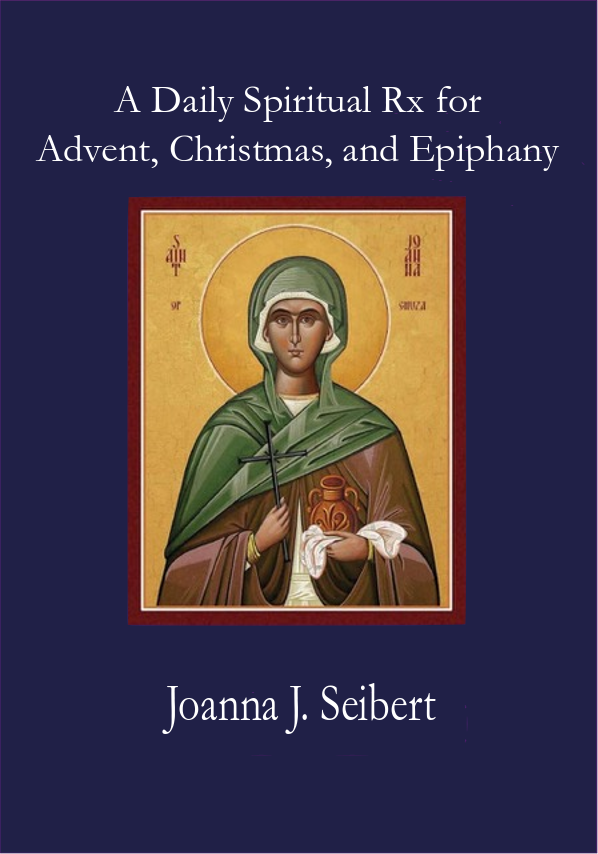
adventfront copy.png

Release party!!!!!!!!!!!

Come and get a signed copy of the new book

Just in time for the holidays

A Spiritual Rx for Advent Christmas, and Epiphany

The Sequel to A Spiritual Rx for Lent and Easter

Both are $18

All Money from sale of the books goes either to Camp Mitchel Camp and Conference Center in Arkansas or Hurricane Relief in the Diocese of Central Gulf Coast

Seibert’s, 27 River Ridge Road, Little Rock, Arkansas 72227

10 to noon, Saturday September 14, 2019

RSVP joannaseibert@me.com