Hospitality of Thoughts as a Spiritual Practice

 Hospitality of Thoughts as a Spiritual Practice

“Hospitality means primarily creating a free space where the stranger can enter and become a friend instead of an enemy. Hospitality is not to change people but to offer them space where change can take place. It is not to bring men and women over to our side. The paradox of hospitality is that it wants to create a friendly emptiness where strangers can enter and be free to sing their own songs, speak their own languages, dance their own dances; free also to leave and follow their own vocations. Hospitality is not a subtle invitation to adore the lifestyle of the host, but the gift of a chance for the guest to find his own.”—Henri Nouwen in You Are the Beloved (Convergent Books 2017).

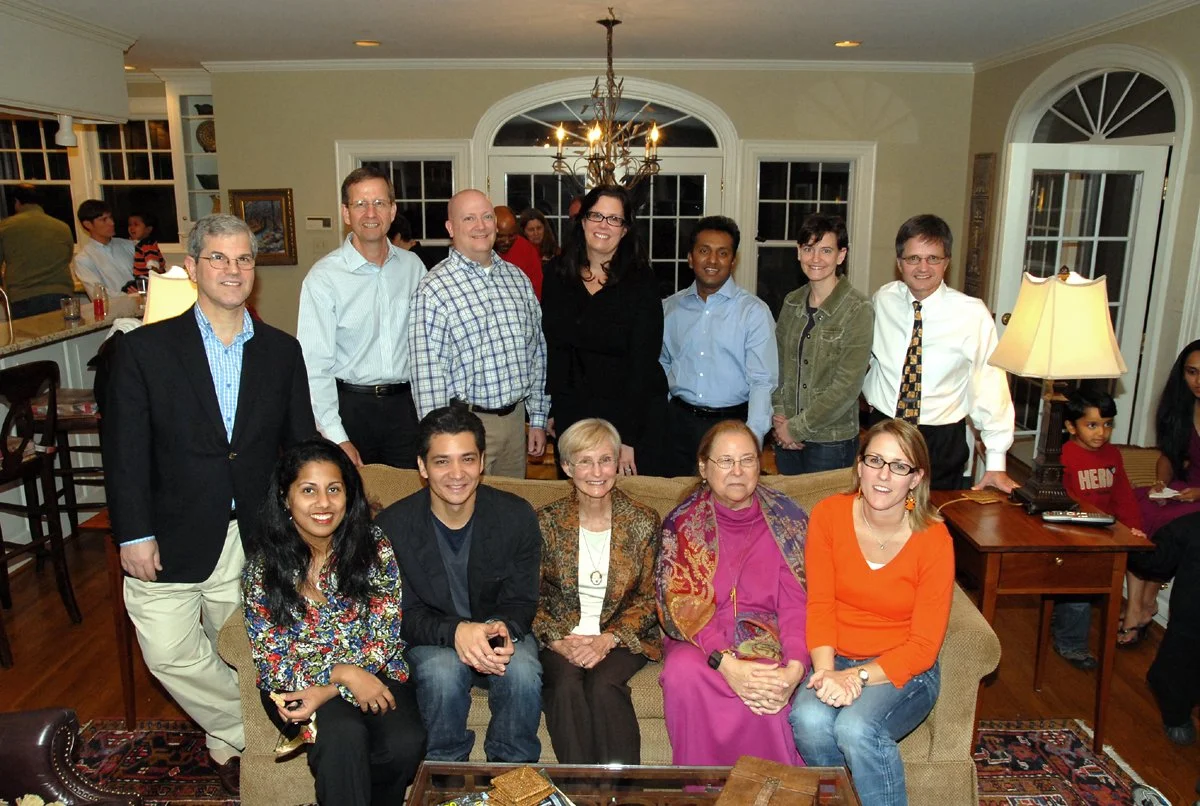
During the pandemic, I was part of a Zoom call with other pediatric radiologists nationwide, honoring a staff member who led our group of physicians for over twenty-nine years, striving to deliver the best care to children undergoing diagnostic imaging. Jennifer was highly competent, but also exceptionally unique to work with. Some of the comments I remember were that she was always a glass-three-quarter-full person. I knew about a person who considered a glass half empty, meaning they saw the world in its scarcity. A person thought to be a glass half full saw the world and its abundance. But Jennifer saw the world with an overabundance, more possibilities than one could imagine. Someone else mentioned she never saw a bad idea. That meant she listened to every thought given to her and looked at all the possibilities it had to offer. 

I wish I had spent more time with her and learned more from her, even by osmosis.

We recently studied the Rule of Benedict with a group of people learning about pastoral care. We talked about the Benedictine concept of radical hospitality, where the stranger is always welcomed, no matter who he is or where he is from. At the celebration of Jennifer Boylan’s work, I realized she was practicing radical hospitality of people’s thoughts and ideas. She welcomed them no matter who proposed them, and looked for the truth in each possibility to move forward. More and more, I realize our thoughts are precious to us. They come from the creative and vulnerable part of us that we must treat gently, as she so well did.

 I also asked Jennifer to explain how she learned these skills. She told me she learned this from her father, who died in 2015, whom I had met once when he was in the hospital. His colleagues described him as “a seeker of knowledge, foe of unnecessary complication, purveyor of simplicity. A calm place in a storm. Always willing to talk. Quick with a smile. Respected by his peers.” This so well described Jennifer, as she had hoped in her life to emulate her father. She had learned from him an impatience for bureaucracy and a need to minimize the steps between A and B.

I heard Jennifer and her father teach all of us “experts” that night about staying in relationship and serving others, leading by example. We would call this person a servant leader in a religious rather than medical setting.

zoom call

Eating Together As a Spiritual Practice

Eating Together as a Spiritual Practice

“The question of bread for myself is a material question, but the question of bread for my neighbor is a spiritual question.”—Nikolai Berdyaev.

last ACH Radiology gourp

Indeed, Jesus gives us continued examples of his feeding thousands and eating at the home of others, often with the most despised, such as Zacchaeus and Matthew, tax collectors. Jesus, a role model in this, feeds others and lets others feed him. For Christians, Jesus leaves us with another meal, the Eucharist of bread and wine, a sacrament reminding us of his care and bringing his presence to us.

When I am having difficulty with someone, I imagine us together at the altar rail, kneeling, if possible, to receive the bread and wine of the Eucharist. Jesus is with us. After kneeling together, I see the person in a different light. Sometimes I can see the Christ within them. 

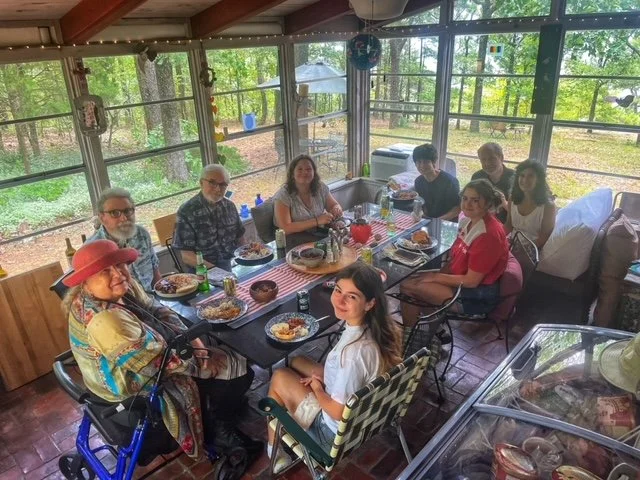
I have given up trying to understand why eating a meal around a table with someone else can help us develop a relationship faster than spending hours talking to that person. As we are being fed, we see the person more clearly. So often, we can continue a deeper conversation when food is present. It is almost as if the food is a natural icebreaker.

I remember when, in my medical practice, I worked with nine other physicians. Each had unique gifts and advocated for distinct parts of our practice. Each person wanted their area to be funded and fully staffed.

One day, we decided to have lunch together once a week to try to work through complex issues. The situation changed almost overnight. We began to see each other’s needs as they related to our many areas of interest. We prioritized what was most important for the patients we cared for, instead of focusing on our own needs. Some of us even became lifelong friends!

petit jean lunch

Wisdom of Children

Wisdom of Children

“The wolf shall live with the lamb,
   the leopard shall lie down with the kid,
the calf and the lion and the fatling together,
   and a little child shall lead them.”—Isaiah 11:6.

There are many Bible stories about the wisdom and leadership of children and youth. An adolescent boy leads Saul to Samuel (1 Samuel 9). Baby Moses’ sister Miriam keeps watch over him until Pharaoh’s daughter finds him and suggests a “nurse” for him (Exodus 2:1-10). A young captured Israelite girl tells Naaman’s wife about Elisha, who can cure his leprosy (2 Kings 5). In the Gospel of John, Andrew brings a young boy with five barley loaves and two small fish to Jesus to feed five thousand people (John 6:1-14). I know there are more stories. Help me remember them.

As a children’s physician and now a grandmother, the significance of children daily becomes evident. Children teach me about joy. They model awareness. They show me how to live in the moment. Yet, their connection to the sacred seems to be on a shorter string than mine.

As a parent, I was so worried about raising my children “right” that I often missed their wisdom as they were growing up. However, I do remember one time I listened to my young daughter and stopped my busy work to go outside to see the rainbows in our lawn sprinkler—after she came running in to tell me about all the rainbows outdoors.

My grandchildren are growing up too fast. Langley, our oldest, graduated from college and is preparing for law school. Her brother, Mac, is a junior in college. Zoe, in this picture, is going back to college in a few days. Turner and Gray will be seniors in high school this year. Elizabeth will be in the eighth grade. I do not want to miss a second I might have with any of them.

I also loved being part of the Cathedral School when I was at Trinity Cathedral.

I am now assigned as a deacon to St. Mark’s, where there is a Day School. I cherish every opportunity I can get to spend time with these preschoolers. I love how they fold their tiny hands and kneel to pray in chapel. Sometimes their heads are bowed. Sometimes they look up with wonder, seeking to “get” what this new adventure is about. Tomorrow, a friend, Mary, and I will be the storytellers at Vacation Bible School. They teach me more about God and God’s love than most books on my bookshelf, as they share their connection to God.

So when people come to me for spiritual direction, I always recommend spending time with children, especially one-on-one, to learn more about God’s love. Barbara Brown Taylor suggests getting down on the floor with them. Unfortunately, I can no longer do that; but I can still sit and listen to their stories, share meals with them, throw kisses, and give hugs. I also love to watch movies with them and remind them every time I see them that we love them and that they are beautiful inside and out.

Joanna.    https://www.joannaseibert.com/