Rohr: Forgiveness

Rohr: Forgiveness

“As long as you can deal with evil by some means other than forgiveness, you will keep projecting, fearing, and attacking it over there, instead of ‘gazing’ on it within and ‘weeping’ over it within yourself and all of us. Forgiveness demands three new simultaneous ‘seeings’: I must see God in the other; I must access God in myself; and I must experience God in a new way that is larger than an ‘Enforcer.’”—Adapted from Richard Rohr’s Things Hidden: Scripture as Spirituality (Franciscan Media, 2008), pp. 193-194.

the burden we carry with us when we cannot forgive

Richard Rohr is teaching us more basic lessons about how to forgive. It involves seeing the Christ—God in the person we are forgiving—as well as seeing God or Christ in ourselves. That makes sense. But then Rohr throws in this third condition. We see that God is larger than a hall monitor, handing out detention slips, checking a list, looking at our every action, and judging whether our neighbors and we behave correctly.

My experience is that we are called to enlarge our concept of God as a God of love. How do we do this? First, we place ourselves with others who seem to experience God’s love. Second, we observe how they know how to forgive others.

As we see the Christ in others who know love, the God of love, the Christ in us awakens—and slowly, often very slowly, we also begin to see the Christ in those who have harmed us. We may discover that personal tragedies have brought them to the place of hurting others. This awareness starts as we pray daily, sometimes hourly, for the person who has harmed us. We realize we are still carrying around a heavy load of resentment, which makes it so challenging to live and walk on our journey through life. It is like a cancer, destroying the joy in our lives a little each day. That person is still hurting us. They are becoming our higher power, our God. More and more, they are all we can think about.

As we pray daily for that person, they may never change, but my experience is we will.

I will be speaking at the Arkansas Daughters of the King Fall Assembly in Little Rock, on September 9 on Forgiveness and the Spirituality of Aging. Contact me for more information.

Joanna. https://www.joannaseibert.com/


Death and Relationships

Death and Relationships

“We are given each other in trust. I think people are much too wonderful to be alive briefly and gone.”—Marilynne Robinson. 

When I talk with spiritual friends who have experienced the death of a loved one, I remind them that the God, of my understanding, does not give us an amazingly loving relationship with someone else and then abruptly takes it away. Death is not a period at the end of a sentence but more like a comma. The relationship still goes on.

Our loved ones continue in their relationship with us, but in a way we don’t yet understand. Sometimes we can feel their presence. We often sense the reality of their prayers. In his book, A Crazy, Holy Grace (Zondervan, 2017), Frederick Buechner has written about doing active imagination with those we love who have died. We can converse with them in the silence of our minds, but we often feel their presence, supporting and loving us just as they did when they were alive.

I also remind friends that those we love are now with us at all times—beside us—again, in some form, we do not understand. When they were alive, we were present with them only when we saw them physically. They are now always with us in a closer relationship than we can explain.

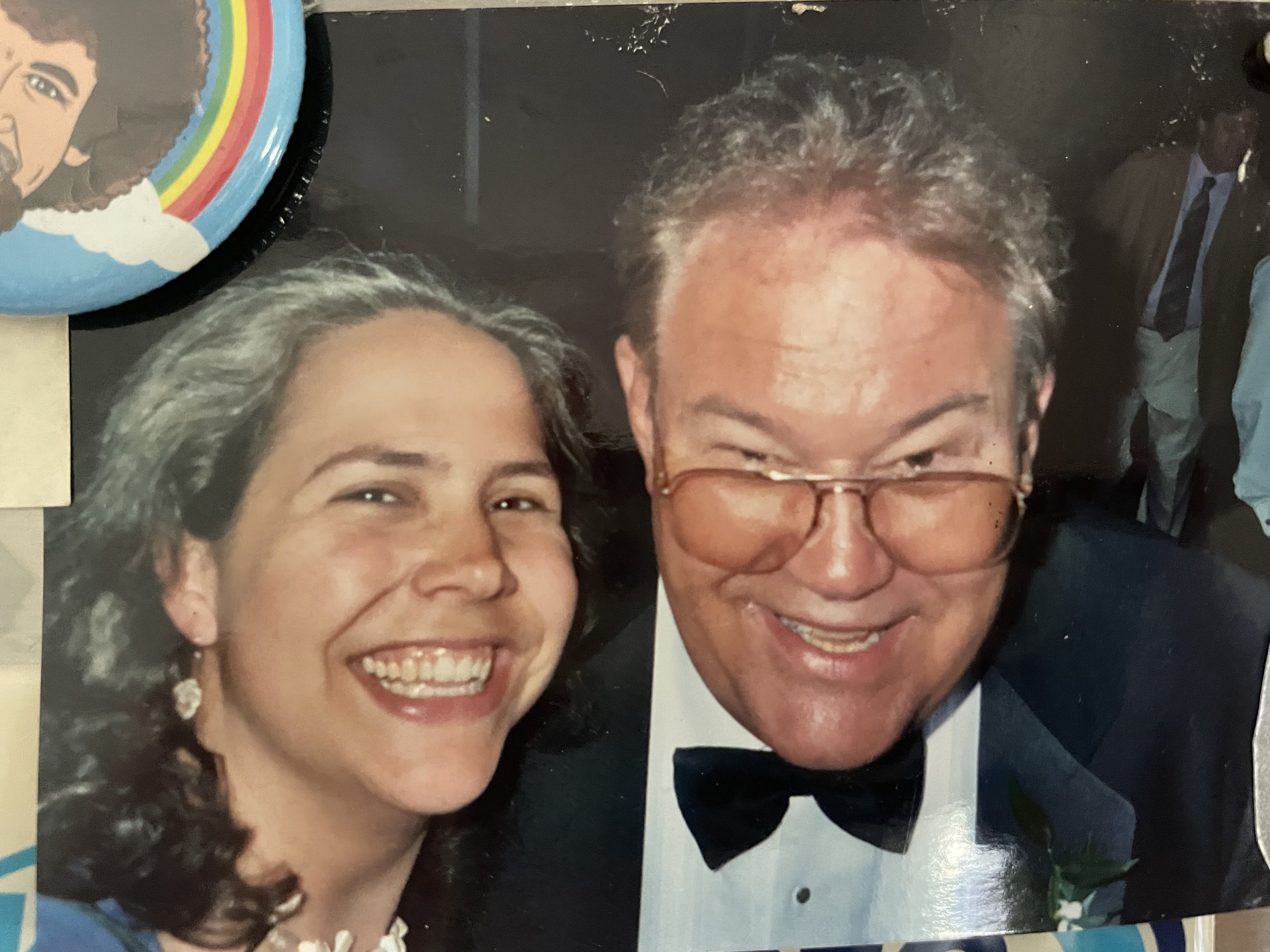
I often feel the presence of my younger brother, Jim, my only sibling, who died much too prematurely in 2014, the day after Christmas. His birthday was Saturday, and we spent the day celebrating his life with our daughter and her husband. I especially always feel the fun, full mischief we can so easily see in his eyes. We celebrate him again, since he was born on Labor Day 1944.

I will be speaking at the Arkansas Daughters of the King Fall Assembly in Little Rock, on September 9 on Forgiveness and the Spirituality of Aging. Contact me for more information.


Joanna. https://www.joannaseibert.com/


Overcoming Fear

Bishop Charleston on Overcoming Fear

“I have an assignment for you this weekend: don’t be afraid. Wait, before you roll your eyes, hear me out. I am not talking about some greeting card spirituality where you just put on a happy face and pretend nothing bad is happening around you. I am talking about taking some time over the next three days to seriously confront fear in your life and feel its power over you diminish. How? Like most spiritual healing, it seems deceptively easy. First, find a quiet moment when you won’t be disturbed. Then, sit upright in a comfortable position. Close your eyes, open your hands, and breathe in and out with an awareness of each breath. Sit quietly. Don’t pray at this time. Just open your heart to the Spirit and receive the feeling of a sacred presence in your life. Abide in it. Let it permeate your whole body as though you were being bathed in light. Join me in doing this for ten minutes at least once a day over the next three days. Join me in the fight against fear: become a receiver of light.”—Bishop Steven Charleston Facebook Page.

Bishop Charleston has written several pieces about fear recently. How does he know that fear looms over us like a suffocating cloud during the pandemic and unrest? Fear has a smell, an odor, a way of speaking, a walk, a glance, a posture. Fear lies, getting “bottomless” Pinocchio’s Factchecks from The Washington Post.

 Fear wakes us up in the night. Fear keeps us from saying our prayers, because we need to do whatever we can to attack fear and get rid of it. We can try to hide it, avoid it, or put it in the closet of our mind and body, but it sneaks out through a keyhole when we are not looking. Fear comes without invitation. It is a bully, pushing its way through the happiness of our days to stand front and center, shouting with an outside voice so we cannot hear the preciousness of our days. Fear also knows how to whisper so softly we do not recognize its presence.

Charleston gives fear one more attribute I did not know about. He says fear is a coward that shrinks like the wicked witch in The Wizard of Oz when water is poured on her, when fear hears laughter. Bishop Charleston says, “Laughter is to fear what garlic is to a vampire. It chases away fear by exposing how much deeper life is, how much more alive and engaging, with so many possibilities and chances that our worst fears will never happen anyway. Humor and hope drain worry and anxiety of all their power, leaving them sulking in a corner while joy walks in through the front door.”

So, Bishop Charleston tells us to think of the funniest thing we have experienced when fear sneaks in. My experience is that laughter must come from something humorous that I have read in a story, seen in a movie or television series, or seen in my life. I think of playing with my children and grandchildren when they were small. This could be another answer. Being with children is an automatic laughter-inducing event. We could not be with them during the pandemic, but we could ask for videos, FaceTime, and even Zoom with them. Just the sound of their voice can make a difference. Children make us do funny things, like sit on the floor, create silly faces, or speak an ancient language.

Of course, there are so many other ways to deal with fear, but for today, we will try this one until fear reduces to a manageable level or even takes a sabbatical or leave of absence.

I will be speaking at the Arkansas Daughters of the King Fall Assembly in Little Rock, on September 9 on Forgiveness and the Spirituality of Aging. Contact me for more information.

Joanna  https://www.joannaseibert.com/