Memory and Eucharist

Buechner: Memory, Eucharist, Jesus

There are two ways of remembering. One way is to make an excursion from the living present back into the dead past. The other way is to summon the dead past back into the living present. The young widow remembers her husband, and he is there beside her. When Jesus said, ‘Do this in remembrance of me,’ he was not prescribing a periodic slug of nostalgia.”
—Frederick Buechner in Wishful Thinking (Harper & Row, 1973).

Buechner gives us two ways to remember: going back and bringing memories forward. Returning to past memories can allow us to relive a scene from our lives. Anthony de Mello writes that perhaps that scene was too powerful to experience the first time. As we relive it, we can participate in it again and again, each time gaining a greater sense of its meaning.

Bringing memories forward is like doing active imagination with a living friend or someone you deeply loved who has died. You imagine the person’s presence with you. My experience is that sometimes we feel that presence even without trying to imagine it.

Buechner believes that when Jesus said, “Do this in remembrance of me” (1 Corinthians 11:24b), he was calling us to bring him back into our presence—to know and feel his love, so we might go out and bring others in to share in this love. 

Some believe Jesus is present in the Eucharist’s bread and wine. Others believe that bread and wine are messengers or symbols, reminding us of Jesus’ presence and love in our lives. Either way, the God of love is present.

Receiving the Eucharist is one of the significant liturgical sacraments many people missed during the isolation of this pandemic. Jesus is still beside us and within us, but we are learning that the symbol of this presence is more powerful and more needed than we recognized. Perhaps in our remembering, we can return to previous times or bring Jesus forward and let him know that we believe with all our hearts that he is very present within and beside us.

Joanna. https://www.joannaseibert.com/


Vamping

Vamping

“Music is the language of the spirit. It opens the secret of life, bringing peace, abolishing strife.”―Kahlil Gibran.

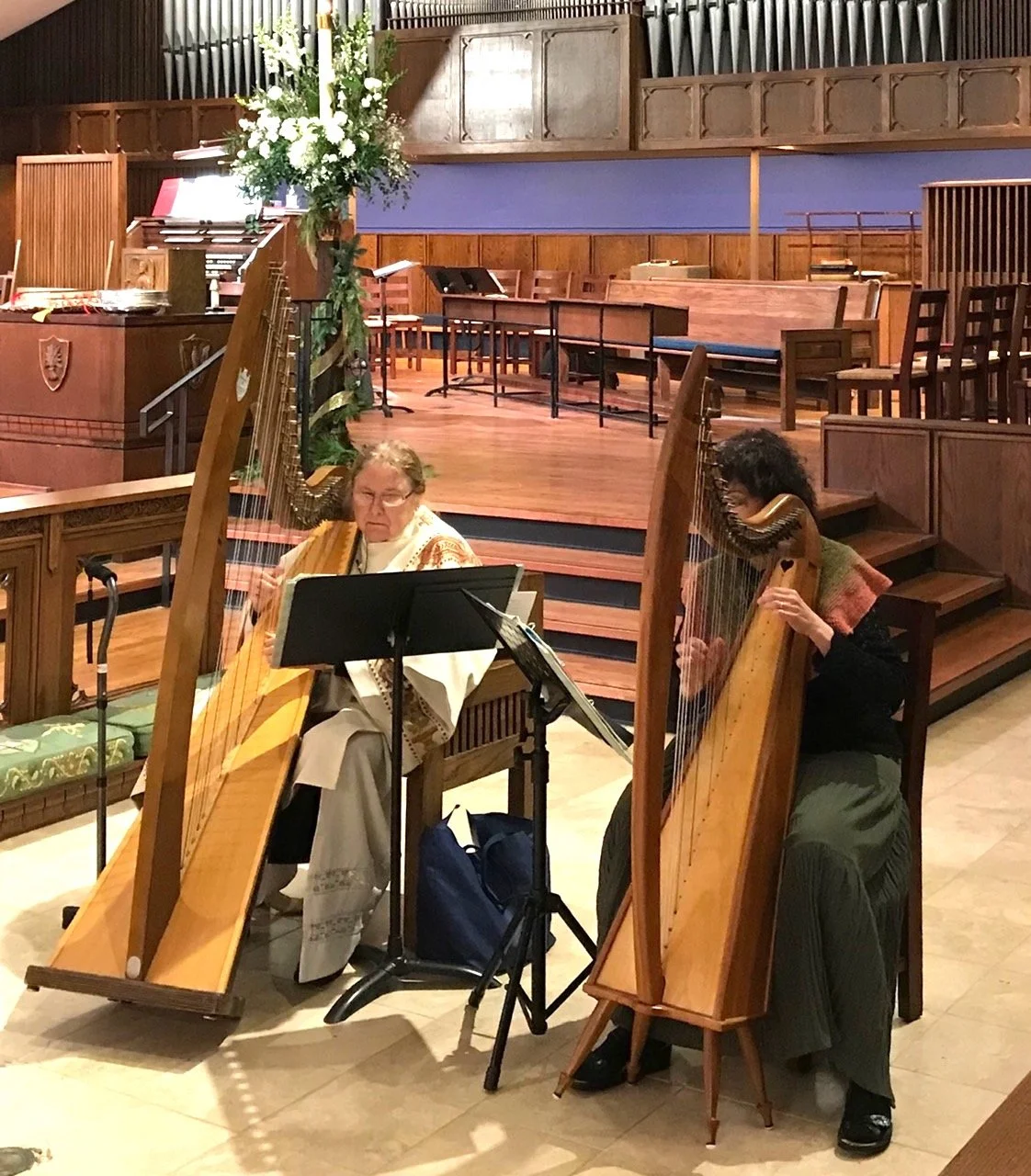
 Once a week, I played harp duets with a highly talented harpist who tolerated my missed or absent notes and tried to teach an old harpist new tricks and fingering. One year, Pam also taught me an unfamiliar word: vamping. She said, “I will vamp you in.” She plays a brief series of chords before I start my part of the piece. I definitely like the word. Vamping. It means we play a simple chord or beat, usually as we wait for someone else to start—and then perhaps keep quietly playing the background chords as the other player takes the melody.

I think this best describes a meeting with a spiritual friend. I may ask a simple question, such as, “Where did you see God in your life today?” I may then repeat the question when the subject seems to change. Often, I keep saying prayers that the Holy Spirit will guide us. These prayers are my chords.

Our job is to stay connected to the beat, as we listen for the rhythm and melody of the presence of the Holy Spirit. We are to remain in the background and support and undergird the person we are with. We keep the beat going, listening and praying so the Holy Spirit can be heard, guiding and directing both of us.

Joanna. https://www.joannaseibert.com/


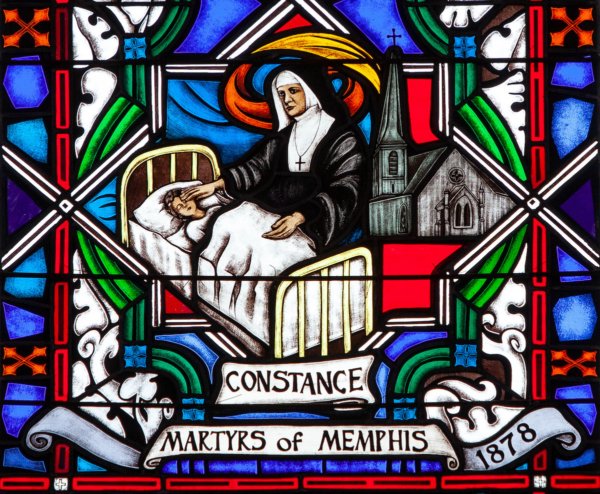
Constance and her Companions

Constance and her Companions

THE MARTYRS OF MEMPHIS, September 9, 1878

“We give you thanks and praise, O God of compassion, for the heroic witness of Constance and her companions, who, in a time of plague and pestilence, were steadfast in their care for the sick and the dying and loved not their own lives, even unto death. Inspire in us a like love and commitment to those in need, following the example of our Savior Jesus Christ; who, with you and the Holy Spirit, lives and reigns, one God, now and forever. Amen.”— “Collect for Constance and her Companions,” Lesser Feasts and Fast, p. 371.

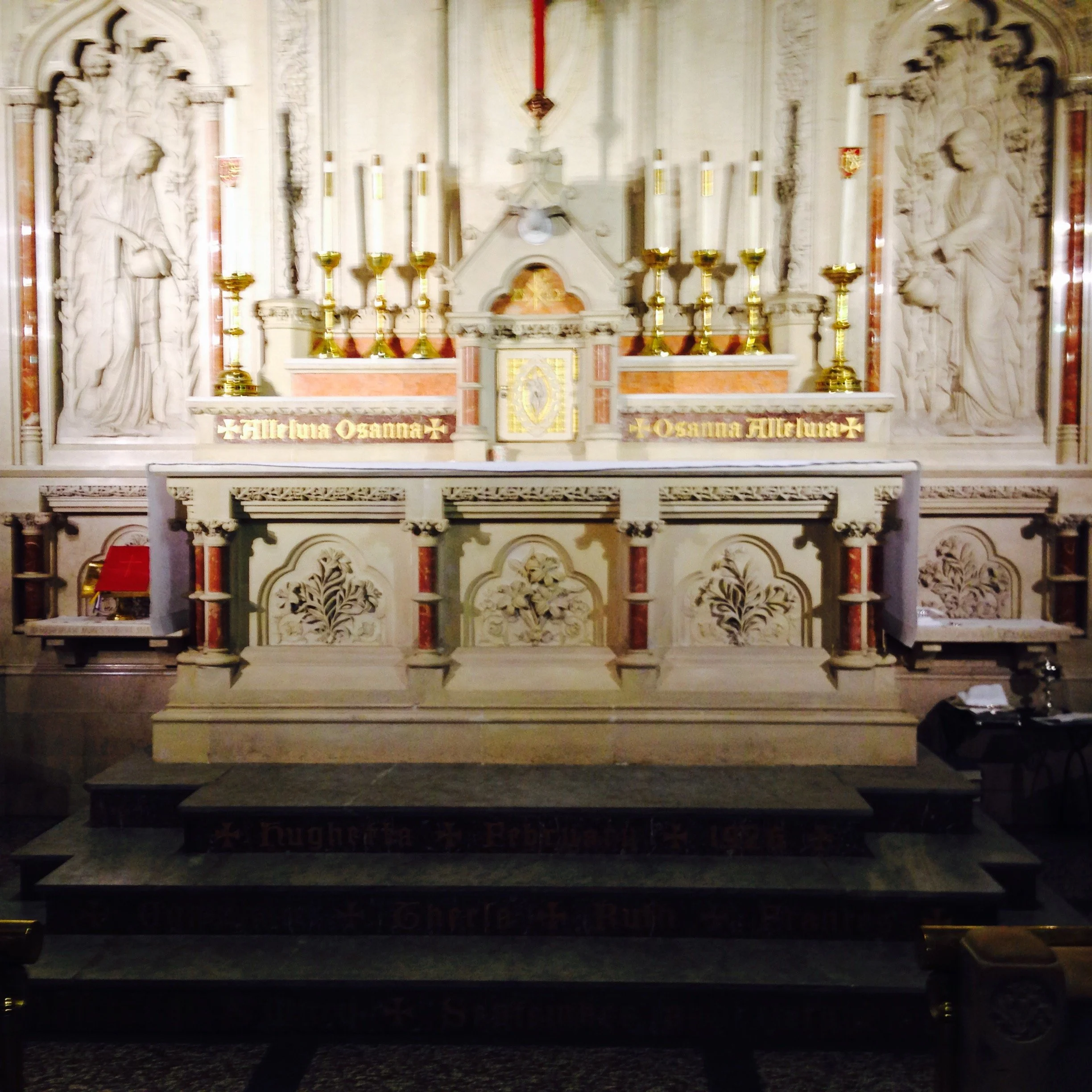
Altar St. Mary’s Cathedral Memphis

Let’s journey back in time across the Mississippi River to Memphis for a few minutes. It is the summer of 1878, forty years after the founding of St. Mary’s Church from Calvary Church, and only eight years since St. Mary’s becomes the cathedral. Its third epidemic strikes our city on the bluff of the Mississippi River in a decade with yellow fever, the mosquito-borne hemorrhagic viral infection. Thirty thousand citizens flee in terror. Death tolls average 200 a day. The city becomes so depopulated that Memphis loses its charter and will not reorganize for fourteen years. When this epidemic is over, ninety percent of Memphis’s population contracted yellow fever, and over 5,000 people died.  Everyone who can afford to do so packs up their bags, leaves the city, and flees away from the river. It was not yet known that the disease is mosquito-borne, but high and dry seems safe.

 At St. Mary’s Cathedral in Memphis is a community of Anglican nuns from New England who have been in Memphis for barely five years. They have the opportunity to leave, but stay despite the high risk of contracting the disease. They remain to nurse the sick and soothe the dying. They are dedicated to prayer, service, and evangelism. We can identify with them and, for today, become one of the sisters. Imagine that we are now part of the Sisterhood of St. Mary. We come as one of the sisters to Memphis in 1873 to found a Girls’ School next to St. Mary’s Cathedral. When the epidemic begins, our cathedral dean, George Harris, and Constance, the superior of the Sister of St. Mary, organize a team for relief work, which includes the sisters, the rectors of Grace Church, and Holy Innocents, and three physicians, two of whom are ordained Episcopal priests.  This team becomes known as the martyrs of Memphis, and we celebrate their life and ministry today. But, unfortunately, most of them, thirty-eight in all, are themselves killed by the fever. One of the first to die on September 9, 1878, is Constance, head of the Community of St. Mary.

A round stone in Elmwood Cemetery marks where four martyred sisters and two priests are buried in a joint grave. The cathedral will have a virtual pilgrimage to their gravesite this weekend, as it does every year, to honor their sacrifice for the church and for the city.

When I always return to this Cathedral of St. Mary’s, I am moved to go up to the beautiful High Altar. It is a memorial to the four Sisters who died. The cathedral’s high altar is consecrated on Pentecost 1879 and reads “Alleluia Osanna,” Constance’s last words.

  My family and I are indebted to the sisters for their sacrifice. Bishop Gates confirmed my husband and me at the cathedral in 1968. Dean Dimmick baptized our two sons, Robert and John, there.  Indeed, Dean Dimmick, later bishop of Northern Michigan, modeled the sister’s ministry by seeing his call to prayer, service, and evangelism as risk-taking when he takes the processional cross from St. Mary’s down Poplar Avenue in 1968 after the death of Martin Luther King, leading other Memphis clergy to Mayor Loeb’s office demanding rights for sanitation workers. He eventually loses nearly half of his congregation in protest of his actions.

This afternoon St. Mary’s celebrates this feast day and their return to their church after many months of renovations.

Elizabeth Boggs transcriber, Project Canterbury, The Sisters of St. Mary at Memphis: with the acts and Suffering of the Priests and Others who were There with Them During the Yellow Fever Season of 1878, New York, 1879.

Holy Women, Holy Men, Celebrating the Saints, Church Publishing.

St. Mary’s Cathedral Website. www.stmarysmemphis.org