Marrying Orthodoxy to Orthopraxis

Marrying Orthodoxy to Orthopraxis

“There’s a movement in the church to marry action and contemplation, to connect orthodoxy and orthopraxis. We’re not throwing out what we believe, but we’re also focusing on practices that work out those beliefs. In the past few decades, Christianity has primarily been about what we believe. But in Jesus, we see an invitation to join our actions with a movement rather than ideas and doctrine. People have grown tired of a Christianity that can say what it believes on paper but doesn’t have anything to show with our lives.”—Adapted from Shane Claiborne in When Action Meets Contemplation (Center for Action and Contemplation, 2010), disc 1.
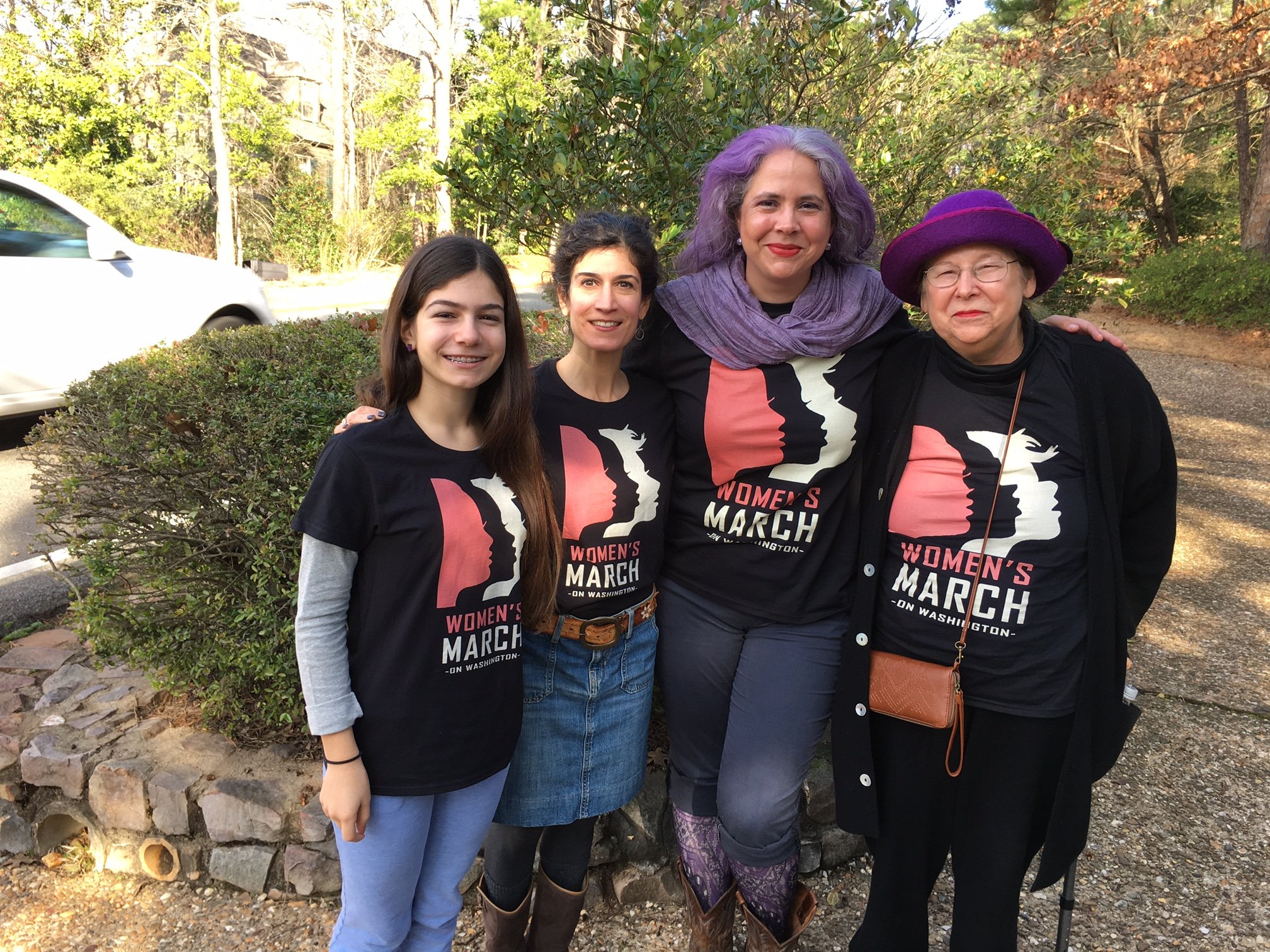
Orthopraxis, or practicing our faith, differs from orthodoxy, adherence to a particular belief. It is a paradox. We need both. We need to frame and reframe what we believe, but if we do not put that belief into practice, we are like a “noisy gong.” I am one of those people Shane Claiborne talks about who has numerous t-shirts spelling out social justice issues—but until I write letters, or make phone calls, or visit those in prisons, or those who are sick or in trouble, or those who are trying to immigrate to our country because they are in danger, I am not putting that belief into practice.

I have learned this most pointedly from younger people. The women in my family marched in the women’s march the day after a previous presidential inauguration, concerned about the human rights of others. We were talking with our feet. The crowds and speakers at this protest inspired us to do more.

That day has become like an icon for me about reaching out from the words of my comfortable t-shirt to become more active, visiting and making calls, and protecting those in need. I know in my heart that this is the way the Spirit works. We are called to study God and the Spirit, but we are also compelled to find the God within ourselves that will lead us to discover and connect to the God in others.

I share with spiritual friends that when I attempt to find God in others, God is most apparent in those in need. God most readily shines in those who are sick, dying, or seeking recovery, or at our food pantry, or our dinners for homeless veterans, or those today peacefully protesting for racial and social injustice or assisting those in our country who have fled Afghanistan. Practicing the ministry of orthopraxy teaches us the most about orthodoxy, about God.

Joanna. https://www.joannaseibert.com/


Thoreau: Superficial Life

Thoreau: Superficial Life

“When our life ceases to be inward and private, conversation degenerates into mere gossip. Sometimes, we meet a man who can only tell us news he has read in a newspaper or been told by his neighbor. As our inward life fails, we may constantly and desperately go to the post office. You may depend on it, that the poor fellow who walks away with the greatest number of letters proud of his extensive correspondence has not heard from himself this long while.”—Henry David Thoreau.

My spiritual friend, Bridget, sent this to me. Most of us do not go to the post office, and letter writing is becoming a lost art. But we are now judged by how many Facebook friends we have! I have a Facebook page to keep informed about family and friends, and one as an author. But a Facebook message is not the same as a phone call, a visit, or a conversation over a meal. When we are face to face, we can share what is truly going on with us. Then, we may bare our souls and look for the Christ in our friend, hoping that the Christ within us will guide us. Meeting with spiritual friends is not optional for the inner life, the life of the soul. It is mandatory.

Even better is meeting over a meal. Replenishing our bodies mysteriously opens up our minds to nourish the soul. Here is where we see Christ in each other and maybe even get a brief glimpse of the Christ in ourselves. 

I have previously written about a pediatric radiology medical group I was a part of for over thirty years. We each had our own agenda and our areas of expertise. We were having difficulty making decisions and seeing the importance of each other’s plans. We decided to meet for lunch once a week and simply talk about what was going on in our lives. It took a while, but miracles happened. We began to look at each other’s ideas in a better light. The mysterious result of meeting and talking to each other and having a regularly shared meal was that the food and conversation nourished us into forming a genuine community.

Being unable to meet with friends, especially over a meal, during this pandemic took its toll on our spiritual life as we knew it in community. Zoom meetings, Facetime, Google Meet, Live streaming, and so many other ways to see and talk with each other do seem to help. We learned and accepted new technology. We also learned to stay connected more closely to a small core of people for strength and support.

People are also connecting more to nature, walking, gardening, and spending more time outside. I connect daily to the downy and red-bellied woodpeckers who come to the feeder near my window. I watch them feed each other while the trees outside, where they vertically climb and rapidly peck, remain steady as their green leaves daily photosynthesize my soul.

with Bridget

Joanna   https://www.joannaseibert.com/


Winning and Losing

Winning and losing

“We perceive that only through utter defeat are we able to take our first steps toward liberation and strength. Our admissions of personal powerlessness finally turn out to be firm bedrock upon which happy and purposeful lives may be built.”—TWELVE STEPS AND TWELVE TRADITIONS.

My grandchildren have reintroduced us to the world of sports. Sporting events were the social life in the small town where I grew up, where everyone came out to support our high school of approximately 200 students. Now, we are glued to the television for their college games, hoping to find children and grandchildren in the crowd. Of course, there has been no escaping Razorback football as well. Otherwise, we would not know about the games to understand or share in the conversation with many friends.

We cannot escape it. Our schooling, our sports events, and our professional work are all about winning and losing. I root for the Razorbacks and Georgia and Tulane. Sometimes, it is so intense that my husband and I must change to another channel and look for the replays. When we win, we are excited, even if we miss it in person. But watching in person shows us something we may miss when we are not there in real time. We see the agony of defeat. The next day, I think about kickers who missed that winning field goal or receivers who missed that last football thrown into their hands over the goal line.

Richard Rohr has pointed out another way of life, which he calls the prophetic path. We take two steps forward and one step back. In the suffering of our step back, we gain the wisdom and energy to go on to the next steps forward. The whole process continues, forward and back. 12-step literature might call it “a moment of clarity.” Christians might call the wisdom gained in the step backward of suffering that leads to resurrection. It happens continually in our lives.

Joanna    https://www.joannaseibert.com/