Living with Limitations: Crafton

Crafton: Living with Limitations

“Just because you’re disabled doesn’t mean you’re not anything else. Have you lost an ability you used to have? Something you loved? Have you had to say goodbye to it? Maybe there’s another way or another place in which you can still do it, or something like it.”—Barbara Crafton, eMo from The Geranium Farm (geraniumfarm.org), August 16, 2018.

Metropolitan Museum New York City

The Center for Disease Control (CDC) reports on its website that 61 million adults, or about one-fourth of adults in this country, have a disability that majorly impacts their lives. The most common disability involves mobility, which affects one in seven adults. This limitation is more common in women, especially those with lower income in the South. Cognitive impairment is the most common disability in younger adults.

Barbara Crafton, who once visited St. Mark’s Episcopal Church, Little Rock, contributed to an almost daily email eMo from the “Geranium Farm,” including a picture of artwork related to her story. For example, one week, she featured a Van Gogh painting, “Summer Wheat Field with Cypresses,” painted in the artist’s last year, a view from a window in his room at a mental facility. Her last eMo was now several years ago. We honor her today for so many years that the many faithful daily waited for her wisdom.

My experience is that each of us has what the Apostle Paul calls a “thorn” in our flesh. We are mistaken if we imagine another person doesn’t suffer from this “thorn” in some form.

We have a choice of how to respond to a disability. But, more and more, I believe we can ask in our prayers how that thorn brings fresh light into our lives. Those in recovery will say their addiction brought them to an alternative life they never dreamed possible. I encounter people with cancer changing and improving the lives of others with the disease. I recognize parents with disabled children who are experts in patience, kindness, and love.

There is a new pathway. It may not mean overcoming the disability, but rather waking up to a divine message or being open to a new direction in becoming the person God created us to be.

barbara Crafton
God's Presence

God's Presence

"When, like Elijah, you're surprised by sheer silence, listen to God speaking deep inside. When, like Peter, you're scared by the wind on the sea, look to Jesus right there with you. Finally, when bedtime nears, stop and review how the Spirit caught you by the hand and caught you off guard with love. Hold these close to your heart and go to sleep."—Br. Luke Ditewig, SSJE, from "Brother, Give Us a Word," a daily email sent to friends and followers of the Society of Saint John the Evangelist (SSJE.org).

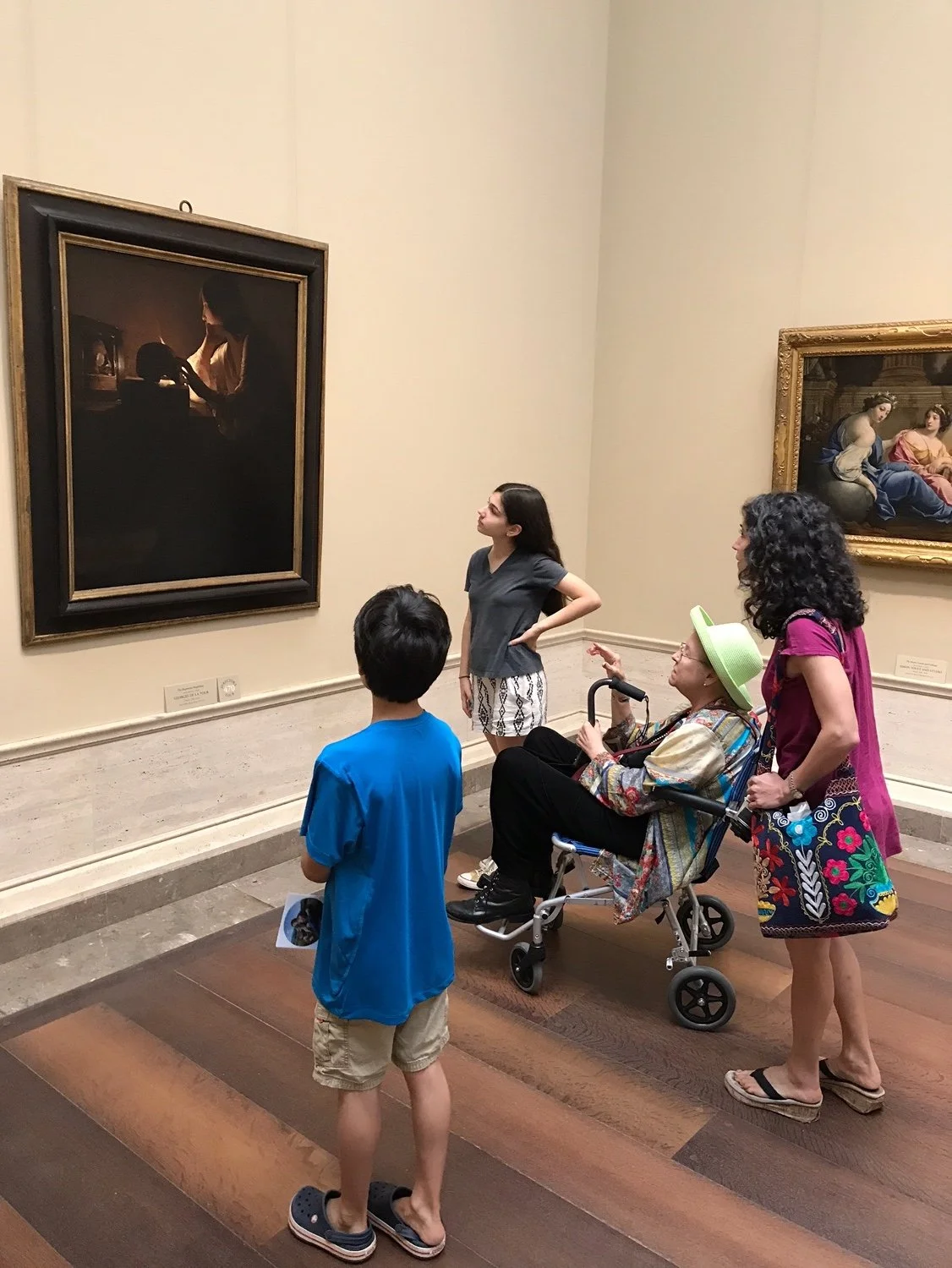
At National Gallery of Art

God promises God is always with us, beside us. Always. All the time. How do we feel that presence? My experience is that when I connect to the God within me, the Christ within me, and when I can see the Christ in my neighbor, I feel God's presence. 

We feel God's presence when we feel the fruit of the Spirit, love, joy, peace, patience, generosity, gentleness, faithfulness, self-control, and kindness (Galatians 5:22-23). We feel God's presence when we suddenly realize we can do something we did not think we could do.

During troublesome times, God shows up in the presence of someone who loves us just as we are. This epiphany can be in a phone call, an email, a snail mail, or even a text.

It isn't easy to spend any time outdoors in nature, or even to gaze outdoors to observe the birds feeding near our windows without feeling the presence of something greater than ourselves.

Gratitude helps us put on new glasses so we can recognize God's presence in our lives.

Forgiving ourselves and others keeps us from putting up the barriers that prevent us from seeing God in our lives.

Beauty in art, music, the sacred word, poetry, fiction, and nonfiction writings can open up our eyes, ears, and minds to see God sitting right beside us—on a bench at the National Gallery or in the center orchestra section, or as we curl up in our favorite chair with a favorite book.

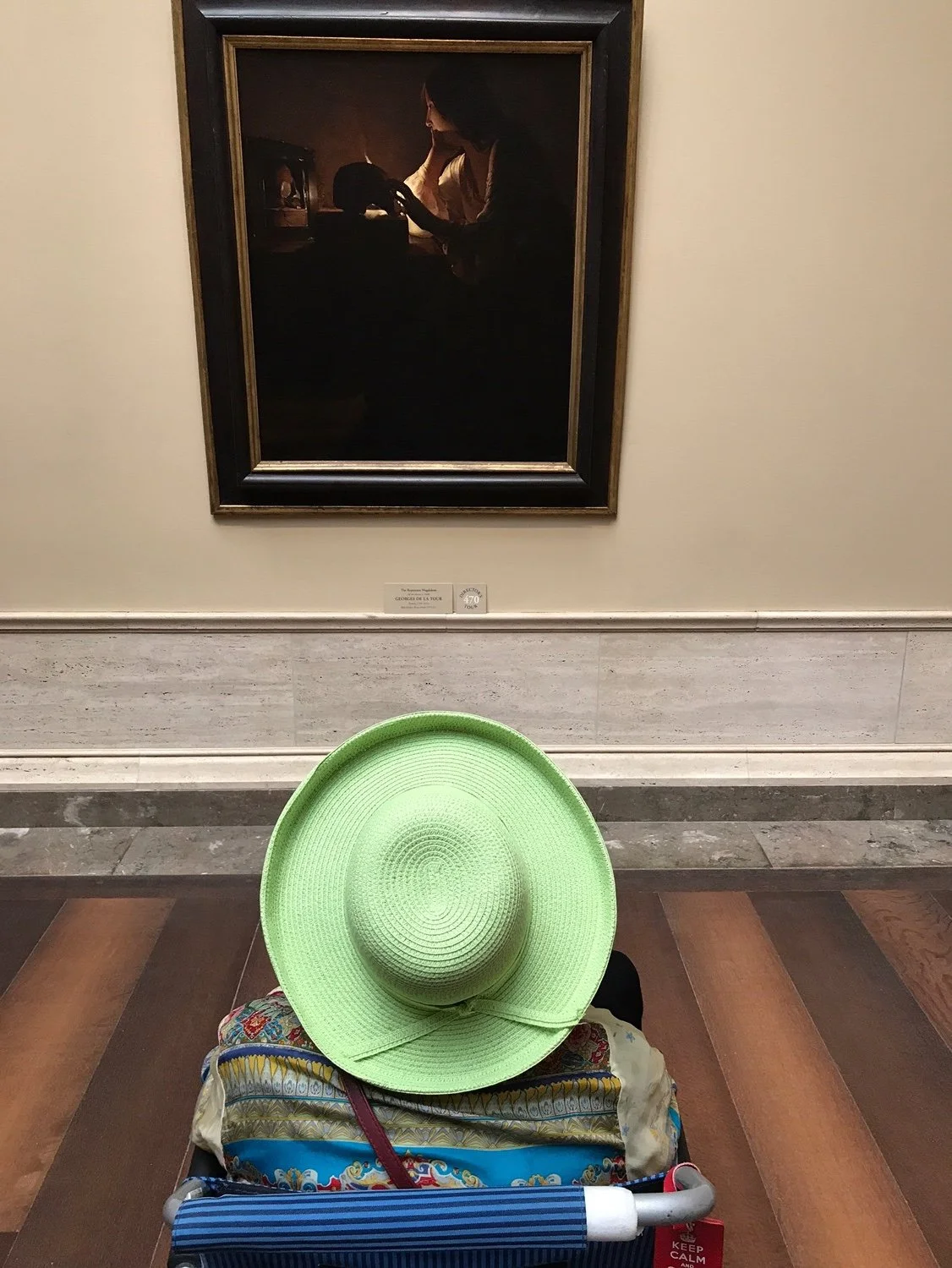
Repentant Magdalen 1635 Georges de la Tour National Gallery

Joanna. https://www.joannaseibert.com/


Sabbath Keeping

Sabbath

Sabbath-keeping is a resistance movement, and it’s very counter-cultural. Sabbath-keeping is a resistance to the clutter, the noise, the advertising, the busyness, and the ‘virtual living’ that sucks the life out of our lives. Sabbath-keeping is a resistance to constant production, work, and accumulation. It may be the most difficult of the Ten Commandments to keep, and it may also be the most important.”—Br. Curtis Almquist, SSJE, from “Brother, Give Us a Word,” a daily email sent to friends and followers of the Society of Saint John the Evangelist (SSJE.org).

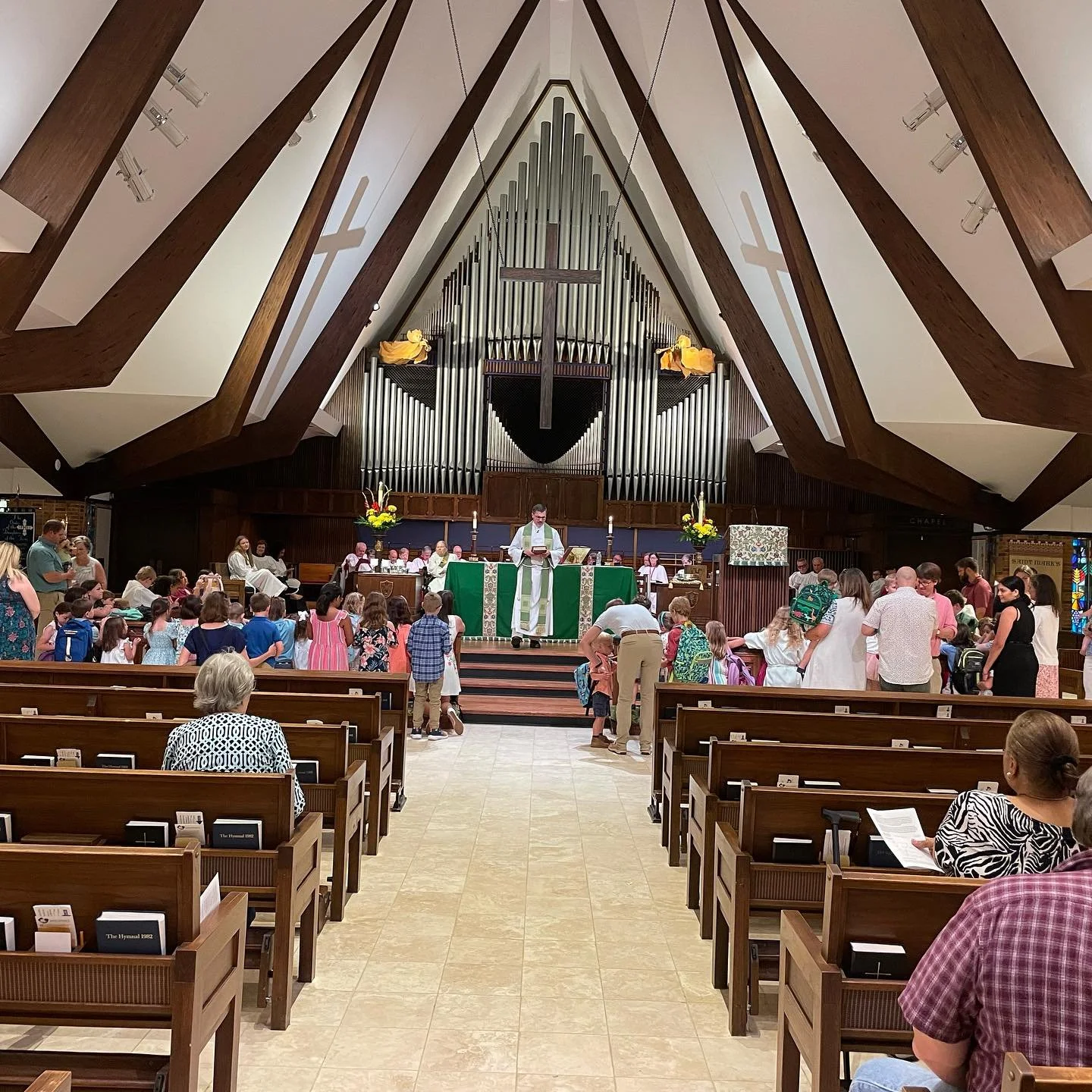
backpack blessing

Keeping the Sabbath in our culture is more than problematic. I have one friend who rests entirely on the Sabbath. She does nothing work-related, trying to spend as much time as possible outdoors. I am reminded of my grandparents, who followed this rule. My grandmother would not even do a little sewing on Sunday. I often spent Sundays with them. We ate, rested, walked around my grandfather’s farm, and attended church. We watched the Ed Sullivan Show at night on television, after making Seven-Up floats. I would then spend the night in their guest double bed, which seemed unbelievably huge. I remember most of all the feeling of love and peace these days. I wonder how much was related to Sabbath-keeping.

They mentored me on how to keep the Sabbath, but I have forgotten. I am an important person. I will never make those deadlines unless I do a little work on Sunday. A little turns into several hours’ worth. Once I start, it is hard to stop. I will rest later.

I want to keep the Sabbath. It is not too late to start. Join me. Let us encourage one another. Maybe we need a Sabbath recovery group to share stories about what happens when we keep the Sabbath.

When I meet with people to offer spiritual direction, I ask them how they keep the Sabbath. I hope to learn from them and remind them of this spiritual gift, the third commandment. It may be the only spiritual gift that is a commandment.

The Ten Commandments honor God, but were also given for our health and safety. Sometimes, viewing them as rules and guides to a healthy life is helpful—more important than diet and exercise.

Sabbath-keeping was even more problematic during this pandemic. Our usual practice to honor God was through a live-streamed service from an empty church, where we no longer could see or feel our community that once surrounded and supported each other. We only saw the faces of our faith community at formation meetings through a computer or phone on Zoom. Our clergy are masked and stay distanced. Our Rally Day and animal blessings were drive-through.

My experience is that our Sabbath-keeping by necessity became more individual rather than community-based. As a result, we spent more time writing, reading, praying, meditating, listening, walking, or talking one-on-one to others. Suppose we can envisage this as a revival of old spiritual practices or starting new practices to spend time with our Creator. In that case, it can become a new adventure that may carry over into life if it ever becomes “normal” again.  

However, we must never forget what it was like to worship in person in community and kneel side by side as we receive the Eucharist, for this is where we will more often discern and taste the face of God.

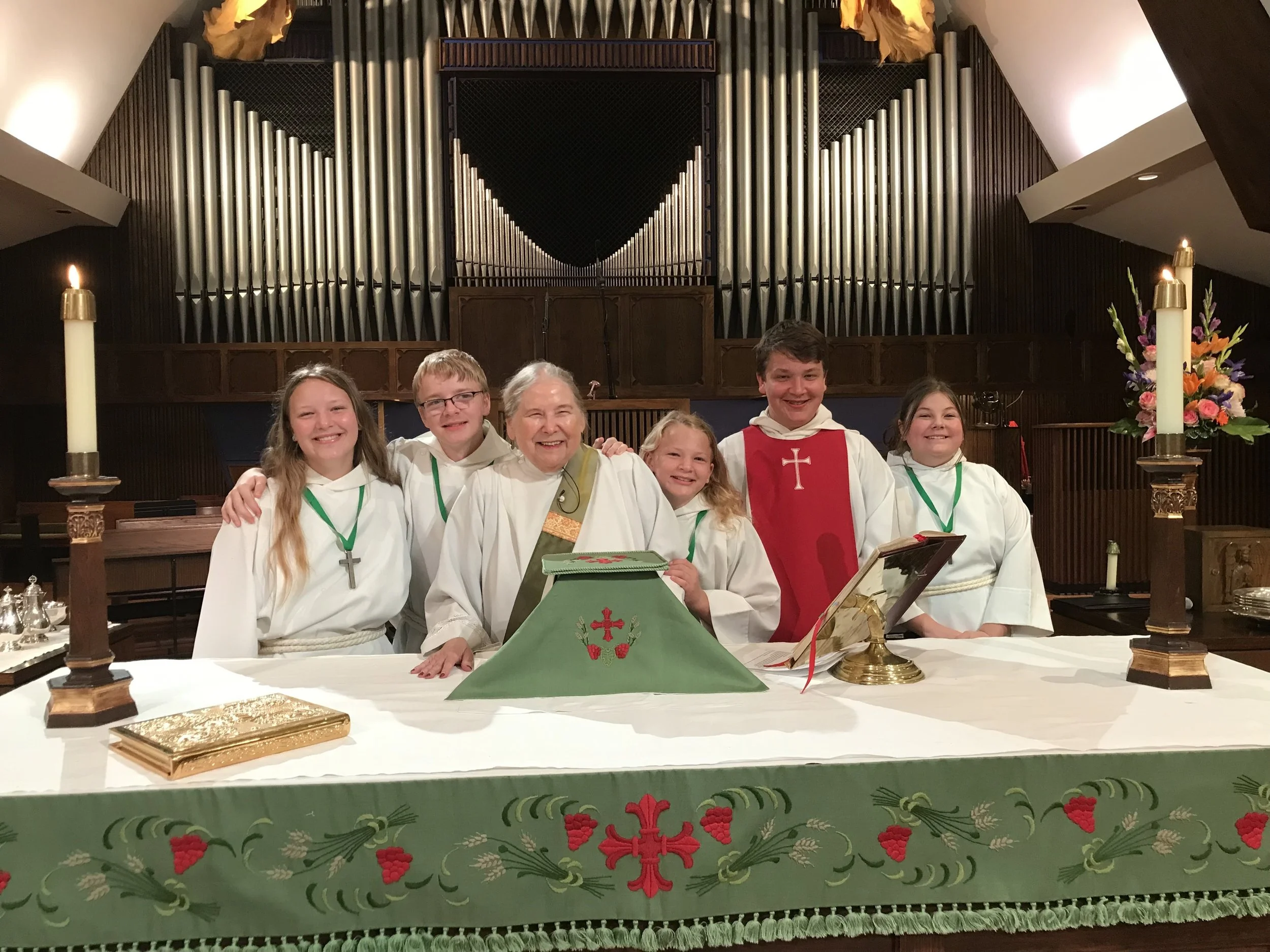
acolytes

Joanna. https://www.joannaseibert.com/