Saint Lucy Day December 13

St. Lucy, December 13

“Santa Lucia, thy light is glowing

Through darkest winter night, comfort bestowing.

Dreams float on dreams tonight,

Comes then the morning light,

Santa Lucia, Santa Lucia.”—Swedish Children’s Folk Song.
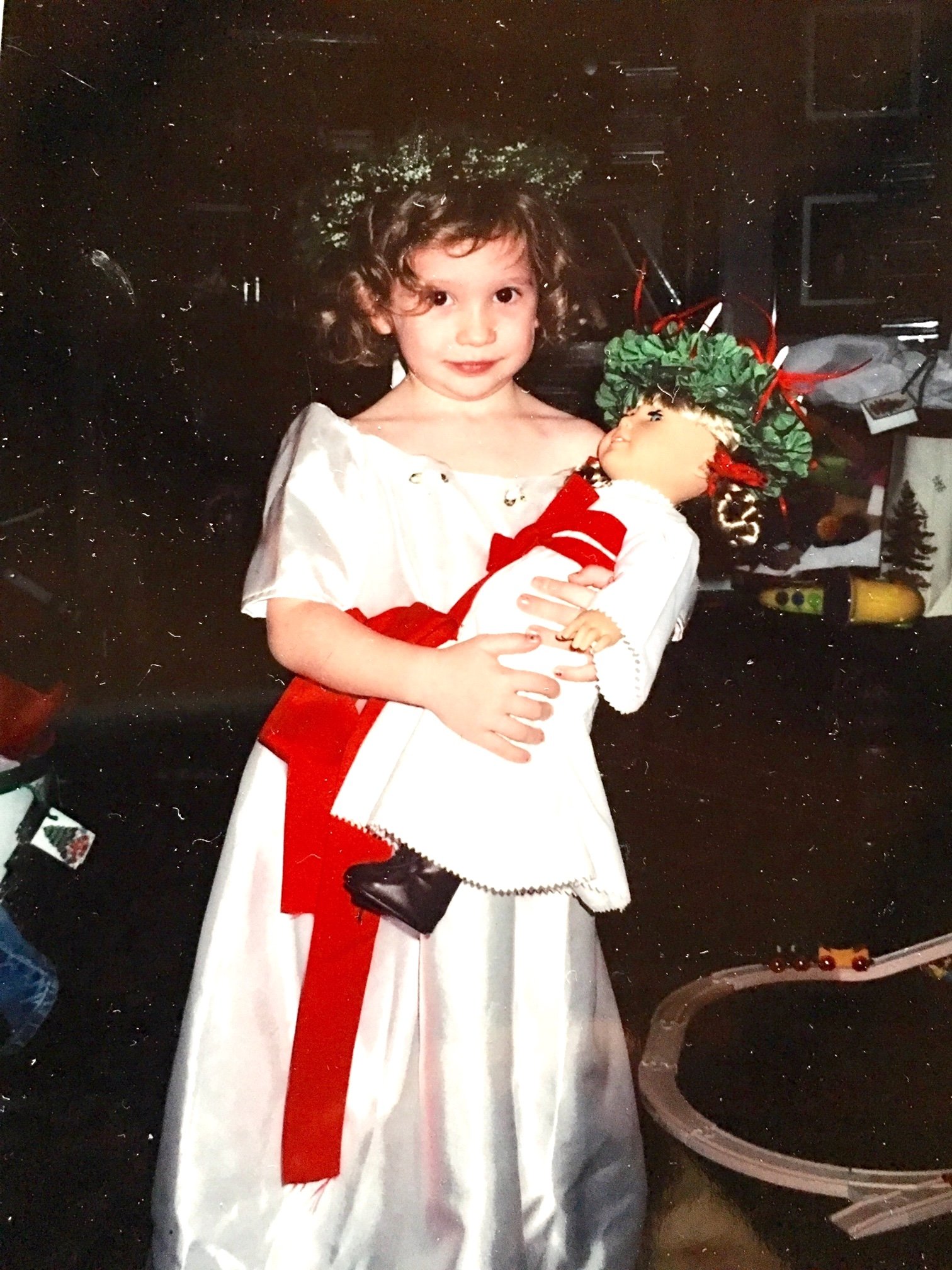
Today, December 13th, in the darkest hours of the morning (2 a.m. to 4 a.m.), in Sweden and Norway, the eldest daughter of a family wearing a white gown, a red sash, and a crown of lingonberry twigs and seven burning candles on her head emerged out of the darkness carrying a tray of rich saffron buns and steaming coffee to wake up her family.

Every village also has its own Lucy, who goes from one farm to the next carrying a torch to light her way, bringing cookies and buns at each house and returning home by daybreak. The Nobel Peace Prize winner for literature often has the honor of lighting the candles on the head of Lucy for the city of Stockholm. Throughout Sweden, they celebrate the feast day of Lucy as a festival of lights with bonfires, incense, and candlelight parades. It is a mystery how honoring St. Lucy became so spectacular in Scandinavia when Lucy was a native of Sicily. The tradition of honoring Lucy may have originated in Sweden with Vikings. They traveled south on peaceful trading expeditions to Italy and brought back the stories of the early Christian martyr Lucia.

December thirteenth is one of the shortest days of the year. In popular piety, Lucy is perhaps most revered, because her feast day was, for many centuries, the shortest day of the year. (The calendar reform by Pope Gregory VIII (1582) would shift the shortest day to December 21/22, depending upon the year.) On Lucy’s day, the light gradually returned, and the days lengthened. This was particularly powerful in northern Europe, where the days of winter were quite short.

Therefore, the Scandinavians honor a young Sicilian girl, Lucy, whose name means “light” during the darkest part of their year, as light is about to return. It is all a mystery, but the tradition is beautiful.

I especially remember this day because two friends who carried the light of Christ to so many people died on this day seven years apart. So, in my prayers on St. Lucy's Day, I remembered special friends who have brought light out of darkness to so many but treasure, especially those in my own life who showed me the light in times of darkness.

My Advent prayer on St. Lucy's Day is to remember those who brought the light of Christ, the light of God, and the light of the Spirit to us.

St. Lucy Day is an Advent tradition that the Scandinavians have given us to remember the light that shines in our darkness.

We can also take this Advent practice to our homes. In the past, our family often celebrated St. Lucy's Day during the second week of Advent, with our oldest granddaughter serving buns at an Advent family service. She dresses in a white dress with a red sash and carries a candle (or her St. Lucy doll), as we all say, the traditional song Lucy sings on her rounds.

Elizabeth's 116th birthday

Elizabeth’s 116th birthday

“But Ruth said, ‘Do not press me to leave you or to turn back from following you! Where you go, I will go; your people shall be my people, and your God my God.’”—Ruth 1:16.

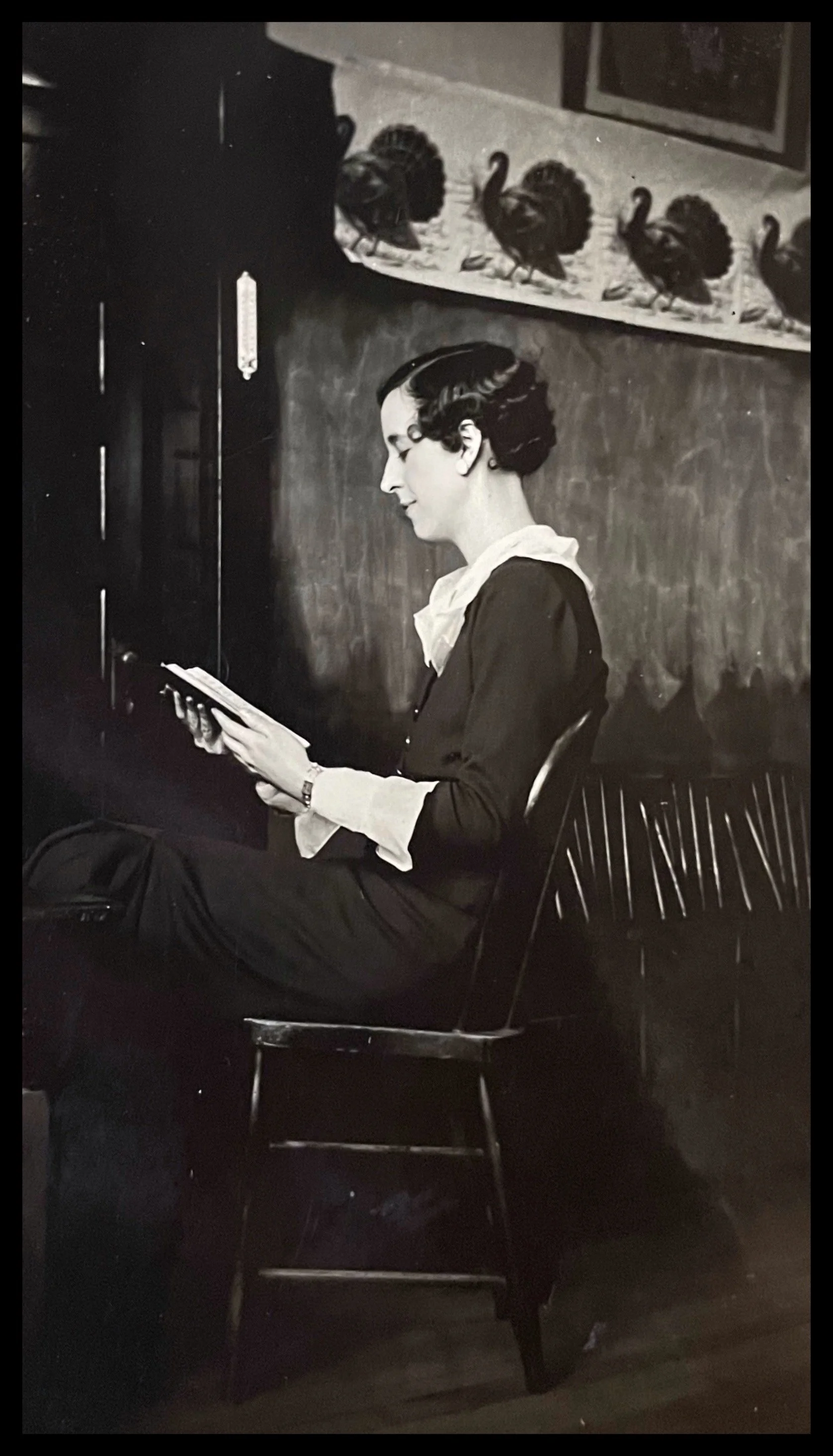
 During Advent, we hear the story of Elizabeth and her family. Our family also has a unique Elizabeth. In August, we celebrated my mother-in-law’s 116th birthday. She was born in 1907 and died when she was 81. Our church tradition remembers people on the day of their death. However, our family still remembers those we love on their birthday. I think this is because we remember how we celebrated their birthdays, or maybe for some unknown reason, their love and presence seem closer on their birthday.

My daughter and our youngest granddaughter are named after her. Elizabeth taught school and second grade for over forty years. Her class was called Happy Town. I keep wondering if any of her thousands of students remember her. They do not know that August 30th is her birthday.

 I tried to Google her to find out the exact day she died. But, unfortunately, I do not find her. There is no Google picture of her either. But my life was changed by knowing her, her acceptance of me from that first Christmas night, and her unconditional love for her grandchildren. So many saints like Elizabeth changed many people’s lives, but have become unknown.

When Elizabeth died, I remember asking her in my prayers to watch over our children like a guardian angel, and I promised I would care for her husband she so loved, Bob, who was left behind. But, unfortunately, Elizabeth did a much better job watching over our children than I cared for her Bob.

Whenever our children were gone from home, I would pray for Elizabeth to be with them. I truly know she was reminding them in some way that they were loved, keeping them out of harm’s way. I feel her presence today, telling me that all shall be well, all shall be well. I pray that others may remember and feel the Elizabeth Seibert who taught them about unconditional love in Happy Town.

Advent as Countercultural

Advent as Countercultural

“To pray for your enemies, to worry about the poor when you have worries enough of your own, to start becoming yourself fully by giving of yourself prodigally to whoever needs you, to love your neighbors when an intelligent 4th grader could tell you that the way to get ahead in the world is to beat your neighbors to the draw every chance you get—that was what this God asked, Paul wrote.”—Frederick Buechner, Quote of the Day, first published in The Clown in the Belfry.

Joanna Campbell

Buechner reminds us how countercultural the Christian faith was from the get-go as well as today. There is no better time to experience this than in the season of Advent. Advent is the four weeks before Christmas at the beginning of the church year. Our culture during December is hurrying, overloaded, frantic, and caught up in commercial craziness. Meanwhile, the season of Advent calls us to a quiet preparedness, watching, waiting, and pausing. One year, the staff at our church even made “pause, breathe, wait, watching for the Christ child” our theme for the season. “Pause, Breathe, Wait, Watching for the Christ Child.”

We may have had less activity in Advent during this pandemic, which is now becoming an endemic season. Still, the overriding anxiety and isolation of this long season of illness and death call us away from Advent quietness even more than our own busyness does.

 Advent is still my favorite season. This call to quietness is even more needed in our present time. We put on pause the cacophony of anxiety inside and outside of our heads, sit in a favorite chair, read or write, look or walk outside, light candles, feel something moving inside of our body as we move from our head to our body, and become grounded to the present moment. The air we breathe in and out is full of anticipation of new birth in us and the world. The Christ Child already within us awakens, opens its eyes, and smiles as it sees the light of Christ across the room in someone we want to know better.