Inside Voice

Inside voice

Quiet

“For whatever reason, God never seems to shout when trying to get my attention. God always uses his ‘inside voice,’ as my mother used to call it. Shouting, calling, crying out, and throwing people off their horses is great stuff, but that’s not how I hear God. I hear God in a whisper; in a look; in a turn of the head; in a subtle expression on a face.”—Br. James Koester, Brother, Give Us a Word, Society of Saint John the Evangelist, Daily Email, SSJE.org, friends@ssje.org
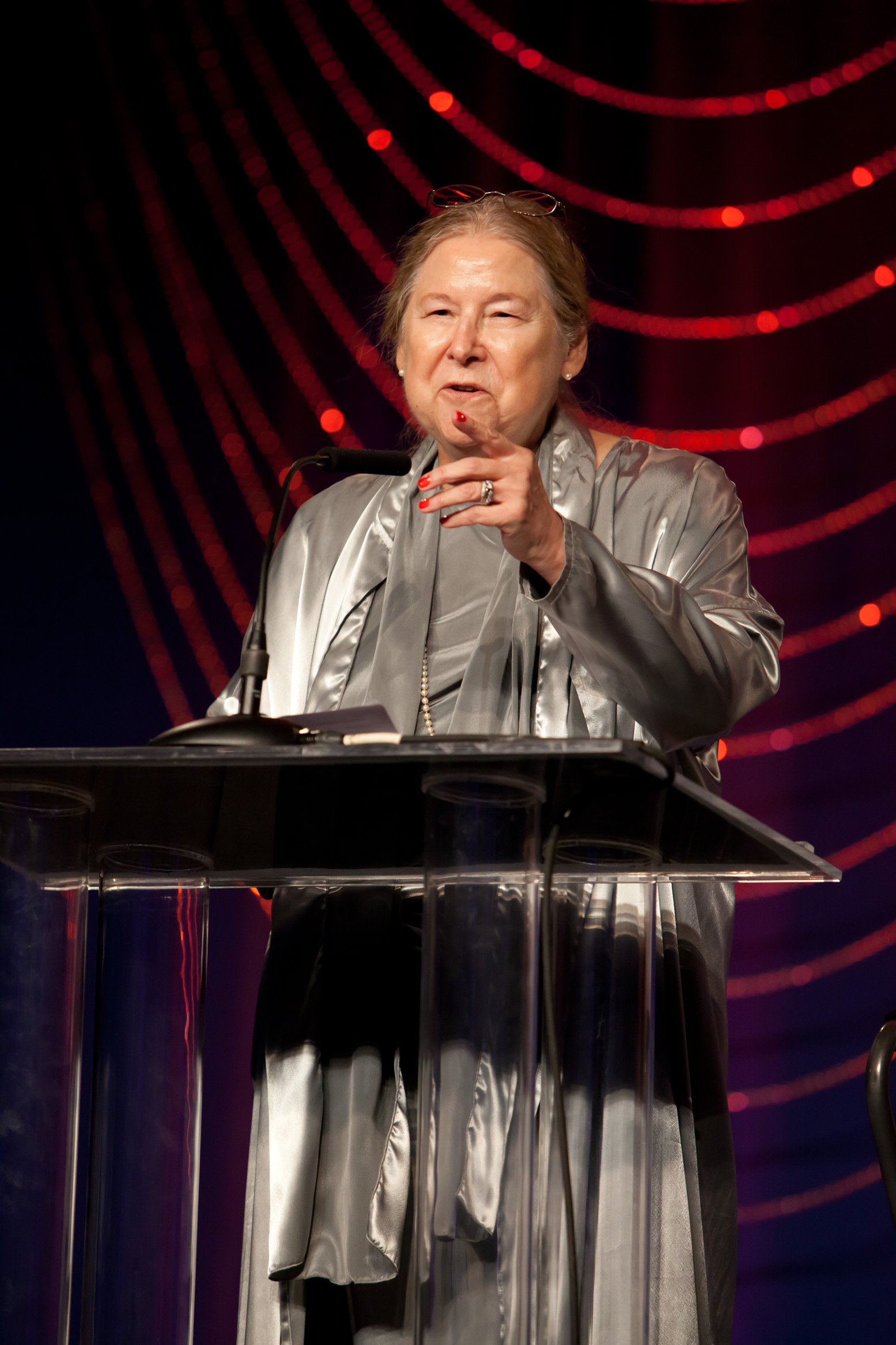
The irony is that as we read from SSJE about God speaking to us in God’s inside voice, I am practicing preaching with all my might with my outside voice. My voice is soft. It is a legacy from my father, who was soft-spoken. It is a blessing and a curse. It is a blessing, as I talk to people and can more easily relate to them as a softer listener. But when I stand in the pulpit to preach the word of God or speak out to a group, I have always had difficulty projecting that message, even with suitable amplification. My husband always sits in the back of any congregation or meeting, giving me signs to increase my volume. I spent years working with a fantastic speech pathologist, but I still have to push my voice. If someone has a hearing impairment, they may especially have difficulty hearing me.

My former rector took me on as a project to increase my volume. He let me read prayers outside at a burial office as an “audition” to see if I had an outside voice. After that, I think he gave up on me! Recently, I preached at a church without amplification. I felt as if I were shouting the entire time.

So, what is the point of all this regarding our relationship with God? First, I have become acutely aware of what an inside voice sounds like and the volume of my outside voice. My connection to God comes through an inside voice, quietly slipping in. But, we often hear these soft messages when we least suspect God, usually in interruptions in our daily routine.

God seems to speak most clearly in Advent in an inside voice, while the world shouts more than ever in an outside voice mode.

I wonder, however, if God also speaks to us at times with an outside voice, and we may never hear it because we expect only the quiet inside connection.

Does God’s outside voice also speak at unexpected times by the least expected people we rarely listen to or don’t even want to listen to?

For the present, my best experience with God’s outside voice is in my dreams. Eventually, my dreams become louder, more memorable, and messier if I ignore them.

Joanna https://www.joannaseibert.com/


Hearing God

Hearing God

“As we live in this Advent season, awaiting the Lord’s coming, we might examine our hearts to see if they are truly open. Are we open to God speaking to us in the language of everyday events? Are we willing to hear God’s warnings and accept God’s guidance, or are we happier to justify our selfish behaviors and chart our own way in life? May the Lord find in us hearts open and ready to receive him, whenever and however he chooses to come to us.”—Br. David Vryhof, “Brother, Give us a Word,” Society of Saint John the Evangelist, December 10th, 2018, a daily email sent to friends and followers of the Society of Saint John the Evangelist, a religious order for men in the Episcopal/Anglican Church. www.ssje.org.

Discernment is our daily question. Are we following our will or God’s will? Are we listening to God, or are we listening to ourselves and what promotes ourselves and our own self-interest? My experience is it is not easy to know. I have learned to listen cautiously to those who tell us they know exactly what we are to do. I usually do not know if I am doing God’s will until much later.

 So, what do we do? First, we try to put ourselves in position to hear God’s will. This means being silent, practicing spiritual exercises, being in thin places where the spiritual and physical world seem to have only a thin membrane between them, being in community with other spiritual seekers who share experiences, studying scripture and stories of those before us in our own religious traditions, worshiping in community. When I feel or know the fruit of the spirit after discernment, this is a sign that the Christ is guiding us within the Holy Spirit, the God of our understanding. (Galatians 5:22: love, joy, peace, patience, kindness, generosity, faithfulness, gentleness, and self-control.)

This is not a walk we do alone. Instead, we are surrounded by a cloud of witnesses before us who are now with us to guide us.

In 1994, sixty-six Arkansas Episcopal women wrote about this as they contributed meditations on the common Sunday lectionary scripture readings for years A, B, and C. It was a project of the Board of the Episcopal Church Women of the Episcopal Diocese of Arkansas. This initial project was before the day of email, so everything was done by phone calls and mail. Our theme came out of John 4:1-42, which is about a Samaritan woman encountering Jesus at a well. She was the first person in John’s gospel where Jesus revealed he was the Christ. The book’s title, Surrounded by a Cloud of Witnesses, came from the proper preface for All Saints Day used at the Eucharist of a funeral of a dear friend, Martha Lyford, who died much too early in 1982.

The present ECW president, Kaki Roberts, was instrumental in making this happen at the time, as well as board member Karen McClard. Andrea McMillin produced unique artwork and helped with publishing. I was the editor and took a six-month sabbatical from my medical practice to make this happen. At every step, we were “surrounded by a cloud of witnesses,” from being at Martha’s funeral to the writing, editing, publishing, and multiple joint book signings and readings by the authors. We had two printings of the book and raised over $10,000, which became seed money for the ECW foundation in Arkansas. Unfortunately, the book is out of print, so it is appropriate that now there is another edition, spearheaded by the Rev. Marti Darby, who edited Surrounded by a Cloud of Witnesses II.

Joanna. https://www.joannaseibert.com/


Lessons From the Last Leaf

Lessons From The Last Leaf

“Everyone whom I allow to touch me in my weakness and help me to be faithful to my journey to God’s home will come to realize that he or she has a gift to offer that may have remained hidden for a very long time. To receive help, support, guidance, affection, and care may well be a greater call than that of giving all these things because in receiving I reveal the gift to the givers, and a new life together can begin.”—Henri Nouwen in You are the Beloved (Convergent Books 2017).

 A single autumn leaf has been clinging to the wood frame of my office window for weeks. It is the first and last thing I look for as my day begins and ends. It reminds me of one of my favorite O. Henry short stories, “The Last Leaf.” A young artist in New York’s Greenwich Village at the turn of the last century loses her will to live and succumbs to pneumonia. She watches from her window as the cold winter wind blows leaves from a tree branch growing along the side of a nearby adjacent building. She decides when the last leaf falls, she will die. She eventually watches the last leaf miraculously remain on the tree until she regains her will to live. Later, she discovers that an older artist in her building, whose own realistic paintings rarely sell, heard her story. He spends a night in the cold, while she sleeps, painting a leaf on the wall of the building. Shortly after he paints “his masterpiece” to save her life, he also dies from the pneumonia epidemic.

Of course, the story is one of sacrifice of love for another human, reminiscent of the story of the good Samaritan. It is also a story of hope. How do we offer people that they will not remain in despair? There is a promise of Easter after every Good Friday experience. But that promise of light in the darkness can be difficult without the help of others. The darkness forgets what light is like. We see and read about this hope from others. The story of old Simeon and Anna at the temple in Jerusalem at Jesus’ presentation reminds us of the promise that the Christ Child will always come to us.  

I also see this story about the use of our gifts and talents. We may think our abilities are minor compared to others, maybe even worthless. But there will be a time when what we have to offer is more significant than what others can offer. We will be called to use our talent at the right time, when no one else will be there to help.

Advent is a time to watch, wait, and pray that we will be open to offering what we consider as our “insignificant masterwork” that will make a difference in the life of another.

Joanna. joannaseibert.com