Nouwen: Jesus Prayer
“Lord God, Lamb of God, that takest away the sins of the world, have mercy on me.”

Previously, we read about the Jesus Prayer from Bishop Hibbs. Today we learn more about it from Henri Nouwen. This prayer is a modification of the Agnus Dei recited or sung in the Eucharist or Communion service at the Fraction after the celebrant breaks the consecrated bread.
The prayer is also a modification of the ancient Jesus Prayer: “Lord Jesus Christ, Son of God, have mercy on me.” I have used this modification for years, awakening during the day—especially during difficult times and as I fall asleep. When we pray the Jesus Prayer or a modification continuously, it is considered a Prayer of the Heart: opening the heart with unceasing prayer, as Paul called for in Romans 12:12 and 1 Thessalonians 5:17.
I have been to only one General Convention of the Episcopal Church. What I remember most is attending a special lecture by Henri Nouwen. I continually give thanks for taking time out of a busy day to go. I do not remember a word Nouwen said, but I remember his presence. It was loving, accepting, not centered on himself, at peace with himself, the closest thing I have experienced to a holy presence. I can still feel that holiness in his writings.
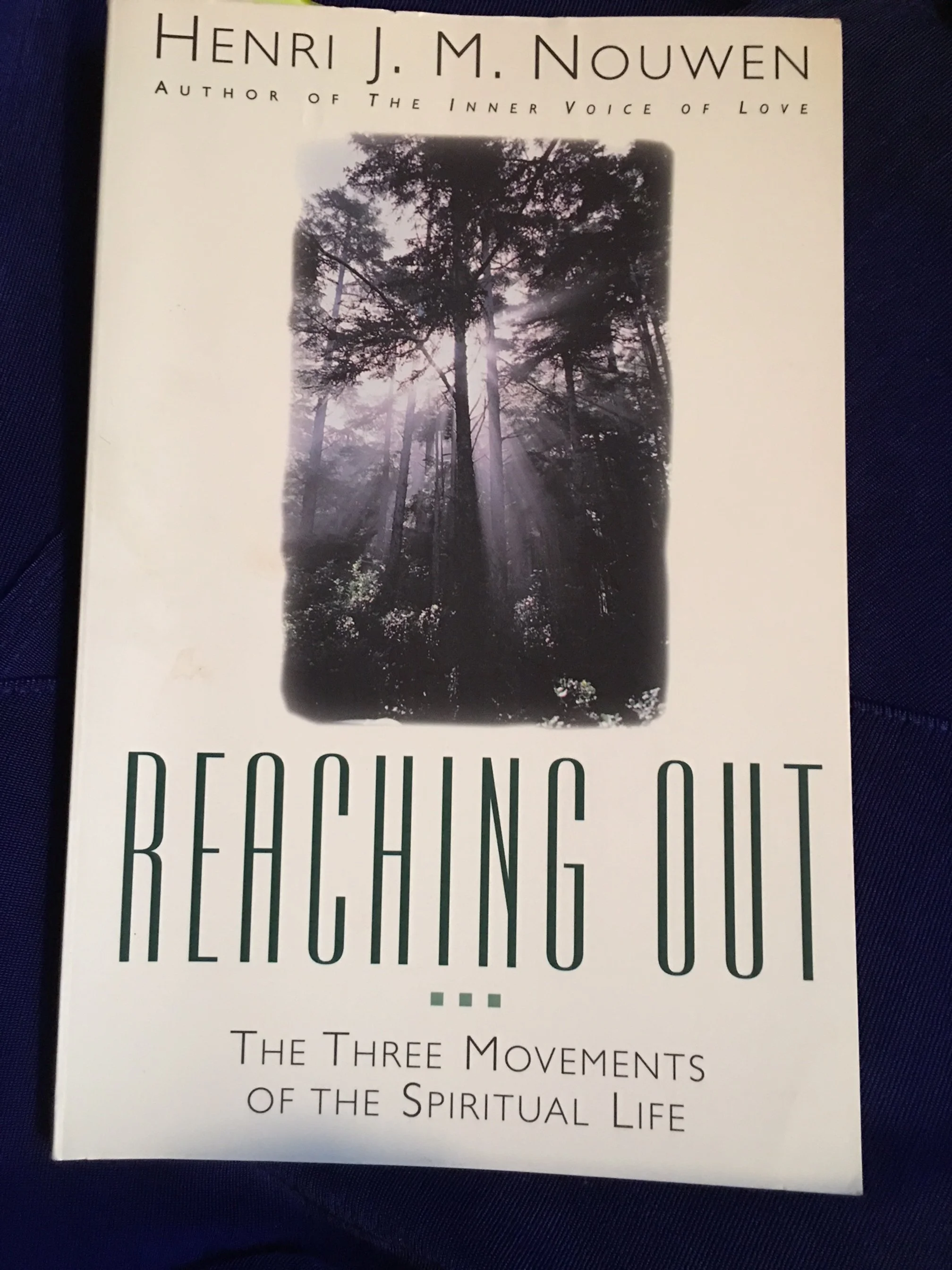
Nouwen’s theme of praying the Jesus Prayer or Prayer of the Heart is found in Reaching Out: The Three Movements of the Spiritual Life. Nouwen contends this practice moves our prayers from the head to the heart, as we realize that answers to questions and the presence of God are in our hearts. Nouwen’s thoughts remind me of the spiritual exercises of Anthony de Mello, who also recommends imaging our body and breath to move from our head to our heart and body.
The Jesus Prayer has been a part of my being, particularly when I find myself living in fear. I have never said it unceasing 3000 times a day, then 6000, then 12,000 times a day, as the 5th-century Egyptian Desert Fathers and the 19th-century Russian monk recommended to the anonymous Russian peasant in The Way of the Pilgrim. I confess that I pray the Jesus Prayer more often when I reach my human limits, indicating my powerlessness, rather than using the prayer on God’s terms.
Nouwen teaches about the paradox of prayer, learning to pray when we can only receive prayer as a gift. God’s Spirit, God’s breath, prays into and with us. Instead, I often use prayer, especially the Jesus Prayer, in times of weakness, as a support system, as a foxhole prayer, or when I can no longer help or control the situation and am desperate. Nouwen reminds us to pray the Jesus Prayer at the point when we can reach out to God, not on our own terms and needs, but on God’s terms. This kind of prayer pulls us away from self-preoccupations and challenges us to enter a new world, a great adventure, praying to our God, who has no limits.
Nouwen’s book Reaching Out, about the spiritual journey and union with God using the Jesus Prayer, is one I keep readily available by my bed. I recommend it to those who come to me for spiritual direction if they are experiencing the absence of God. Nouwen writes that God is present, but God’s presence is so much beyond our human experience of being connected to another that it may be perceived as absence. Yet, paradoxically, God’s absence is often so deeply felt that it can lead to a new sense of God’s presence.
Nouwen’s book is excellent for adult studies, especially during Advent or Lent.
The Way of the Pilgrim and The Pilgrim Continues His Way, a new translation by Helen Bacovin. (Image 1978).
Henri Nouwen in Reaching Out: The Three Movements of the Spiritual Life. (Image 1975).
Henri Nouwen in Desert Wisdom: Sayings from the Desert Fathers. (Orbis 1982).
Joanna. https://www.joannaseibert.com/


