Charleston: we are not done yet

Charleston: We are not done yet

"We are not done yet. We may count our progress in inches. We may swim against the deep tides of greed and hate, but we are not done yet. Even if we do not live to see it all, we will be content to be the inspiration, to give all we have to free our world from fear."—Steven Charleston, Daily Facebook Page.
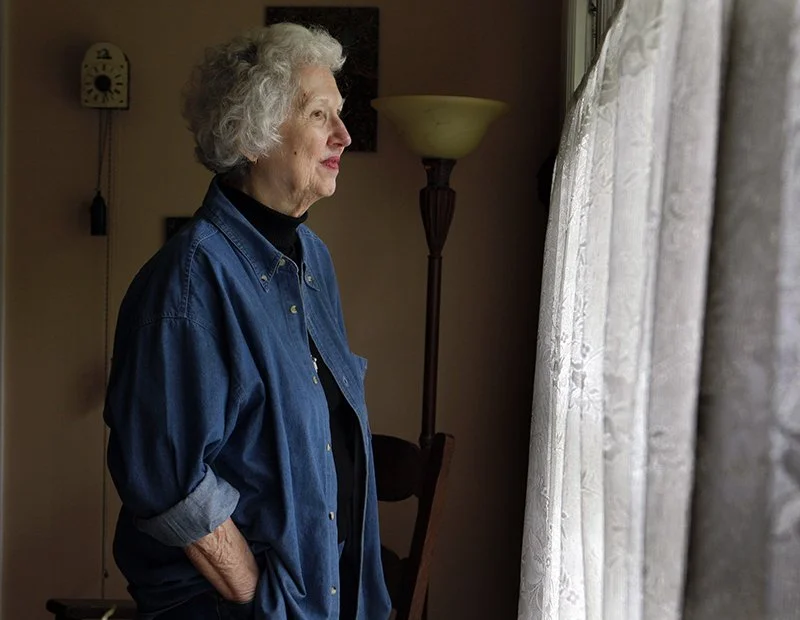
Bishop Charleston gives us encouragement during difficult times when we are discouraged. This is why God constantly calls us to community. We feel we have lost our connection to God when our lights are dim. We think we have accomplished nothing. We believe we are failures. Yet, there are others in our community whose lights are on, who are more connected to God, and who can encourage and support us until we see a different picture. They are like Simon of Cyrene, briefly carrying our cross. They are like the paralytic's friends, lifting him through the rooftop to Jesus. Then, in turn, as we heal, it will be our turn to be the encourager.

Often, people come for spiritual direction or meet with spiritual friends who have been burned out or feel their life or ministry is not accomplishing what they had hoped. Our job as spiritual friends is to show each other where God is working in our lives, and how important it is to continue inspiring each other, remembering that we may not see the results. But unfortunately, the results may be apparent much later, long after we have lived our lives and our names have been forgotten.

As I grow older, I more vividly remember the people, teachers, grandparents, co-workers, and friends who encouraged, supported, and never gave up on me. But unfortunately, most of them are dead, so I can only thank them by trying to pay it forward and encouraging others as they did to me.

So today, I share with you Jon Sweeney's recent biography of Phyllis Tickle, Phyllis Tickle, A Life, where he shares how Phyllis was a major encourager for him, myself, and so many others.

Joanna  https://www.joannaseibert.com/


Windows

Windows

“A Window covered with raindrops interests me more than a photograph of a famous person.”—Saul Leiter, artist and photographer.

 “View From My Window” is a social media group that calls me out of bed each morning as I long to refocus my life from more than the world outside my own window. Stunning photography from all over the globe enlarges my connection to universal beauty from Europe, Africa, South America, Australia, Canada, and other parts of North America. Flowers of every possible species, forests, elephants, bobcats, oceans, tidal pools, mountain ranges, snow in Austin, Texas, and northern lights in Iceland and Alaska wake me daily to beauty beyond my normal vision.

My experience is that being in or seeing nature is one of my best ways to connect to God. Each morning, I take a visual journey into the presence of creation in all its splendor beyond the bounds of my own home to someone else’s view that I will probably never meet. Each morning, I see a part of the beauty of the outdoors that I would have never seen in my lifetime. Occasionally, I share the view outside my window of woodpeckers and cardinals, Carolina chickadees, and blue jays, who visit the feeder beyond my floor-to-ceiling window, taking up almost a whole wall in my office at home.

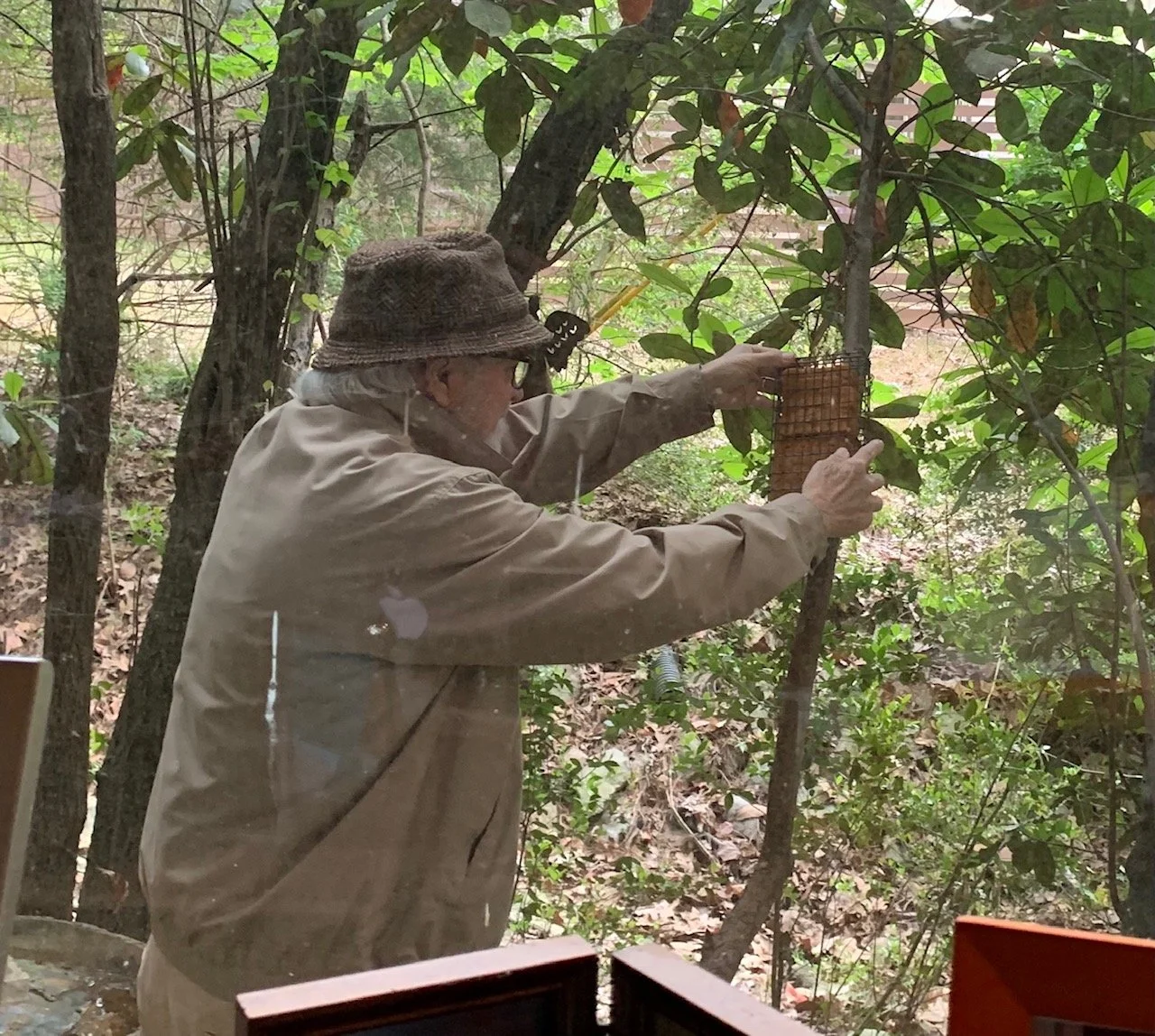
However, my favorite view is when my granddaughter or grandson comes by to wave and say hello with a dog they walk, or when my daughter leaves taped outside my window a colorful “I love you” hand-drawn message with lots of hearts. Another favorite view is my husband going out in all kinds of weather to put out bird food, so I can see my avian neighbors every morning.

I rarely left my house during the two years of our long pandemic. The view from my window, where I spent most of the day, was my connection to the outside world. I am so fortunate that my view encompasses much of nature, where Parker Palmer tells us that the plants photosynthesize our nervous energy into peace, passing all understanding.

Now, I connect to the views from people’s windows from all around the world. Consequently, I can now begin my day with a larger worldview.

De Mello: Ignatian Exercises

De Mello: Ignatian Exercises and More

“This is the spirit in which we embark upon Ignatian contemplations. Through the simple childlike use of our fantasy, we attain a truth far beyond fantasy, the truth of mystery, the truth of the mystics.”—Anthony de Mello in Sadhana: A Way to God (Image Books, 1978).

De Mello offers many awareness exercises that enable us to know and feel the presence of Christ, especially in prayer. In one exercise, we imagine Jesus sitting in an empty chair beside us. He reminds us that we can start our prayer in our heads. But our prayers will become stale and dry if we do not move to our senses and heart—out of a place of thinking and talking into a place of feeling, sensing, loving, and intuiting.

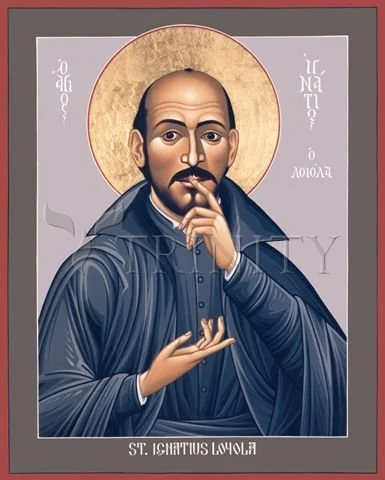
De Mello suggests Ignatian contemplation to help us become part of a scene from Christ’s life, to enhance our reading of Scripture and our prayer life. He reminds us of others who experienced God using Ignatian contemplation. Francis of Assisi, in contemplation, took Jesus down from the cross and knew his Lord was no longer dead. Teresa of Avila felt closest to Christ when she was with him, as he agonized in the garden. Ignatius of Loyola became a servant, accompanying Mary and Joseph to Bethlehem.

Learning how to enter into the truth of these mystics can transform our own experience of living in God’s presence.

We give thanks for spiritual guides who knew what we would need in today’s world of strife and illness so many years ago.