Sue Monk Kidd; Incubation in Darkness

Sue Monk Kidd: Incubation in Darkness

“Today (August 12) is my birthday. It makes me think of the new life I’m incubating and the Birth-day still to come. Today, I’ll talk to myself. I’ll say, ‘Accept life—the places it bleeds and the places it smiles. That’s your most holy and human task. Gather up the pain and the questions and hold them like a child on your lap. Have faith in God, in the movement of your soul. Accept what is. Accept the dark. It’s okay. Just be true.’”—Sue Monk Kidd, “A Journal Entry” in When the Heart Waits: Spiritual Direction for Life’s Sacred Questions (HarperOne, 1992).
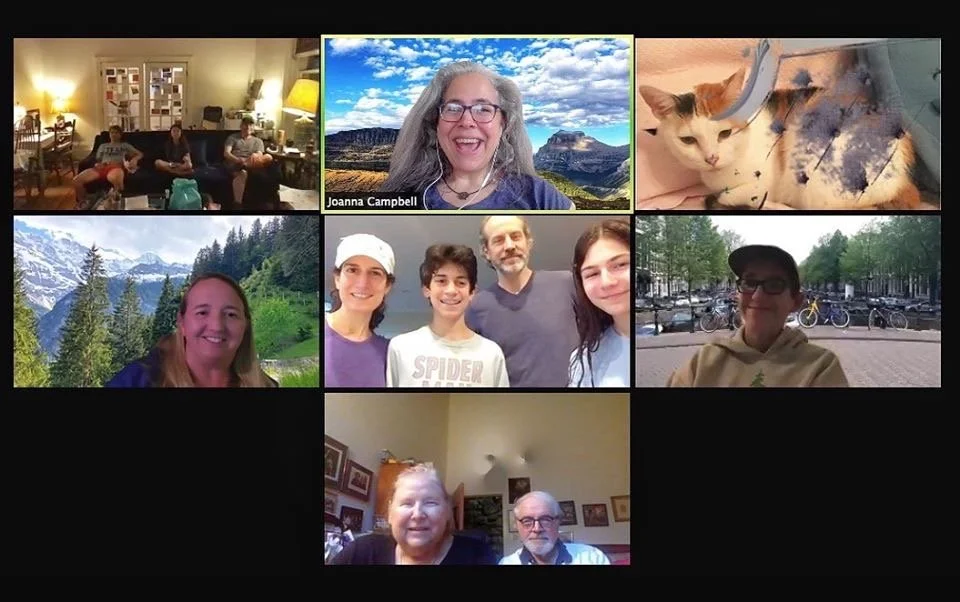
family zoom duringthe pandemic

Today, we continue to share stories from author Sue Monk Kidd. I found two copies of her book, When the Heart Waits: Spiritual Direction for Life’s Sacred Questions, unread in my home library. So when I saw the book on the list for my spiritual direction studies at the Haden Institute, I took this as a sign to read it. I still remember the first time I met Sue Monk Kidd. She was on tour for her book The Dance of the Dissident Daughter. I took all my female partners in my medical group and my daughter to hear her. One of my partners cried the entire time and bought several books.

Kidd is as impressive a speaker as a writer. She reminds us of Marion Woodman’s writings about creative suffering in the dark. Creative suffering burns clean, unlike neurotic suffering, which creates more soot. Creative suffering “easters” us or transforms us, chooses a new way, owns our shadow, and heals our wounds—as opposed to neurotic or self-pitying suffering, which is un-transforming and leads to despair. Kidd continues to tell us that pain may not kill us, but running from it might.

At a retreat she led at Kanuga conference center, Kidd described a healing exercise where we placed on the altar cut-up scraps of colored paper representing wounds and pain from our lives. We then offered them up, turning them over instead of pushing them down or trying to escape from them.

She reminds us that the most significant events in Jesus’ life occurred in darkness: birth, arrest, death, and resurrection. Then, as tiny bits of light come out in our lives, we begin eastering—much like the lighting of the Paschal candle and bringing light into the dark world at the Easter Vigil. This is a great image for me, as the deacon often carries the Paschal candle, saying “the light of Christ” three times before singing the Exsultet, giving thanks for the light. The Paschal candle we use is a natural wax and, for some reason, is always challenging to extinguish!

Kidd describes how our addictions keep us unaware of what is going on inside of us, as well as outside of us. When I live in my addictions, I deny the harm to my body, soul, and heart that comes from wearing my many false selves. Thirty-two years ago, when I was introduced to a twelve-step program, I got my voice back, but the recovery of dealing with the tensions of all the false selves is still part of my recovery trying to live the steps. I experience more and more easterings or resurrections, but it is still hard work. When the true self emerges, there is light and delight in life. Gratitude is what living in the true self brings. God becomes our playmate, and we find our inner child.

Kidd writes about our accelerated, instant, quick “fast-food” society. I remember talking to a ten-year-old about playing chess, and her response was, “It takes too long.”

Kidd also reminds us of our desire for shortcut religion, looking for what Bonhoeffer called cheap grace, “Long on butterflies but short on cocoons.”

I go down to our den this afternoon and find my husband and our almost thirteen-year-old grandson quietly playing chess. I feel hope.

What great tragedies happened in this pandemic and our recent tornadoes in Arkansas, but we are also beginning to see easterings, neighbors and churches caring for each other, families checking on each other, more families getting vaccines, a realization of the value of community and staying healthy in community.

sue monl kidd

Kelsey: The Ballad of Judas Iscariot

Kelsey: The Ballad of Judas Iscariot

 “We forget that the real task is to bring the totality of our psychic being to God and not just to repress and split off those parts of ourselves that we cannot change.”—Morton T. Kelsey in The Other Side of Silence: A Guide to Christian Meditation (Paulist Press, 1976).

Theologian Morton Kelsey wrote a practical book more than fifty years ago called The Other Side of Silence: A Guide to Christian Meditation, which affirmed that meditation is not only for those in Eastern religions. His revised edition, published twenty years later, The Other Side of Silence: Meditation for the Twenty-First Century, contains more of his writings for an audience now familiar with Christian meditation.

 Kelsey believes that meditation is simply the way we set up the conditions to prepare for the God who seeks us and breaks through to us, particularly in silence.

“Doing meditation” involves using biblical stories, dream images, poems, and images from other sources. Kelsey’s book includes a moving poem, “The Ballad of Judas Iscariot,” by the Scottish poet Robert Buchanan, which I read and meditate on every Easter season. It reminds us that no one is lost, unforgiven, or unloved by God. The ballad must have been powerful when sung.

The story is of Judas wandering through regions of darkness until he spies a light from a lantern at a doorway. Jesus is holding up the light, and he beckons Judas to come in and join his fellow disciples who are getting ready to eat. Jesus tells Judas they were just waiting for him before pouring the wine.

http://www.robertbuchanan.co.uk/html/sel4.html

I also offer the poem to spiritual friends who feel they have done something unforgivable or that God no longer loves them. Then, of course, I meditate on it when that darkness of guilt, shame, or a poor self-image surrounds me. Judas is a reminder and icon of times when we cannot accept that we might be forgiven or loved, or are having trouble opening ourselves to God’s Grace, which is continuously offered through dark and light times.

 But, honestly, was Judas’s betrayal of Jesus worse than denying or abandoning him as the others did? Judas simply could not ask for or accept forgiveness, and had forgotten that the God of his understanding was loving and forgiving.

During the pandemic and our recent storms, we were called to do more than our usual forgiving and ask for a greater share of forgiveness from others.

Joanna. Joannaseibert.com https://www.joannaseibert.com/

Holly Street

Holly Street

“When they saw the courage of Peter and John and realized that they were unschooled ordinary men, they were astonished, and they took note that these men had been with Jesus.”—Acts 4:13.

Since coming to Arkansas in 1976, we have often believed that many talented, well-known Arkansans grew up in this small Delta town of Helena on the Mississippi River between Memphis and Vicksburg. Holly Street, by Steve Petkoff, is a book packed with stories about Steve’s life as a young boy growing up in Helena, Arkansas, in the 1940s and 1950s. Although Steve reveals his humble beginnings, starting work at age four, he compares past times with today’s modernism, wealth, and self-taught lessons acquired from the school of hard knocks.

His curious mind and common-sense approach to life were grounded in the love his parents, family, and friends passed on to him through how they lived, displaying mercy, care, and respect for others. Not to say that he did not exhibit his share of mischievous deeds and reckless boyhood adventures. He was far from perfect, but learned from the antics and injuries he caused to others.

One reviewer described Holly Street as a journey “back to the days when kids freely roamed the streets of their hometowns, went to the Saturday matinee at the local theater, and camped out in tents with their friends.”

All was not idyllic. While witnessing many adult actions and situations prematurely, Steve quickly picked up life’s ethical values as a youngster.  Finding dead bodies in his yard and neighborhood while witnessing incest, drunks, and knife fights sped up his growth.

 The author writes that prayer, regular church attendance, and respect for people of all races molded him into the man God intended for him to become.

         Like Peter and John 2,000 years ago, God has always abided with commonplace men and women throughout history to carry the message of love and resurrection. From Steve, we learn why and how many well-known and not-so-known Arkansans received this message of love and caring for their neighbors in this unique Mississippi Delta town. Holly Street tells us this is true, because the proceeds from Steve’s book go back to his community of Helena Phillips County!

Joanna joannaseibert.com https://www.joannaseibert.com/