Nature as Healer

Nature as Healer

“Everybody needs beauty as well as bread, places to play in and pray in, where Nature may heal and cheer and give strength to body and soul alike.”—John Muir.

A Forward Day by Day writer today reminds us of this quote from John Muir, one of our country’s most famous naturalists and conservationists. Muir was instrumental in forming the National Park Service and the Sierra Club. In spiritual direction, we ask, “Where do you find meaning or feel closest to God?” The most frequent answer is “outdoors in nature.”

In photosynthesis, trees transform light energy into chemical energy. I believe the trees, the sun, the sky, the ocean, and the mountains also convert some energy inside of us when we are outdoors among them. As a result, we see beauty alive and well, whereas before, we could only see ugliness. We realize that there is something greater than ourselves, something that transcends our own problems. It is there for us. We do not have to pay for it. It is a gift.

My experience is that when I have difficulty sleeping because of physical, mental, or spiritual pain, it helps to go outside or sit by a window and watch the sunrise in the morning, even on a cloudy day. The sunrise, the world outside, can be a constant reminder of a new opening, a new beginning—the dawning of a fresh way to look at things. I am reminded of John McQuiston’s book, Always We Begin Again, a modern version of the Rule of Benedict.

Muir stands out as someone poised to make us aware of the marvel of nature, particularly the wilderness, but he also reminds us of our stewardship of this gift.

Consider the experience of viewing nature, the outdoors, as one of our most crucial lifesaving, life-renewing spiritual practices and remedies—better than drugs. But nature, like our own soul, also needs care and love.

Joanna https://www.joannaseibert.com/


Psalm 23 and Who Are the Shepherds?

 Psalm 23 and Who Are the Shepherds?

“The Lord is my shepherd.”—Psalm 23.

Marko Andrea. 1887

Malinda Elizabeth Berry reminds us in an article, “Who Is My Shepherd?” in ChristianCentury.org (7/19/2018), of a frequent misconception about the gender of shepherds. In biblical times, young girls were often shepherds, as were boys and men. For example, Berry reminds us that beautiful Rachel was tending her father Laban’s sheep when Jacob first saw her and fell in love with her (Genesis 29:9-10). Likewise, Zipporah and her sisters were trying to water their father’s sheep when Moses drove away some other shepherds bothering them (Exodus 2:16-17).

We may also infer that these young, fair maidens were just as masterful with a slingshot as young David!

Berry asks us if we have seen Bible story pictures or paintings with girls as shepherds. Indeed, I could only find a few, including one by Hungarian painter Marko Andrea (1887) called Shepherd Girl. Berry then challenges us to consider having girls and boys dress up as shepherds in this year’s Christmas pageant! (At our staff meeting, Luke, our Family Ministries Coordinator at St. Mark’s, reminded me that, unknown to me, St. Mark’s has been including girl shepherds for years!)

This is another example of a tradition that doesn’t align with historical facts: that shepherds should only be boys or men. It makes me wonder why I didn’t think of girls as shepherds, even after reading the stories of Rachel and Zipporah more times than I can remember. Now, it is so apparent.

I hope you can share my excitement with Berry’s new information about stories we thought we knew so well. Berry's thoughts remind us not to gloss over old Bible stories but to hope to see new insights each time we read them. They also encourage us to continue researching what others discover in their study of the Bible. Finally, they remind us that the Holy Spirit is alive and well and continually teaches us new insights from old stories.

Joanna. https://www.joannaseibert.com/


Jonathan Daniels Pilgrimage and the Song of Mary

August 14: Jonathan Daniels Pilgrimage and the Song of Mary

I knew then that I must go to Selma. The Virgin’s song was to grow more and more dear in the weeks ahead.”—Jonathan Daniels, quoted in The Jon Daniels Story, William J. Schneider, ed. (The Seabury Press, 1967), p. 67.

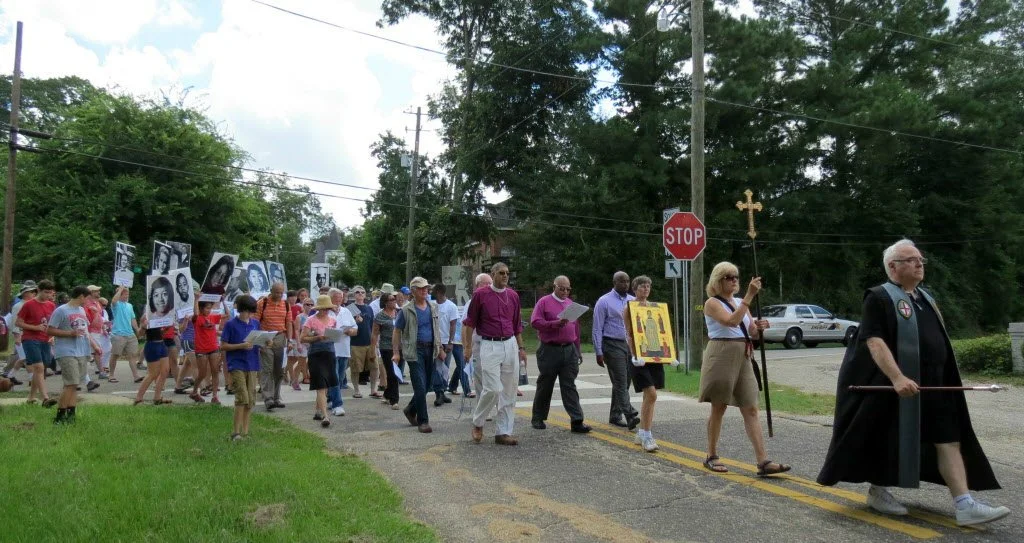
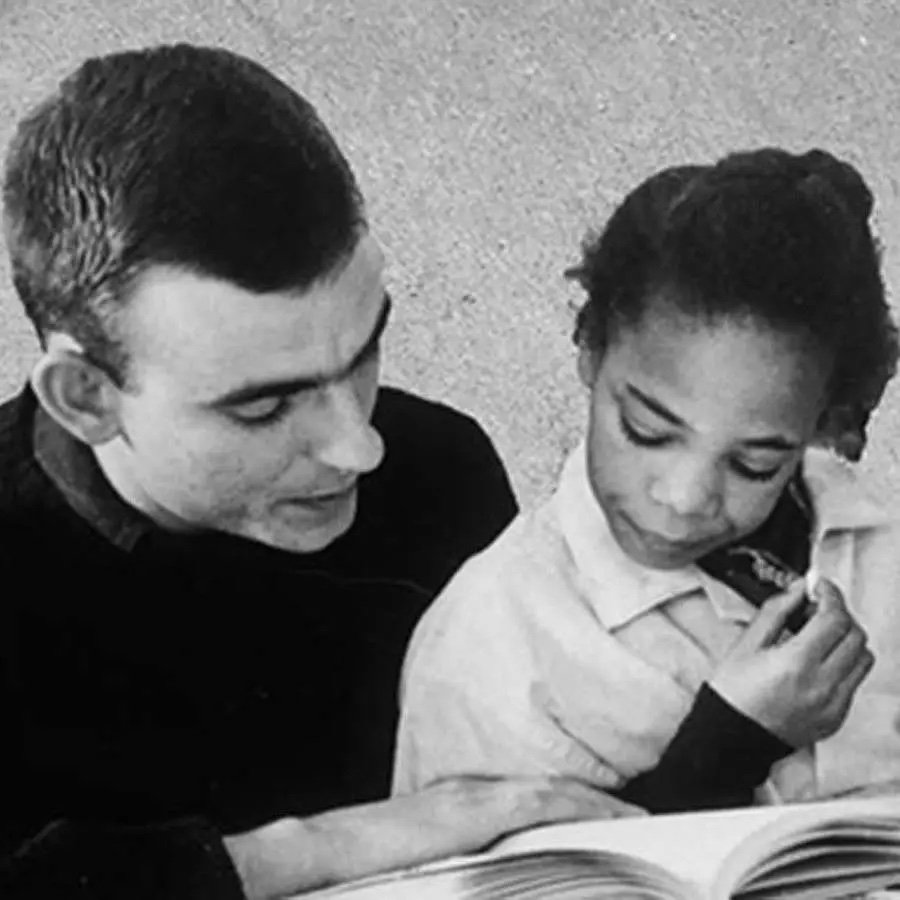
On this second Saturday in August, people from all over the country will assemble at 11:00 a.m. Central in Hayneville, Lowndes Country, Alabama, to remember the death of an Episcopal seminarian, Jonathan Myrick Daniels. On August 20, 1965, Daniels died as he protected an African American teenage girl named Ruby Sales.

The pilgrimage starts at the courthouse, where a trial lasting less than an hour found the man who murdered Daniels “not guilty.” Next, it moves to where there stood a small country store in which Jonathan was shot. The pilgrimage then returns to the courthouse for Eucharist, where the bread and wine are consecrated on an altar previously the judge’s bench for that 1965 sham trial lasting less than an hour that found the man who murdered Jonathan not guilty. Prevously, the Right Reverend Phoebe Roaf, the Bishop of the Diocese of West Tennessee, was the preacher.

Bishop Russell Kendrick of the Diocese of the Central Gulf Coast recently reminded us that this march, remembering the death of the twenty-six-year-old Daniels, took place on the same day as the disastrous march of white supremacists in Charlottesville, Virginia, in 2017. The similarities are sometimes too much to bear, reminding us that we seem no further advanced in race relations than we were three-quarters of a century ago. As a nation, we seriously lack the ability to secure human rights. We all need continued growth in recognizing who is our neighbor.

Daniels took a leave from Episcopal Seminary in Cambridge, Massachusetts, after hearing Martin Luther King, Jr.’s call for students to join him in his march in Selma, Alabama, to support the Civil Rights movement. He had been moved by singing the Song of Mary, the Magnificat, in Evening Prayer, and especially by the words: “He hath put down the mighty from their seat and exalted the humble and meek.”

Jon devoted many Sundays in Selma to bringing small groups of black high school students to services to integrate the local Episcopal church. They were seated but scowled at. Many parishioners openly resented their presence, putting their priest squarely and uncomfortably in the middle of the controversy.

Jon returned to the seminary in May to take examinations and complete other requirements. Then, in July, he returned to Alabama, where he helped create a list of helpful local, state, and federal agencies and other supportive resources legally available to persons of color.

On Friday, August 13, Jon and others went to Fort Deposit to join in picketing three local businesses. On Saturday, they were arrested and held in the county jail in Hayneville for six days before receiving bail. After their release on Friday, August 20, four of them went to purchase sodas at a local country store and were met at the door by a special county deputy with a shotgun who told them to leave or be shot. After a brief confrontation, the part-time deputy aimed the gun at a seventeen-year-old black girl in the party, Ruby Sales. Jon pushed her out of the way, took the bullet, and was instantly killed.

Ruby attended the same seminary as Daniels and now heads the SpiritHouse Project in Atlanta. This program uses art, spirituality, and education to bring about racial, economic, and social justice.

Our senior associate rector, Michael, reminded me that at the School of Theology, Sewanee, Tennessee, all first-year students are loaded onto a bus and taken on the Jonathan Daniels pilgrimage during seminary orientation. He describes it as a very moving experience for many who are visiting the site of a martyr for the first time.

When we sing or say Mary’s song, The Magnificat (Book of Common Prayer, p. 119), together, let us remember Jonathan Myrick Daniels and Ruby Sales and how this Canticle altered their lives. Is there something in that song that also resonates with each of us?

Daniels died on August 20th, but is remembered on the day of his arrest, August 14. The march will also be live-streamed from the Diocese of Alabama at these two sites:

Their website: www.dioala.org/jonathandaniels

Their Facebook Page: www.fb.com/dioala/live