Putting God in charge of Spiritual Direction

Putting God in Charge in Spiritual Direction

“In spiritual direction, one might say, ‘My prayers are for God’s will to be done in you and for your constant deepening in God. During this time we are together, I give myself, my awareness and attention, and my hopes and heart to God for you. I surrender myself to God for your sake.’”—Gerald May in Care of Mind/Care of Spirit

(HarperSanFrancisco, 1982), p. 121.

In Care of Mind/Care of Spirit, May encourages us to begin spiritual direction with a similar silent prayer—remembering that it is like being in prayer, except that we are with someone else and God. We are to help direct the visitor or guest’s attention, moment by moment, to God while simultaneously knowing that we can do this only if we are tuned in to our own prayer life.

May advises on bringing up sexuality early in the sessions, so it is a familiar topic: “What are times you have felt closest to God? What about nature, music, sex, worship, or times of crisis?” May also makes a strong case for spiritual directors to be careful about relationships with their directees outside the direction relationship.

Dr. May’s detailed chapter on referral is easily understood, primarily because he writes about many of his personal experiences. Perhaps of most significant importance to those in the healing community is May’s concept of the difference between healing in the greatest sense and curing a specific disorder.

I am grateful that I have been in a group of spiritual directors who took May’s advice and met regularly to discuss concerns and issues that arise in our work. We meet for mutual support, prayer, and questions, knowing we are not doing this ministry alone but in community.

May asks us to identify in spiritual friends their experience of God beyond their belief system, emphasizing that belief and experience are two different areas to explore. We must use the language of the directees’ own spiritual experience, not our own. We should avoid solving people’s spiritual problems with statements such as, “You should pray this way” or “You need more faith.” May writes that the spiritual friend needs to know that the desire for an experience of God is already the experience of God they seek.

I hope to remember that I am a companion, at most a midwife, on a person’s heart journey with God and that this is God’s business. God is in charge, even though I may have such beautiful ideas!

Joanna. https://www.joannaseibert.com/
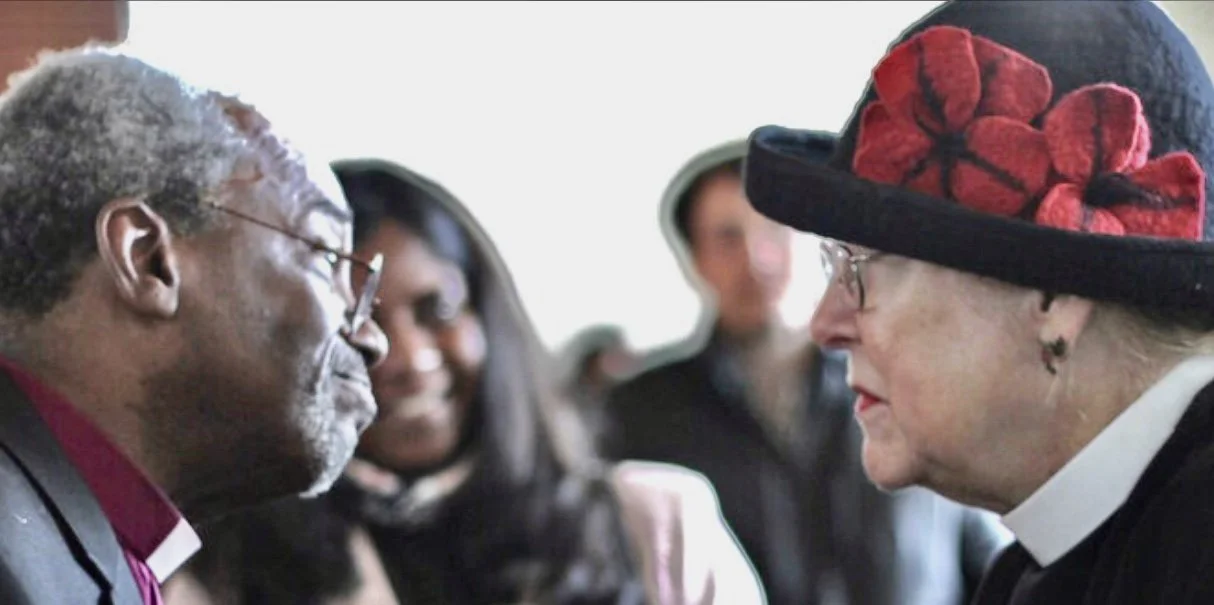
 

Listening for God in Each Other

Gerald May: Spiritual Direction, Listening for God in Each Other

“Besides differing from psychotherapy in intent, content, and basic attitude, spiritual direction is generally surrounded by a characteristic atmosphere seldom encountered in any other interpersonal relationship. As one person put it, ‘Being in spiritual direction is just like being in prayer, only there’s someone with me in it.’”—Gerald G. May in Care of Mind/Care of Spirit: A Psychiatrist Explores Spiritual Direction (HarperSanFrancisco, 1982), p.113.                

When I took down Dr. May’s book Care of Mind/Care of Spirit from my bookshelf and opened it, a bulletin from September 1990 fell out. It mentioned a book group at my church reading Care of Mind/Care of Spirit. The book had no marks, so I knew I had not read it. This happened over thirty years ago, two months before I went into recovery.

Our book group had read May’s book Addiction and Grace the previous year. For some reason, at that time, I was not ready to hear May’s words. But on this day, it was different. In 1990, we became missionary members from Saint Mark’s Church to start another Episcopal church in a growing part of our city. Alas, May’s book would have been helpful in starting a new congregation as I began life in recovery, and even more so nine years later when I was studying to become a deacon. 

This has been one of the best books I have read about spiritual direction. Dr. May emphasizes how spiritual direction differs from his own highly effective psychotherapy. In therapy, the director or caregiver “hopes to encourage more efficient living in the prevailing culture, seeking to bolster an individual’s capacity to achieve a sense of autonomous mastery over self and circumstances.” Spiritual direction “seeks liberation from attachments and a self-giving surrender to the will of God.”

So, at some point, spiritual direction may stand in opposition to many cultural standards and values supported by psychotherapy. May skillfully writes about how a spiritual director constantly seeks rabbit holes or traps that the directee may encounter while simultaneously looking for God in their life. May also reminds us that the real healer is God, and that the director and directee are merely channels.

May cautions spiritual directors about how easy it is to become distorted in our roles, “playing God.” I try to keep this book as close to me as possible while doing the direction. Sometimes, I have to avoid obsessing about what May would say about something that comes up in a meeting. Then, after spending some time together, I hurriedly look up the appropriate chapter. But, of course, May would say that our job is not to worry about what we say at the moment, but to focus solely and “most soulfully” on connecting this person to God during that moment!

AI and the Writer

AI and the Writer

Guest Writer: Isabel Anders

“Every garden preserves something of the Garden of Eden and can become a living library for important lessons.”—Mother Bilbee.

What does it mean to be creating (in my case, simple rhymes for children’s picture books) in an age when AI is a noisy fellow traveler in that same lane—increasingly taking up space that used to be open only to human artists and writers?

Are we at “that long-prophesied moment when mechanical minds surpass human brains not only quantitatively in processing speed and memory size but also qualitatively in intellectual insight, artistic creativity, and every other distinctively human faculty?” (NY Times, 3/8/2023).

Not yet (and maybe never), most critics agree. AI lacks, above all, perhaps, a personal morality and a history of living. It literally does not have “skin” in the game.

As I strive to express the spirit of Jesus’ Beatitudes in scenarios children themselves might encounter, I’m reminded that language is “layered.” Timely words seem to pour out intuitively from years of interactions with other living, enfleshed beings—who are also trapped (or thriving) in their contemporary situations, as we are. 

How can we as writers bring forward the rich legacy of our own years of learning how to live—not only morally, but also by modeling fundamental spiritual integrity?

How many children today, for instance, have even heard of the Golden Rule: That we are to do unto others as we wish them to do toward us? At the youngest level of readers and listeners, there is a unique opportunity to convey this pictorially, never to exhaust its meaning—but with prayers to instill a taste for goodness at a very young and formative age.

Just as the sun melts butter but hardens clay—some young hearts will respond favorably, and others won’t. And as with any ministry, that is not a reason not to make the attempt—even in today’s highly competitive children’s picture book marketplace.

And so, taking on the challenge, those of us on the Mother Bilbee team are embarking on a modest experiment: asking readers young and old to “join our kindness movement.”

If AI begins to take notice and gather up (“scrape”) my efforts for its own use, I won’t be sorry to see the Word spread, like seed, enhancing the possibility of a wider harvest.

Isabel Anders is the author of Mother Bilbee Tales (MotherBilbee.com) for children ages three to eight: Sing a Song of Six Birds is available in ebook and paperback on Amazon. Her newest title, Mary, Harry, Pete, and Carrie, How Does Your Garden Grow? will be released on September 1. 

“Mother Bilbee Tales is a refreshing, delightful update on some of our modern bedtime lullabies that are enjoyed by both the old and the young. The tales are a rhyme of encouragement, especially when we are learning and, even later in life, deciding the next right thing to do!” —The Rev. Joanna J. Seibert, M. D.

 Joanna joannaseibert.com