Love Never Dies

Love Never Dies

“Love never dies.”—1 Corinthians 13:8.

friends from our congregation who have died

I have heard this passage from 1 Corinthians about love many times, but when I heard it recently, directly from our friend Paul and our preacher Michael McCain, I was moved to tears. I have told grieving people that their love for and from their loved ones is still there and never dies.

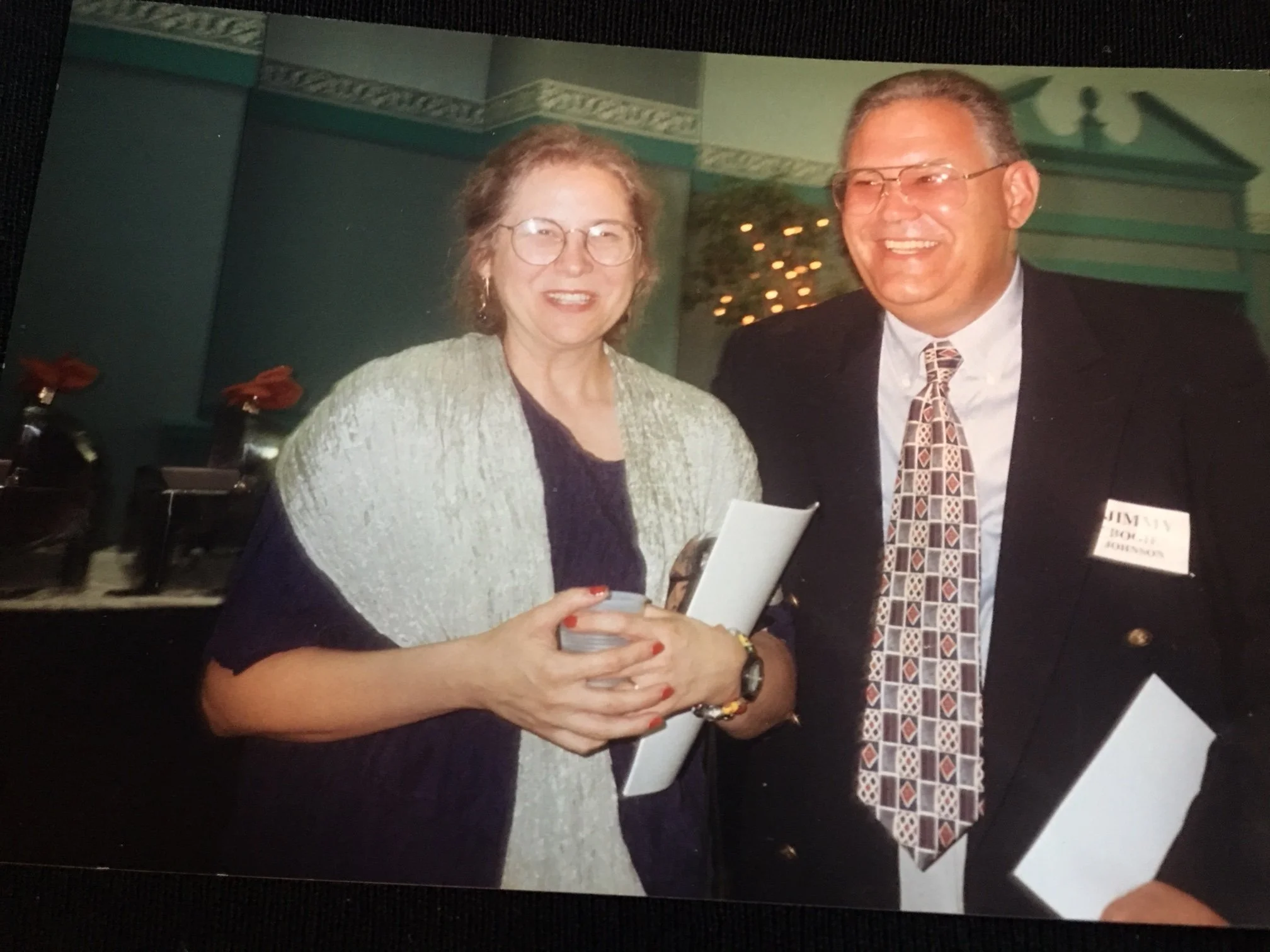
I don’t understand it. It is a mystery. I look at pictures of my loved ones who have died, my brother and my grandparents, and I can feel their love as I send it to them.

Frederick Buechner and Henri Nouwen tell us that our bodies die, but our mutual love somehow returns to God and is kept for all eternity.

If you are a mystic, you have no difficulty understanding this. However, this may be a difficult concept if you are a person who comprehends mainly by rational thinking.

Why did this passage move me that Sunday? As I grow older, I have obsessed with how I will miss friends and family members when death separates us. Yet, I suddenly know in my heart that our love for each other will always endure.

Our love for them is ongoing, as is their love for us. We will never be lonely. I believe that in some mysterious way, this love never dies and is carried forward in eternity to be a transforming effect in ourselves, in them, and in the universe.

Today, I am thinking of the love of friends who have died: my younger brother, Jimmy, and recent friends, Phyllis, Kay, Hap, Rosemary, Pat, and Karen.
my brother

The Martyrs of Memphis

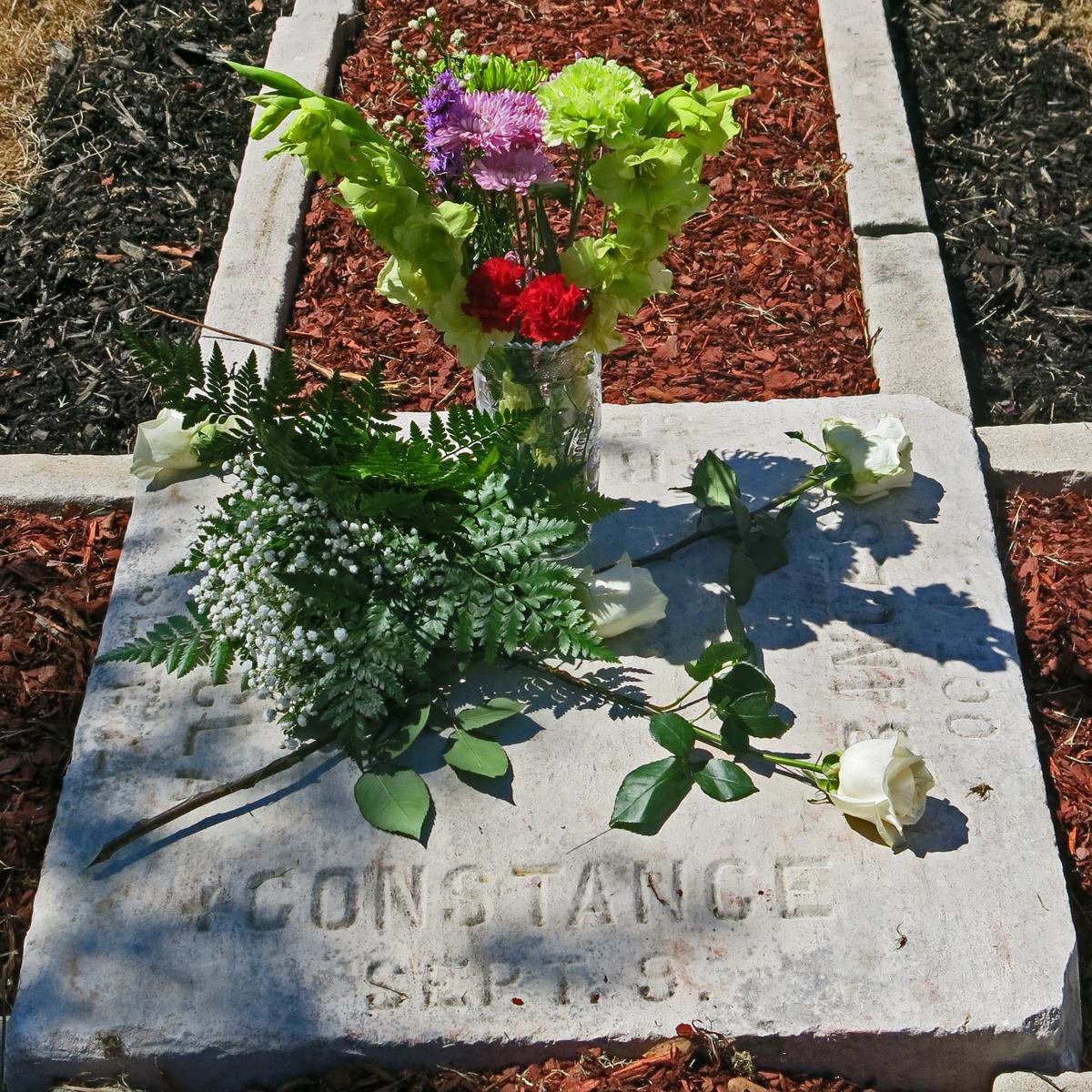
Constance and her Companions

THE MARTYRS OF MEMPHIS, September 9, 1878

“We give you thanks and praise, O God of compassion, for the heroic witness of Constance and her companions, who, in a time of plague and pestilence, were steadfast in their care for the sick and the dying and loved not their own lives, even unto death. Inspire in us a like love and commitment to those in need, following the example of our Savior Jesus Christ; who, with you and the Holy Spirit, lives and reigns, one God, now and forever. Amen.”— “Collect for Constance and her Companions” (Lesser Feasts and Fast) p. 371.

Let’s journey back in time across the Mississippi River to Memphis for a few minutes. It is the summer of 1878, forty years after the founding of St. Mary’s Church from Calvary Church, and only eight years since St. Mary’s becomes the Cathedral. Its third epidemic strikes our city on the bluff of the Mississippi River in a decade with yellow fever, the mosquito-borne hemorrhagic viral infection. Thirty thousand citizens flee in terror. Death tolls average 200 a day.

The city becomes so depopulated that Memphis loses its charter and will not reorganize for fourteen years. When this epidemic is over, ninety percent of Memphis’s population contracted yellow fever, and over 5,000 people died.  Everyone who can afford to do so packs up their bags, leaves the city, and flees away from the river. Later, we will learn that the disease is mosquito-borne and that high and dry conditions are indeed safer.

 At St. Mary’s Cathedral in Memphis is a community of Anglican nuns from New England who have been in Memphis for barely five years. They have the opportunity to leave but stay despite the high risk of contracting the disease. They remain to nurse the sick and soothe the dying. They are dedicated to prayer, service, and evangelism. We can identify with them and, for today, become one of the sisters.

Imagine that we are now part of the Sisterhood of St. Mary. We come as one of the sisters to Memphis in 1873 to found a Girls’ School next to St. Mary’s Cathedral. When the epidemic begins, our cathedral dean, George Harris, and Constance, the superior of the Sister of St. Mary, organize a team for relief work, which includes the sisters, the rectors of Grace Church, and Holy Innocents, and three physicians, two of whom are ordained Episcopal priests. 

This team becomes known as the martyrs of Memphis, and we celebrate their life and ministry today. But, unfortunately, most of them, thirty-eight in all, are themselves killed by the fever. One of the first to die on September 9, 1878, is Constance, head of the Community of St. Mary.

A round stone in Elmwood Cemetery marks where four martyred sisters and two priests are buried in a joint grave. The Cathedral has a virtual pilgrimage to their gravesite every year to honor their sacrifice for the church and the city.

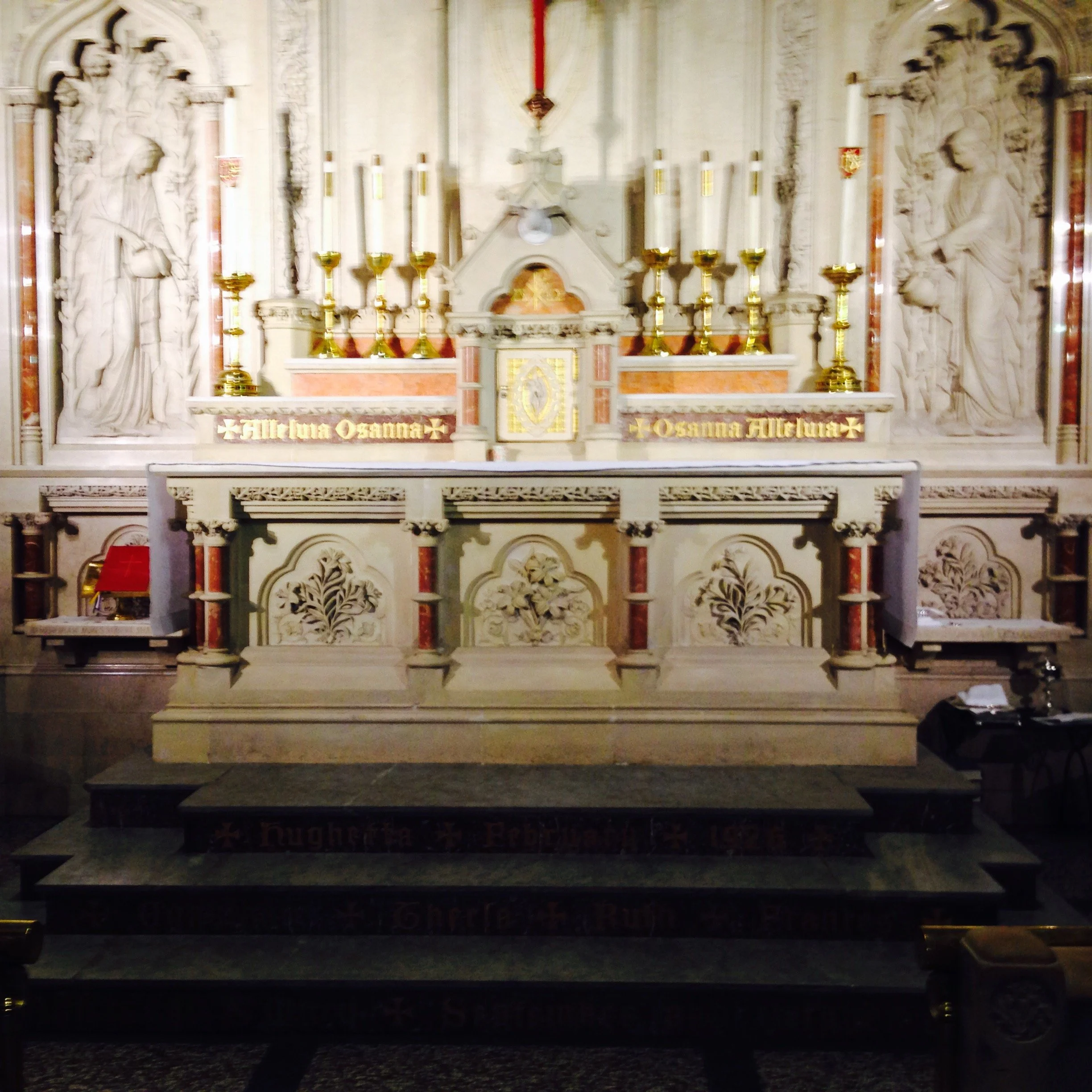
Whenever we return to this Cathedral of St. Mary’s, we are moved to go up to the beautiful High Altar. It is a memorial to the four Sisters who died. The Cathedral’s high altar is consecrated on Pentecost 1879 and reads “Alleluia Osanna,” Constance’s last words.

  My family and I are indebted to the sisters for their sacrifice. Bishop Gates confirmed my husband and me at the Cathedral in 1968. Dean Dimmick baptized our two sons, Robert and John, there.  Indeed, Dean Dimmick, later bishop of Northern Michigan, modeled the sister’s ministry by seeing his call to prayer, service, and evangelism as risk-taking when he takes the processional cross from St. Mary’s down Poplar Avenue in 1968 after the death of Martin Luther King, leading other Memphis clergy to Mayor Loeb’s office demanding rights for sanitation workers. He eventually loses nearly half of his congregation in protest of his actions.

Elizabeth Boggs transcriber, Project Canterbury, The Sisters of St. Mary at Memphis: with the acts and Suffering of the Priests and Others who were There with Them During the Yellow Fever Season of 1878, New York, 1879.

Holy Women, Holy Men, Celebrating the Saints, Church Publishing.

St. Mary’s Cathedral Website. www.stmarysmemphis.org  

Rohr: Forgiveness

Rohr: Forgiveness

As long as you can deal with evil by some means other than forgiveness, you will keep projecting, fearing, and attacking it over there, instead of ‘gazing’ on it within and ‘weeping’ over it within yourself and all of us. Forgiveness demands three new simultaneous ‘seeings’: I must see God in the other; I must access God in myself; and I must experience God in a new way that is larger than an ‘Enforcer.’”—Adapted from Richard Rohr’s Things Hidden: Scripture as Spirituality (Franciscan Media, 2008), pp. 193-194.

carrying the burden of not forgiving. graham covington

Richard Rohr is teaching us more basic lessons about how to forgive. It involves seeing the Christ—God in the person we are forgiving—and seeing God or Christ in ourselves. That makes sense. But then Rohr throws in this third condition. We see that God is not a hall monitor, handing out detention slips, checking a list, looking at our every action, and judging whether our neighbors and we behave correctly.

My experience is that we are called to enlarge our concept of God as a God of love. How do we do this? First, we place ourselves with others who seem to experience God’s love. Second, we observe how they know how to forgive others.

As we see the Christ in others who know love, the God of love, the Christ in us awakens—and slowly, often very slowly, we also begin to see the Christ in those who have harmed us. We may discover that personal tragedies have brought them to the place of hurting others. This awareness starts as we pray daily, sometimes hourly, for the person who has harmed us.

We realize we are still carrying around a heavy load of resentment, which makes it so challenging to live and walk on our journey through life. It is like a cancer, destroying the joy in our lives a little each day. That person is still hurting us. They are becoming our higher power, our God. More and more, they are all we can think about.

As we pray daily for that person, they may never change, but my experience is we will.

Joanna. https://www.joannaseibert.com/