New Day, Milestones

New Day, Milestones, Synchronicity
Waking up this morning, I smile.
Twenty-four brand new hours are before me.
I vow to live fully in each moment
and to look at all beings with eyes of compassion.” 
—Thich Nhat Hanh in The Heart of the Buddha’s Teaching (Broadway Books, 1998), p. 102.

Richard Rohr compares Christians and Buddhists in his daily email. “Christians are usually talking about metaphysics (‘what is’), and Buddhists are usually talking about epistemology (‘how do we know what is’). In that sense, they offer great gifts to one another.” 1

Buddhist monk Thich Nhat Hanh’s writings often speak to me. What a marvelous idea to wake up in the morning and say, “We have twenty-four brand new hours before us. I don’t want to waste a second, a minute, or an hour. It is a new day.”

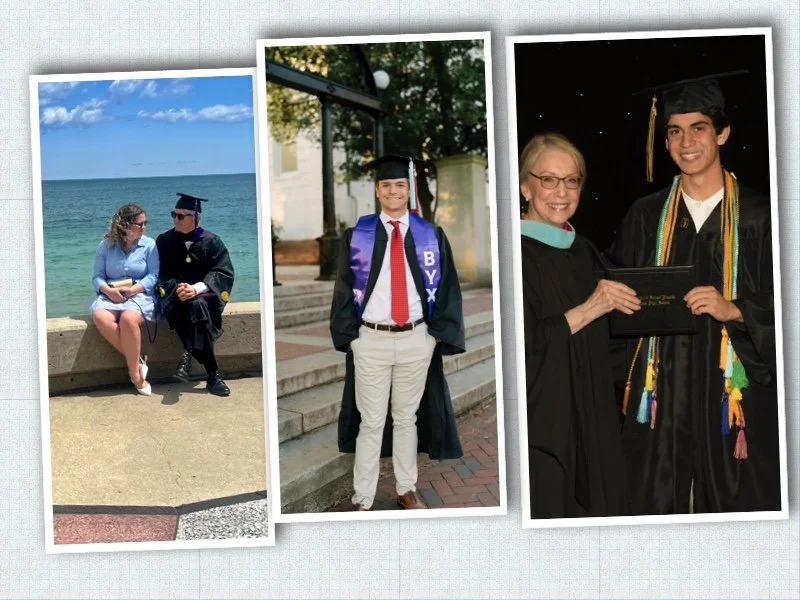
Graduations are milestone marks of the beginning of a new day. But we also can experience a new day every day.

Yesterday is past. We reviewed what we had done and left undone the night before, when we prayed for God to forgive us of our wrongdoing, also referred to as sins. We remembered where we found joy, often where we least expected it. We recalled where we found love. We remembered the day’s experiences in which we saw God working in our lives.

new day

This is an extra day, a new beginning. We can no longer regret the past. If we have harmed others, we will make living amends where we need to, but today, we are offered a fresh start. We hope we have learned from the past. We will not continue doing the same thing every day and expect different results. Instead, we will look for synchronicity, moments, or serendipity in which we make connections and see how events are related.

One morning, I write about the Eucharist, and someone, unaware of my previous thoughts, later confides in me how important the Eucharist is in their life. We receive a message from a friend we have been thinking about that day. We think about someone we haven't seen in a long time. Later, that person calls. She tells us what we did or said was precisely what she needed at the time. That is synchronicity. These are God connections, constantly around us each new day.

1 Richard Rohr, Center for Action and Contemplation, Meditation: Mindfulness, cac.org, August 24, 2018.

Joanna. https://www.joannaseibert.com/


Tangier Island, losing its margins

Tangier Island

“‘The margins, Nathan,’ he said when he started speaking again. ‘That’s what we’re losing. We’re losing the churches on the margins. We aren’t doing enough for them.’”—Loren Mead to Nathan Kirkpatrick at faithandleadership.com.

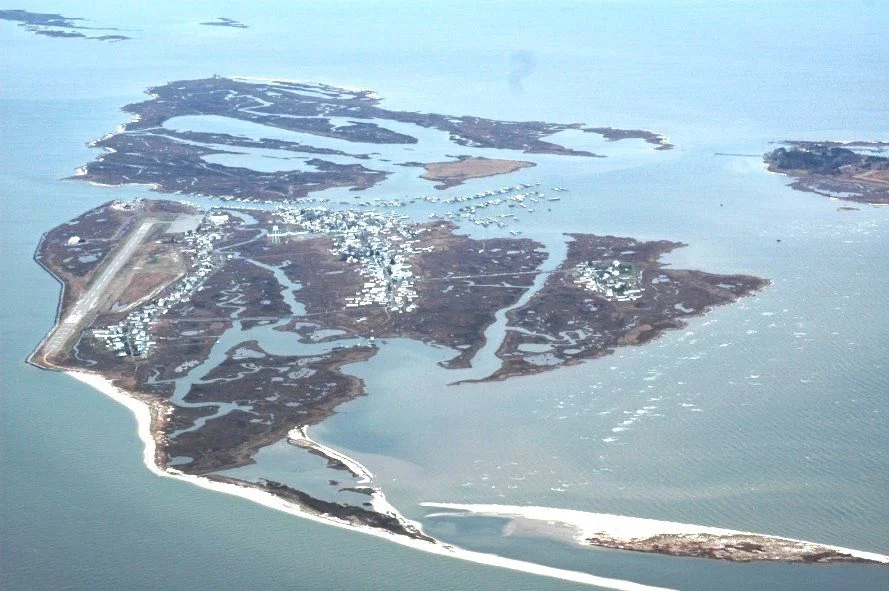
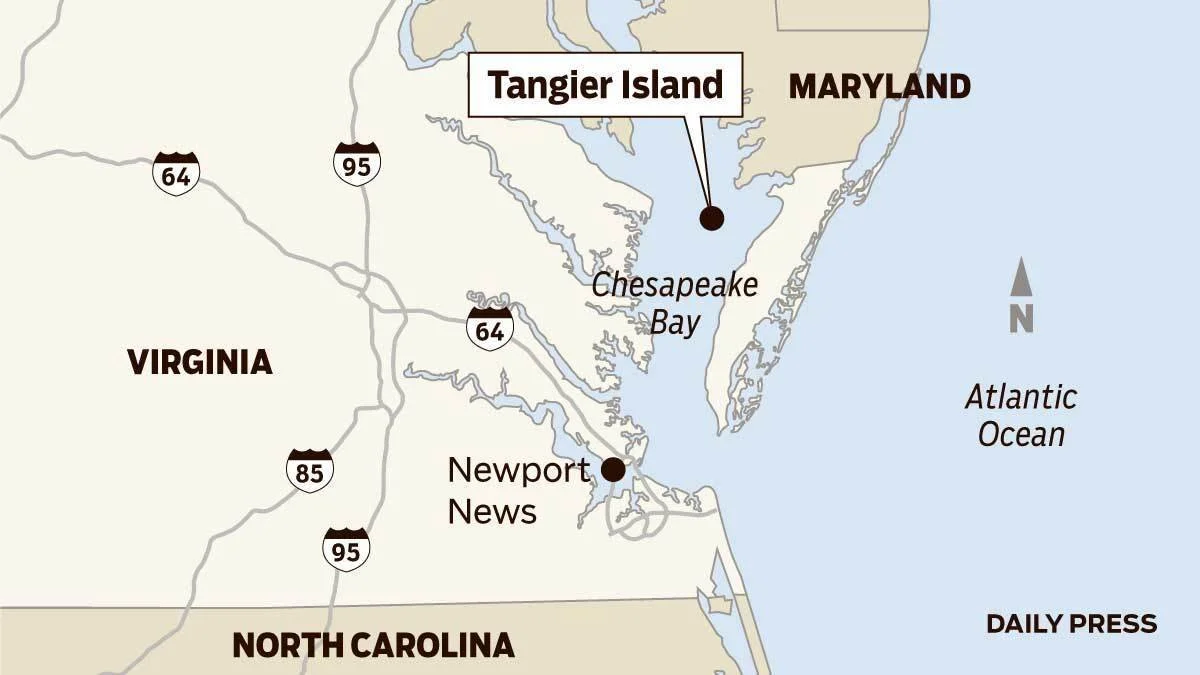
Tangier Island is a disappearing island in the Chesapeake Bay, located twelve miles equidistant from both the Maryland and Virginia coasts, losing up to sixteen feet of its coastline annually due to rising sea levels resulting from global warming and soil erosion. The government believes the island will become uninhabitable for the over 500 people living there within twenty to thirty years. In fifty years, the island will be completely underwater.

The local islanders speak a dialect described as unique, combining elements of Elizabethan British and a southern drawl. They are primarily fishers of oyster and crab year-round, and tourist guides in the summer. The 1.2-square-mile island is steeped in religious tradition and completely shuts down on Sunday mornings.

Nathan Kirkpatrick, writing in the Duke Divinity School Leadership Education Center Alban Weekly (June 26, 2018), recalls the above conversation with Loren Mead, the founding director of the Alban Institute, who compared the Church to Tangier Island. What does Dr. Mead mean by saying the Church is “losing its margins?”

Is he telling us the Church is shrinking because it is not paying attention to people on the fringes or margins of society—the poor, the weak, the hungry, the homeless, the tired, the sick, those who are the most different from ourselves? In the larger scheme, is he referring to our neighbors who border us that we do not care about? Our call to service comes from these margins. Through our prayer life, we hear that call.

I remember one of my favorite quotes from Bishop Barbara Harris: “The Church is like an oriental rug. Its fringes are what make it most beautiful.” This is our call to bring the needs of the world to the church.

In spiritual direction, I also ask people how the story of Tangier Island might relate to the care of their soul. There are so many possible answers.

One question is, “Do you ever feel your soul shrinking? Do you feel you are losing the margins, the borders, the uniqueness, the most inspiring and possibly the most interesting parts of your soul, the God, the Christ within you?” Many causes contribute to this: a lack of time for silence or prayer, becoming too busy, a loss of priorities, or straying from only the fringes without being led by the Spirit in prayer, or when we stop being connected to community.

Joanna. https://www.joannaseibert.com/


Storm Warnings

Storm Warnings

“Jesus also said to the crowds, ‘When you see a cloud rising in the west, you immediately say, ‘It is going to rain’; and so it happens.… You know how to interpret the appearance of earth and sky, but why do you not know how to interpret the present time? And why do you not judge for yourselves what is right?’”—Luke 12:54-57.

joanna campbell

I sit and watch a storm come up the beach in the early morning. The sun is out, with blue skies to the east, but the sky is grayer to the west. Clouds move overhead. Sometimes, this dark overhead carpet seems so close that I feel I can almost touch it. Fishing boats return to port to weather the coming storm. Birds take shelter. The great blue heron moves inland. The pelicans are nowhere to be seen. The mighty osprey is the last to give up looking for one more meal before returning to her nest. A violent wind precedes and announces the pivotal event, almost horizontal driving rain.

patti martin

Jesus reminds us that we see signs that indicate storms may be coming in our lives. Our children act out, or their grades at school drop. We receive occasional hints that a project is not going well, but we are too busy to address the matter at the moment. Later. Too many other things are going on. We recall how a particular food affected us in the past, yet we still eat it anyway. Our clothes no longer fit, but we do not change our eating habits, exercise routine, or lifestyle. We ignore pain, a sign that some body part needs attention.

The same principle applies to our spiritual life. Our prayer life seems dry. We cannot remember our dreams. We can no longer write. All we read appears dull and uninteresting. We think of every excuse not to attend corporate worship. We stop going outdoors. It is too hot. Too cold. Too sunny. Too cloudy. We stop talking to friends. We isolate ourselves. 

In medicine, a sign is an outward or objective appearance that suggests what is going on, like the red butterfly rash across the nose characteristic of lupus erythematosus. On the other hand, a symptom describes something that is subjectively experienced by an individual, such as lupus fatigue or pain associated with a urinary tract infection, which requires some interpretation.

We are constantly given signs and experience symptoms in our outer and inner lives that can direct us. God never abandons us. We are called only to keep ourselves “in tune” to see and hear. Spiritual directors, spiritual friends, and spiritual practices are all gifts that can help us along this journey and place us in a position to connect to God. They assure us we are not alone, and that a directional move or change in course may be needed in our outer or inner life. But then, of course, it is God that changes us..

My own experience, however, is that I am so much like that osprey, waiting until the very last minute before I surrender to something greater than myself.

This last Rembrandt represents another storm. I grieve every time I see it mentioned. I rejoice that I had the opportunity to see the mesmerizing painting several times before it was stolen from one of my favorite museums. We see clearly the violent storms of our life and often have difficulty seeing Christ there with us, but he is so clearly there, beside us.

Christ in the Storm on the Sea of Galilee, Rembrandt, 1632. This painting was stolen in 1990 in the largest art heist in U.S. history from the Isabella Stewart Gardner Museum in Boston.  A $10M reward has not been claimed for its recovery.  Its empty frame remains hanging in the museum

Joanna. https://www.joannaseibert.com/