Encountering Water and Desert in Advent

Encountering Water and Desert in Advent

 Guest Writer: Dr. Elizabeth-Anne Stewart
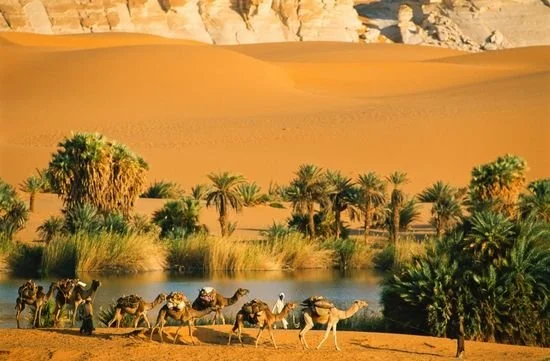
water and desert

We need both the desert and water, that time of aridity, and that time of refreshment and cleansing. These seeming opposites belong together: on its own, the desert is a fearsome place that can leave us at the mercy of sandstorms, scorpions, wild beasts, night terrors, and agonizing thirst; on its own, water lets us float aimlessly or else tugs at us relentlessly until we are swept away by powerful currents or else battered by tempestuous waves.

 To linger in the desert too long places us at the mercy of demons, while to dive deep into unknown waters can lure us into forgetfulness and oblivion. Alone in the desert, we are left to face our worst selves and relive the pain of lives past —forgotten memories of what we have done and what we have failed to do, of promises made and broken, of relationships that ended with a bang or a whimper, of opportunities missed.

Alone in the water, we lose all agency as the waves and rippling currents do what they will, lulling us into complacency or leaving us struggling for survival...

But together, desert and water are balm for the soul. In silence and solitude, we remember; in water, we are "remembered" or made whole again. The desert brings insight, allowing us to see how we have been responsible for much of our pain, primarily because of our attachments and ego needs; at the same time, it allows us to understand why others may have harmed us, to see how their own wounded selves have caused them to be cruel, unjust, or indifferent. For its part, water washes over us, cleansing our hearts and minds, soothing our aching limbs, and accepting our tears of grief and remorse.
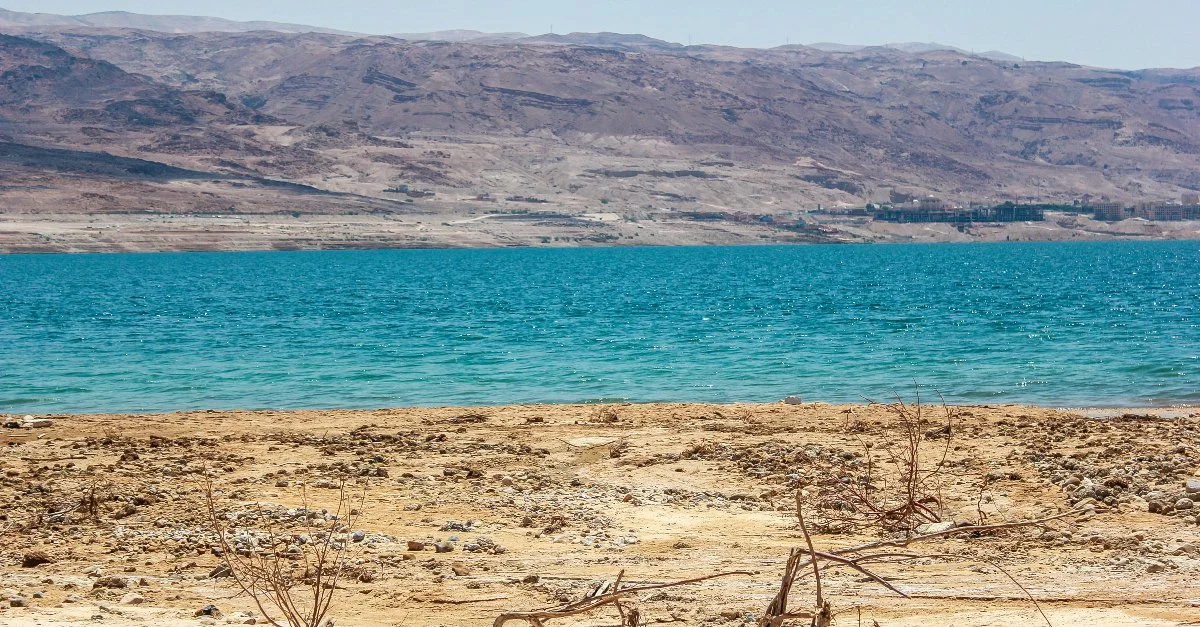
Jordon River


Just as in the days of John the Baptist, the people of Judea flocked to the desert to be immersed in the waters of the River Jordan; so, too, we need to seek out both desert and water, both insight and forgiveness. This desert/water immersion is neither an empty ritual nor a mere obligation. It is not about trying to feel good, getting rid of guilt and regrets, being "saved," becoming righteous, or preparing for Judgement Day. Instead, it is an opportunity to encounter the God who dwells in both desert and water, to be with the One who was driven by the Spirit into the desert to find his mission and identity and who had the power to calm turbulent waters. In his company, we look to the desert to find life, not death; at his bidding, we plunge into the maelstrom to learn to walk on water...

For all its glitter and frenetic activity, Advent is a desert season. Still, while we in the northern hemisphere celebrate a snowy wonderland in our carols, it is the living water that brings life to the desert-- the inexhaustible streams of God's love and mercy that are ever-present in those places where even angels fear to tread, flowing through the wasteland, the scorched earth, and the parched lands...

Elizabeth Stewart

Elizabeth-Anne Stewart, PhD, PCC, BCC

In addition to her work as a spiritual director, Elizabeth focuses mainly on spiritual coaching and writing coaching. Based in the greater Chicago area, she teaches writing at St. Xavier University and spiritual coaching at the Institute for Life Coach Training (ILCT); she recently launched The Ministry Coaching Foundation to offer opportunities for continuing education and personal renewal. www.elizabeth-annestewart.comwww.MinistryCoachingFoundation.comwww.ChicagoWritingCoach.com

Joanna joannaseibert.com

+++
Celtic Spirituality, the Immanent Presence of God

 Celtic Spirituality, the Immanent Presence of God

Gaelic Blessing

“Deep peace of the running wave to you,

Deep peace of the flowing air to you,

Deep peace of the quiet earth to you.

Deep peace of the shining stars to you,

Deep peace of the gentle night to you.

Moon and stars pour their healing light on you,

Deep peace of Christ, the light of the world to you.”

In Celtic Spirituality, God’s presence is in and through the created world. There is no dualism. Nothing is seen as secular. All is holy. Nature is sacred. God is present everywhere, but this is not pantheism. The hills, the sky, the sea, and the forests are not God, but their spiritual qualities reveal God and are connected to God. This is like the artist’s connection to his painting. While bearing the artist’s hand identity, a picture or statue still exists separately from the work.

Gaelic Blessing is the John Rutter anthem our choir sang at my ordination. I have experienced the words of this music from an early age. Sitting by my desk, even in front of a picture window, I become consumed by my world and its problems, and I become self-absorbed. When I go outside, I am in a different world. I suddenly experience a world more significant than my own that I did not create. My problems become small. I become connected to something greater than myself. Following the moon’s rise at night, the rising of the sun in the morning, its setting in the evening, or listening to the constant rhythm of the waves by the ocean brings peace to our bodies, souls, and minds that no drug or substance can duplicate.

Nature helps us live in the present. God most often meets us in the present moment, even on these cold winter days of Advent. Maybe especially in the winter of Advent, when the deciduous trees are now bare and sleeping, so we more clearly see beyond the world around us.

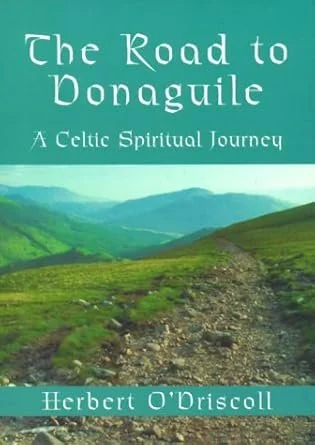
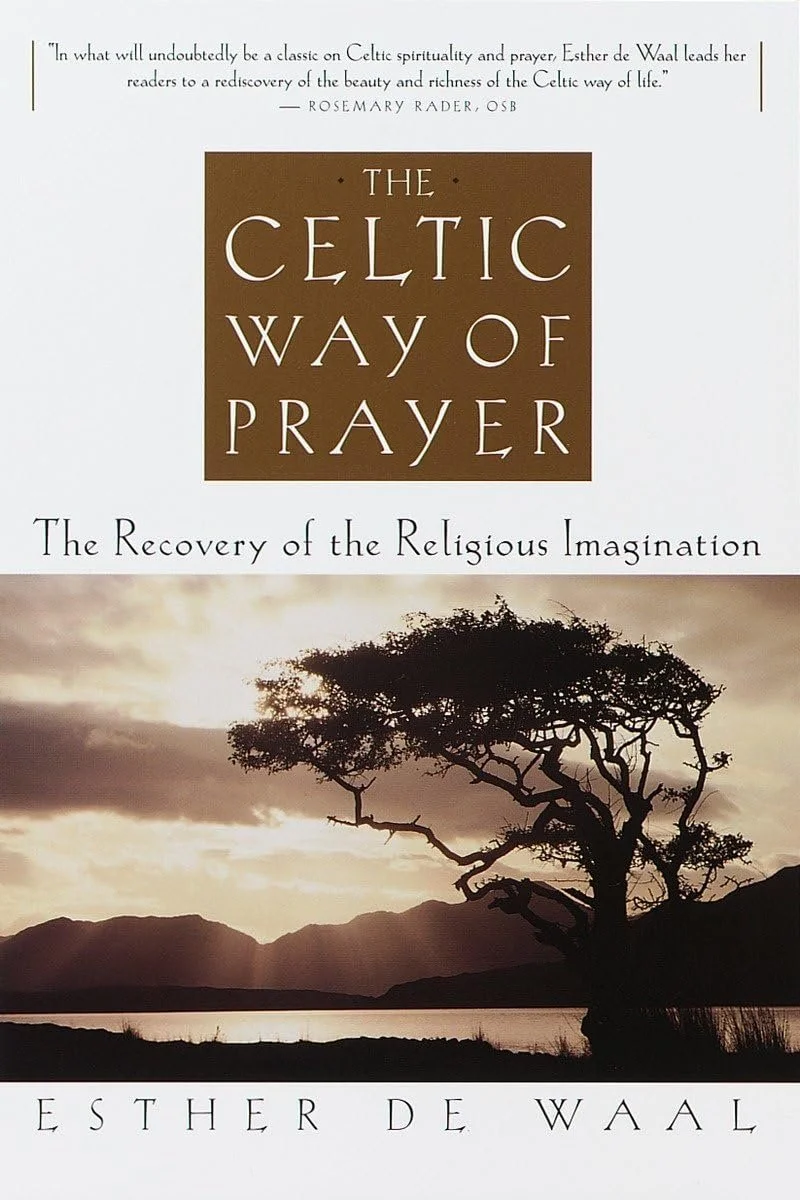
Two authors I had the privilege of getting to know at the College of Preachers are good reads about Celtic Spirituality: Esther de Waal in The Celtic Way of Prayer and Herbert O’Driscoll in The Road to Donaguile: A Celtic Spiritual Journey.

Painting as a Spiritual Practice

Painting as a Spiritual Practice

ART SHOW RECOLLECTIONS

Guest Writer: Dr. Ken Fellows

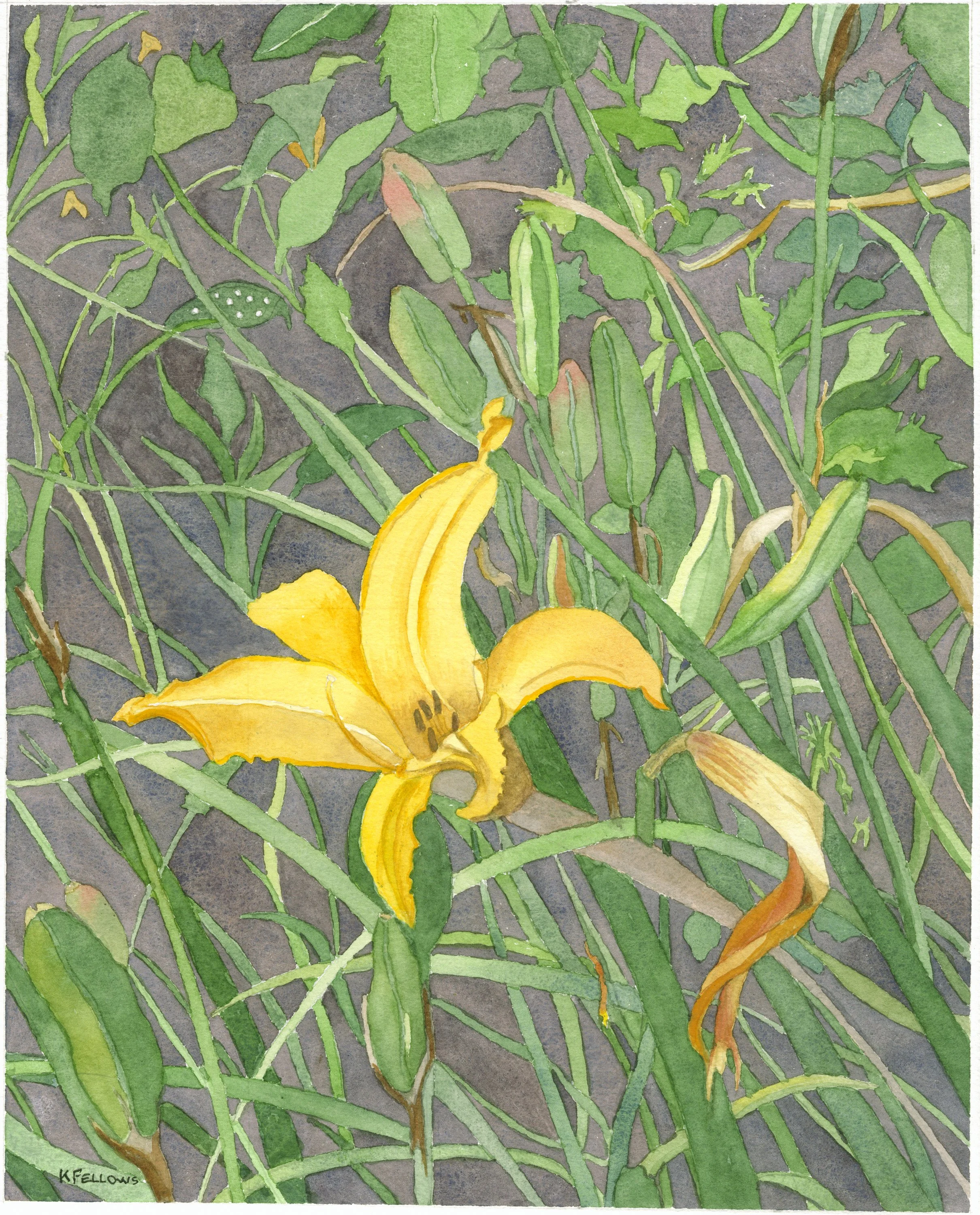
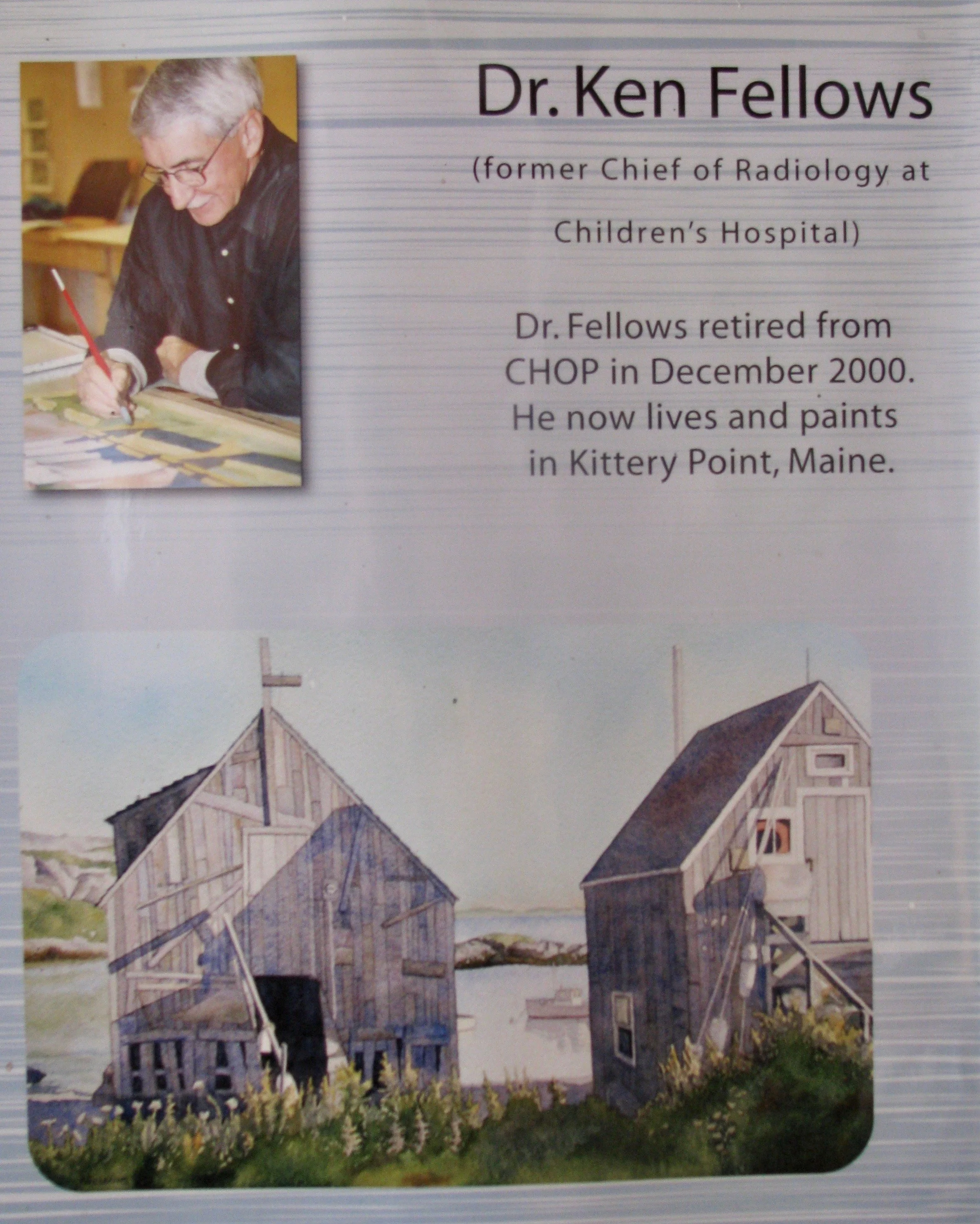
        I retired and moved to Kittery Point, Maine, in 2000. Kristin and I soon joined the Kittery Art Association (KAA), a group of artists and art admirers that has existed since 1958. At the start, we helped rebuild a burned-out KAA Gallery, an early 1900s firehouse, and finished the restoration in 2001. That early work allowed me to brag for over 20 years that “I’m one of the few artists who has a permanent collection on view at the gallery …” I painted the ceiling, the walls, and the baseboards.”  I even served for many years as a custodian. I preferred the term ‘art preservationist,’ which means cleaning bathrooms and sweeping out. Over the years, I was a ‘featured artist’ in 3 exhibits. Two of those are memorable, and one is indelible in my mind.

     For one July 2014 show, the promotion for its 5 pm Sunday KAA Opening Reception announced that my watercolor paintings would cover an entire gallery wall and that I would give a 20-minute talk on my artistic motivations, techniques, and pleasures. That very Sunday morning, I was at a Portsmouth trampoline emporium watching my young granddaughter, Ella, running helter-skelter among a mob of kids. Suddenly, I noticed a father convulsing on the floor nearby. I rushed to his side, minutes later to be joined by his wife, who confirmed he suffered grand mal seizures. We did what was needed to attend to him until an ambulance crew arrived.

    At 5 pm that afternoon, I was conversing with a group of new friends at the KAA Opening Reception when a pregnant young woman next to me swooned and collapsed to the floor. It was, oh my, here we go again. After rendering necessary medical support, she revived and was stable 20 minutes later. Just as the ambulance arrived to take her to York Hospital, I was summoned to begin my gallery talk. I recall no compliments on the talk, although someone mentioned that my shift in gears was “impressive.” I didn’t explain that I already had some practice just that morning. Fortunately, no one was hurt by either my medical interventions or my blathering on about watercolors that day --gratification enough.

   Some years later, my local artist friend Bill Paarlberg and I were invited to prepare a 2-man KAA show. That exhibit is memorable for the great fun it was to plan and the appreciative crowd that came. The public was alerted to the lightness of the event by the show’s

title–– “Some Pretty Good Watercolors.” Also, the advertising postcards and posters depicted us as Van Gogh and Cezanne in a ‘2 Stooges’ pose.

     Attendees were greeted on the gallery porch by an African drumming group and tables of edibles and drinks, creating a festive atmosphere. Inside, on the galleries’ second floor, Bill had set up a wide table where viewers were invited to try painting with watercolors. Chairs accommodated all those wishing to dabble with the paints, water, brushes, and paper provided. An accomplished art teacher, Bill led folks in fun exercises and in copying simple scenes he sketched for them. Many gallery viewers participated, and about half were children. Our own paintings adorned the gallery walls and received the usual compliments, but seemed somewhat incidental to the entertainment. Our watercolor extravaganza was later voted “Best Show” of the year by the KAA membership, so perhaps our watercolors were considered “good enough.”  

     A joint show in 2006 … wife Kristin and I with Polly and Peter Moak … is most ingrained in my memory. The show’s opening evening is seared in my mind by the elation of the event and by its sad aftermath. A KAA exhibit comprising only two couples was unique. Kristin was an art major in college and has been a lifelong, active, successful multimedia artist and craftsperson. Polly is recognized locally as an innovative painter, and Peter, a retired art professor, paints creatively in gouache. The turnout that opening evening was large, attracting many personal friends, patrons, and KAA members. The atmosphere was electric, and the praise profuse. Kristin and I left the gallery that evening happy, even euphoric, over the show’s success.

     Upon arriving home at about 7 pm, the phone was ringing. It was my daughter Hannah calling from nearby Portsmouth, NH. She was crying but managed to stammer that our son Ian, 37, had been found dead on the floor of his apartment, his dog lying beside him. My brother John, who, like Ian, lived in Grand Rapids, Michigan, had gone to do a well-being check on his nephew. 

      I recall becoming completely numb and voiceless. Everything went dark. My mind was blank. I called brother John, who confirmed the crushing news. I had gone from the heights of joy to the depths of despair in minutes.   The only reaction I could muster was to step outside into the humid summer air to issue a long, loud, primal scream into that black night. There’s no graceful way to react to the sudden death of a loved one.

     Later, we learned from an autopsy that Ian’s unexpected death was from a cardiomyopathy, an inflammation of the heart muscle. That all happened 15 years ago, but for me –and even more for Kristin –the date remains the saddest, most devastating recollection of our life together.


             “… Losing a child is simply not supposed to happen. The brain goes numb. God’s

 way of offering mercy. If we were fully cognizant, it would be unbearable.”—Garrison Keillor 

Ken Fellows

Joanna Seibert joannaseibert.com