Waiting for the Light, the Light in the Snow

 Waiting for the Light
Guest writer: Susan Mayes

“So you, by the help of your God, return, hold fast to love and justice, and wait continually for your God.”— Hosea 12:6

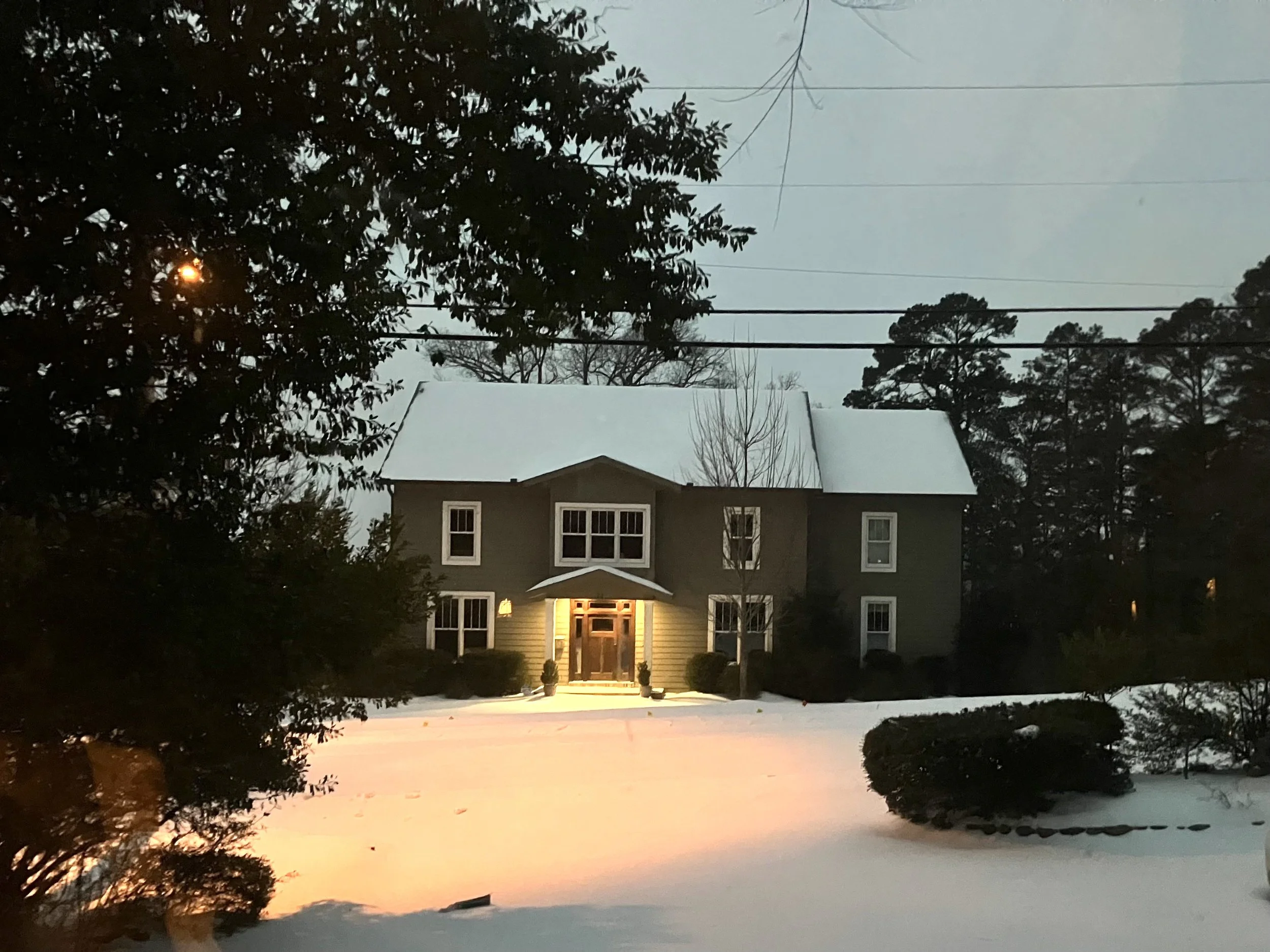
As an early morning riser, I begin my day waiting. A perfect time to “Be still and know that I am God.” Viewing neighbors’ lights illuminate their windows, one by one, in various apartments, makes me feel a sense of community. We will all be waiting today, as a large winter storm is predicted to bring chilling air, winds, snow, and ice to our landscape. As one might imagine, along with waiting and watching comes anticipation and preparation.

Our university has already called for early dismissal, so students, faculty, and staff will not be in danger if the weather event happens as anticipated. My own living village has plans for staff to stay overnight to accommodate the needs of residents with special needs, keep driveways and sidewalks clear, and deliver meals as needed. A local performing arts venue has moved its show time to an earlier hour to ensure attendee safety. My church still plans to hold services on Sunday morning, but we have been advised to monitor for the latest updates. 

The shelves at the local grocery were getting bare as I visited yesterday. In fact, I can’t remember seeing that many people in that market in years! All this busyness in anticipation of “the event!” So, it begins… the waiting, the preparation is a dynamic moving process, but for now, we are as ready as possible. 

The above “anticipatory set” is an analogy to our work as Christians.  We hear the news of our Savior; we read, study, and listen to the history of God’s people, as well as the stories of Jesus’ love and healing. We pay attention to other interpretations of theology; we pray in our discernment… we are preparing. As the season of Lent quickly approaches, let us be mindful to take time to enter our “personal desert” and contemplate making ready for Christ’s resurrection and, ultimately, His coming again. 
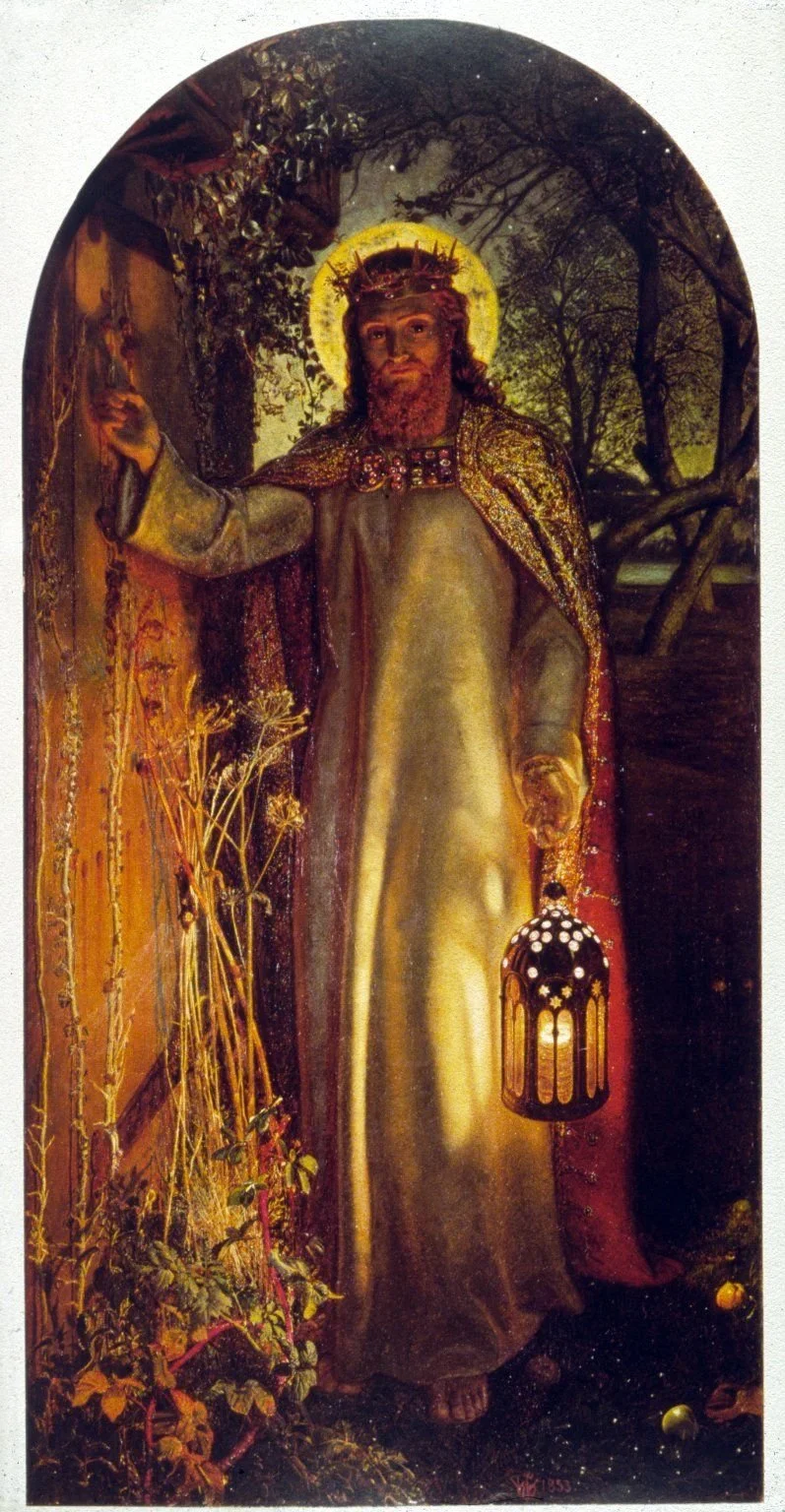
I just saw the first light brighten a neighbor's window! Be prepared, and let us wait in love for His lantern and the light that will bring an abundance of Christ’s brilliance. 

Susan Mayes

Joanna joannaseibert.org


Many Epiphanies, Seeing the Light of Christ in Each Other

Many, many Epiphanies: Seeing Christ in All

Caryll Houselander mystic

“I was in an underground train, a crowded train in which all sorts of people jostled together, workers of every description going home at the end of the day. Quite suddenly, I saw with my mind, but as vividly as a wonderful picture, Christ in them all.

But I saw more than that; not only was Christ in every one of them, living in them, dying in them, rejoicing in them, sorrowing in them—but because He was in them, and because they were here, the whole world was here too … all those people who had lived in the past, and all those yet to come.”—Caryll Houselander, A Rocking-Horse Catholic (New York: Sheed and Ward, 1955), 137–139, 140. 

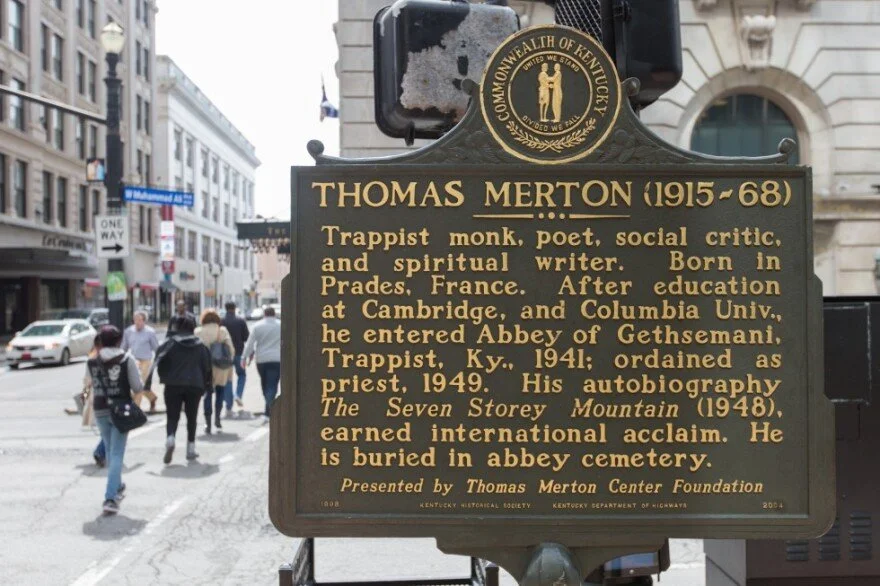
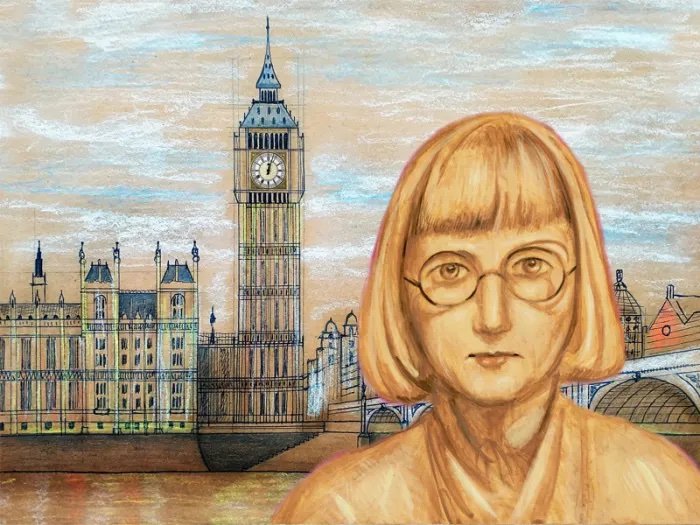
This twentieth-century English mystic, Caryll Houselander (1901–1954), describes how a powerful vision of Christ’s presence in all occurs on an ordinary underground train journey in London.  It brings to mind Thomas Merton’s epiphany in Louisville, at the corner of Fourth and Walnut.

“In Louisville, at the corner of Fourth and Walnut, in the center of the shopping district, I was suddenly overwhelmed with the realization that I loved all those people, that they were mine and I theirs, that we could not be alien to one another even though we were total strangers.” — Thomas Merton.

This is the first line of Thomas Merton’s famous mystical revelation and epiphany in downtown Louisville, Kentucky, described in his 1968 journal, Conjectures of a Guilty Bystander, about the world of the 1960s. pp. 140-142.

Merton had been a Trappist monk for 17 years and was on an errand for the monastery on an ordinary day in March 18th, 1958. The story became so famous that Louisville erected a plaque at the site in 2008, at the 50th anniversary of Merton’s revelation. Ordinary people and popes continue to visit the corner of Fourth and Walnut, where Merton’s life-changing experiences and those of his readers began. 

 Merton’s and Houselanfer’s experience also seems similar to what James Finley describes in Christian Meditation: Experiencing God’s Presence as “having a finger in the pulse of Christ, realizing oneness with God in life itself.”

 This experience may also be similar to what St. Francis realized in nature when he called the sun his brother and the moon his sister. Richard Rohr calls it finding our True Self, “our basic and unchangeable identity in God.” 1

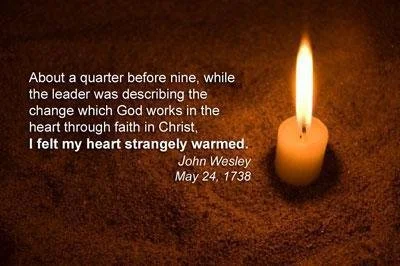
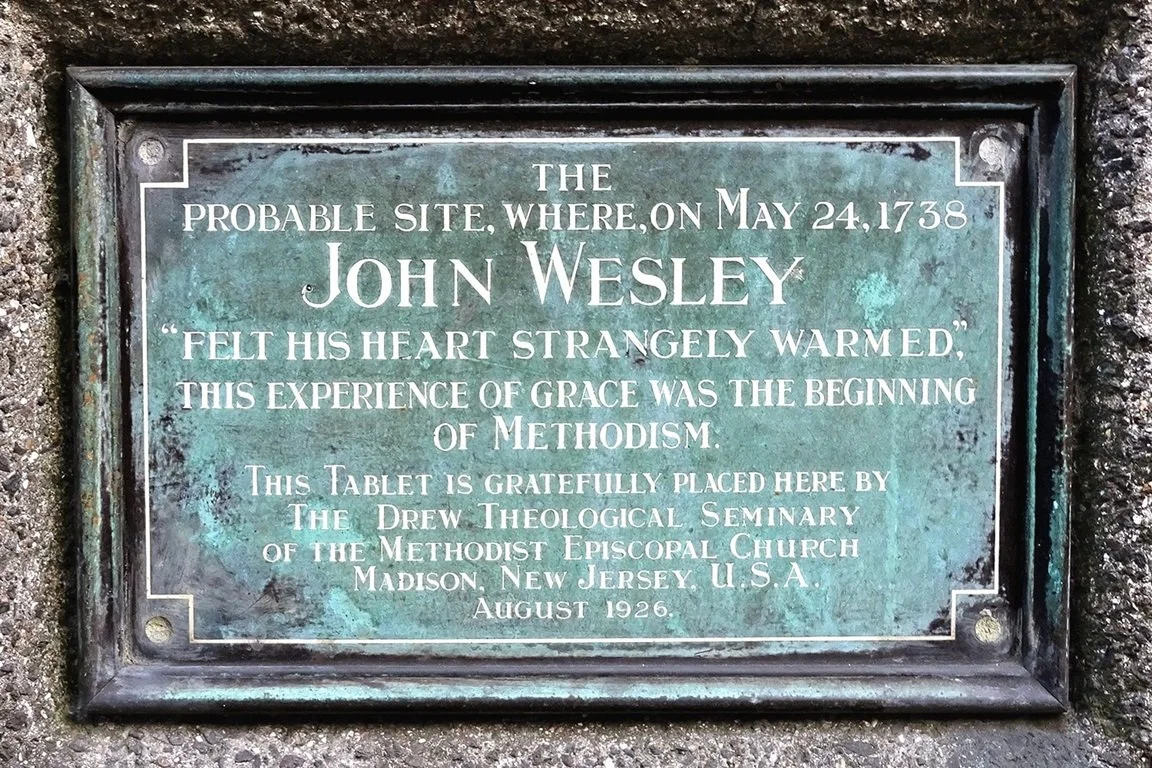
Methodists might relate it to John Wesley’s experience at 8:45 pm on May 24th, 1738, at a Society meeting in Aldersgate Street, when someone read from Luther’s Preface to the Epistle to Romans, and Wesley said, “I felt my heart strangely warmed.” 2

Suppose you ever have an opportunity to visit Louisville. In that case, we hope you can go to the corner of Fourth and Walnut and let us know what epiphanies may come to you in London, in the underground, on Aldersgate Street, or in a new place!

1 Richard Rohr in “Richard Rohr Meditation: Thomas Merton Part II, Center for Action and Contemplation, October 6th, 2017.

2 John Wesley in Journal of John Wesley (London: Charles H. Kelly, 1903), p. 51.

Joanna       https://www.joannaseibert.com/


Non-anxious Presence/ or Less Anxious Presence

Non-anxious presence/or Less anxious presence

“The sea does not reward those who are too anxious, too greedy, or too impatient. One should lie empty, open, choiceless as a beach - waiting for a gift from the sea.”—Anne Morrow Lindbergh in Gift from the Sea (Pantheon 1955, 1991).

Anne Morrow Lindbergh describes our ideal position in our relationships and ministries. We are waiting “choiceless,” like at the beach, for the gift from the sea to know the next direction and the next words, especially in any decision or conflict.

Family Systems dynamics teaches us that if we can remain a non-anxious presence in tension in relationships with others, we may keep tensions from growing and eventually solve any dilemma. I know a few who can remain non-anxious, for it is not a human trait. However, staying less anxious is a real possibility.

If we can be the least anxious presence in any situation, we can keep our arteries from tightening, which can take minutes and weeks off our lifespan. Our inner and outer presence will stay calmer. We become a vessel for the spirit to become part of the relationship, decision, situation, meeting, encounter, or ministry.

Answer: How do we become like the beach waiting for the gift from the sea Lindbergh describes? It certainly involves spiritual disciplines. Prayer and meditation before, during, and after each decision, ministry, and relationship are a good place to start.

We learn from our own spiritual disciplines and from hearing about the experiences of others who follow them: centering prayer, morning prayer, yoga, a rule of life, spiritual direction, corporate worship, and study. There are many more. Our tradition, scripture, and reason tell us that these disciplines are gifts from God to help us care for our souls and those of others.

 But we should never forget Lindbergh’s central message. The world in nature outside our confined world is also the primary setting from which to learn, know, and feel the rhythm of waiting to receive Lindbergh’s gift from the sea.

Joanna  https://www.joannaseibert.com/