Loving Without Understanding
 Loving Without Understanding

“And so it is those we live with and should know who elude us, but we can still love them. We can love completely without complete understanding.”—Norman Maclean, A River Runs Through It (University of Chicago Press, 1976).

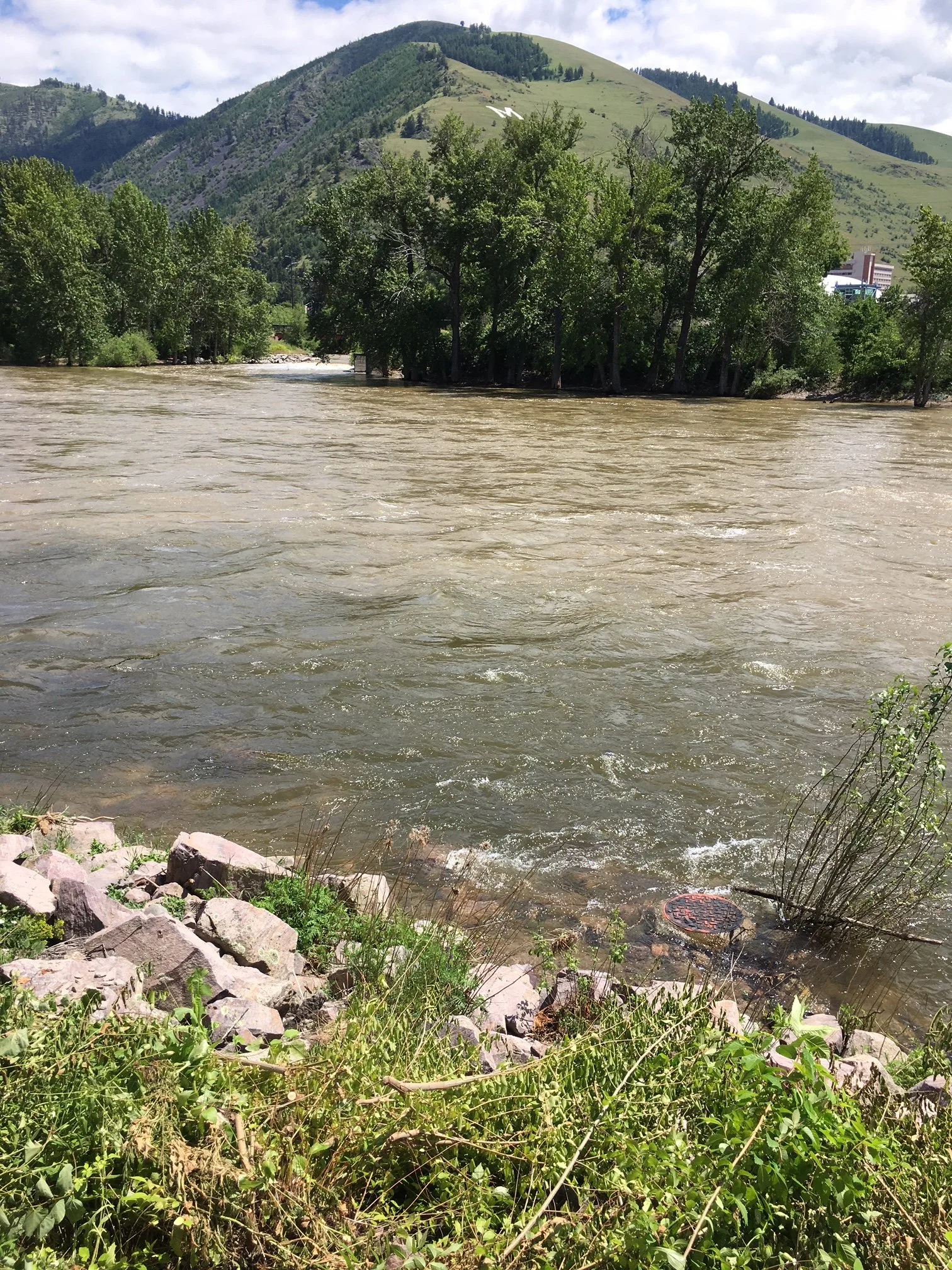
I remember being in Missoula, Montana, visiting our daughter, Joanna, and her husband, Dennis, with our oldest grandson, Mac, and his dad, John. Our hotel is directly on the banks of the Clark Fork, and the river is racing by our small porch on the first floor in real time.

We are mesmerized by watching the high-speed water, but the sound of the raging river enters our being and, indeed, runs through us. It calms. It soothes. In its orchestral movement, it is peaceful. It sounds like a wind instrument, perhaps a distant Native American flute. Sometimes, it has the “Om” sound chanted in yoga and Eastern meditation.

We begin to know the stillness of sitting or standing, and observe the wonder of something too magnificent for words as it rapidly passes by. We can become so relaxed that we fall asleep.   Water, moving or still, has healing powers we cannot understand.

I watched Robert Redford’s movie A River Runs Through It with all of our children and most of our grandchildren. We can often quote lines from the film and respond to them. Stop now if you have not read the book or seen the movie, because I will spoil it for you.

The story is about the Maclean family, a father and two sons, Norman and Paul, growing up fly-fishing in Missoula, Montana. The words quoted today are near the end of the movie, preached in one of the father’s last sermons.

I could almost hear Norman’s father when we rode by that same brick Presbyterian church yesterday on the way to get ice cream. The father indirectly talks about Norman’s younger brother, Paul, who died an early traumatic death related to his addictions.

As I watch and listen beside the Clark Fork, where the Macleans lived and loved a century ago, I also think of those I could not understand but wanted to love completely. Today, my prayers are to continue to try to hear these words from Norman’s father about them. Of course, there are also those I cannot understand and may never want to love, even a bit, much less completely. I pray to see them in a new light, seeing the Christ in them.  

Loving without understanding may be on the path to unconditional love, God’s love. It is also the balm to heal our differences. Om.

Joanna  https://www.joannaseibert.com/
 

Celtic Spirituality: Celtic Sacred Life of Hospitality in Community

Celtic Spirituality: Celtic sacred life of hospitality in community

         “I sought my God;

    My God, I could not see.

    I sought my soul

    My soul eluded me.

    I sought my brother

    And I found all three.”

In the Celtic hospitality tradition, God is present not only in Nature but also in our neighbor, ourselves, and especially in the stranger. This is a sacredness in relationships. I am told there is no word in the Irish language for private property. Faith is lived in a community that combines periodic seclusion with community and mission. Anamchara, or soul friends, spiritual friends, or spiritual directors, are essential relationships. Women are regarded as equals, and communities are not hierarchical. Monasteries rather than parishes are the basis of the church. The Celts value education, art, and music.

We traveled to Iona off the western coast of Scotland twice and would return in a heartbeat. You don’t simply stumble on Iona, however. You really do have to want to go there by ferry, down a one-lane winding road, and finally walk over on a ferry onto the small, three-mile-long island in the Inner Hebrides, where Columba brought Celtic Christianity to England in 563.

Here, the breathtakingly illuminated manuscripts of The Book of Kells is believed to have been written at the end of the 8th century. Iona is considered an exceptionally “thin” space where the membrane between the spiritual and the secular is extremely thin. This was our experience as well. You walk a lot, eat good food, worship outdoors in the ancient abbey and a decaying nunnery, listen to the wind and waves, study high crosses, wear warm clothing, and watch the sea change the color of the abundant million-year-old rocks by the shoreline.

I often meet with spiritual friends who describe Celtic Spirituality when they have no name for it. This seems a sign of the universality of this type of spirituality. The sacred presence of God in each of us is a start.

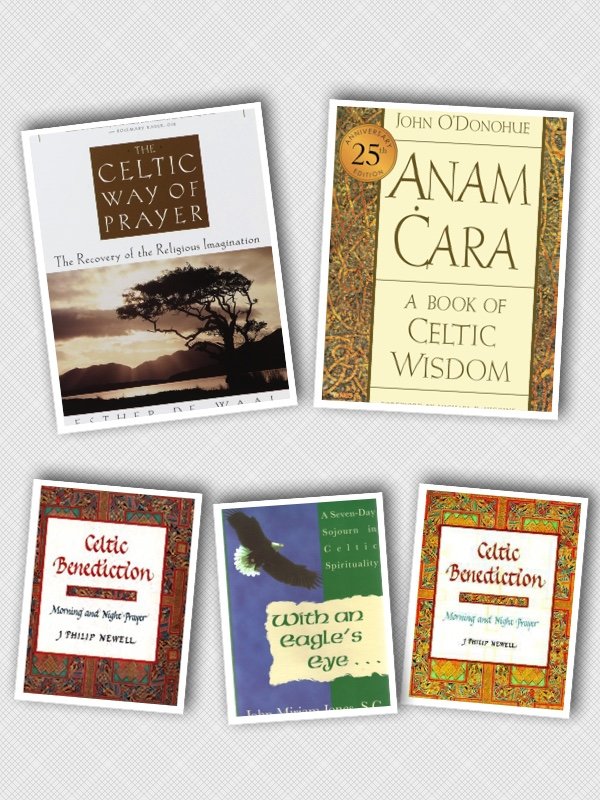
Again, further reading might include Philip Newell’s Celtic Benediction, John Miriam Jones’s With an Eagle’s Eye, Esther de Waal’s Celtic Way of Prayer, and John O’Donohue’s Anam Cara.

Joanna    https://www.joannaseibert.com/


Sacraments, Meditation, and Thin Places

  Meditation and Sacraments and Thin Places

Dissolving the Membrane Between the Spiritual and Actual World

‘If you compare the mind to a balloon, meditation as a religious technique is the process of inflating it with a single thought, to the point where the balloon finally bursts, and there is no longer even the thinnest skin between what is inside it and what is outside it.”—Frederick Buechner— in Wishful Thinking.

Buechner’s thoughts on spirituality take us out of the box. Indeed, in meditation, we hope to enter that thin place where the spiritual and the actual worlds are only a thin layer away. Buechner tells us that meditation can dissolve and break that membrane wide open, so no barrier exists. That especially happens when we see Christ in our neighbor, and our neighbor sees Christ in us.

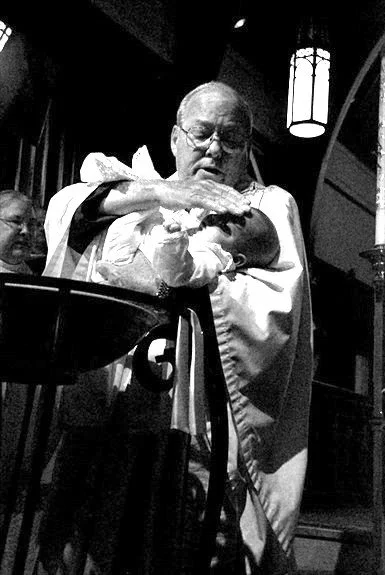
This explosion occurs when we see the sacredness in the secular world, honor every human being, and care for “this earth, our island home.” That barrier is often broken in the sacraments, especially Eucharist and Baptism. We recently saw it at our church at the baptism of three adults, but this mystery also happens with infant baptism. Earthly holiness breaks through, all wet, sometimes with screaming.

I like the balloon bursting, because we never know when it will happen. Balloons, like meditation practices, come in all sizes and colors. Some balloons do not seem to burst. Some break with little effort. Again, it is a mystery.

Breaking a balloon can also produce chaos. Yet, that is where God most often meets us—and creation begins.