Sports and Bonding

Sports and Bonding

Guest Writer: Ken Fellows
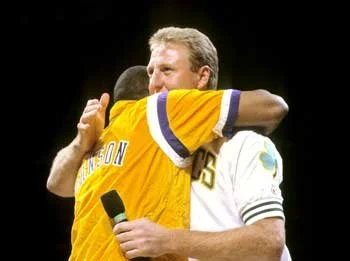
       In their day, Larry Bird and Magic Johnson were celebrated Hall of Fame stars on two of the most competitive professional basketball teams, the Boston Celtics and Los Angeles Lakers. While giving no quarter across many games, they famously bonded off-court to form a legendary friendship full of mutual admiration. In all sports, there are similar close relationships between fierce competitors, but perhaps none more recognized than the Bird/Johnson comradeship.

    The byline for this recent picture in the Boston Globe was: ”Real Reward: Results Matter in Sports, but Relationships Matter More and Last Longer.” In the piece, sports writer Tara Sullivan described the “power of friendship in sports and how bearing witness to the respect, trust, and loyalty between professional athletes can be as captivating as watching them compete for wins and championships. The example they set in those moments resonates with more potency than anything achieved statistically.”

     In her article, Sullivan points out that “Jesse Owens, who forever changed our conversation on racial equality, said this: Friendships born on the field of athletic

strife are the real gold of competition. Awards become corroded, and friends gather no dust.”
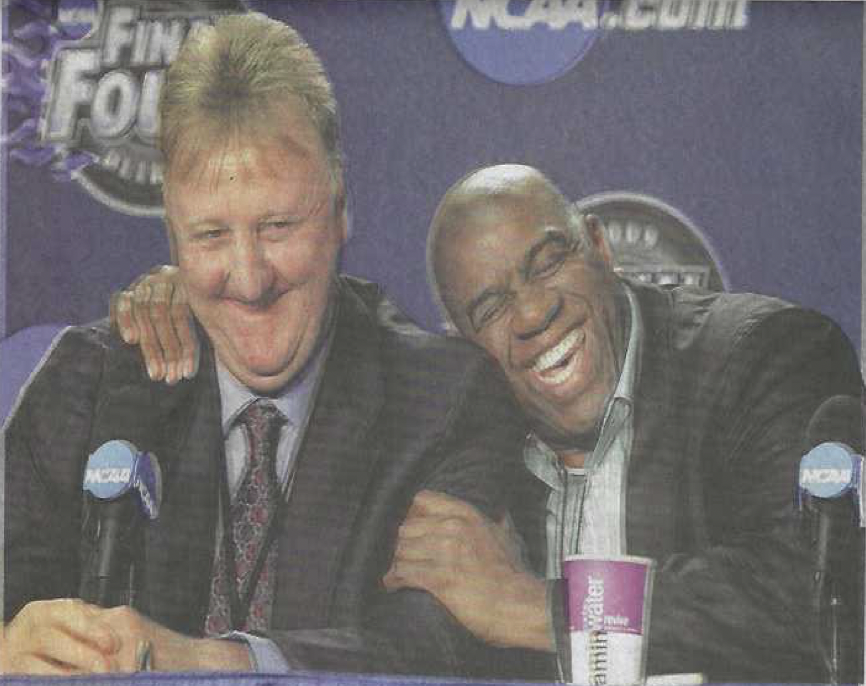
     This statement, whose wording is quite eloquent, is nonetheless insightful and has been illustrated many times in other athletic avenues. Sullivan’s article also cites Chris Evert and Martine Navratilova, former competing tennis champions turned best friends, who helped each other through their battles with cancer. And, at the end of Roger Federer’s retirement tennis match with Rafael Nadal, the pair celebrated their respect and loyalty while tearfully holding and raising hands.

     My youth and my adult years were enlivened and enriched by playing individual and team sports. Especially memorable in my senior years are the many teammates, competitors, and games I played over 25 years of retirement playing adult basketball and pond hockey in Kittery Pt, Maine.

     Our basketball games occurred in a local school gym on Monday and Wednesday evenings from 6-8 pm. As memorable as the games were, the camaraderie … the kidding, joking, stories, and laughs … during between-game rest periods produced particularly lasting friendships and durable memories. The night I “retired,” I told the assembled 8-10 players that it was my last game …with regrets that all I ever wanted to hear upon leaving this earth when the time comes was “nice shot.” One of my best friends immediately countered: “That would never happen. The last words you would ever hear are: “That’s another foul.” He, I, and several other longtime player-friends still meet several times annually to reminisce over ‘beers and burgers.’ And there’s always a ‘reunion picnic’ held each spring.

     I’ve also maintained friendships with many of my ice hockey compatriots.

Having retired from playing hockey several years ago, I now stop and wistfully wave at the guys when driving past the Fort McClary pond where we played. But not anymore. Climate change has terminated skating there and at most local ponds. Many of those hockey players, like my basketball buddies, are still chums and peers …. for which I’m grateful.

     It’s refreshing to be reminded that trophies and medals are valued mementos of achievement, but tarnish, fade, and break. Like Larry and Magic, the best rewards in sports are the friendships established … they can last forever.

Ken Fellows

Joanna Seibert joannaseibert.com
    

Buechner: Ash Wednesday

Buechner: Ash Wednesday

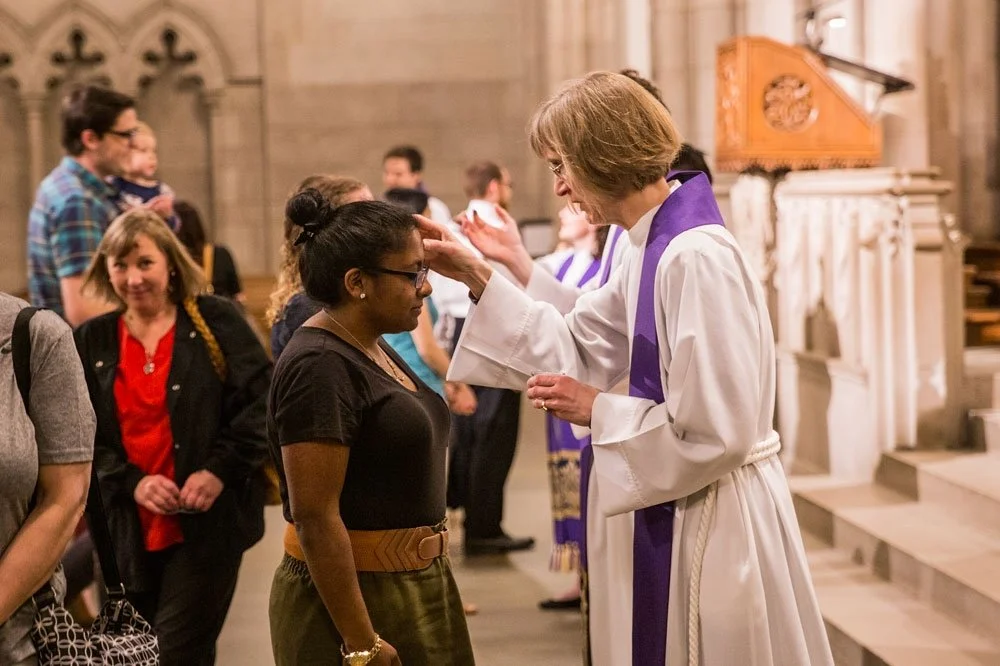
Ash Wednesday Duke University Chapel

“In many cultures, there is an ancient custom of giving a tenth of each year’s income to some holy use. For Christians, to observe the forty days of Lent is to do the same thing with roughly a tenth of each year’s days.”

 —Frederick Buechner in Whistling in the Dark: An ABC Theologized (Harper & Row, 1988), p. 82.

We begin our Lenten journey on this Ash Wednesday. It is a day to remember our mortality: “Dust you are, and to dust you shall return.” I think of my favorite aunt, who had Alzheimer’s for more than ten years, who died on Ash Wednesday.  

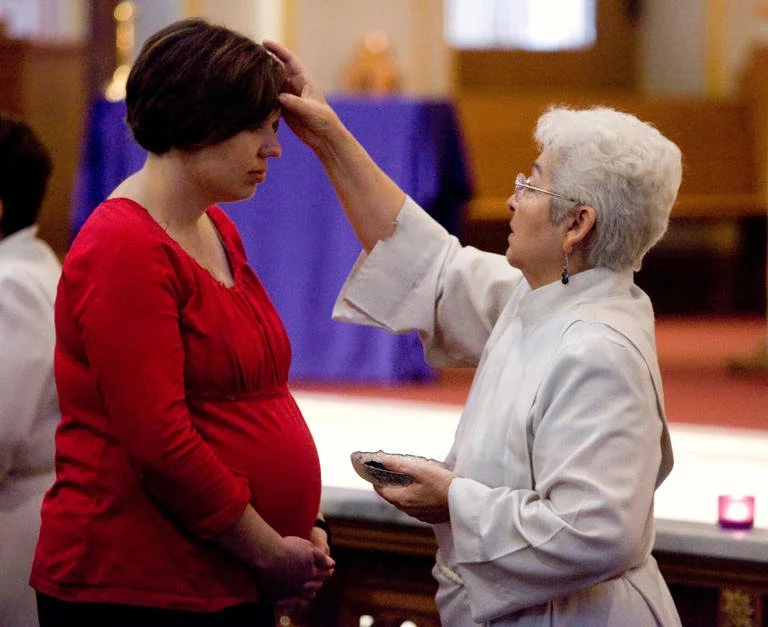
I remember watching the members of our parish receive the imposition of ashes. Some have cancer or other illnesses, and I know they worry whether they will be present in this body at this church next Ash Wednesday. Some are filled with tears as they stand or kneel at the altar. I wonder who will meet death face to face before next Easter. Could it even be a member of my family or me? I never imagined we would not be in our churches for two Ash Wednesdays.

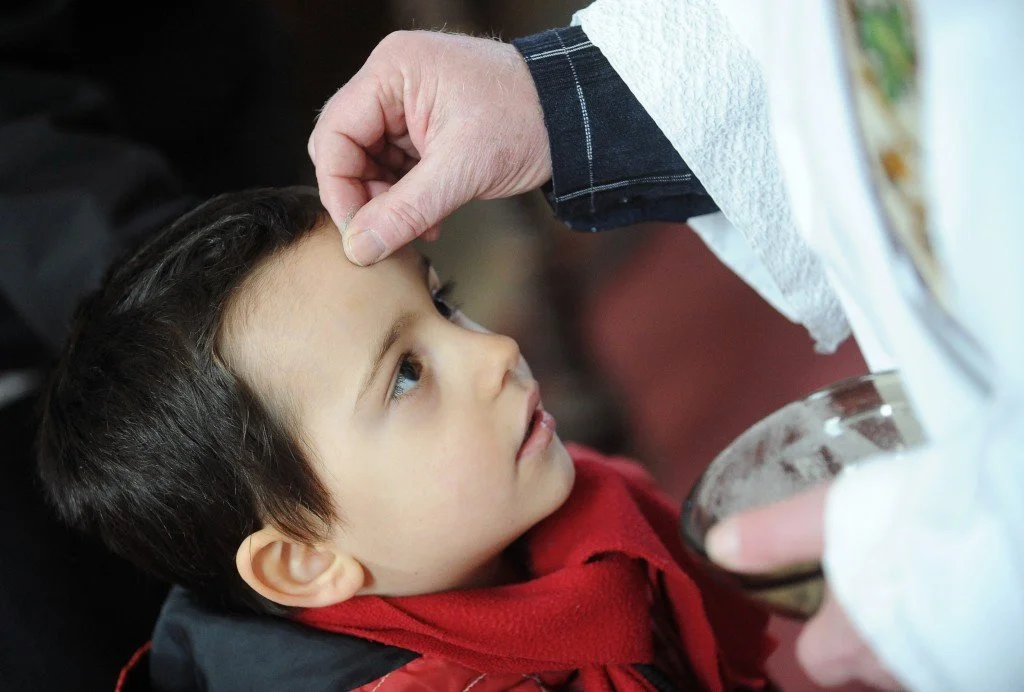
I travel back in time to the Cathedral School on Ash Wednesday, when we heard elementary students comment as we placed ashes on their foreheads: “Will it stay on? How do I look? You look funny.”

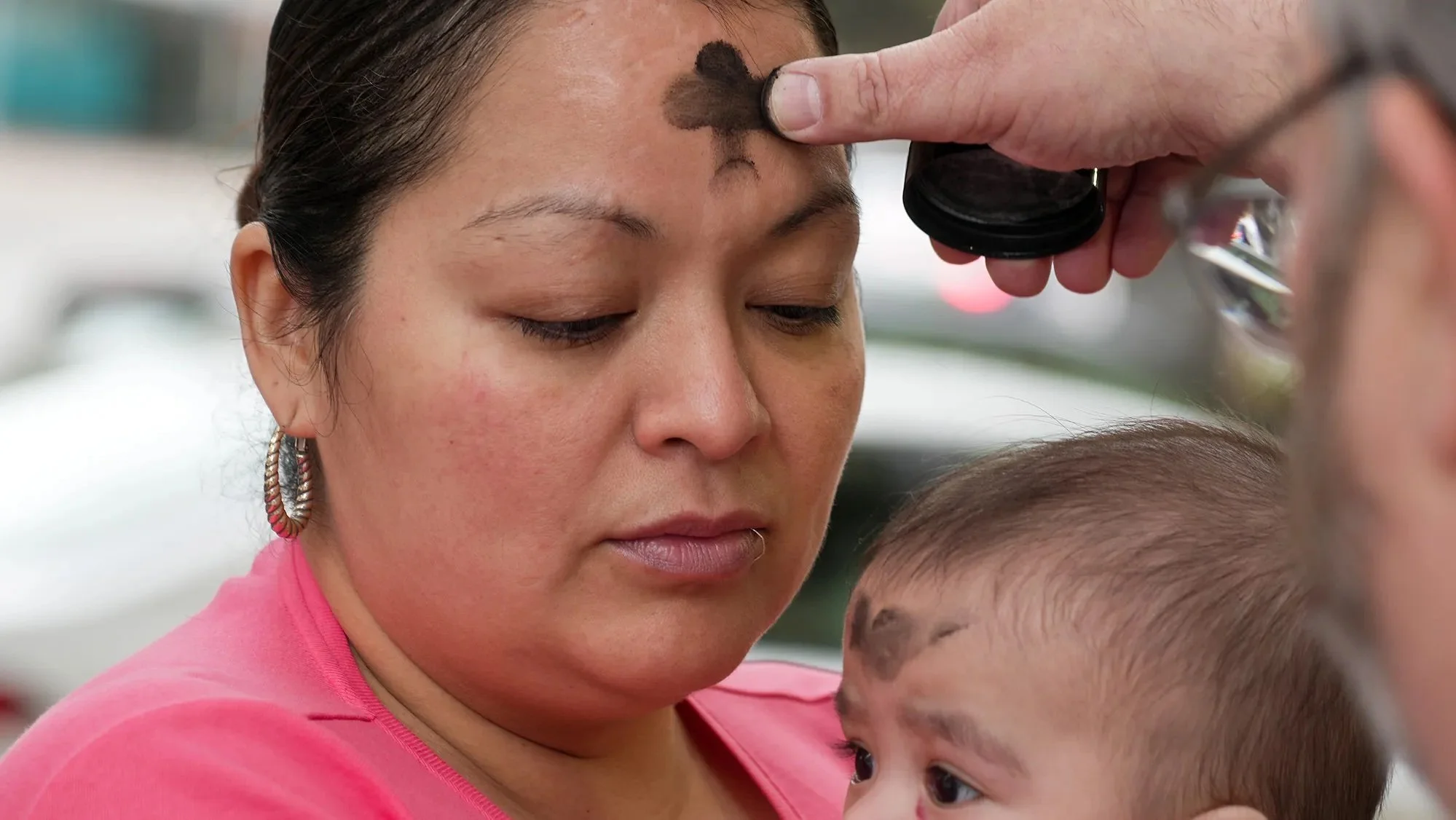
I remember a beautiful young mother holding her three-month-old baby girl and coming to the altar. Our priest traces the sign of the cross on the mother’s forehead. I do not want her to put the cross on this baby’s head. I watch as she asks the mother, and then applies the black ashes to the tiny forehead. The little girl does not cry out, but I want to stand up and protest: “No, don’t do that!” My life’s profession has been to care for tiny babies. I do not want to think of this precious one dying. I will not permit it. I still have no answers as to how to handle the death of a child. 

Ash Wednesday is a reminder of our immortality. I still have difficulty with it. A huge part of me lives as though I and others will live forever. As I grow older, I realize this is not true, and I begin to treasure each day as a gift. Easter tells me there is more than this life—resurrection—a resurrection, a new life. Barbara Crafton calls this life in the resurrection The AlsoLife.

I think again of my aunt, who died on Ash Wednesday. I still sometimes feel her presence. That same Ash Wednesday she died, someone calls to tell me that a dear friend is having her first baby and has asked for prayers. I pray that the presence of God in the spirit of my aunt will be by the bed of my friend to guide and protect her and her unborn child. 

It is always thus. One person dies, another is born. We all carry the blackened sign of the cross on our foreheads. My mind returns to the Cathedral School as I remember a sermon by Beth Maze on Ash Wednesday: “Creation Is Made from Dust.” 

It is good that we have these forty days to ponder all this.

Joanna https://www.joannaseibert.com/


Hillesum: Finding Answers in Emotional Difficulties

Hillesum: Finding Answers in Emotional Difficulties

“Thinking gets you nowhere. It may be a fine and noble aid in academic studies, but you can’t think your way out of emotional difficulties. That takes something altogether different. You have to make yourself passive then and just listen. Re-establish contact with a slice of eternity.”—Etty Hillesum in An Interrupted Life, Daily Quote, June 29, 2018, Inwardoutward.org, Church of the Saviour.

Etty Hillesum, a Jewish writer who died during the Holocaust, shares her formula for finding a way through difficult emotional situations. Those who make decisions using their thinking (T) function, what is reasonable, will probably disagree. Considering the importance of relationships, those who make decisions using their feeling (F) function may agree with Hillesum. They both are right. We need both thinking and feeling when making decisions.

Looking beyond personality types takes us to another level. Hillesum is trying to tell us to let the committee in our heads rest by whatever means we use: reading, meditation, music, walking, praying, writing, or just being. She tells us to connect with the God within us, especially after the silence that follows our spiritual practice. Jake Owensby also recently wrote about Hillesum and her experience of feeling God’s presence.1  He reminded us that hope in times of great difficulty is not a spiritual achievement on our part.

We do not generate hope with our practice. Instead, spiritual practices open us to the source of hope: to the God who is always already present to us and with us.

 We are to try to find an answer from something greater than ourselves, our God who is always beside us. We may not know the exact answer. We will recognize it because we know it will have something to do with love.

1 Jake Owensby in “A Hope-Shaped Life,” The Woodlands: A Place for Exploring the Spiritual Life, February 13, 2026.

Joanna  joannaseibert.com   https://www.joannaseibert.com/