God's Presence

God’s Presence

“Union with God is not something we acquire by a technique. Because God is the ground of our being, separation is impossible. God does not know how to be absent.”—Martin Laird, Inward Outward Daily quote, May 16, 2018.

We may feel that God is not beside us or has abandoned us, but Martin Laird reminds us that God is never absent. Never absent. Never absent. We need to remind ourselves about this every day, every moment. We are never alone. The vastness of God’s presence and love is more incredible than we can know, feel, or imagine.

My experience is that when I ask for more love from friends and family than they can give, this is a stop sign that I have become disconnected from God’s presence.

I am asking others to give more love than they can give because I do not feel God’s love. When I talk to people in spiritual direction who feel estranged from God, I remind them of my experience.

So, how do we change? How do we feel God’s presence and God’s love, rather than God’s absence? My experience is that we have become disconnected, especially from the Christ within us. There are a multitude of ways we can put ourselves in a position to know and feel the love of God, who is always present. That is the purpose of all spiritual exercises. Some make gratitude lists. Others try to be more intentional about their prayer time, spending more time with God and listening instead of talking. Some spend more time in Nature, where God’s presence and beauty are overwhelming, watching the sun rise and set, anywhere, but especially by the sea.

We are told God is always present among the sick, the poor, the needy, and the lonely. My experience is that visiting those in need is one of the surest ways to connect with the Christ in another, who then reflects to us the Christ in ourselves that has been there all along. Working at a food pantry, visiting the sick, and sitting with someone lonely is where we find God.

The paradox is that getting out of ourselves leads us back to the God within.

Joanna joannaseibert.com  https://www.joannaseibert.com/
 

De Mello: Ignatian Contemplation

De Mello: Ignatian Exercises and More

“This is the spirit in which we embark upon Ignatian contemplations. Through the simple childlike use of our fantasy, we attain a truth far beyond fantasy, the truth of mystery, the truth of the mystics.”—Anthony de Mello in Sadhana: A Way to God (Image Books, 1978).

De Mello offers many awareness exercises that enable us to know and feel the presence of Christ, especially in prayer. In one exercise, we imagine Jesus sitting in an empty chair beside us. He reminds us that we can start our prayer in our heads. But our prayers will become stale and dry if we do not move to our senses and heart—out of a place of thinking and talking into a place of feeling, sensing, loving, and intuiting.

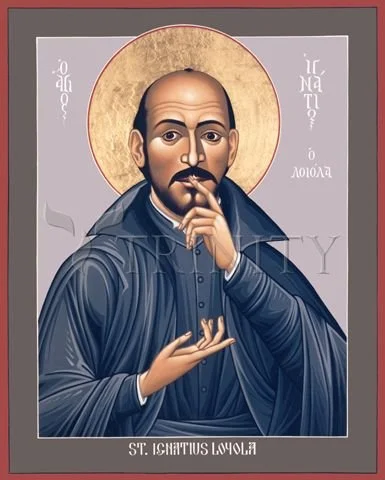
De Mello suggests Ignatian contemplation to help us become part of a scene from Christ’s life, to enhance our reading of Scripture and our prayer life. He reminds us of others who experienced God using Ignatian contemplation. In contemplation, Francis of Assisi took Jesus down from the cross and knew his Lord was no longer dead. Teresa of Avila felt closest to Christ when she was with him, as he agonized in the garden. Ignatius of Loyola became a servant, accompanying Mary and Joseph to Bethlehem.

Learning how to enter into the truth of these mystics can transform our own experience of living in God’s presence.

We give thanks for spiritual guides who knew what we would need in today’s world of strife and illness so many years ago.

Joanna. https://www.joannaseibert.com/


Unconditional Love

Loving and Making God’s Unconditional Love Visible

“Whenever, contrary to the world’s vindictiveness, we love our enemy, we exhibit something of the perfect love of God. Whenever we forgive instead of getting angry at one another, bless instead of cursing one another, tend to one another’s wounds instead of rubbing salt into them, hearten instead of discouraging one another, give hope instead of driving one another to despair, hug instead of harassing one another, welcome instead of cold-shouldering one another, thank instead of criticizing one another, praise instead of maligning one another...in short, whenever we opt for and not against one another, we make God’s unconditional love visible; we are diminishing violence and giving birth to a new community.”—Henri Nouwen in You Are the Beloved (Convergent Books 2017).

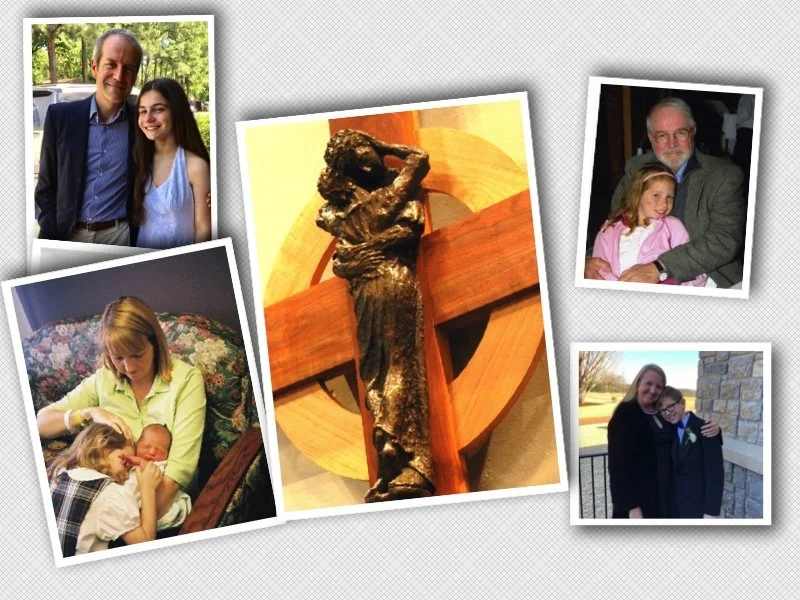
I share pictures of those I know who give unconditional love, members of my family, and, of course, Christ, even on the cross.

My image is that I am a loving person.

Nouwen proves me wrong.

 I rarely love my enemies or anyone who harms me, my family, or my friends.

 I am just scraping the surface of forgiveness.

I bless less frequently, as my excuse is that deacons are not supposed to bless! Sounds like a Pharisee!

I know subtle ways to rub salt into wounds.

I also have mastered the cold shoulder.

 I often forget to thank others for what they do. 

I try to encourage others and offer hope, especially to those grieving. However, I could do better by encouraging and offering hope to those I disagree with.

So, Nouwen has given us a Lenten list of loving and unloving practices to pray that the Spirit will change in us.

I also have a part. I am to stop and pause when I have the opportunity to show love or not show love in a multitude of daily situations.

 Let us pray that we may love each other.

Joanna. https://www.joannaseibert.com/