Esther De Waal: Living at the Threshold of Two Worlds

De Waal: Borders and Uncertainty
“The first step in listening, learning, and changing is to see that different is not dangerous; the second is to be happy and willing to live with uncertainty; the third is to rejoice in ambiguity and to embrace it. It all means giving up the comfort of certainty and realizing that uncertainty can actually be good.”—Esther de Waal, To Pause at the Threshold, Reflections on Living on the Border (Morehouse).
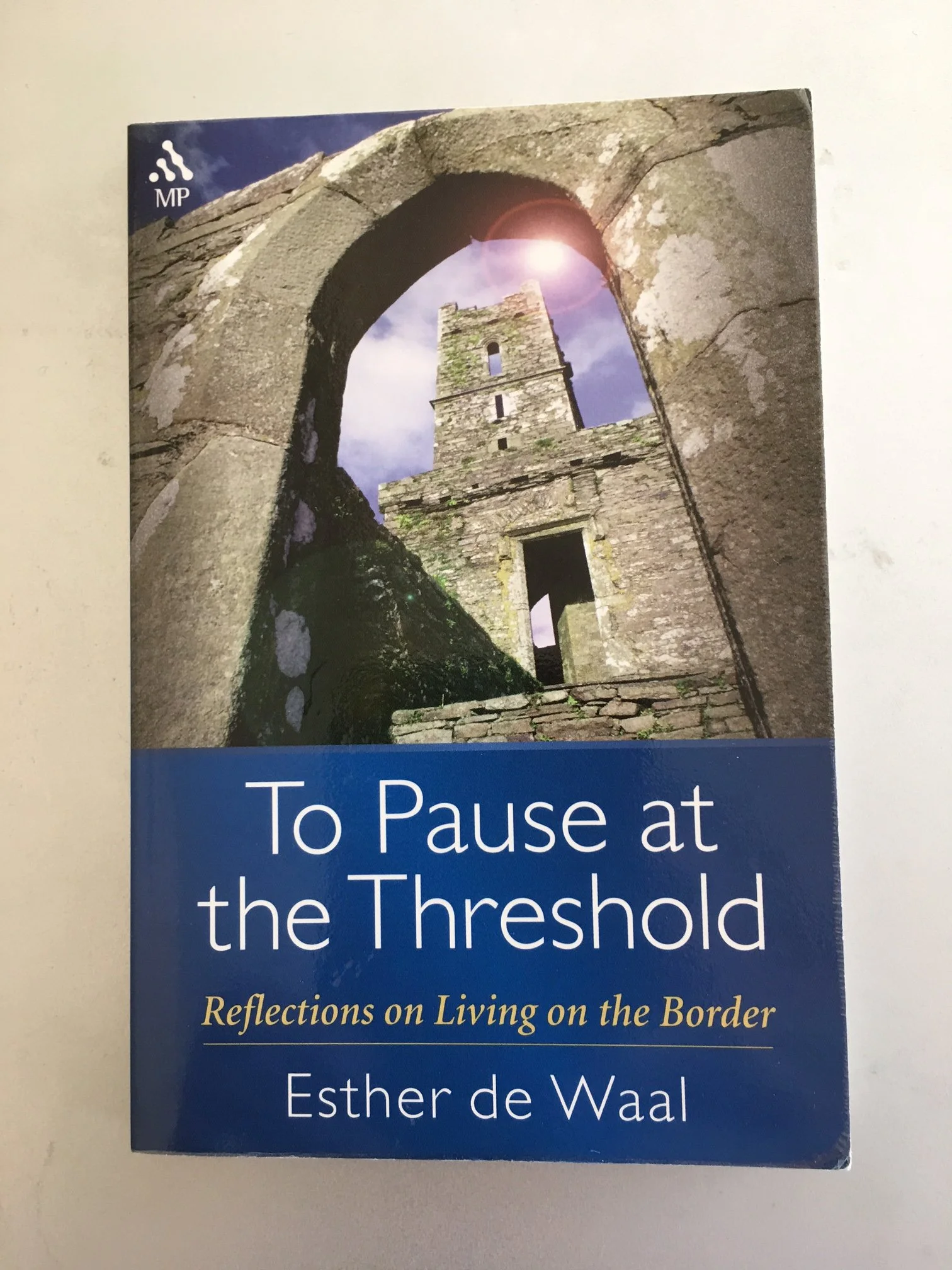
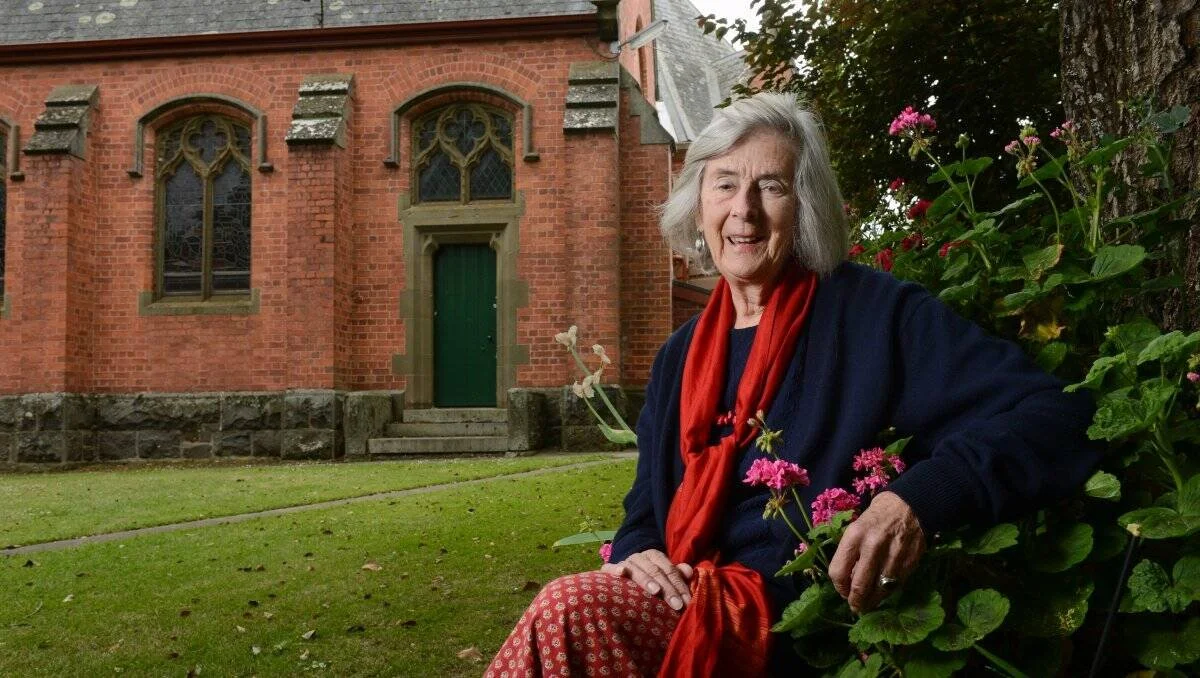
 When de Waal wrote this book, she had returned to the home where she had grown up on the border between England and Wales. I met this prolific Benedictine and Celtic spirituality writer at the College of Preachers at the Washington National Cathedral. She often took up residence there and was accessible to weekly pilgrims like me during mealtimes, seeking respite and learning in this sacred space.

This small pocket-sized book is a gem to read and re-read. De Waal discusses how we relate to borders and boundaries, having direct encounters with them in her day-to-day life.

Do we build walls, barriers, and fortresses, or do we engage in conversation and learn about something different, another culture?

She describes the world’s diversity as an icon to let us know God loves differences. She entices us to be like a porter waiting at the gate of a Benedictine monastery, standing at the “threshold of two worlds.” He welcomes those who ask to enter, no matter the time of day, treating each stranger as if they were Christ.

This resonates with me as a deacon. Our ministry calls us to move back and forth between two worlds: the church and the world outside the church.

De Waal also teaches us to honor the threshold between the two worlds and be open to the change,  uncertainty, and contradictions that the different worlds may present to us.

De Waal’s concept of thresholds has helped in visiting those in hospitals or at home. I have learned to pause as I cross the threshold of the hospital room. This is a time to wash my hands at the patient’s door. The threshold is a symbolic reminder that I am entering another world. Hand-washing is a reminder to leave my agenda at the door. I am there to honor that person, listen, and be present to them.

During the previous pandemic, I again encountered this ritual, with the many times we washed our hands. I tried to let loose or wash away the cares that previously consumed me. It was a reminder to live in the moment and be open to passing through a new threshold.

Sometimes, I continue to remember.

Joanna https://www.joannaseibert.com/


Kelsey: Two Spiritual Paths

Kelsey: Two Spiritual Journeys

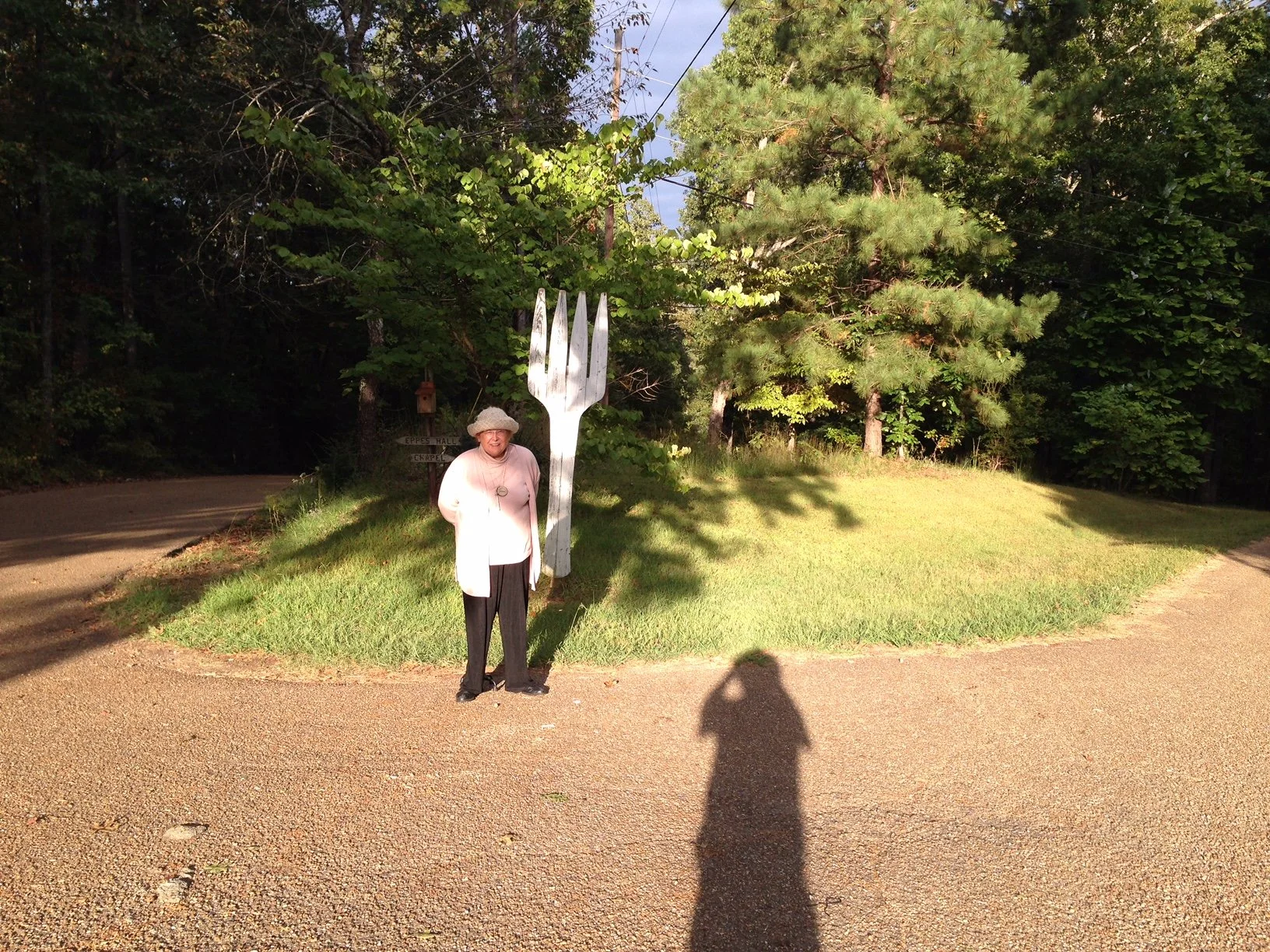
fork in the road

“There are two quite different ways of leading people on the spiritual pilgrimage, which have often been seen as opposed to each other.”

 — Morton Kelsey in Companions on the Inner Way, The Art of Spiritual Guidance (Crossroad 1983), pp. 7,8.

 Kelsey first describes the sacramental method of spiritual direction, in which we use spiritual practices involving concrete matter, music, pictures, beads, rituals, and symbols to connect to God. Kelsey calls this method the kataphatic way from the Greek meaning “with images.” The downside is that these can lead to idolatry, worshiping the means we use to reach God instead of worshiping God. For Episcopalians, it has always been the Book of Common Prayer, as illustrated by the difficulty our tradition has had in revising it. As a result, droves of people leave the church. The same thing may happen in churches when the altar is moved, when we change the order of service, or even when we change the prayers.

Kelsey describes the second path based on the belief that we best connect to God by emptying ourselves of all images, remembering that there is no way to explain or represent the holy. In silence and emptiness, we connect to the God within. This is the apophatic way, from the Greek for “without images.” It has been the way of Hinduism, Buddhism, and Christian contemplative forms, such as Centering Prayer. Kelsey believes the downside is that this inner work can occasionally lead to a reluctance to reach out to others, even though the desired result is to connect to the Christ we find within ourselves to the Christ in others.

Kelsey encourages us to practice both methods. The two are essential to a well-developed and informed spirituality.

Joanna joannaseibert.com. https://www.joannaseibert.com/


Butler Bass: Belonging

Butler Bass: Belonging

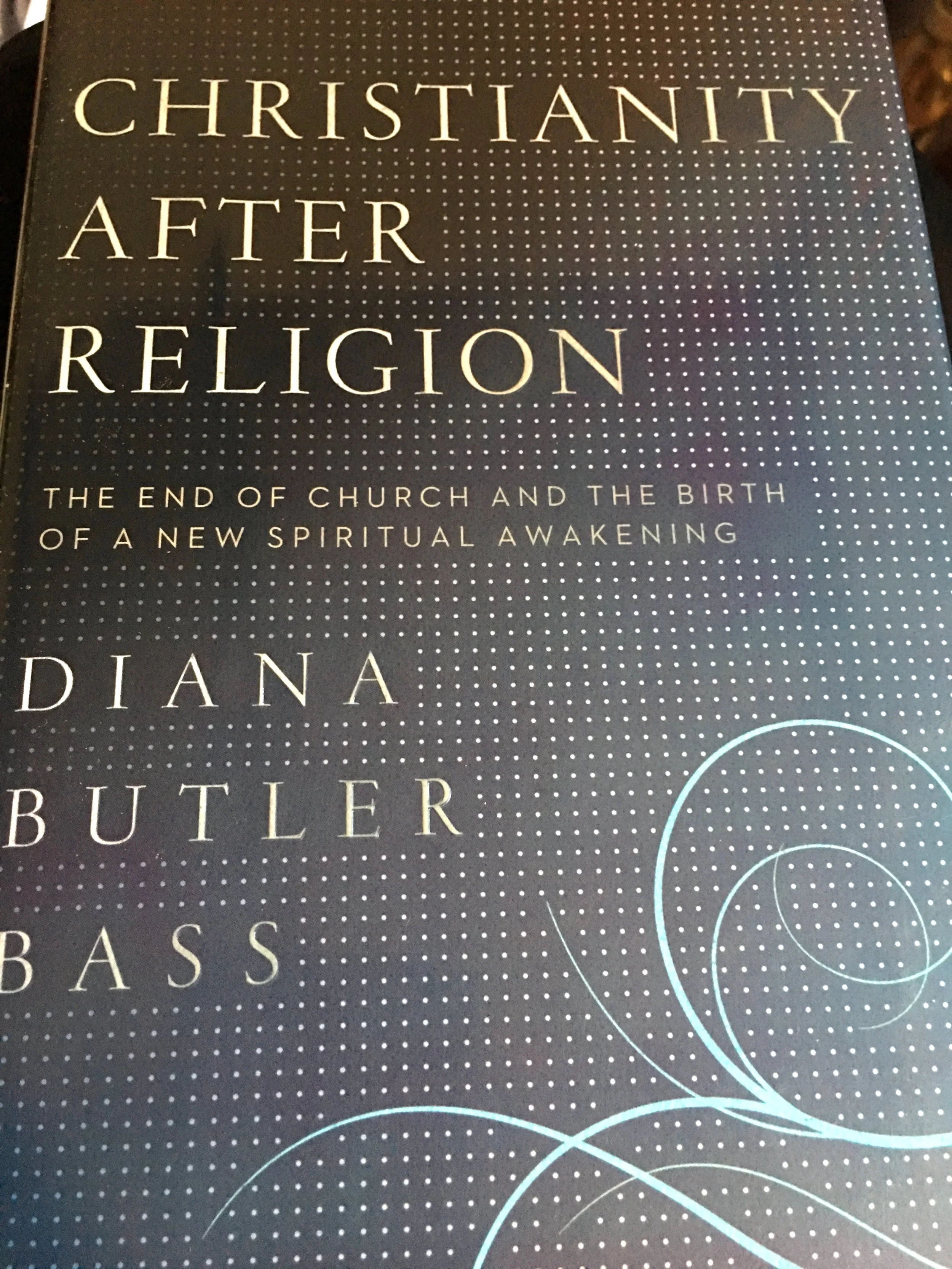
“Instead of believing, behaving, and belonging, we need to reverse the order to belonging, behaving, and believing. Jesus did not begin with questions of belief. Instead, Jesus’ public ministry started when he formed a community.”—Diana Butler Bass in Christianity After Religion: The End of Church and the Birth of a New Spiritual Awakening (HarperOne 2011), pp. 11-64.

Diana Butler Bass seeks to help us understand what is happening in today’s changing Christian landscape, where religion is no longer the center of a member’s life. She reminds us that our religion started with community, not confession.

Thomas Watkins from Wilson, North Carolina, also tries to explain how our church might change using the South’s love of football in an article in the Journal of Preacher (“Game Day: Becoming a New Church in an Old South,” Pentecost 2017, vol. 40, no. 4) “They (fans) are not asked to show their diplomas at the stadium gate.”

One of the most frequent questions of those seeking spiritual direction is, “I don’t know if I believe or what I believe anymore. Maybe I am no longer a Christian.” If the person belongs to a confessional denomination or church of orthodoxy, where they must believe a specific set of doctrines, this can sometimes be a problem.

 Some denominations are churches of orthopraxy, where members are held together because of how they worship or practice their faith. In that circumstance, a changing belief is sometimes considered an asset, a sign of growth. Our relationship to God will change as our God becomes larger, as we see the Christ in more and more people, people who are very different from ourselves.

 I often quote that line I first heard from Alan Jones at a Trinity Wall Street conference at Kanuga in the early 2000s: “The opposite of faith is not doubt, but certainty.”

Doubting signifies that God is working in us; our relationship is changing. Sometimes, this change in the relationship can feel like the movement of the Earth’s tectonic plates. Sometimes, it can be like a volcano erupting.

But, if we can take it as a good, not a bad thing, and try to stay steady, a new relationship and a new life will arise. I remember a quote from Catherine Marshall, “Those who never rebel against God or at some point in their lives have never shaken their fists in the face of heaven have never encountered God at all.”

Community is so important in this process. In a church alive with the spirit, there will be many others who have experienced this awakening who can walk and hold a steady hand when the foundations that we thought were our beliefs are threatened.

We see that these beliefs are not endangered but enlarged. We learn about these enlarging connections to God through belonging to a community.

You can follow Diane Butler Bass online at Diane Butler Bass, The Cottage, dianabutlerbass@substack.com

Joanna                https://www.joannaseibert.com/