A Liturgy of the Veil

A Liturgy of the Veil

Guest Writer: Karen DuBert

"At that moment, the curtain of the temple was torn in two from top to bottom. The earth shook, the rocks split."— Matthew 27:51
A Liturgy of the Veil

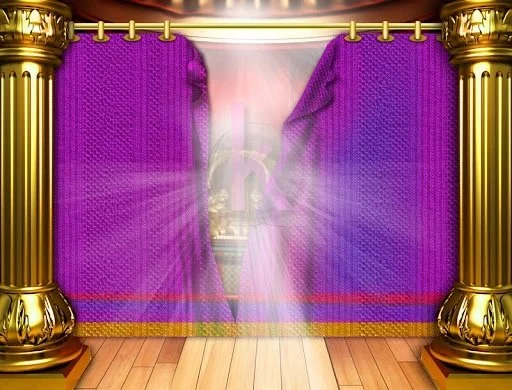
It was not a translucent, shimmering, lacy veil—

a hint of covering, inviting speculation.

It was not to hide the wearer or obscure the view.

It was weighty, ponderous, impressive

(“thick as a man’s hand” they said)

sixty feet high by thirty feet wide,

seventy-two squares woven together to last:

A massive undertaking to fabricate

to say nothing of hanging it

(it took three hundred priests, they claim)

Lord, the Veil You ordered to keep us safe

was not soft and cozy to bury our faces in—

no, it hung heavy, solid, and forbidding.

That veil was a shield

to protect us from the searing brightness of Your glory,

from the Beauty we couldn’t bear to see

from the Perfection that would have scalded us

from the Holiness that threatened to blind us:

It barred the way to the Mercy Seat

and once a year it was trespassed

(with fear and trembling, I’m sure)

by one with bells attached

and a rope to pull a body back—should things go badly.

In that veil You posted “No trespassing:

Violators will be prosecuted”

Thus we fathomed that holy was hazardous

as well as sacred.

But then “at the moment”

when the tormented Man on the cross cried out—


that Impenetrable Veil was obsolete,

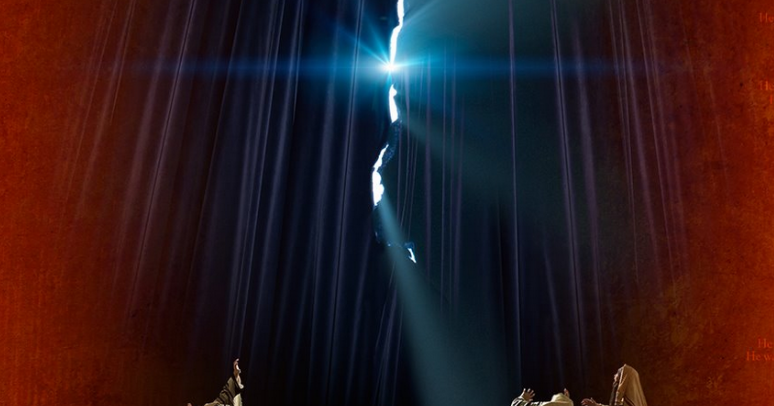
Torn from top to bottom:

You tore it

and the Mercy Seat glimmered—

centuries of sprinkled bloodstains vanished.

So began the invitation into Your Presence

to bask in a welcome

we could never have borne

had death’s undoing not begun

and nothing has ever been the same. 

Amen
Karen DuBert

 Joanna JoannaSeibert. com
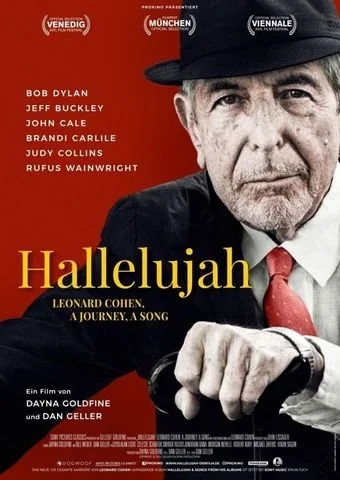
 

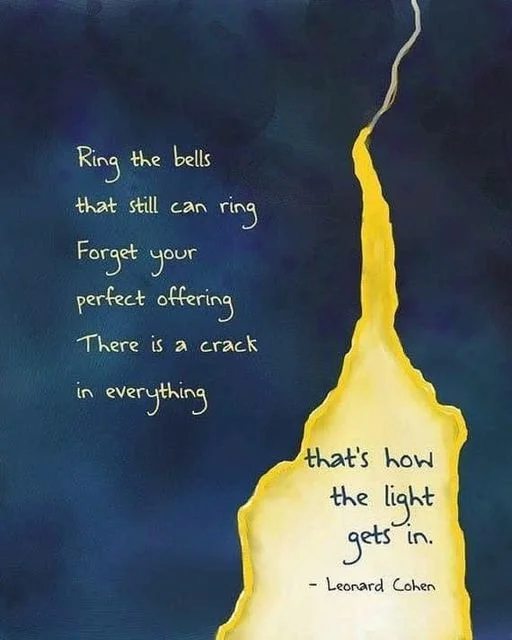
Leonard Cohen and Hallelujah

Leonard Cohen

“You let me sing, you lifted me up, you have my soul a beam to travel on. You folded your distance back into my heart. You drew the tears back to my eyes. You hid me in the mountain of your word. You gave the injury a tongue to heal itself. You covered my head with my teacher’s care, you bound my arm with my grandfather’s strength. O beloved speaking, O comfort whispering in the terror, unspeakable explanation of the smoke and cruelty, undo the self-conspiracy, let me dare the boldness of joy.”―Leonard Cohen, “Poem 19,” Book of Mercy, 1984.

My husband and I recently watched an incredible documentary about Leonard Cohen’s song “Hallelujah” and the 80 to 180 verses he wrote throughout his lifetime. Certainly, the music and its lyrics captured the life of the Canadian poet and songwriter. The story behind Hallelujah was equally fascinating. It took Cohen five years to write the song.

Cohen initially released Hallelujah on an album that was rejected by a major record company in this country, and it was only released in England in 1984, where it achieved minimal success. Its widespread popularity truly began when other well-known singers, John Cale and Jeff Buckley, started performing Hallelujah. Remarkably, the version of Cale’s Hallelujah used in the animated movie Shrek in 2001 caused the song's popularity to skyrocket. Then, after Cohen’s death in November 2016, the song gained renewed international recognition. 

I remember being moved by “Hallelujah” when k.d. lang performed it at the opening ceremonies of the Winter Olympics in Vancouver, Canada, in 2010. She was dressed in white on a high stage, singing the anthem with all her heart.

Lang described the verses as a battle between human desire and spiritual wisdom. The early lines include biblical references to Samson and Delilah, as well as King David and Bathsheba. Many see the music and lyrics fluctuating between blessings and losses. The history of the anthem and its lyrics appears to serve as a powerful timeline for Cohen’s spiritual autobiography.

What music might each of us compose to share the story of our spiritual journey?

Joanna  https://www.joannaseibert.com/


Nothing Can Separate Us From God's Love

Nothing Can Separate Us

Trinity Cathedral, Pierce Chapel

“For I am convinced that neither death, nor life, nor angels, nor rulers, nor things present, nor things to come, nor powers, nor height, nor depth, nor anything else in all creation, will be able to separate us from the love of God in Christ Jesus our Lord.”—Romans 8:38-39.

I talk to many people who don’t believe they deserve God’s love. I remember visiting with a very alert, highly educated woman in her 90s, still involved in her successful business, who wanted to start going back to church—but only after she got her life together and felt she was a better person. I told her the famous line, “The church is not a museum for saints, but a hospital for sinners.” But she never returned.

I talk to many people recovering from addiction who feel deep shame for the life they've led. They can't see how God and others can forgive them. Many have been taught to fear a judgmental God watching over their shoulder, ready to catch them in sin. 

I want to tell them there is another way, a belief in resurrection, an Easter that can be redeemed after a Good Friday life or experience. I remind them of Jesus’ disciples who abandoned and denied him if I can. He did not return to them in that upper room on Easter evening and say, “Shame on you.” Instead, he said, “Peace be with you.… When he said this, he breathed on them and said, “Receive the Holy Spirit. If you forgive the sins of any, they are forgiven.” (John 20:21-23).

We discuss the difference between shame, “I am a bad person,” and guilt, “I did a wrong thing.” We also discuss addiction as not being a moral failing but a disease. Finally, we look for any sign of God’s love alive and well, working in their lives. We pray that the Holy Spirit will lead both of us to recognize this presence alive in each other so we will both see and be led by Christ in each other.

Sometimes, I tell my story of  God’s presence in my life through many difficulties to see if they recognize similarities between my story and theirs.

Lastly, I may share the above mantra from Romans that I still use because I became aware of the harm I cause to others and myself, and I now seek forgiveness.

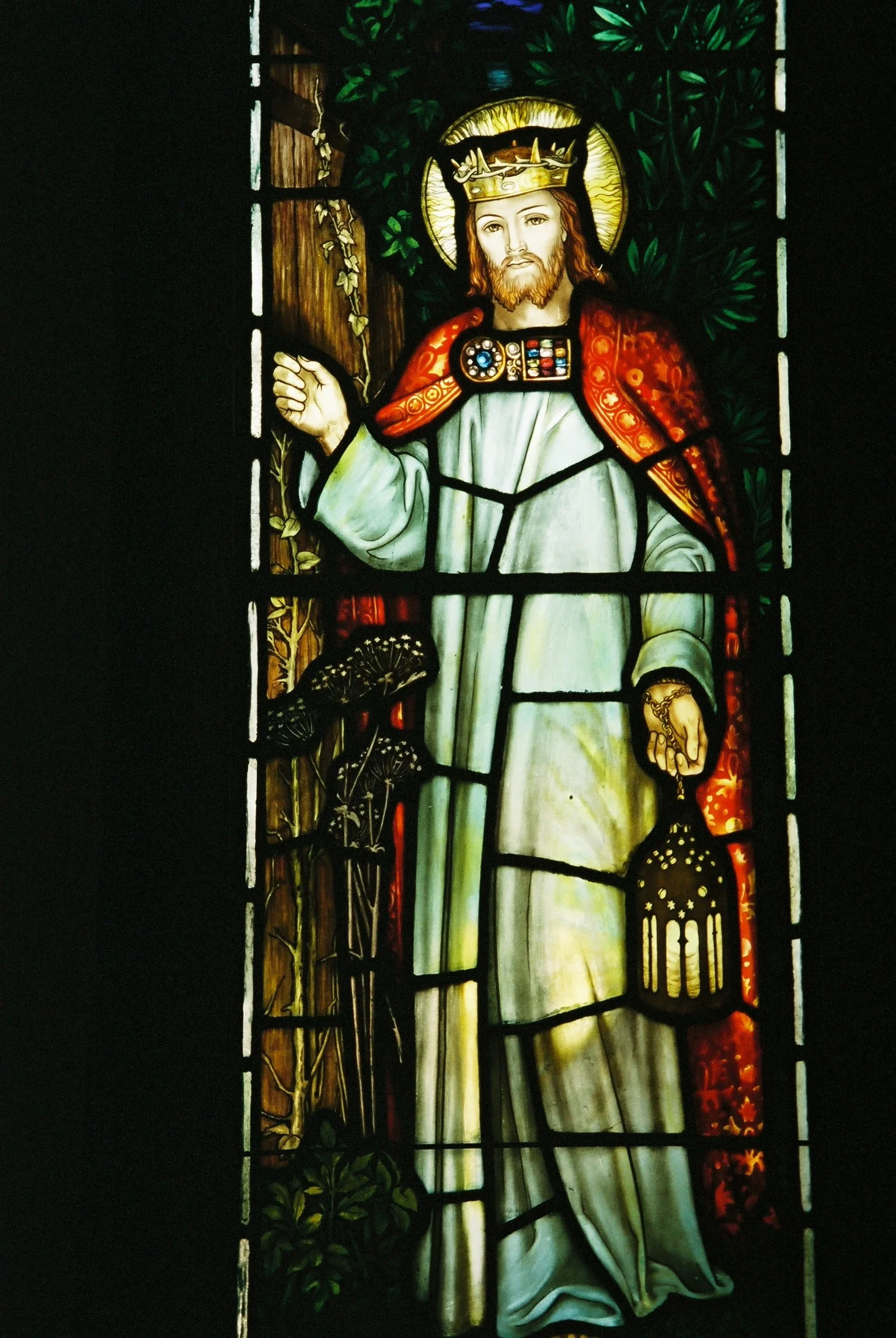
Sometimes, I share this image from Trinity Cathedral’s Pierce Chapel of Jesus, the Light of the World, with his bright lantern, constantly calling us to love us.

Joanna. Joannaseibert.com. https://www.joannaseibert.com/