Easter Forgiveness

Easter Forgiveness

Guest Writer: Eve Turek

“Father, forgive them, for they do not know what they are doing.”—Luke 23:34a.
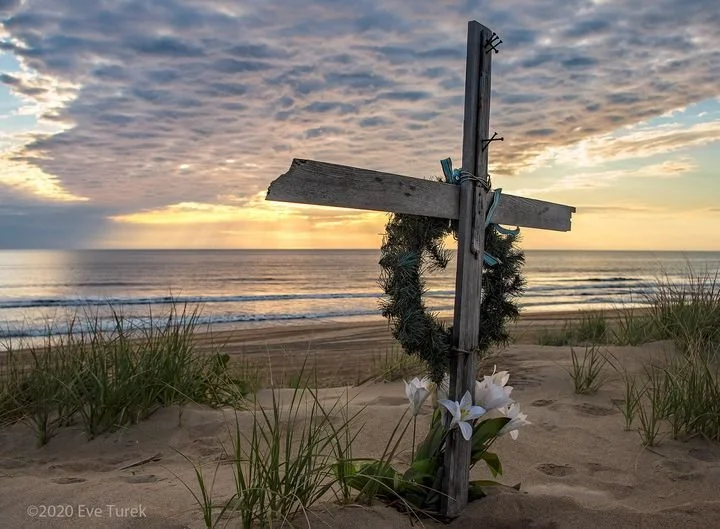
This photograph is from a previous Easter Sunday morning during lockdown. Before daybreak, I went to the ocean and found the empty Cross waiting at the access road. I felt led to go to it.

I’ve been thinking a lot this week about what we Christians sometimes call “Holy Week.” There is so much to consider... where to pause and contemplate? Palm Sunday? Last Supper? Good Friday? Easter Vigil? Easter Morning? This year, what caught my heart (and my breath) was a more profound implication I heard in the Cross: “Father, forgive them; they do not know what they are doing.” 

What got to me was what I didn’t hear. I didn’t hear, Father, forgive them; they are really sorry. Father, forgive them; they know better now and will never do this again. Father, forgive them. They are repentant. Father, forgive them. They are so ashamed. Nope.

I heard something like this: Oh, Father, forgive them; they just don’t get it. Father, forgive them. They are so clueless (bless their hearts). Father, forgive them... not because they know, but because they don’t know. They really don’t know.

This is why, at rock bottom, when people ask me what I believe and what I stand for, I tell them I am in Love with God to my core, in Love with His Son Jesus, and in Love with His Spirit because He loved us first. To whom much is forgiven, that one loves much. That’s why I focus so much on Love. I’m forgiven, and I was forgiven even before I knew better, did better, or wanted better. I was forgiven not because I was sorry, but because He is Love.

 And once I really got hold of that truth, God had hold of my heart. And He’s never let go...thank God. Because He sustains this Love, I can walk in Love and forgiveness.

That’s what Easter means to me this year. He is Risen... not only 2,000+/- years ago, but risen in me. Coincidentally, the Easter season once again coincided with the day I first made a conscious, deliberate commitment to God: April 1, 1973. Many years ago. I was 16 years old. Somehow, I knew the decision meant everything would change. And it did. 

I still had my times when I walked away from the best I knew, but God was faithful even when I wasn’t. It was His faithfulness that brought me back to my best self. And that Love is why I am STILL His today.
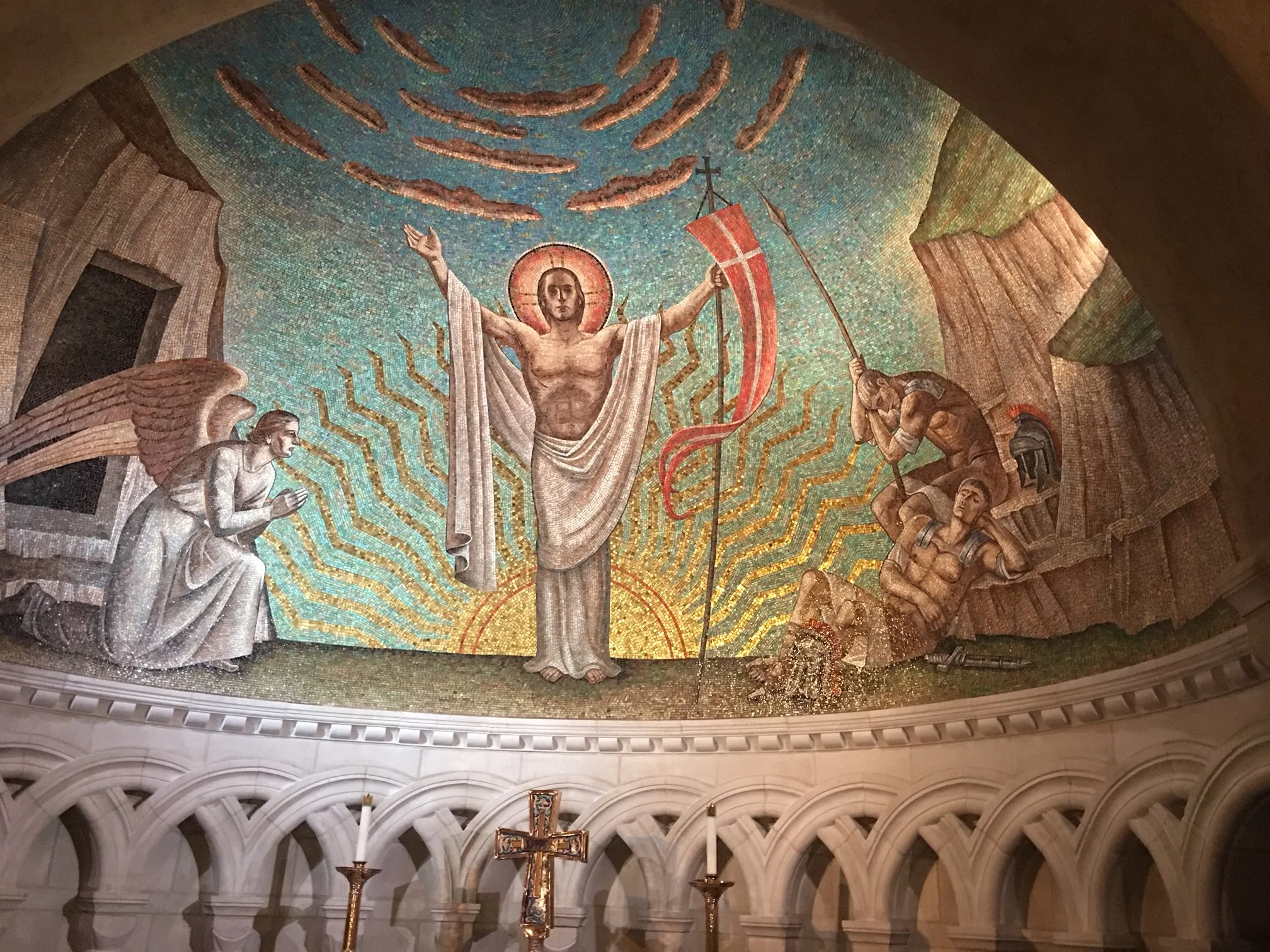
Resurrection Chapel, National Cathedral

Eve Turek

Joanna. joannaseibert.com   https://www.joannaseibert.com/


Peace of God

Peace of God

“Jesus doesn’t offer peace of mind. Instead, he offers the peace of reconciliation.”—Diane Roth, “Living the Word,” Christian Century, March 14, 2018, p. 23.

Easter Accord

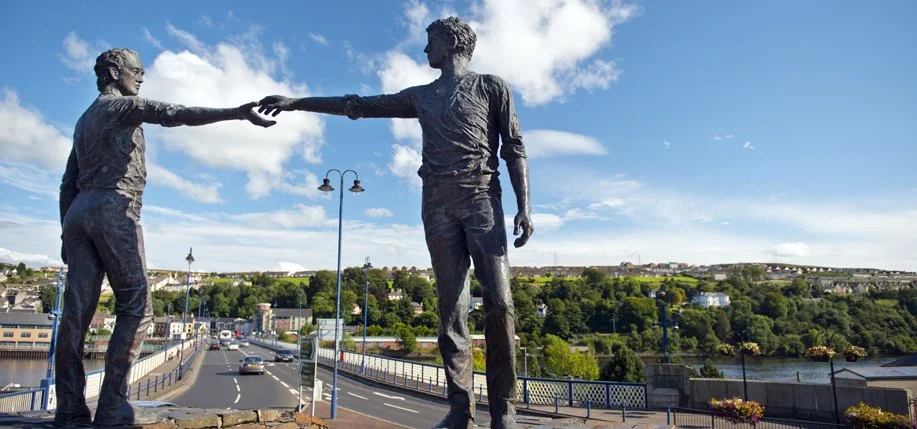
Diane Roth's response to the Lectionary Readings for the Second Sunday in Easter from John 20:19-31 serves as a reminder for us to reconcile with those we struggle with. Jesus calls us to love neighbors who are very different and to love our relatives who view politics through a different lens. It also involves seeing Christ in the most unlovable person at work and loving those whose beliefs are completely opposite ours. I could go on with many more examples. 

hands across the divide Derry

A verse that often haunts me, spoken at the offertory, is Matthew 5:23-24: “So when you offer your gift at the altar, if you remember your brother or sister has something against you, leave your gift there before the altar and go; first, be reconciled to your brother or sister, and then come and offer your gift.” 

Family systems models suggest that we should try our best to reconnect with any family members with whom we are estranged.

The core of 12-step recovery involves examining our resentments toward others, recognizing our role, which causes separation, making amends, and realizing our similarities instead of focusing on our differences.

These teachings remind us that when we struggle to love our neighbor, it becomes difficult to love God, because the God of our understanding also resides in our neighbor, just as God lives in us. 

This is an important message for us to share with spiritual friends. We might not be trained to help our friends reconcile with those they are struggling with, but we are called to share our experience: that reconciliation with our neighbor is a direct path to the peace of God.

Forgiveness and reconciliation are central to our paths in building relationships with others and with our God.

Joanna   joannaseibert.com. https://www.joannaseibert.com/


Recognizing Angels and Jesus

Recognizing Angels and Jesus

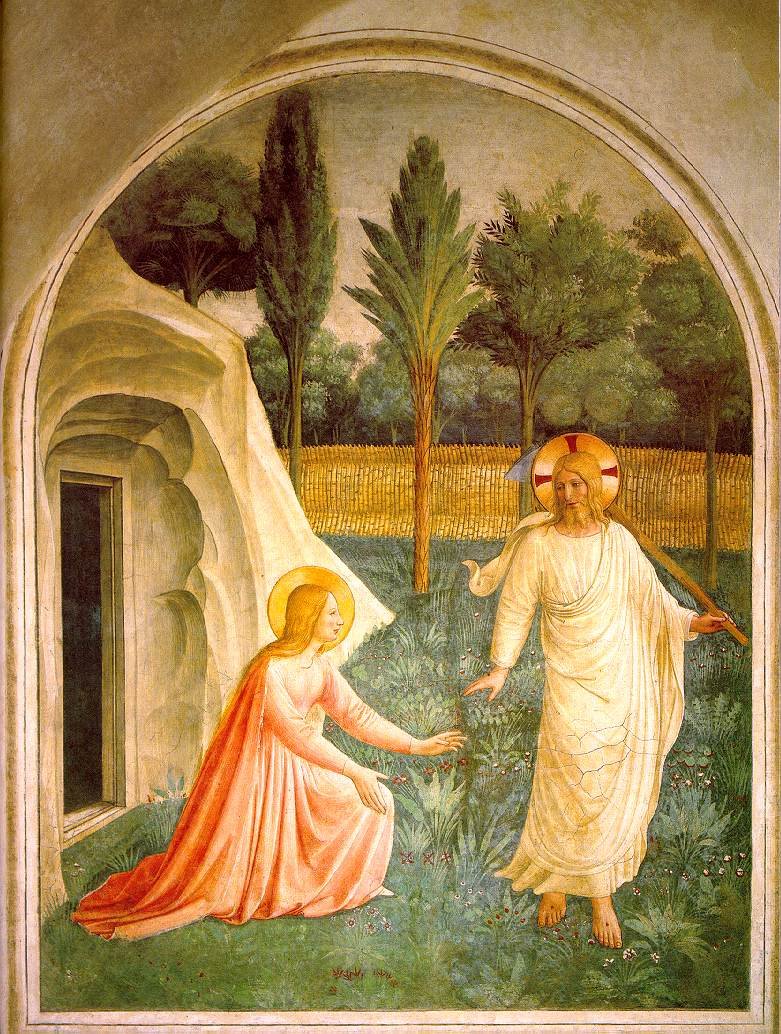
noli me tangere fresco. fra angelico

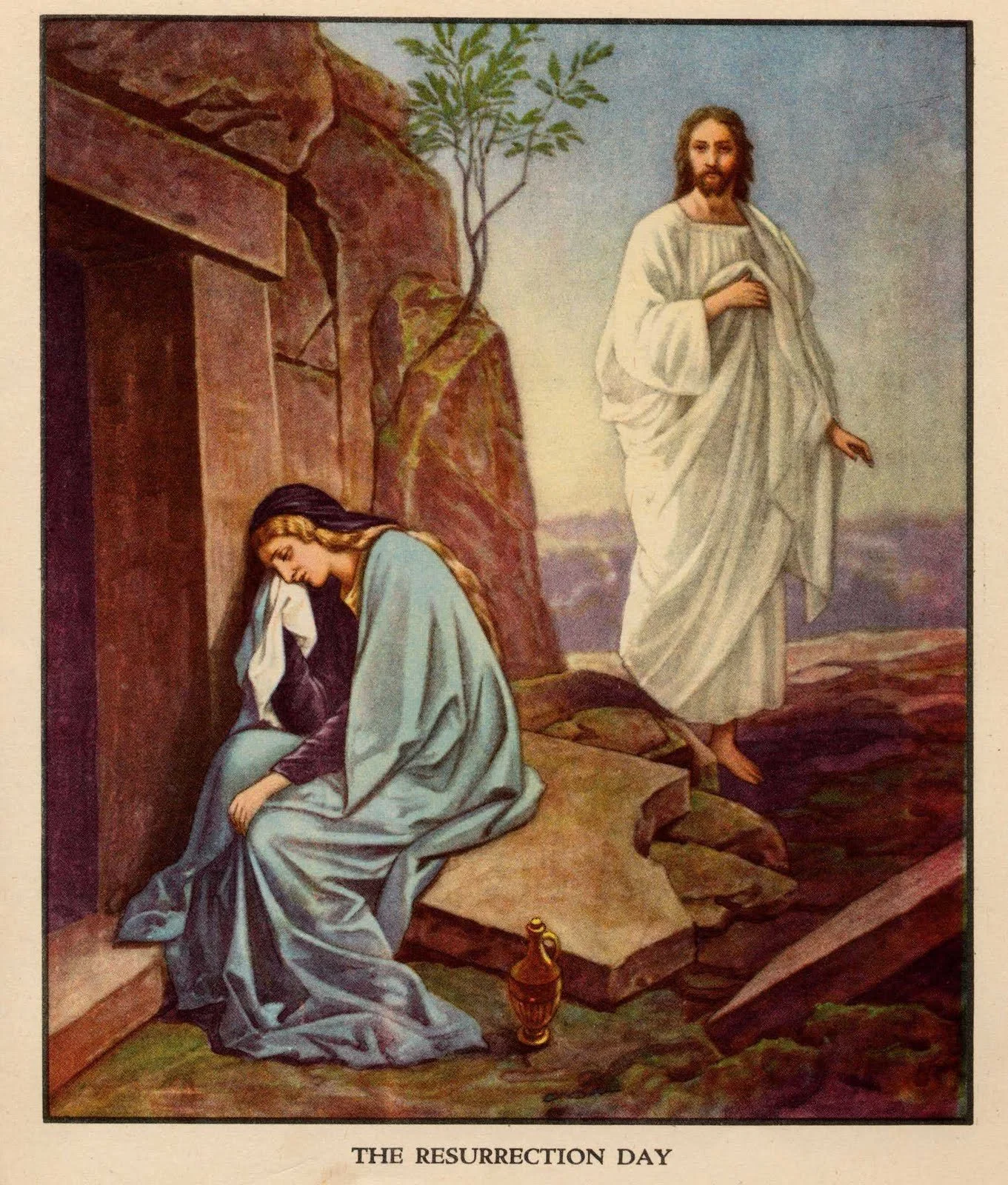
But Mary stood weeping outside the tomb. As she wept, she bent down to look into it, and she saw two angels dressed in white, sitting where Jesus' body had been, one at the head and the other at the feet. They asked her, “Woman, why are you weeping?” She replied to them, “They have taken away my Lord, and I do not know where they have put him.” 

When she said this, she turned around and saw Jesus standing there, but she did not recognize it was Jesus. Jesus said to her, “Woman, why are you weeping? Whom are you looking for?” Thinking he was the gardener, she said, “Sir, if you have carried him away, tell me where you have laid him, and I will take him.” Jesus said to her, “Mary!” She turned and said to him in Hebrew, “Rabbouni!” (which means Teacher).”—John 20:11-17.

My mind and heart are overwhelmed with thoughts about this Easter as I read others’ works and envision new images from this familiar story about Jesus' appearance to Mary Magdalene. 

Bishop Jake Owensby of Western Louisiana suggests in an Easter blog “that Mary Magdalene did not recognize Jesus because she is looking right at the risen Christ, and yet she sees nobody. For Mary Magdalene, the gardener is a nobody.”

Owensby’s theme is that our calling as people of the resurrection is to “find the risen Christ in everybody, no matter their physical appearance.” Christ is no longer confined to one body but present in each of us. No exceptions.

Frederick Buechner also explores this theme in The Faces of Jesus. Buechner states that “it hardly matters how the body of Jesus came to be missing, because in the last analysis, what convinced the people he had risen from the dead was not the absence of his corpse, but his living presence.”

Here's another insight into Mary Magdalene’s visit to the tomb. Angels speak to her, but there’s no indication that she recognizes the awe of the moment. Maybe she sees and talks to angels regularly, but if we try to imagine ourselves in her place, we might feel more like the other Mary at the annunciation—full of fear, surprise, or wonder. If we stay in the scene with Mary Magdalene, my best guess is that she might not realize they are angels. We are reminded once again of how hard it can be to see Christ in our neighbor and to recognize the angels guiding us through these difficult times.

rebecca stephens fracasantos

Mary Magdalene must have realized all of this later, as is often the case with us. Otherwise, we wouldn't be familiar with her story. 

Angels and Christ, in others, were very present during the past pandemic and this war in Ukraine and the Middle East. They were wearing masks, driving trucks, stocking shelves in our pharmacies and grocery stores, at the checkout counters, making take-out dinners, giving us vaccines, caring for refugees, treating the wounded, and especially the women of our Daughters of the King, who pray for us every day.

1Jake Owensby, “Everybody is Somebody,” Looking for God in Messy Places, Jakeowensby.com, April 19, 2019.

2 Frederick Buechner “The Cross as the crossroads of eternity and time,” in The Faces of Jesus (Paraclete, 2005), p. 87.

Joanna  joannaseibert.com https://www.joannaseibert.com/