Return of Blue Sky on Earth Day

Charleston: Return of the Blue Sky on Earth Day
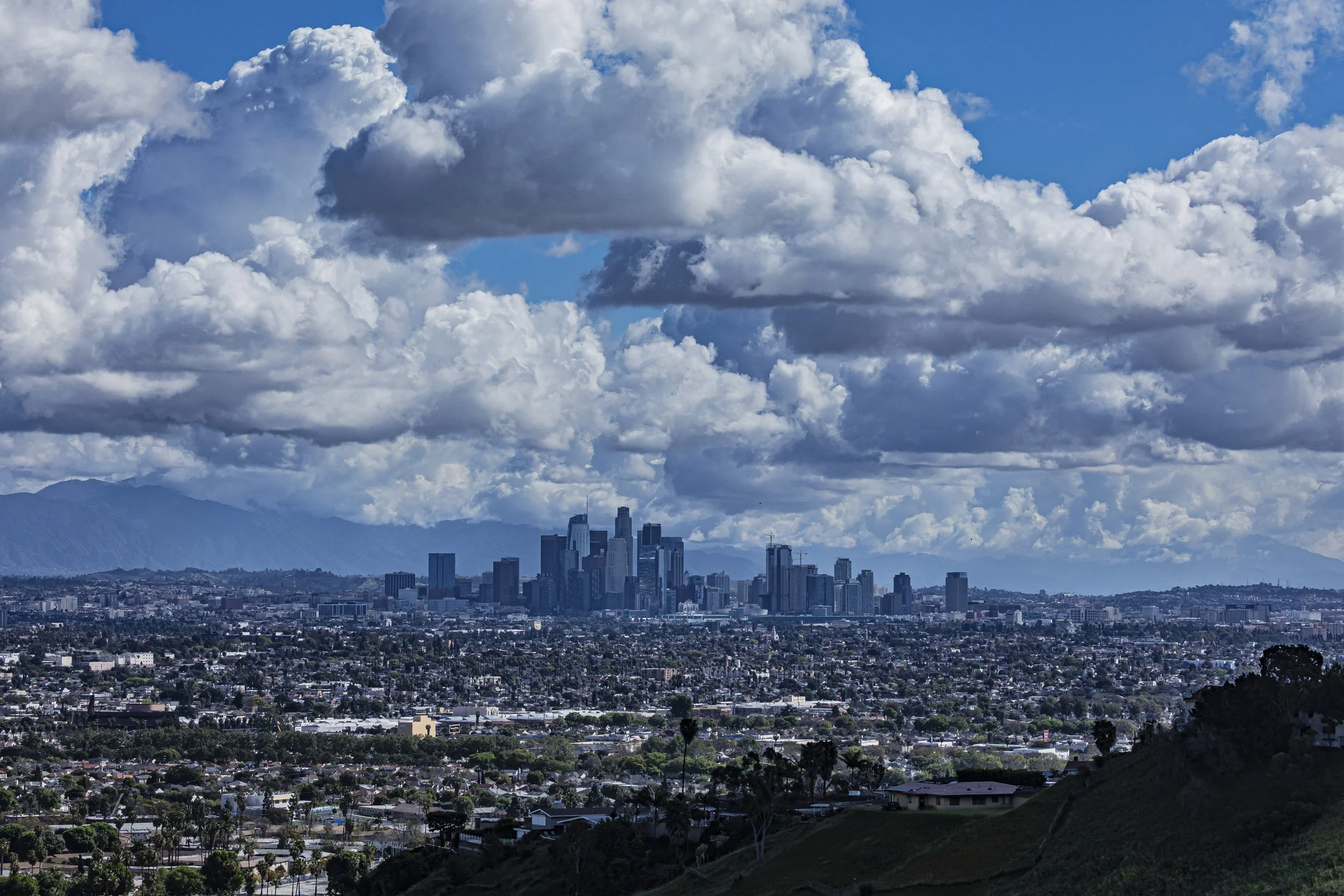
ted soqui NBC News

"Did you notice any stories about the return of the blue sky? Unfortunately, there were not many, and they were usually tucked away behind other news reports that seemed much more critical. But they were there: the return of clear skies above cities like Los Angeles, which had not been seen for generations. As traffic levels declined, pollution fell, and the clear sky appeared like a sign from heaven. It is a visual reminder that positive change is possible on the other side of COVID-19, not just for the environment but for our whole society. The blue skies can return for us in many ways if we have the courage to change."—Bishop Steven Charleston's Facebook Page.

Today, we celebrate the 56th anniversary of Earth Day. During the pandemic, Bishop Charleston reminded us that efforts to stop the pandemic had given our planet a rest. As a result, pollution and greenhouse gas emissions fell worldwide. For example, India's capital, New Delhi, is one of the world's most polluted cities. Yet its skies were blue, and many could see the Himalayas for the first time. 

Researchers found a 5 to 10% decrease in air pollutants, such as carbon dioxide, in New York. Carbon monoxide emissions dropped by 50%. Grounding flights, reducing cars on the road, and shutting down businesses and factories brought about the change. Some predicted we might reach the Paris Climate Accord goals even sooner. In Venice, canal water was so clear that fish were easily visible. This may be because there are no boats and people in its waters. But environmentalists warn that all this could be temporary. 

Today, all of this has come at a great cost—the deaths of more than one million people in our own country and more than 7 million worldwide. We can only guess what tomorrow will bring if another flare-up of infections occurs.  

Bishop Charleston tells us to give thanks for the blue sky, honor its presence, imagine ways to keep the skies blue, and never forget the cost in the lives of so many who died. There must be another way to save our planet that is less costly.

Joanna. Joannaseibert.com. https://www.joannaseibert.com/
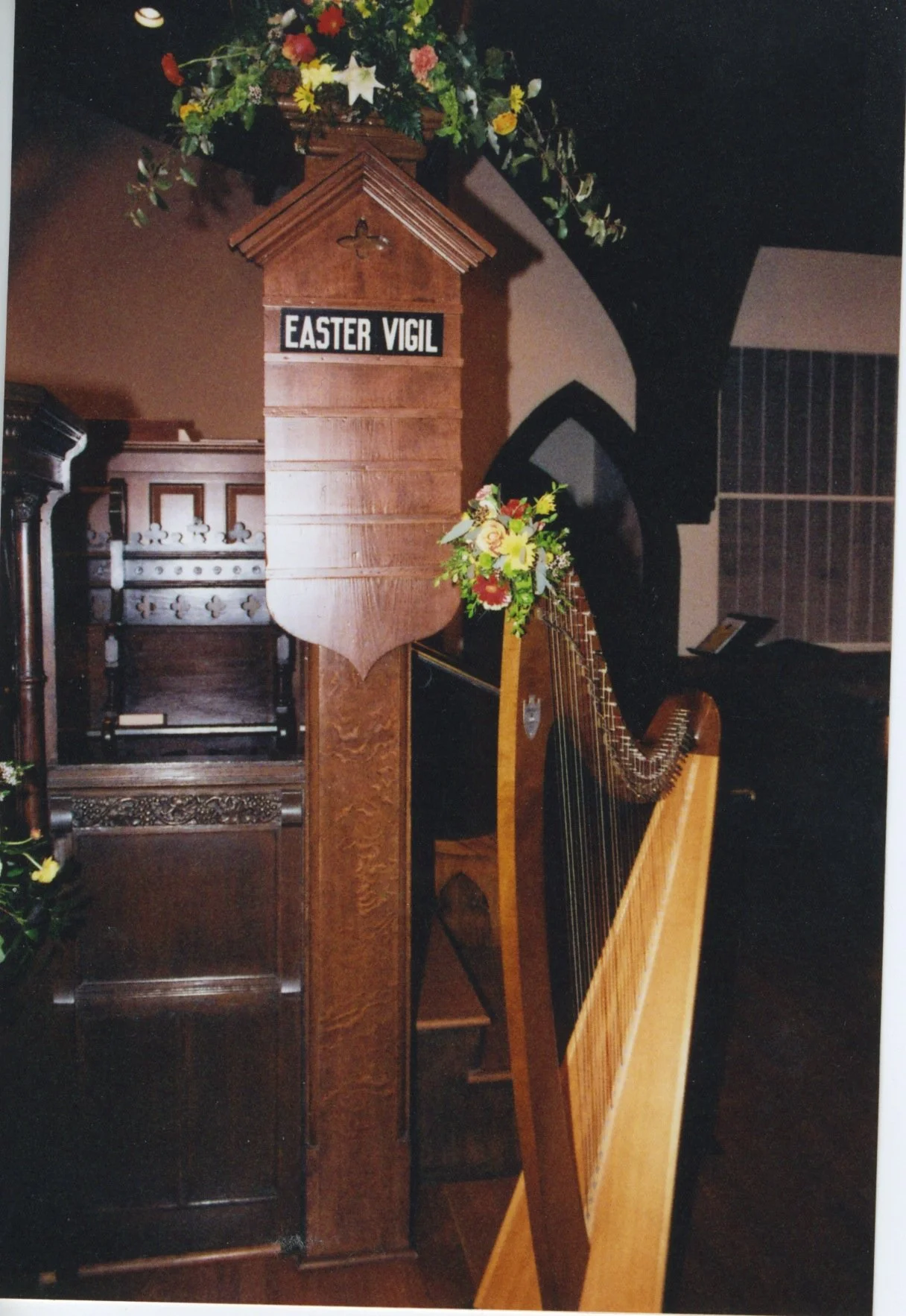


A Memory Book of Past Easter Vigils

A Memory Book of Past Easter Vigils

How blessed is this night when earth and heaven are joined, and man is reconciled to God.”—Book of Common Prayer (Church Publishing, 1979), p. 287.

I revisit this past Holy Week and especially remember beautiful stories about the excitement of the Easter Vigil at each church where I served. I remember one priest telling us in his homily many years ago that our presence at the Vigil didn’t earn us extra points with God. We weren’t getting more stars in our crown for being there. Being among the first at the empty tomb was a privilege to meet the risen Lord. 

One of my favorite surprises was watching to see how the Altar Guild would decorate my larger harp for the Easter Vigil.

Many congregations then follow the Vigil service with an elaborate reception or dinner late at night at church or someone’s home.

Once at Trinity Cathedral, as the deacon tilted the candle ever so slightly to light its wick from the first fire, oil ran out of the top of the candle, and the flames took on a surreal quality, like the tongues of fire described at Pentecost. At St. Margaret’s, we held the Vigil in the Columbarium garden, and I played a smaller lap harp to keep the Exsultet on key as I chanted. I cannot describe the exhilaration of shouting in the open air, “The Lord has risen indeed!” 

At St. Luke’s, a lector reading one of the Old Testament lessons had difficulty seeing in the dark. In the middle of the long reading, my dear friend moved her candle closer to the lectern microphone, which set the microphone’s foam covering on fire. She promptly and elegantly blew out the fire and didn’t miss a beat in the reading. Also, at St. Luke’s, one of the fantastic teachers in the children’s ministries and her two children planned a flashlight egg hunt for older children after the Vigil. The young people searched outside around the church, and it was a huge success that increased the number of people who came to the service! 

If you look online at a virtual Vigil during the pandemic at St. Mark’s Episcopal Church, the Easter fire looks like it is coming out of the air! Spectacular!

It is now more contained, but still very moving.

We recently handed out bells for people to ring during the Great Alleluia. At the end of the service, our other deacon, Susan, and our associate priest, Patricia, spontaneously began ringing their bells whenever the closing hymn, “Christ the Lord is Risen Today, Alleluia,” reached an Alleluia. The congregation soon joined in ringing their bells. It was incredibly moving, since we could not sing because of COVID restrictions, but we could ring!


The Vigil is so unusual that it is easy for clergy to get caught up in the many tiny details of this once-a-year liturgy and to view it as a performance rather than an offering. The Vigil is a service to be enjoyed and celebrated.

We can always count on the Vigil to bring surprises, as it did this year and at that first Easter.

Joanna. joannaseibet@me.com


Servant Ministry and Diaconal Ministry

Charleston: Servant Ministry and Diaconal Ministry

“This is not our first day on the job. I know many of you have been here for a long time, and even more have been working overtime. I wish I could tell you it is time to take a break. I wish I could say the job is almost finished. But that’s not the case. In fact, it looks like we have even more work to do.” 

The task has grown larger, and the stakes have risen. That means we must all work harder to create a culture of inclusion, clear a path to peace, develop a sustainable ecology, and repair the bonds of justice that hold us together. And one last note, we still get paid the same: zero dollars, but more smiles and hope than we can spend.”— Steven Charleston

Deacons are aware that there is no stipend, since ours is a non-stipend ministry. However, there is something gratifying about working for free when possible. It means the deacons may be retired or have another income from a reimbursed job, allowing them to work without compensation in their second job. 

The diaconate is a ministry that keeps you in the world because that is where you are monetarily compensated. Deacons are called to be a bridge between the church and the world, bringing the world’s needs to the church and bringing the church to the world. They are directly under the leadership of their bishop.

The best recent book on the diaconate is Unexpected Consequences, The Diaconate Renewed, by Susanne Watson Epting.

The deacon stands alongside others in ministry, cheering them on as they are called to it. Frederick Buechner would say this is where their “deep gladness” meets the “world’s great need.”

The deacon stands beside the priest at the Eucharist and beside those working for inclusion, peace in this world, justice for all, and care for our ecology. The deacon stands for, leads, and supports others in servant ministry.

When people are deciding what kind of work to pursue, they are often told, “Choose the job you would do even if you were not paid for it.” Most people who do ministry in the church are not paid. However, the icon for this statement may be deacons, who take a vow to be servant ministers.

This month, I  will celebrate the privilege of being an ordained deacon in the Episcopal Church for twenty-five years.  Join me at the forum at 9:15 on Sunday, April 26, at Saint Mark’s Episcopal Church to hear more about what it has been like to be a deacon.

Joanna  joannaseibert.com https://www.joannaseibert.com/