Koinonia

Koinonia

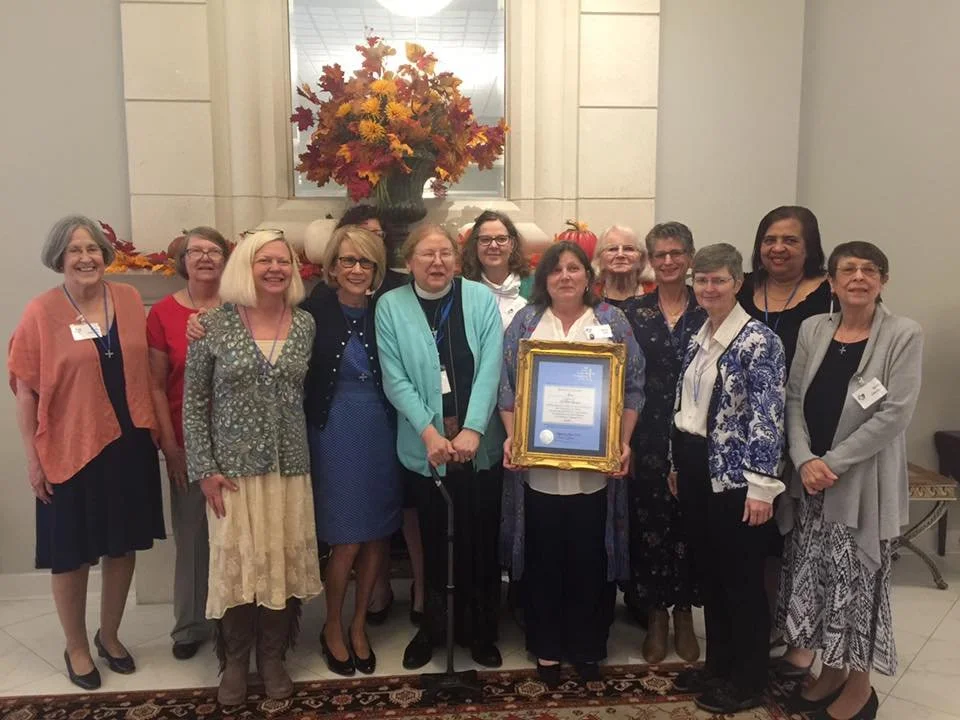
Formation of Grace Chapter Daughters of the King 2018 at Saint Mark’s

“All who believed were together and had all things in common; they would sell their possessions and goods and distribute the proceeds to all, as any had need.”—Acts 2:44–45.

In her brilliant sermon at Saint Mark’s Episcopal Church, Patricia Matthews reminded us of the winning word in the 2018 Scripps National Spelling Bee that weekend: Koinonia. Fourteen-year-old Karthik Nemmani from McKinney, Texas, correctly spelled this word of Greek origin, meaning Christian fellowship or communion with God. It primarily refers to fellowship with other Christians in community. Patricia reminds us that the 91st National Spelling Bee, with its 515 qualified participants, was televised on ESPN. On this sports network, we watch football, basketball, baseball, or soccer more often! 

When I heard Patricia say the winning word that weekend and again on Sunday, my heart skipped a beat. Koinonia had been on my heart for almost a week. Langley, our oldest granddaughter, had just graduated from high school and was headed to the University of Georgia. I had been praying about how I could support her in this decision. The answer came as I read a review of two books about Clarence Jordan in The Christian Century. 

I want to remind Langley about Mr. Jordan, perhaps one of the University of Georgia’s most outstanding graduates. His proficiency in Greek led him to produce his “Cotton Patch” version of the New Testament, as he strove to communicate the Bible’s message in everyday language. Jordan also founded Koinonia Farm, a farming community of believers who share their lives and resources, following the example of the first Christian communities. From this movement came Habitat for Humanity International, founded by Millard Fuller, and later The Fuller Center for Housing, Jubilee Partners, and significant support for the Civil Rights Movement.

Also, that Sunday at our church, a group of women met to begin discerning how to create a Daughters of the King chapter at St. Mark’s. Daughters of the King also seek koinonia—specifically, fellowship with other women who seek a more profound spirituality and relationship with God through prayer, service, and evangelism. 

I will keep koinonia in my heart for a few more years to see if I notice any more serendipitous connections or synchronicity in our world.

Now, over eight years later, the newly formed Grace Chapter of Daughters of the King at St. Mark’s includes more than 40 women who meet monthly and pray daily for every member of this congregation and for the needs of the world. During the pandemic, the Daughters launched a new ministry, Free Read, which reaches out to women in prisons, recovery centers, and homeless shelters who have requested books to read. The ministry was the brainchild of Tandy Cobb Willis and has since expanded into a ministry of the whole church.

Since writing this, we have traveled to Texas, El Dorado, Shreveport, Hot Springs, Memphis, and Springfield, Missouri, to meet other women of the Daughters of the King.
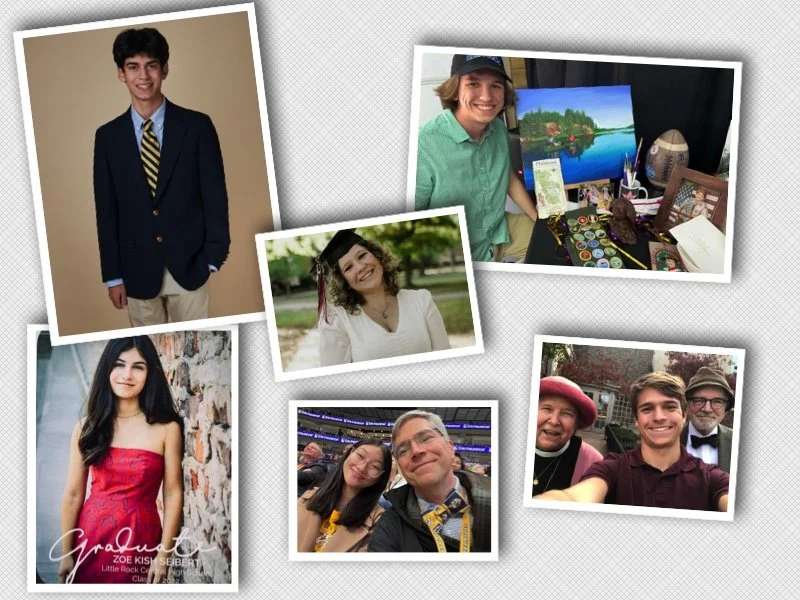
I now love hearing about our grandchildren’s adventures and connections because we travel less and less.

Langley has now graduated from Georgia and is finishing her second year at NYU Law School, studying international law. Zoe will soon graduate from Tulane as a Newcomb Scholar and has experienced Koinonia New Orleans’ style! Last fall, she spent a semester in Copenhagen. She traveled to New York City and Stockholm for two women’s conferences that summer. 

Mac graduated from the University of Georgia last year and then spent a year in Liverpool to earn a master’s in sports management. Gray is finishing his second year at Kentucky, studying art and journalism. Turner is finishing his second year in the honors college at the University of Arkansas, studying biomedical engineering. He visited Belgium last summer to study water management. Elizabeth is now driving. 

Our community continues to grow as we hear stories of connections from across the country and around the world. I have faith in the future as I see what our children’s children are doing.

The Koinonia continues.

Joanna. joannaseibert.com https://www.joannaseibert.com/
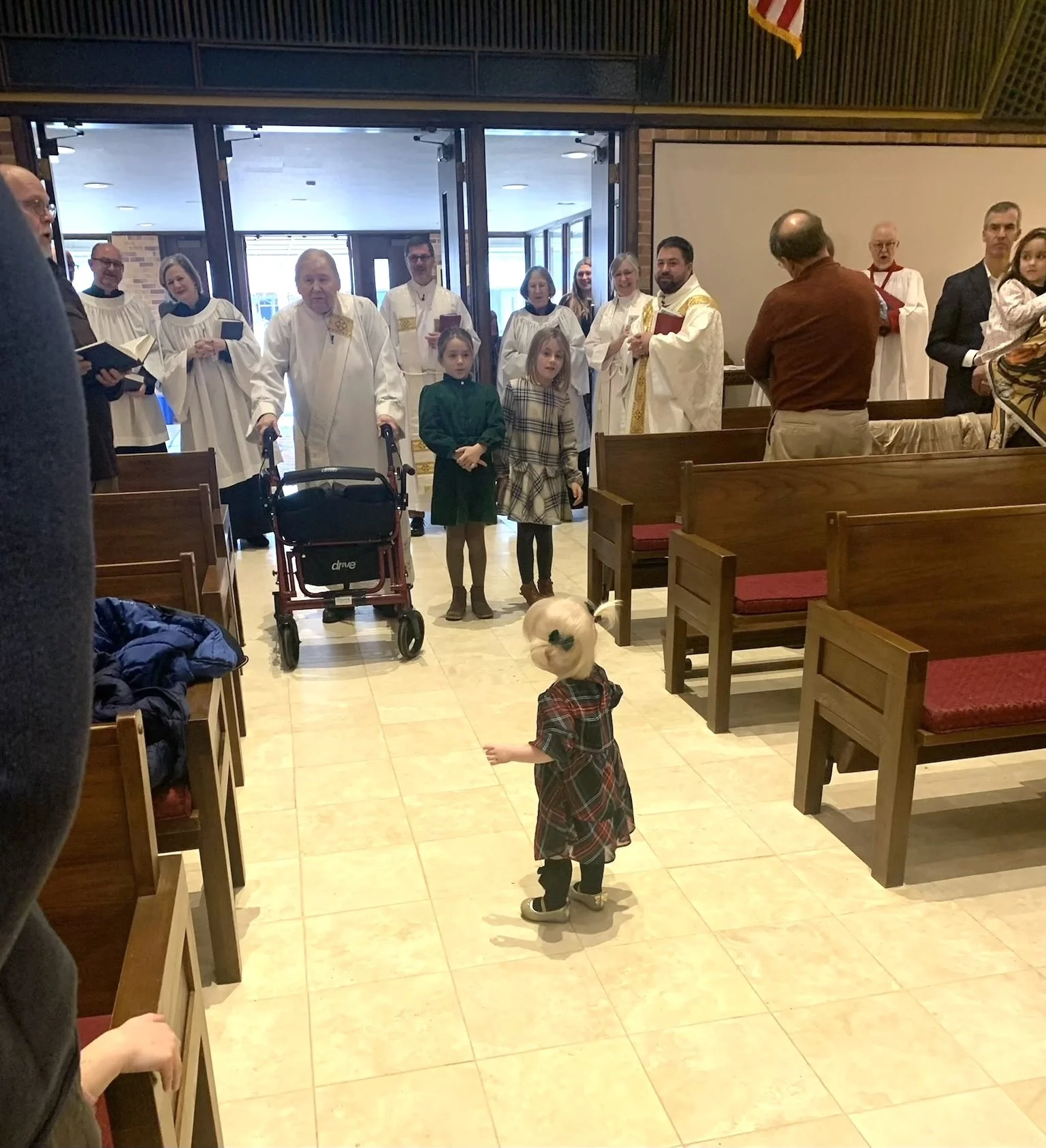


Leaving church with voices of children

Church Dismissal

“He called a child, whom he set among them, and said, “Truly I tell you, unless you change and become like children, you will never enter the kingdom of heaven. Whoever becomes humble like this child is the greatest in the kingdom of heaven. Whoever welcomes one such child in my name welcomes me.”—Matthew 18:2–5.

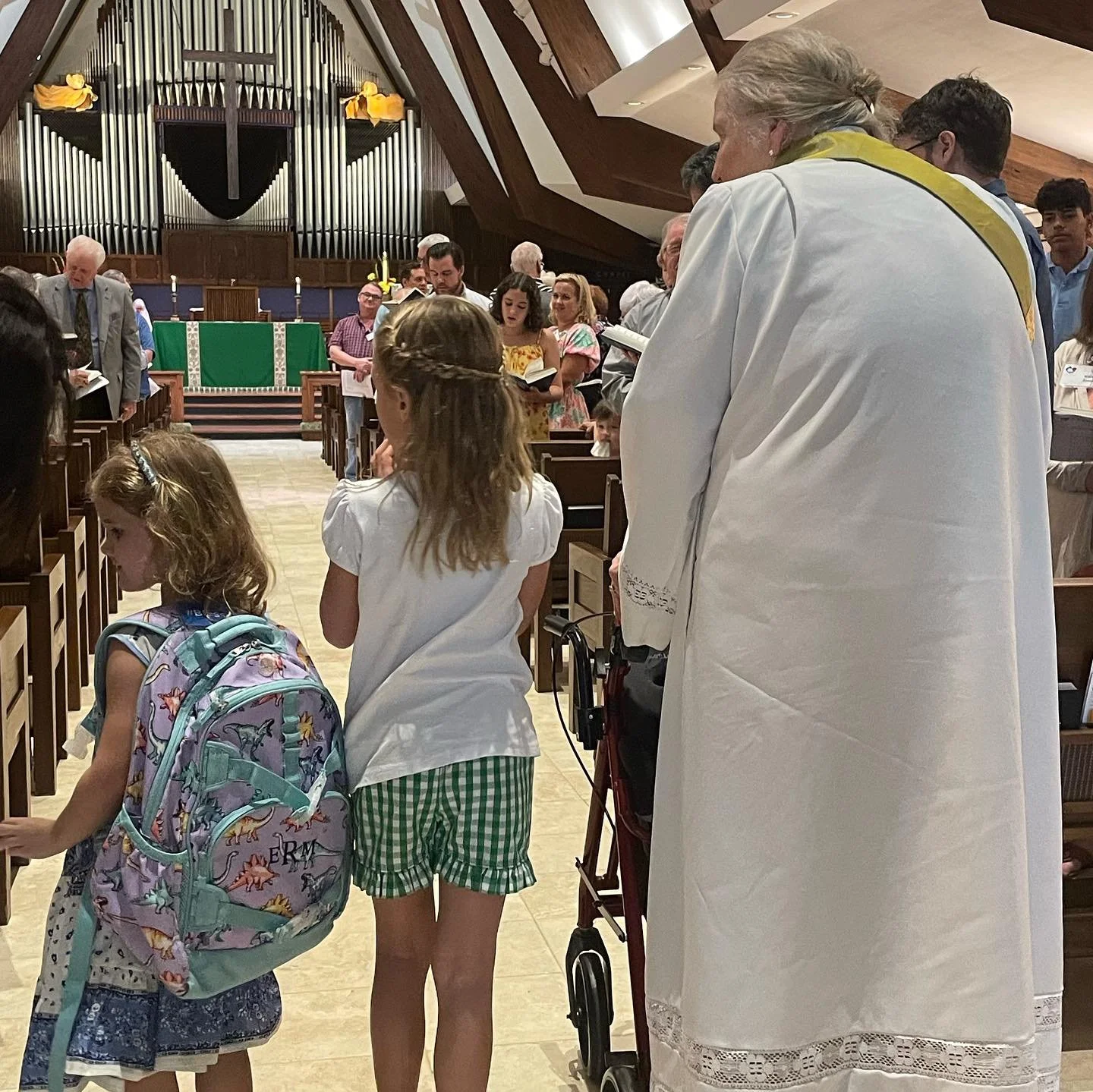
One of my favorite parts of the 10:30 service at St. Mark’s Episcopal Church is at the end, when several young children come to help me with the dismissal at the back of the church. They are usually sweet girls, though an occasional brave boy joins them. On rare occasions, they even walk down the aisle hand in hand with me to reach the back of the church. 

There are so many words I would like to say to them. I want them to learn to love being part of a church community and to worship together. I want them to know they are the future of the world and of Christ’s church. I want them to see that this place is open to them for the rest of their lives.

I want them to know this is a safe place. I want them to know this is where they will find a community that worships a loving God. I want them to know what they can learn from this worshiping community at Saint Mark’s.

This can be the gift they inherit and pass on to their children and grandchildren, as my mother and grandparents did for me. I want them to learn what Jesus said when the disciples asked him who was the greatest in the kingdom of heaven. Jesus pulled a child from the crowd and said that the greatest in the kingdom of heaven are people like these.

Frederick Buechner writes about our children: “Children live with their hands open more than with their fists clenched. They are people who… are so relatively unburdened by preconceptions that if somebody says there’s a pot of gold at the end of the rainbow, they are perfectly willing to go take a look for themselves. Children aren’t necessarily better than other people. Like the child in “The Emperor’s New Clothes,” they are just apt to be better at telling the difference between a phony and the real thing.1”  

 Therefore, I must be careful about what I say and always try to speak the truth. Of course, there is no way to tell these amazing children all this. But I can invite them to be part of the final part of the church service, simply love them for those brief moments at the back of the church before they go home, and remind them that this is a place of love.

1Frederick Buechner in Beyond Words.

Joanna Seibert joannaseibert.com. https://www.joannaseibert.com/


Faith=Trust=Love=Healing

Faith =Trust=Love=Healing

“Faith is often understood as accepting something you can’t understand. The Greek word for faith is pistis, meaning “trust.” Whenever Jesus says to those he has healed, “Your faith has saved you,” he means they have found new life by surrendering in complete trust to the love of God.”—Henri Nouwen in You Are the Beloved (Convergent Books, 2017).

Henri Nouwen speaks to us this morning about faith in God. He reminds us that we often see faith as believing or accepting something we cannot explain or understand.  

Jesus, however, says faith is trust, trust in the unconditional love of God for us that never ends. Knowing this keeps us from looking for and demanding love from other people or from anything other than God. Addictions are love for something other than God. Family misunderstandings arise because, in essence, we do not feel loved or cared for by other family members.  

We do not feel appreciated by other friends, despite all we have done for them. We have given our lives to our work, family, and church, and we perceive that they no longer appreciate us. We have offered conditional love. We have forgotten what unconditional love is like because we have stopped offering it or believing in it.

Whenever Jesus tells those he has healed, “Your faith has saved you,” he is saying that you have surrendered in complete trust to the love of God. That surrender, the trust in an unconditional love continually offered by our God, has healed our hearts and souls, even if physical healing never occurs.

Joanna. joannaseibert.com  https://www.joannaseibert.com/