Parker Palmer: Let Your Life Speak
Parker Palmer: Let Your Life Speak

“A leader is someone with the power to project either shadow or light onto some part of the world and onto the lives of those who dwell there. A leader shapes the ethos in which others must live, an ethos as light-filled as heaven or as shadowy as hell.”—Parker J. Palmer, “Shadows and Spirituality” in Let Your Life Speak: Listening for the Voice of Vocation (Jossey-Bass, 2000).
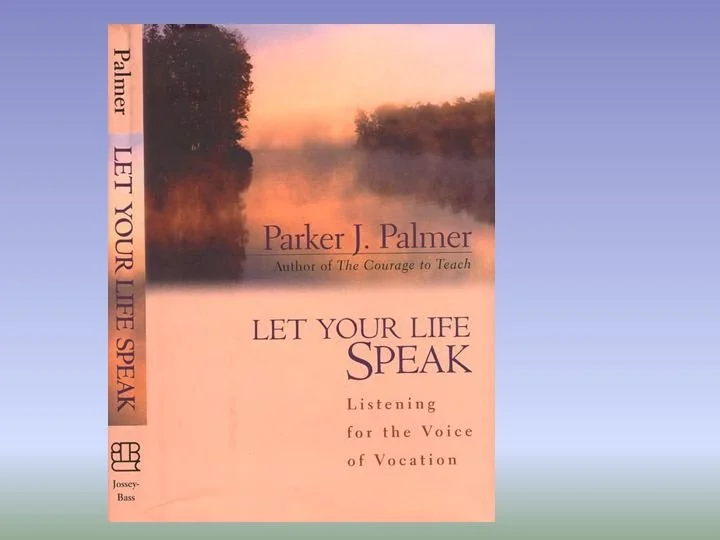
I learned about Parker Palmer when I attended a College of Preachers conference for deacons at the National Cathedral, led by the Bishop of Maryland, Robert Ihloff. We spent the week learning to preach and studying Palmer’s book on vocation. 

Parker Palmer told us what causes leaders to fail.

We cast a shadow rather than light when we fail to embark on an inner journey and are insecure about our identity and worth. Our identity becomes dependent on performance.

When we are insecure about our self-worth, we create situations that deprive others of their identity or develop settings in which others are required to meet our needs.

We assume titles that place us above others.

We call others by their first names, while we must be addressed by our last names or titles.

Leaders fail when they see the universe as a hostile battlefield. We see others as either allies or enemies on a playing field where we must be highly competitive or risk losing.

Palmer’s third explanation for why leaders fail is “functional atheism,” a term he may have coined. We believe that the ultimate responsibility for everything rests with us.

The fourth shadow within a leader that leads to failure is fear, mostly fear of chaos. This fear leads to rigidity toward rules and procedures. We forget that creativity is born of chaos.

Finally, Parker sees leaders fail when they deny death. They keep resuscitating programs that are no longer alive, keeping them on life support.

I can identify with all of these shadows of leadership.

Do these shadows speak to you as well?

During the unsettling and difficult periods in our lives, it is a good time to listen again and again to Parker Palmer’s voice in Let Your Life Speak.

Joanna. Joannaseibert.com
 

Remembering Mentors at the Close of this Easter Season

Remembering Mentors this Easter

“Therefore, since we are surrounded by so great a cloud of witnesses, let us also lay aside every weight and the sin that clings so closely, and let us run with perseverance the race set before us.”–Hebrews 12:1.

Today, I honor a Mentor who died in May 2020 from coronavirus, an early victim of the virus. I still remember how deeply moved we were to hear of the death of the Rev. William Barnwell, a priest in New Orleans. I treasure every moment I spent with him at the National Cathedral, at the College of Preachers, and through the adult education program, Disciples of Christ in Community, DOCC. He taught me, especially about literature and the Bible, preaching, and standing up fiercely for those society has forgotten or never cared for.

The New Orleans Times-Picayune calls William “the crusading minister of New Orleans.” I knew him best as the soft-spoken man with a rich New Orleans accent. Through his courses on the Bible and the accompanying stories from modern literature, he led us to a deeper understanding of the Bible through the lens of contemporary writers.

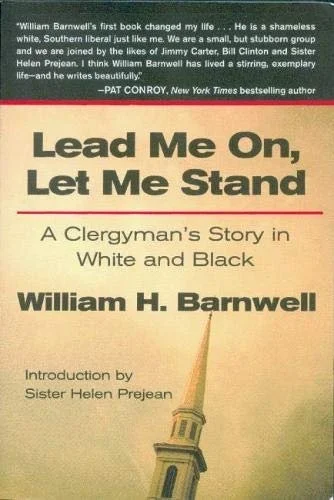
I treasure the books he wrote that Henry Hudson gave me when Henry left New Orleans. They are Lead Me On, Let Me Stand, and A Clergyman’s Story in White and Black. William also wrote Called to Heal and Brokenhearted: Stories from Kairos Prison Ministry International. Just the titles of these two books hint at his passionate ministry. It was indeed a God thing that a friend, Michael Hackett, invited William to dinner with us in New Orleans in January 2020, after a conference at the nearby Solomon Conference Center. I will continually cherish the opportunity to have that last meal with him.

William served in the Coast Guard but was best known as a community organizer against racism and injustice.

Easter can be a time to remember the lives of those who died from this virus and to thank them for what they brought to our lives. I will especially pray for William Barnwell, who almost died so many times as he fought to save and change the lives of others with his words from the pulpit, through the Bible and contemporary literature, and on our southern streets and in our southern prisons.

Give thanks to those who have mentored you. Continue their legacy by sharing with others what you learned from them. Call or write to thank them during the close of this Easter season.
Joanna
https://www.joannaseibert.com/

Eugene Peterson and Prayer

Peterson: Prayer

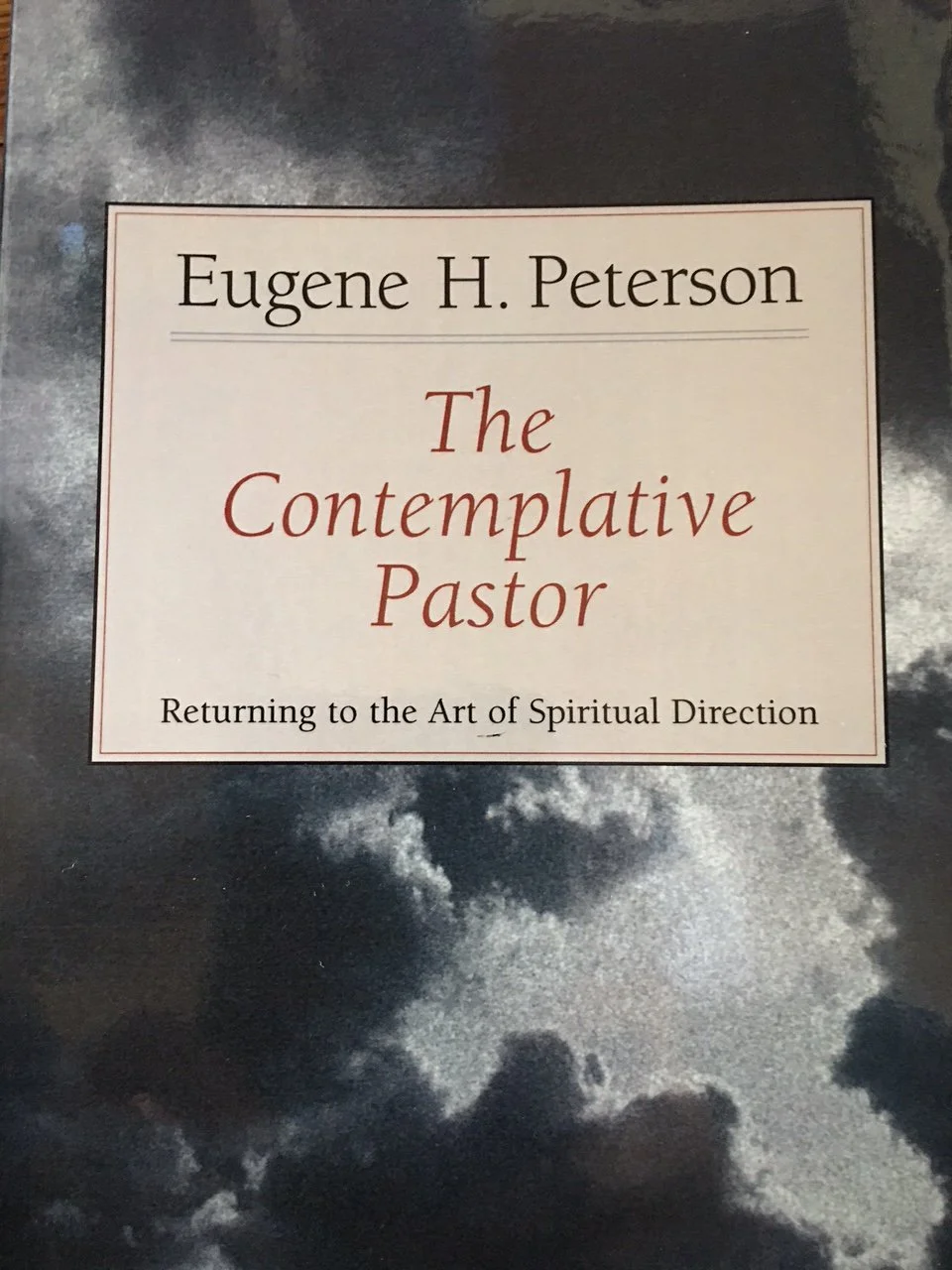
“I began to understand the obvious: the central and shaping language of the church’s life has always been its prayer language. From that recognition, a conviction grew: my primary educational task as pastor was to teach people to pray.”—Eugene Peterson, “What Is My Educational Task?” in The Contemplative Pastor: Returning to the Art of Spiritual Direction (Eerdmans, 1993).

The well-known author of the popular modern Bible translation, The Message, reveals that he interprets the most important ministry of a pastor as being a spiritual director, teaching others how to pray. Of course, he is not downgrading teaching about faith, biblical writings, or the history of God’s people. Still, he calls pastors to be spiritual directors, returning to the wisdom of ancient spiritual leaders who trained people to connect with God and God’s love through various forms of prayer. 

Peterson invites us to make friends with our ancient forebears, beginning with Gregory of Nyssa and Teresa of Avila. He then challenges us to learn the language of intimacy, love, and relationship. 

He reminds us of two great mystical prayer traditions, the kataphatic and the apophatic, the first praying with our eyes open, the second with our eyes shut. Kataphatic prayer turns to icons, symbols, rituals, and incense, affirming creation's gifts as a way to the Creator. Apophatic prayer calls for emptiness—a mind cleared of thoughts and images until one experiences the silence and nearness of God. The two ways of prayer can be blended, and we will find one or the other more meaningful at different times in our lives. 

However, this former professor of spiritual theology reminds us that the Psalms were written by people of God who kept their eyes open.

Joanna joannseibert.com https://www.joannaseibert.com/