Brueggemann, Nouwen: Lessons From the Eucharist: Thanks and Abundance

Brueggemann, Nouwen: Lessons From The Eucharist, the Welcome Table: Thanks and Abundance
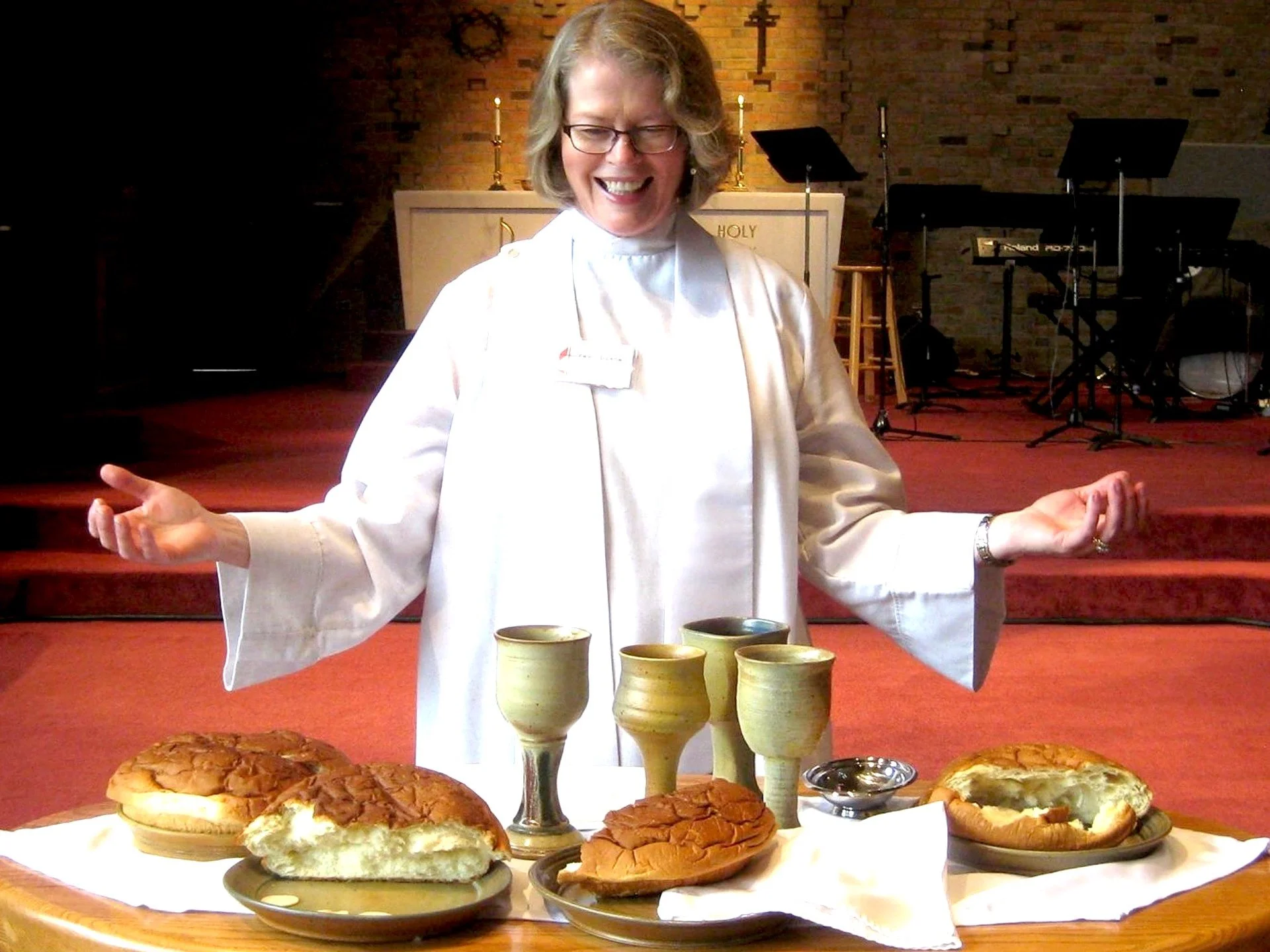
“The church is the only community whose central symbolic act is called ‘Thanks.’ The Eucharist. Eucharist is Greek for ‘Thanks.’ Participation in the Eucharist is an act of gratitude for the abundance that the creator God gives to the world!”

But the extraction economy wants to think, ‘It’s mine!’ ‘I made it, I own it, I can do what I want, I don’t have to be grateful to anybody.’ That leads me to think that participation in the Eucharist is the most subversive thing we can do. But notice what the long history of the church has done to the Eucharist. It has siphoned off its danger, turning it into something about sin and salvation and getting right with God, rather than a meal for the neighborhood.”—Walter Brueggemann.

Brueggemann reminds us of something we so often forget about the Eucharist. Christ called all to the Welcome Table, which should be the center of our worship. Whether weekly or daily, the Eucharist is an experience of abundance. There is always enough bread and wine, and there is always some left over.
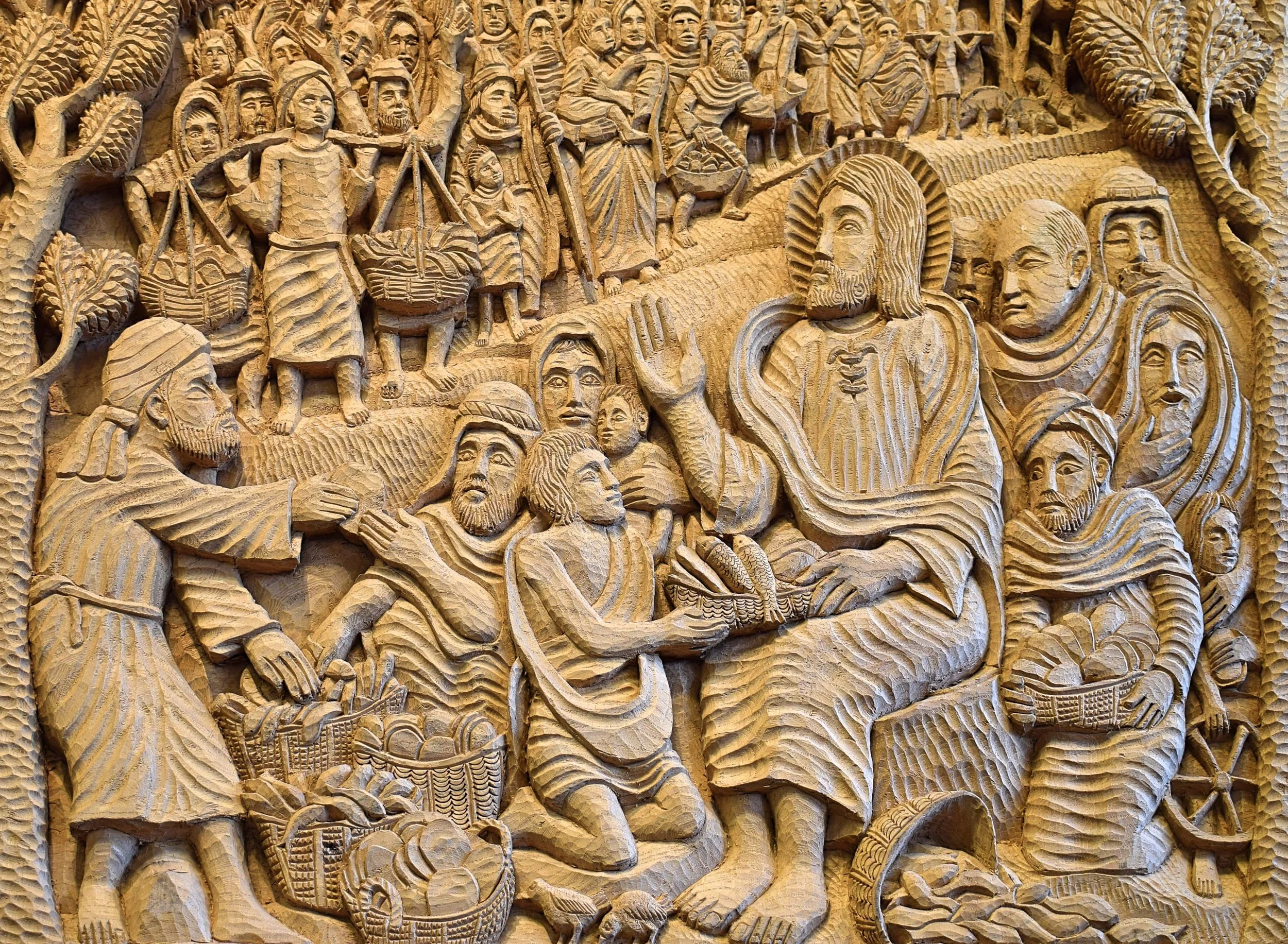
Feeding of the 5000

Henri Nouwen puts it this way:

“Remember the big crowd, five loaves, and two fish (Matt. 14:15-21)? Jesus said, ‘Give them something to eat.’ The disciples responded, ‘Lord, five loaves, two fish, big crowd? It doesn't fit.’ Jesus said, ‘Give them something to eat.’ And he said, ‘Throw out your nets.’ They did and caught fish, but not enough to meet their needs. They caught so many that their nets could not hold them all. It is the same with the crowd. Jesus didn't just want to make sure everyone got a little piece of bread. There were twelve big baskets of leftovers! And the boat was so full of fish that Simon didn't know what to do with them.”

Jesus breaks right through our normal logic. He is moving all of reality into the kingdom. Suddenly, the fishermen were no longer living by the world's logic. They had entered the logic of God's house, which is beyond all human logic. They had entered a whole new world.”—Henri Nouwen in A Spirituality of Homecoming (Upper Room Ministries 2012)

The Eucharist is a reminder of a great gift: God’s love for each of us and for all.

Remembering we are giving thanks for God’s great gift of love,

Remembering that this is a table of abundance for all,

 Remembering this is an assurance that we have been given a life of abundance through Christ, which can make all the difference in how we receive the Eucharist and

How we live our lives.

Nouwen calls it “kingdom logic.”
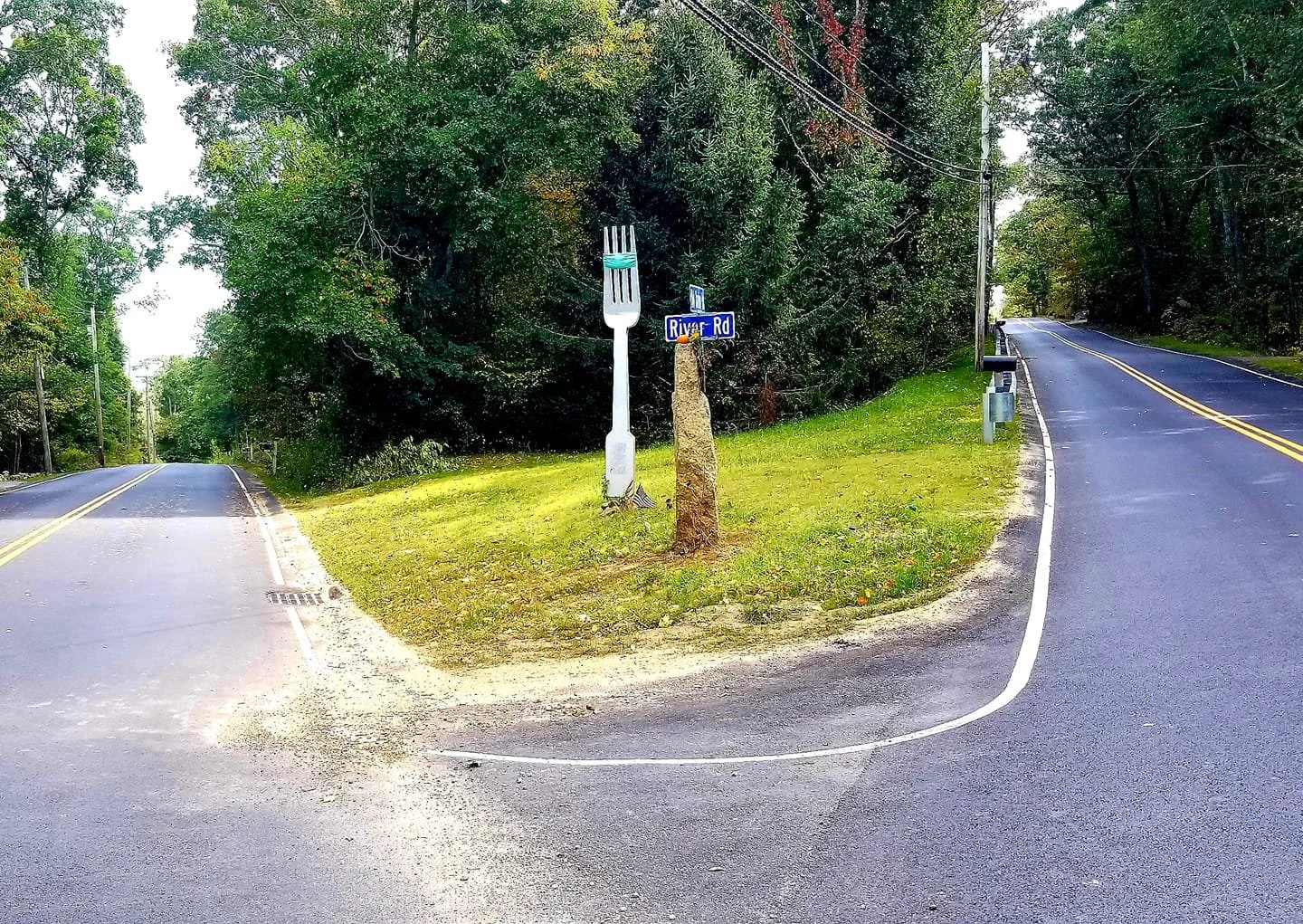
Deciding which Path to Follow Next

Deciding which path to follow next

 And when you turn to the right or to the left, your ears shall hear a word behind you, saying, “This is the way; walk in it.”— Isaiah 30:21.

Fork in the Road

How do we hear God’s voice telling us what to do and where to go? There are many options, perhaps more than the stars. The purpose of all our spiritual practices is to position us to hear God’s direction.

Many believe God is the dream maker who speaks to us in the language of dreams at night. However, my experience is that I can only find meaning in a dream group. Looking back on what I thought this dream meant, the answer was obvious, but only other people could see it.

Many discernment processes can help determine the next path. The one I use most is Ignatian discernment, in which we visualize or imagine our lives in one situation and then in the other. Ignatius suggests that we discern our path by evaluating how we felt after imagining each situation, rather than how we felt while imagining it.

Many use spiritual direction from another person to guide them. The director is there to help the person connect with their inner soul, where answers often come from.

My experience is that the hours just after waking in the morning are often when situations become clearer. So I try to be quiet and wait to see if answers come.

This reading from Isaiah also reminds me of Benedict’s direction in the prologue to his Rule: “Listen with the ear of your heart.”

Joanna Seibert https://www.joannaseibert.com/


The Righteous Gentiles of World War II, Remembered on July 16

The Righteous Gentiles of World War II, July 16

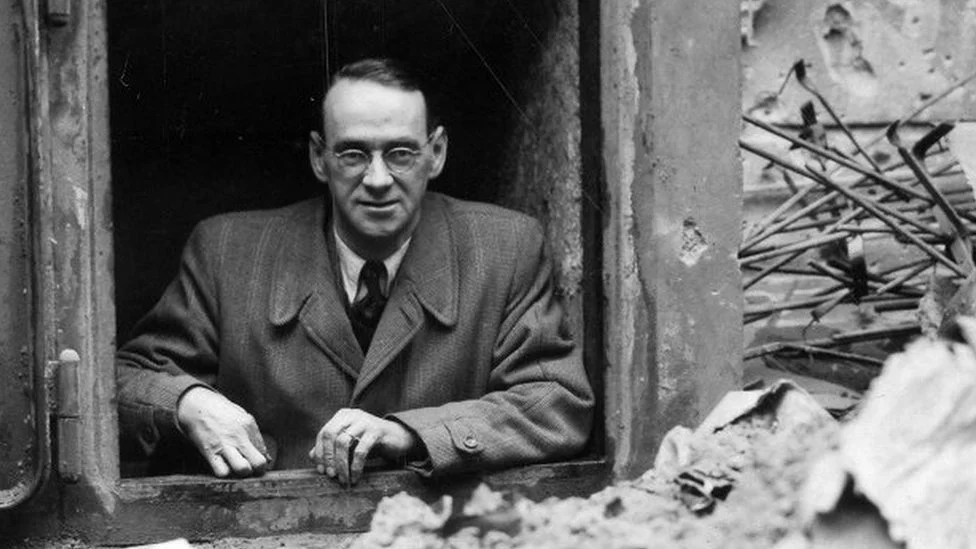
Carl at Window

“Lord of the Exodus, who delivers your people with a strong hand and a mighty arm: Strengthen your Church with the examples of the righteous Gentiles of World War II, who defied oppression to rescue the innocent, through Jesus Christ.”—Collect of the day: The Righteous Gentiles, July 16, in A Great Cloud of Witnesses (Church Publishing, 2016).

Holy Women, Holy Men was a trial expanded calendar of commemorations of saints authorized by the 2009 General Convention of the Episcopal Church, which included many modern people of faith and apostolic action. It was revised to become A Great Cloud of Witnesses (2016). The people remembered on July 16 are the thousands of Christians and people of faith who saved Jews from the Holocaust. One of them was Carl Lutz, an Evangelical Christian Swiss Vice-Counsel in Budapest. Lutz negotiated with the Nazis for the deportation of over 60,000 Hungarian Jews to Palestine, probably saving more lives than any other person.

Lutz had gained permission to issue emigration papers for 8,000 Jews to Palestine. He interpreted this as applying to 8,000 families, thereby saving thousands more. A 2014 American film, Walking with the Enemy, tells of Lutz’s work with Pinchas Rosenbaum in Budapest during the German occupation of Hungary. Lutz also established seventy-six safe houses to hide Jews in Budapest, including the now-famous Glass House, all of which the diplomat declared Swiss territory. 

There is another documentary about Lutz called The Forgotten Hero. I believe each of us is given many opportunities to make a difference in others’ lives. The challenges may not be as dangerous or risky as Lutz’s on the international scene, but in our own environment, they may still demand courage. It is essential to see how creative people who came before us made changes and found loopholes in systems that were beyond awful, when there seemed to be no way out. I can only believe this was the work of the Holy Spirit in the worst of times. May we pray that the same Holy Spirit will work in us today.

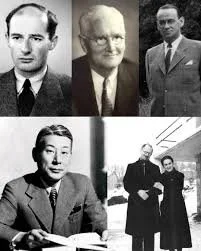
We remember the many other righteous Gentiles from all over the world.

wallenberg bingham IV, Lutz, Sugihara, andre and magda trocme

[See Carl Lutz, International Raoul Wallenberg Foundation, www.raoulwallenberg.net.]

Joanna. https://www.joannaseibert.com/