Gerald May IV: How We Love
“In speaking of love, narcissism says, ‘I need you to love me.’ Erotic love says, ‘I need you.’ Filial love says, ‘I love you because I understand you.’ Agape—if it could speak—might say, ‘I am you in Love.’” —Gerald G. May, Will and Spirit (HarperOne, 1982), p. 167.
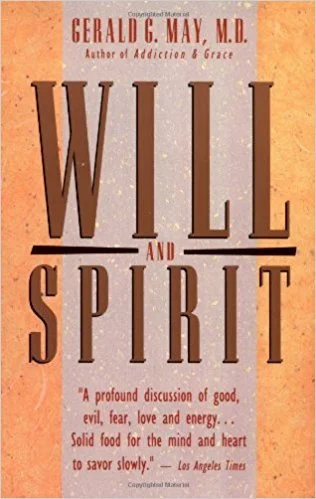
In Will and Spirit, Gerald May discusses types of love: narcissistic (self-love), Me-Me; erotic (romantic) love, Me-You; filial (compassionate) love, I-Thou; and agape (divine, unconditional) love. May believes that erotic and filial love can serve as “primary education leading to agape love.” Our confusion arises when we expect unconditional love from human beings and conditional love from God—and when we look for unconditional love in the image of God.

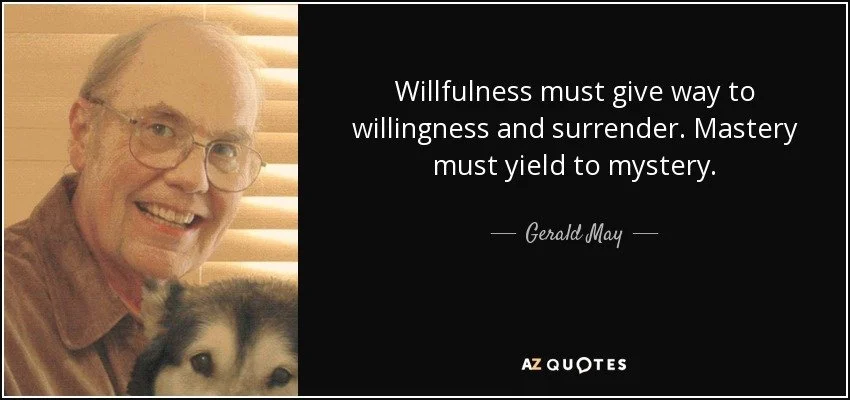
may
May points out that those who believe they are as holy as God commit perhaps the greatest sin. Willful self-determination is a template for human evil, just as willful vengeance is. Willfulness always leads to separateness.
If we can move toward forgiveness for past wrongs, our fundamental capacity for love will not be harmed. But if we hold on to resentment, it will become increasingly difficult to love or feel lovable. Our sense of separateness grows, and we become more afraid of anything resembling belonging, surrender, or union.
It is not so much the nature of the evil forces we encounter, but our response to them, that can make a difference in our lives. When faced with a difficult situation, we must not deaden ourselves to reality, cop out, or rush into our own plan, while forgetting to call on the active power of God. We are called to remember the importance of the situation and the need for action, while recognizing our total dependence on the unconditional love of God. Then our hearts can be open to God working in us—and at some deep level of our awareness, we can relax and be at peace.
Joanna. https://www.joannaseibert.com/