November 22, 1963: Death of JFK, C.S. Lewis, and Aldous Huxley
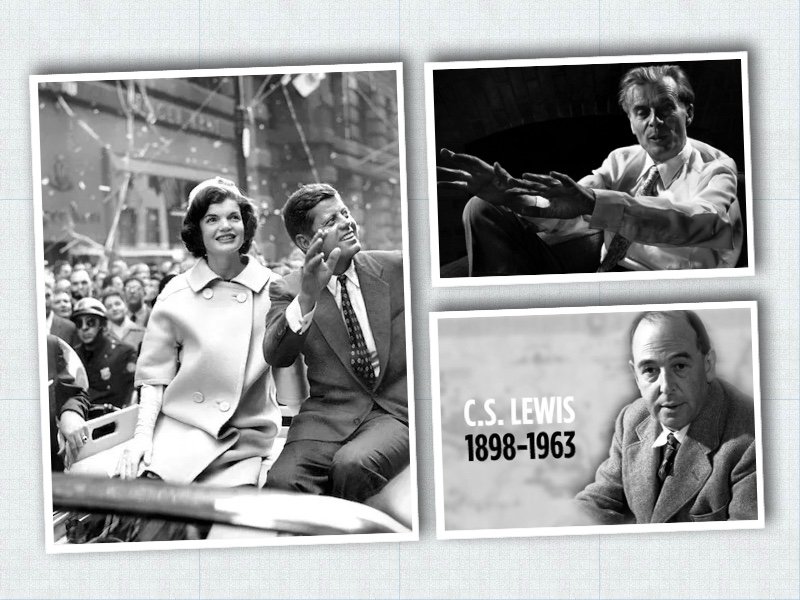
Between Heaven and Hell: A Dialog Somewhere Beyond Death with John F. Kennedy, C. S. Lewis, & Aldous Huxley is a novel by Peter Kreeft about U.S. President John F. Kennedy and authors C. S. Lewis (The Chronicles of Narnia) and Aldous Huxley (Brave New World) meeting in Purgatory and engaging in a philosophical discussion of faith. It was inspired by the fact that all three men died on the same day: November 22, 1963. Kennedy was assassinated, Huxley died of cancer, and Lewis died of renal failure. We see the discussion from three points of view: Kennedy's "modern Christian" view, Lewis's "conservative, orthodox Christian" or "mere Christian" view, and Huxley's "Eastern pantheist" view of God. The book progresses as Lewis and Kennedy discuss Jesus being God incarnate, then Lewis and Huxley debate whether Jesus was a deity or "just a good person."— Wikipedia
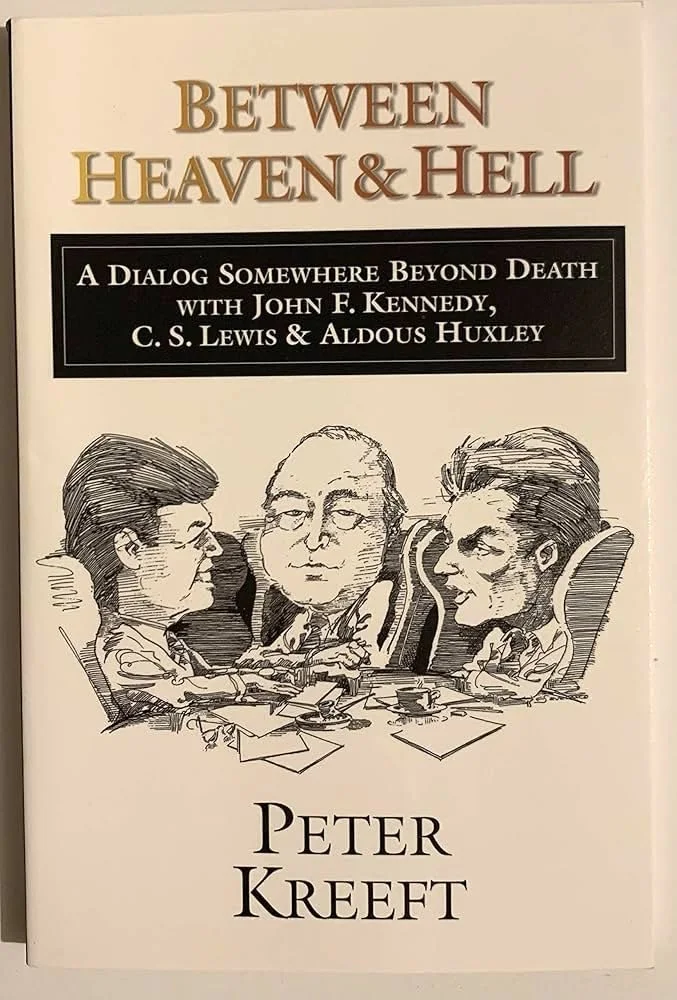
We are sometimes asked whom we would like to have for dinner, living or dead. Many would invite Kennedy, Lewis, or Huxley. Peter Kreeft’s novel imagines what a conversation among these three would be like, since they all died on the same day. Kreeft, a professor of philosophy at Boston College and King’s College and a Catholic apologist, writes a fictional book that reads much like a play, with constant Socratic dialogue among the three men.
Huxley, an English writer and philosopher, portrays God as an Eastern pantheistic universal force, viewing the universe as divine rather than as a separate, personal deity. He believes God is not a distinct being but the underlying essence of all existence, meaning everything is part of God.
Huxley regards the ultimate spiritual goal as attaining a state of unity with cosmic consciousness, in which individual identity dissolves into the larger whole.
In contrast, C.S. Lewis presents a more traditional Western Christian view of God as a personal being who interacts with humanity and can be known through faith. While Huxley's God is not a judge, Lewis's God is a moral authority who holds individuals accountable for their actions.
Kennedy represents Western secular humanists and the modernist Christian perspective.
Most reviewers believe the author is biased toward Lewis, the central figure and the most fully developed character, and that the author poorly represents Kennedy. Still, the concept is so intriguing. So often, we think of friends and family who have died and imagine them having some form of conversation with each other. At some later date, we will all have a chance to learn more!
The book’s ending may also speak to the author’s concept of God. A fourth character, the Light, appears and says, “Are you coming?”
Joanna. joannaseibert.com