A Thanksgiving Letter to My Colleagues
Guest writer: Dr. William Blythe
Dear Colleagues,
There is a woman who cleans our surgery center at night.
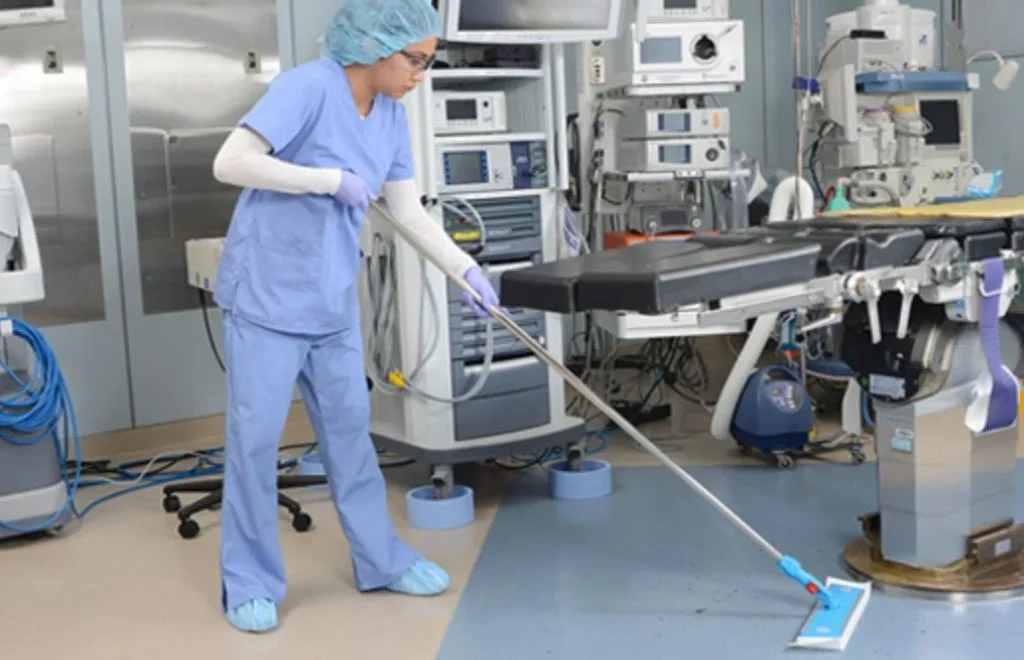
She comes when the work we call our work is finished. When the patients have gone home, the nurses have gathered their things, and the operating rooms have fallen quiet, she begins. She cleans the rooms where we have spent the day trying to make people well. She prepares them for the people who will need us tomorrow.
I am often among the last to leave. By then, I am tired. Sometimes I am carrying the weight of a difficult case. Sometimes I am simply ready to go home. But she always speaks. She is always sweet to me.
I try to return her kindness. Some evenings I do better than others. Too often, I give her a hurried greeting while my feet keep moving toward the door.
I have thought about that more than she knows.
Another woman works in the surgery waiting room. She lost her son in a terrible tragedy a few years ago, and she wears his photograph on her shirt every day. I arrive with my schedule in my head. She arrives carrying a loss I cannot begin to measure. Still, she asks about Meredith. She asks about my children. She makes room in her day to care about my life.
I wish I could say I always make the same room for hers.
And there is a man in Environmental Services who has worked at our hospital for decades. Every morning we have the same routine:
“How’s it going, Doc?”
“I’m just Living the Dream!” I reply.
And he says, “That’s all you gotta do!”
We laugh. Some days, one of us says it before the other can ask. It is our little ritual, familiar and easy, offered in passing between the places we have to be. I enjoy seeing him. But I have accepted his friendship more faithfully than I have taken the time to return it. There is much about his life I have never stopped long enough to learn.
These people stand at the beginning of what I want to say this Thanksgiving.
I have spent nearly thirty years as a physician, and I am still learning how to be worthy of the people this profession brings into my path.
That includes my patients.
Some are difficult. Some arrive unable to explain why they are there, what medicines they take, or what happened at the last doctor’s office. Some have damaged their health through years of choices whose consequences I can recognize much more easily than I can understand the lives in which those choices were made.
I get impatient. I judge. I feel the schedule slipping and the waiting room filling, and sometimes I begin to see a problem to move through instead of a person to care for.
I am not proud of that.
Meredith does this much better than I do. She has a capacity for love and acceptance that I admire and too often struggle to practice. She stays curious when I have begun to draw conclusions. She finds a way to reach people I have found frustrating. Watching her reminds me how much I can miss when I decide too quickly that I already understand someone.
And some days my mind wanders far beyond our office.
I think about a farmer in Blythe, California, sitting beside his sick wife, wondering what tomorrow might bring. A mother in Blythe, Georgia, waiting for someone to tell her whether her child will recover. A father in Blytheville, Arkansas, counting the money in his pocket against the cost of medicine. A family in Blythewood, South Carolina, awake in the night, frightened about someone they love. And an elderly couple in Blythedale, Missouri, holding hands across a kitchen table, quietly wondering how much precious time they have left together.
Five little places scattered across America, all sharing a name that happens to be my own. But the name is hardly what connects them. It is the humanity of the people who live there—their hopes, their fears, their love for one another, and their need for someone to care when life becomes difficult.
I think about the people cleaning buildings, washing dishes, cutting grass, collecting garbage, and doing the necessary work of the world while someone else sleeps. Each of them has a life as complete and precious as mine. Each has someone whose footsteps they recognize, someone whose voice they hope to hear. They have bills to pay and children to feed. They have hopes and dreams, small ambitions and private disappointments. They want a little comfort, a little security, and a chance for their children to have a good life.
And when someone they love becomes sick, they want a physician.
What an extraordinary thing it is that we are allowed to be that person.
We enter a room, and a frightened stranger tells us something they may never have told another soul. A parent places a child in our arms and trusts us to bring that child back. A family waits for us to come through a door because, for that hour, the news we carry matters more than anything else in their world.
Sometimes we cure. Sometimes we operate and restore something that was lost. Every now and then, we save a life. Other times, we explain. We relieve pain. We sit with someone whose illness we cannot fix and help them face what comes next.
There are people living ordinary Tuesdays because of something one of you did. They are buying groceries, answering the telephone, arguing with their children, and planning Thanksgiving dinner. They may rarely think about the day you helped make those ordinary days possible.
You may barely remember it yourself. But somewhere there is a family with another year together.
How could we ever put a price on that?
Of course, our work must sustain our families and the people we employ. Fair payment matters. So do reasonable rules, functioning practices, and the ability to keep our doors open. We should fight for those things with conviction. The financial and regulatory pressures bearing down on medicine are real, and gratitude will not pay the payroll.
But I worry about what happens to us when those pressures occupy every corner of our thinking. We can spend so much time defending the means to practice medicine that we lose touch with the joy of practicing it.
No amount of money can equal the importance of knowing that another human being is better because you were there. I have felt it in an operating room. I have felt it in an office visit that finally brought an answer. I have felt it in a patient’s handshake or hug, in a relieved parent’s face, and in a letter received years after I thought I had been forgotten.
Those moments have sustained me in ways income never could.
I do not know much theology. I have questions, and I cannot pretend to possess certainty about all the things I wish I understood. But Meredith has taught me to live with the belief that God put us here to take care of one another. To be kind. To provide what we can. To notice when someone needs us. And to love and accept one another exactly as we are.
She taught me to live as though I believed it, and somewhere along the way, I found that I did.
I believe medicine is a calling. I still believe that after all these years, and I need to remember it now.
This Thanksgiving, I am grateful for the privilege of being useful. For the education, the hands, the judgment, and the opportunities I have been given. For the people who taught me and the people who work beside me. For patients who have trusted me with more than I could ever have earned the right to ask.
I am grateful, too, for the people who keep offering me kindness while I am busy being important.
The woman cleaning the surgery center deserves more than the back of my head as I leave. The mother wearing her son’s photograph deserves a moment in which I am fully listening. My friend in the hallway deserves to hear me ask how he is doing—and to know I have time for the answer. I cannot claim to love humanity in some distant place and remain too hurried to love the people standing in front of me.
So that is where I hope to begin.
With a little more patience in the examination room. A little more grace for a frightened family. A little more attention to the people whose labor makes my own possible.
And with gratitude that, after all these years, I can still walk into a room and say, “I’m your doctor,” and have those words mean something good.
Happy Thanksgiving, my friends.
May we go home grateful for the people waiting there. May we return grateful for the people who need us.
And may we remember, when someone in the hallway asks how it’s going, that we have been given a life in which “Living the Dream” can still be an honest answer.
Bill
Joanna joannaseibert.com