Joseph of Arimathea and the Election
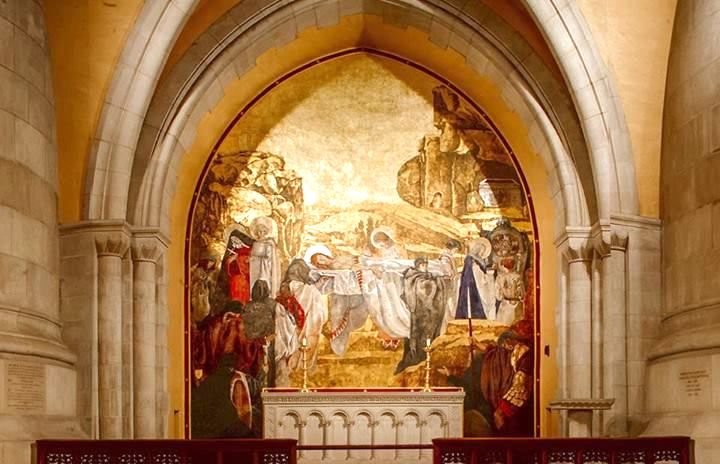
Chapel of Joseph of Arimathea, National Cathedral Washington DC
“He was a good and righteous man… and had not agreed to their plan and action. He came from the Jewish town of Arimathea and was waiting expectantly for the kingdom of God.”—Luke 23:50-51.
As we read this, we may not yet know many of the results of this election. Our prayers should be with those who win the election and for those who lose.
For some reason, I hope to remember Joseph of Arimathea after this election. “He was a good and righteous man… and had not agreed to their plan and action. He came from the Jewish town of Arimathea, and he was waiting expectantly for the kingdom of God.” That’s us!! I think we’re all waiting expectantly for God’s kingdom and hoping to find some part of it in the people we voted for. So we have much in common with Joseph of Arimathea.
“He did not agree to their plan and action.” But what DID he do about it? Did he speak up for Jesus? There is no record of anyone testifying on Jesus’ behalf at his mock trial. We have sometimes been like Joseph of Arimathea—seeing injustice and wrongdoing in the lives of others and ourselves, yet not speaking up against them. We fear what might happen to us. We dread the consequences of speaking out. We fear that what we do or say might be offensive and hurt someone, or—Heaven forbid—we might become unpopular. We are afraid that our voice will not make a difference.
But then a transformation occurs in Joseph, what we might call a moment of clarity. Joseph goes to Pilate. What bravery. He asks for Jesus’ body, then personally and compassionately removes the nails from Jesus’ hands and feet, washes the blood from his head, hands, feet, side, and back, wraps the body in a linen cloth, and lays Jesus in what presumably was his own tomb.
Are we Joseph of Arimathea? Is there a point at which we can no longer live only for our own well-being, focused on issues that affect only us? We no longer pretend to go along with the old crowd, inside and outside ourselves. Instead, we look to our core values, speak our truth, and act on it. This happens to people in recovery from addiction and to spiritual friends who seek a deeper connection to God.
This may also be how we experienced voting recently or today. No matter the election’s results, we voted and let our voices be heard. We took a stand. As with Joseph, it was only the beginning for many of us.
Think about it. We gather today through the internet and may know what it is like to be Joseph of Arimathea. I believe there is a Joseph of Arimathea within each of us, finally making a stand and changing how we relate to ourselves, God, and the world—speaking out with love and compassion and becoming concerned for the plight of others.
Remember the quiet, compassionate, loving courage of Joseph of Arimathea, who is in each of us, the courage to change and the determination to foster love and understanding between ourselves and others. We need that courage to bring compassionate healing to our country, especially in the days ahead.
Joseph provided the tomb for the resurrection to take place. That is now our job. We have learned about resurrection and compassion from spiritual friends and in the thin places where we worship. We are now called to be that same vessel for compassion and resurrection in today’s world, where reconciliation is desperately needed—perhaps even more now than before the election.
Let us be that place for healing and resurrection.
Joanna. https://www.joannaseibert.com/