Parker Palmer: Trees
“I used to take trees for granted. But these days, I know that spending time in their presence leaves me refreshed and renewed. I wonder if trees photosynthesize the soul as well as sunlight?”
But most of all, I’m drawn to trees because of something W. S. Merwin says in this lovely poem—the way they slowly and quietly cycle through the seasons, as though nothing had happened while our individual and collective lives whirl madly around them. This is Parker Palmer’s response to W. S. Merwin’s poem “Elegy for a Walnut Tree,” published in the weekly column “On Being with Krista Tippett” (5/3/2017).
I want to remember what Parker Palmer tells us about the outdoors, especially trees. Could “trees photosynthesize the soul”? Being outside with trees does something to my soul. Photosynthesis is a process plants use to convert light energy into chemical energy (sugar from carbon dioxide and water), which is later used to fuel the plants’ activities, and it releases oxygen as a waste product. Plants are like transformers, changing one form of energy into another, turning light energy into chemical energy.
Being outside in a forest transforms and quiets my soul. Soon, the busyness of my mind, the committee in my head, and my to-do list no longer rule me. I am grounded in the earth. I move out of my mind and into my body. I see a world greater than myself, a power at work beyond my limits.
As I return to the forest, I observe how the trees quietly “cycle through the seasons.” The trees are a permanent icon, reminding us to be the “steady bow,” as the parent Khalil Gibran writes in The Prophet. We are indeed all parents caring for this earth, which in turn also parents us and cares for us.
My father was a forester who, for so many Saturdays, took people out to plant more trees. Often, we would drive by the pine forest to see how the trees were growing. This produced changes in my synapses, so I always had difficulty seeing a tree cut down.
This poem is significant to me today because two large trees in my neighbor’s yard, just outside my window, were uprooted last year. Soon, men with chainsaws took the trees away. I still grieve their absence.
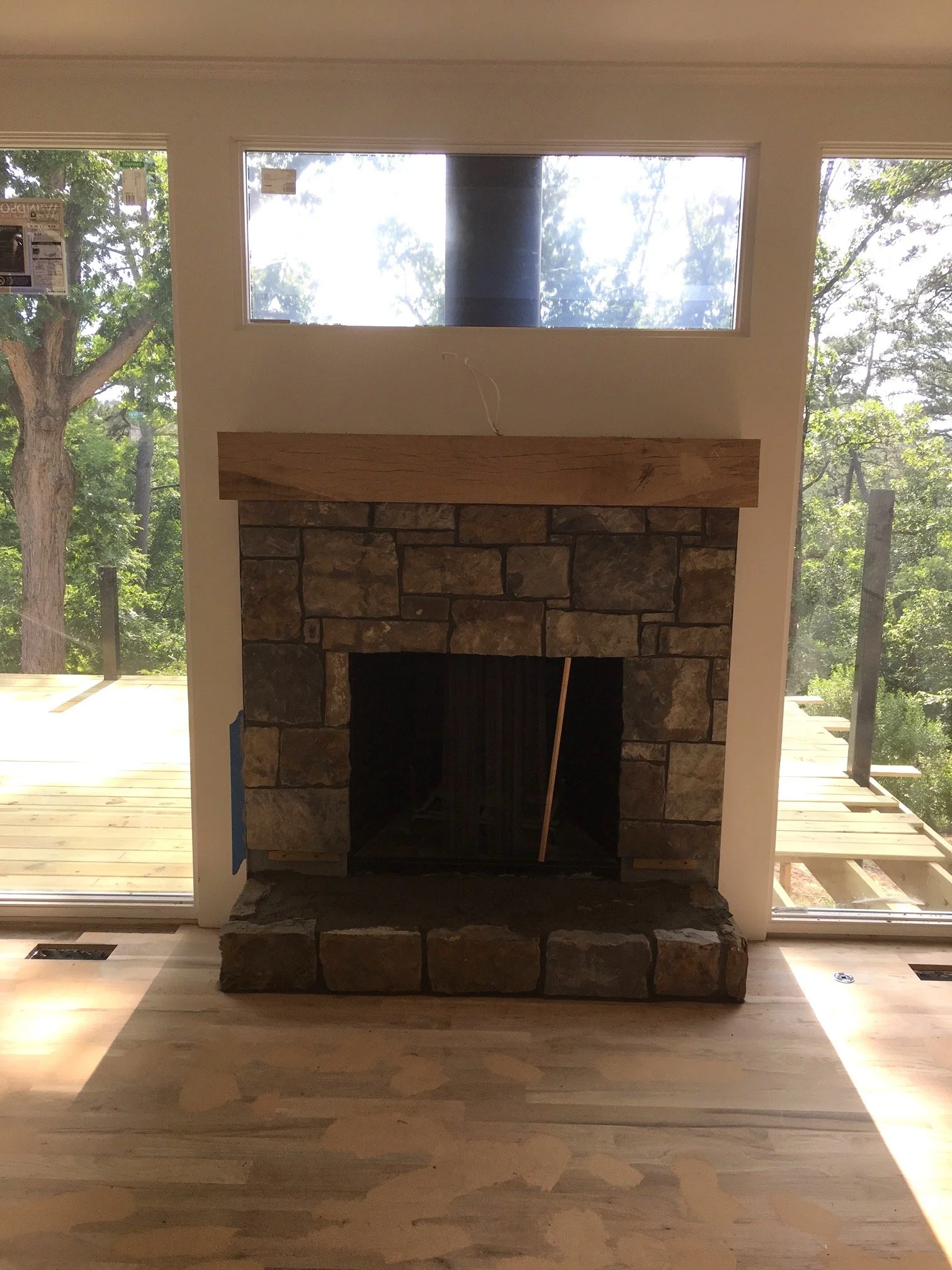
It helps to remember that our son and his wife had to cut down a dying tree near where they were building a house. They honored the tree by using its wood to make a mantel for their fireplace. Our daughter holds an advanced degree in forestry and returned to Arkansas after teaching at the Wilderness Institute at the University of Montana. I have hope for the future.
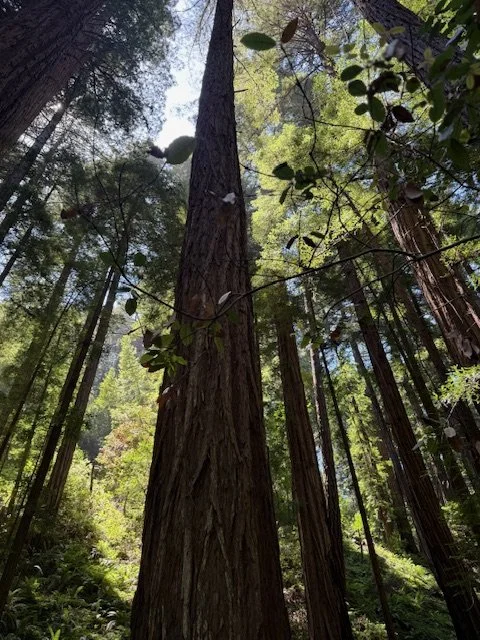
Donna Kay sent me this picture of trees that were meaningful to her.
Trees were nature’s healers for all those who spent more time outdoors during the past pandemic.
Elegy for a Walnut Tree
by W. S. Merwin
Old friend now there is no one alive
who remembers when you were young
it was high summer when I first saw you
in the blaze of day most of my life ago
with the dry grass whispering in your shade
and already you had lived through wars
and echoes of wars around your silence
through days of parting and seasons of absence
with the house emptying as the years went their way
until it was home to bats and swallows
and still when spring climbed toward summer
you opened once more the curled sleeping fingers
of newborn leaves as though nothing had happened
you and the seasons spoke the same language
and all these years I have looked through your limbs
to the river below and the roofs and the night
and you were the way I saw the world
"Elegy for a Walnut Tree" by W.S. Merwin, from The Moon Before Morning. © Copper Canyon Press, 2014. Reprinted with permission.
Joanna. joannaseibert.com