Guest Writers Steve and Sally Harms
Trust God to be the Judge, Weeds and Wheat
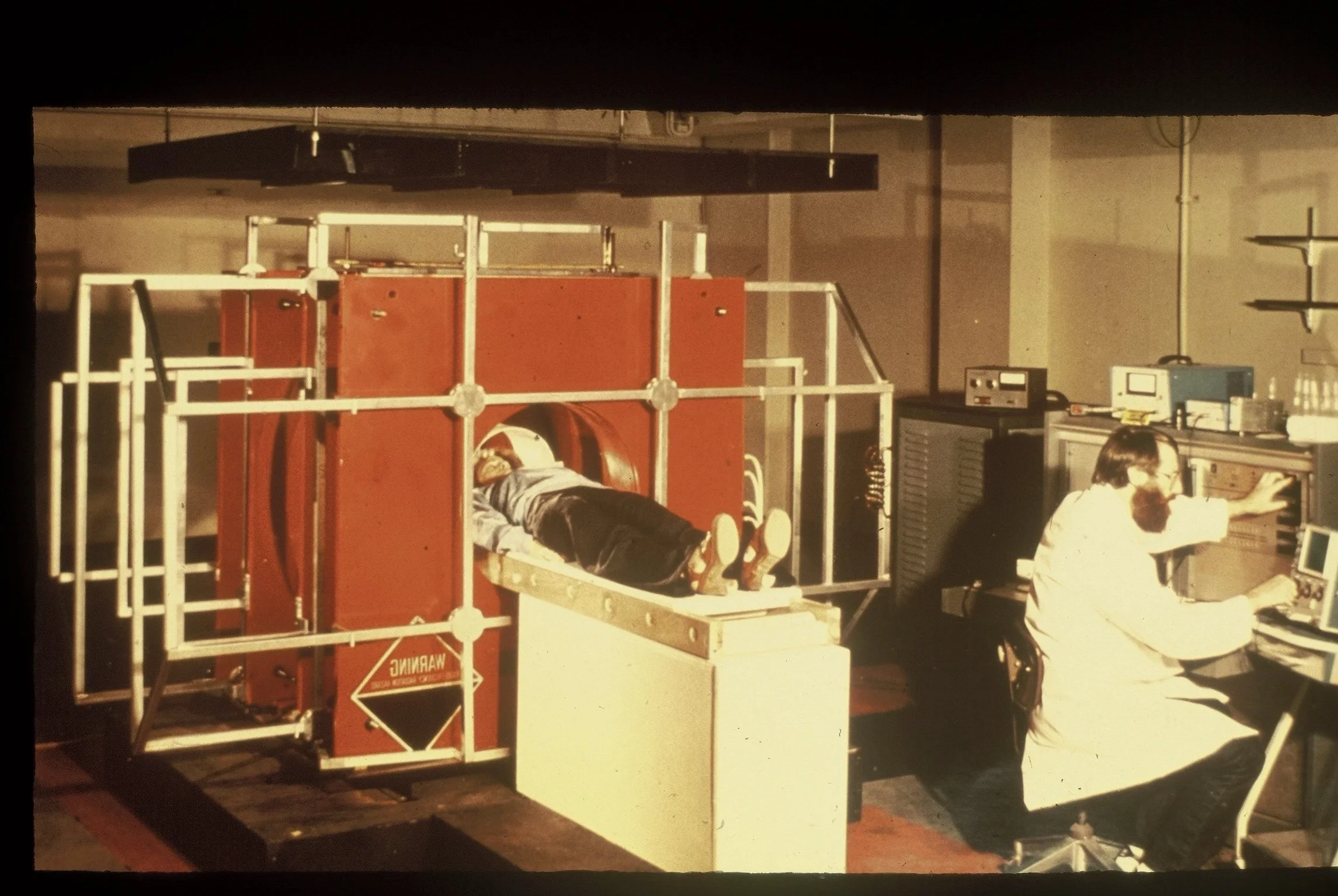
This is the first MRI machine ever built that could accommodate a human body, and it was constructed in Paul Lauterbur’s laboratory. The magnet was a one-of-a-kind machine built to specific specifications. Howard Simon, a graduate student at the time, was the operator. Howard was instrumental in producing the first MRI images of the breast.
Much of my career entailed reviewing scientific research. I often remarked to fellow reviewers that 90% of the papers were relatively easy to rank. The real challenge lay in the remaining 10%. Within that group, it was often difficult to distinguish the bottom 5% from the top 5%. Science usually advances like building a brick wall, each discovery resting on what came before it. But true breakthroughs begin with entirely new ideas. Because we are conditioned to evaluate work as an extension of the past, it can be remarkably difficult to tell whether something represents a transformative insight or a dead end.
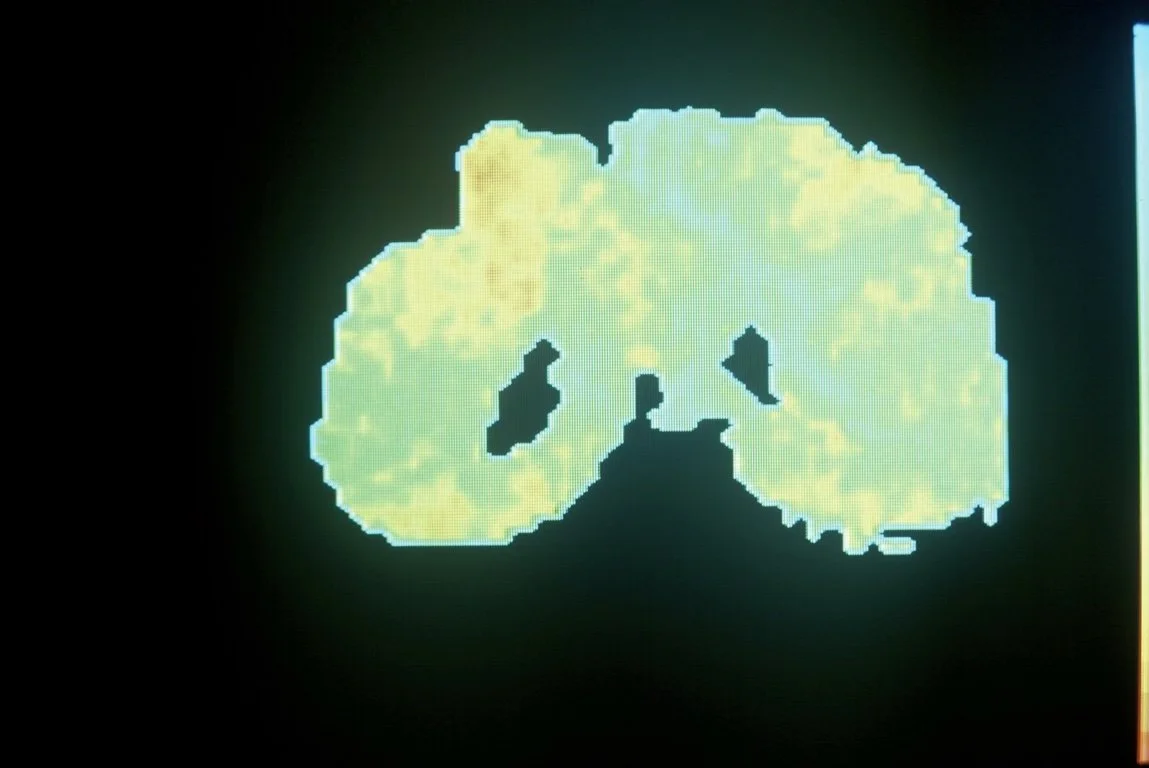
Here’s one of the earliest images of the brain I created. It’s a slice from an autopsy showing an infarct. This was one of the first instances of synthetic imaging, where intensity represented one parameter and color another.
I experienced this difficulty firsthand while working in Dr. Paul Lauterbur's laboratory during the early development of magnetic resonance imaging (MRI). When he presented the concept to the University as a potential patent, a panel of experts concluded it had no commercial value and declined to fund a patent. At the time, medical imaging was analogous to a photographic process—using X-rays or sound waves that pass through the body to produce an image based on differential absorption or reflection. MRI, by contrast, created images from localized variations in magnetic fields—an entirely different paradigm.
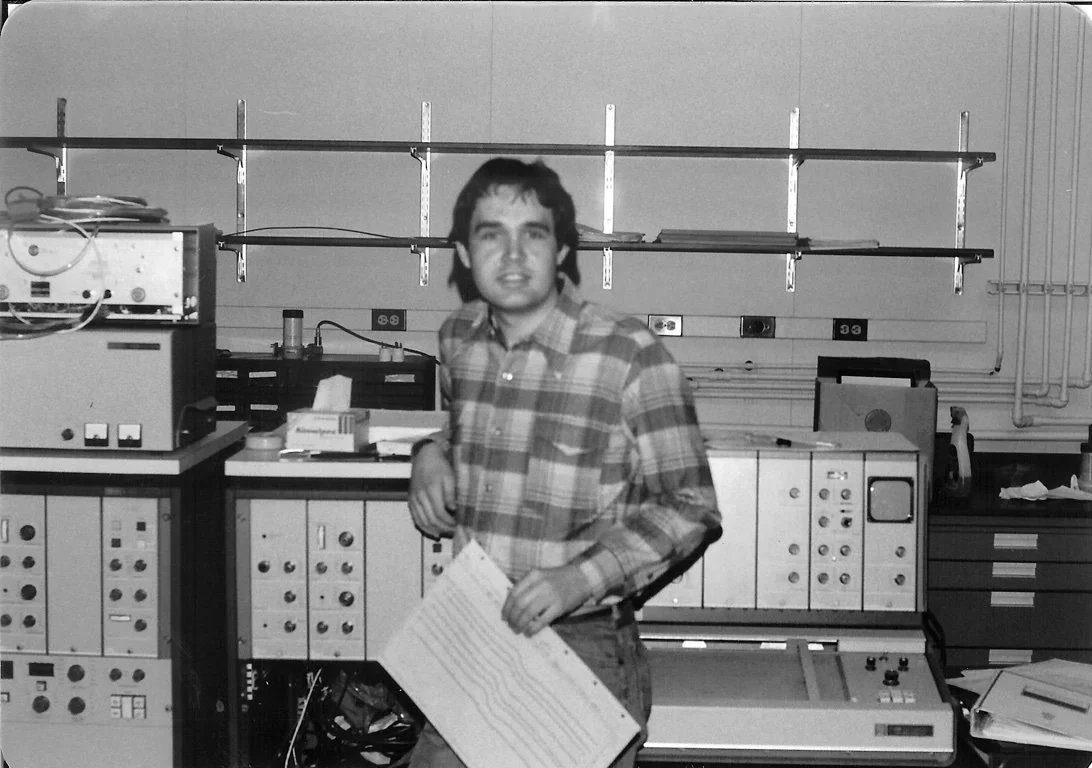
During my senior year of medical school, I worked as a physical chemistry graduate student in the lab at Stony Brook. Despite working under the guidance of a future Nobel Prize winner, I unfortunately didn’t win the student research award presented that year at UAMS. Although my advisor supported my work, he was skeptical about its potential as a medical tool.
The experts were wrong. The University missed substantial royalties from what became a multibillion-dollar industry. Dr. Lauterbur was awarded the Nobel Prize in 2003. MRI was recently recognized by the Wall Street Journal as one of the 25 most important inventions, along with computers and steam engines (April 24, 2026).
Even the most knowledgeable and well-intentioned experts can make profound errors in judgment. In today’s polarized world, it is tempting to judge the actions and motives of others with similar confidence. The readings for today caution us against that impulse.
In Matthew 13:24–30, Jesus describes a field where wheat and weeds grow together. Rather than uprooting the weeds immediately, the master instructs his servants to let both grow until the harvest. What appears to be a weed may, in fact, be wheat not yet fully formed. Premature judgment risks destroying what is good and totally ignores God's ability to change hearts.
This parable is not simply about others—it is about us. The more important question is not, “Who are the weeds?” but, “Am I the wheat?” Psalm 37 addresses the inner response to this reality: “Do not fret because of evildoers.” Their apparent success is temporary. We are instead called to trust, be patient, and refrain from anger and envy. As we see injustice all around us in our world, be comforted in knowing that judgment belongs to God, not to us.
1 Timothy 4:1-16 adds another layer of caution. Paul warns that some will turn away from the faith and that false teaching may arise from within the community itself. The response is not aggressive sorting of others, but careful attention to one’s own life and doctrine: to remain grounded in truth and to train in godliness.
Our calling, therefore, is not to judge prematurely, but to live faithfully—with humility, patience, and trust in God’s timing. In the end, the harvest will make clear what we cannot.
Steve and Sally Harms, Morning Reflection, St. Paul’s Episcopal Church, May 28, 2026.
Joanna joannaseibert.com