Pickett’s Brigade Reunion
“And who is my neighbor?”—Luke 10:29.
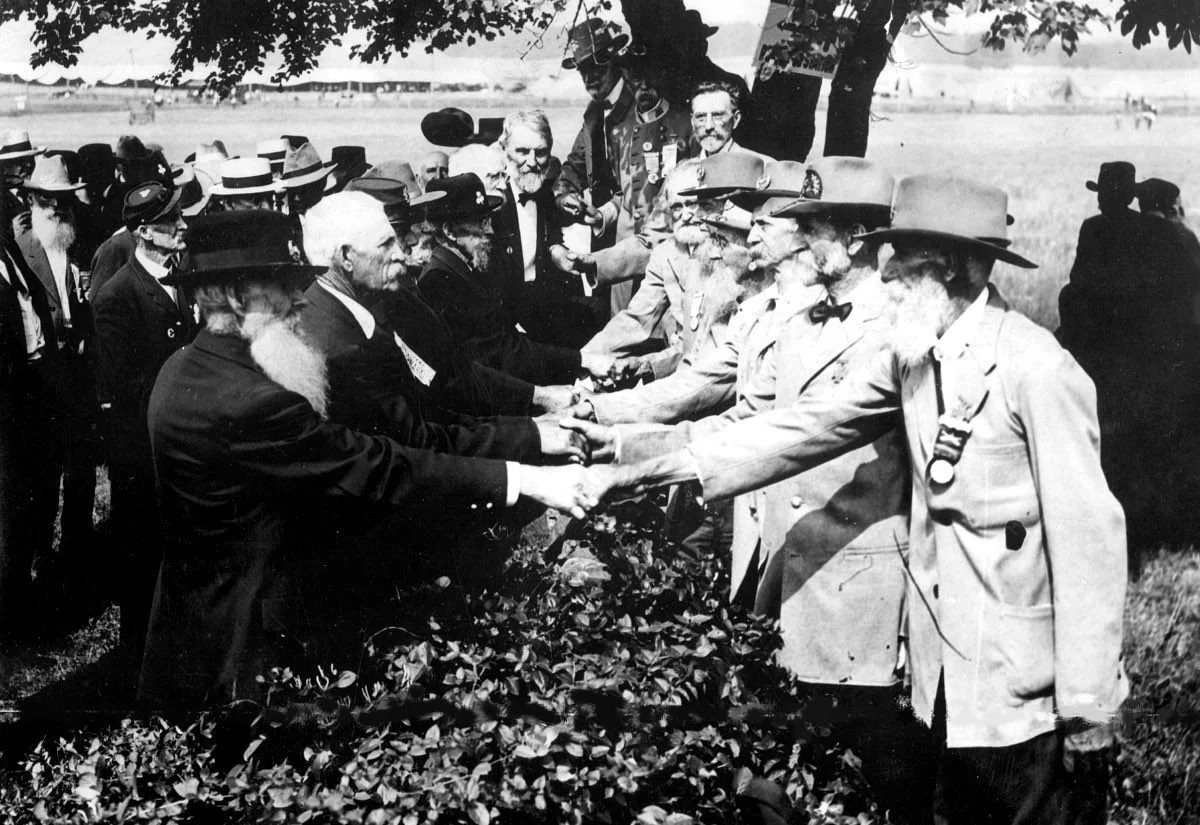
Ken Burns’ television series on the Civil War describes a remarkable scene on the fiftieth anniversary of the Battle of Gettysburg, July 3, 1913, when the remaining veterans of the two armies stage a reenactment of Pickett’s Charge. The old Union veterans on the ridge take their places among the rocks, and the old Confederate veterans march toward them across the field below—and then something extraordinary happens. As the older men among the rocks rush down toward the older men coming across the field, a great cry goes up—except that instead of fighting as they had a century earlier, they throw their arms around each other, embrace, and openly weep.
In 1914, during World War I, German, British, Belgian, and French troops in the trenches along the Western Front mingled during a brief Christmas truce, even singing “Silent Night” and other carols in solidarity. Recently, we have seen something similar at World War II memorials, such as Normandy, where German, English, French, and American soldiers have wept together and shared their stories. We have also seen it when American soldiers return to Vietnam to share stories with those they once fought bitterly.
This repeated act of shared love and storytelling can tell us something about war. So many who have fought on foreign fields can be our strongest advocates against it. They know what they—and those once their enemies—have lost. They share a common, life-altering experience that only those who have been through it can truly understand.
Those in recovery of any kind also know how awful their life of obsession was before healing from addictions to alcohol, drugs, sex, food, etc. They can relate to those who remain trapped in their addiction. Most of all, they can minister to those still suffering and offer hope that their lives can be different. They do this by sharing the story of their life in addiction, contrasted with what it is like now in recovery.
Those who have overcome mental illness can become advocates for others who suffer from this common disease. People who were once homeless can offer restorative hope to those on the street. Cancer survivors can encourage and pray for others recently diagnosed, giving them strength and support.
This story goes on and on and on. We are healed as we reach beyond ourselves, share our stories, and listen to those who suffer in situations we know all too well. We realize “who IS our neighbor.”
Some call this being wounded healers.
Joanna. https://www.joannaseibert.com/