Thin and Thick Places
Guest Writers: Paula Franck and Isabel Anders
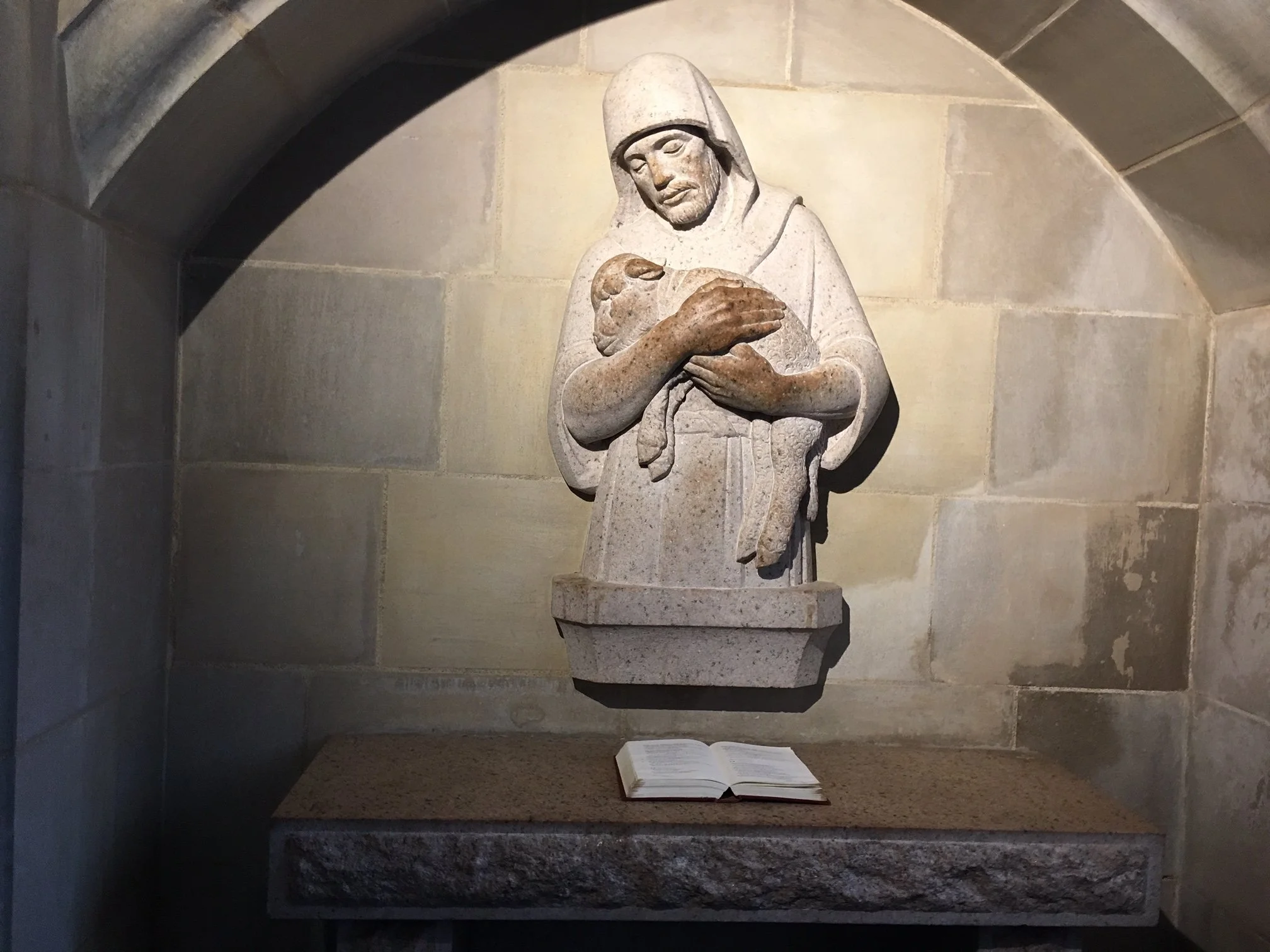
chapel of the good shepherd, National Cathedral, Washington DC
God be with you and grant you to stand in ‘thin places’ where the Presence is deeply known, and Mercy abounds and Wisdom flourishes.— Celtic prayer.
In Celtic mythology, there is the notion of ‘thin places’ in the universe where the visible and invisible worlds come into their closest proximity. According to an Irish saying, “Heaven and earth are only three feet apart, but in thin places that distance is even shorter.”
In a New York Times article titled “Where Heaven and Earth Come Closer” (March 9, 2012), Eric Weiner reflects on being drawn to thin places during his worldwide travels—places that “beguile, inspire, sedate and stir, places where, for a few blissful moments, I loosen my death grip on life and can breathe again.” However, travel to thin places is not always marked by spiritual transformation. These experiences can be disorienting and confusing as we lose our bearings and find new ways of seeing the world. They unmask us, revealing our more essential selves. Time is altered.
Thin places can be anywhere we experience this sense of out-of-time transcendence. They may be sacred places like St. Peter’s Basilica in the Vatican, the Blue Mosque or Hagia Sophia in Istanbul, Rumi’s tomb in Turkey, the Boudhanath Buddhist shrine in Nepal, or a Sikh temple in New Delhi. However, not all recognized sacred places are thin, or where, according to Apache Indian lore, “wisdom sits in places.” There are also “thick places” that are so burdened with history and “outsized expectations” that they collapse under the weight of their own sacredness. For Weiner, Jerusalem is such a “thick place,” weighed down with animosity and historical grievances.
Thin places may be found in the tranquil beauty of nature, in the noise of crowded cities, or in unlikely places—a favorite bar, a city square, a bookstore, or an airport. One of Weiner’s favorite thin places is Hong Kong International Airport. He loves its “self-contained hermetic quality and the way [it] makes me feel that I am floating, suspended between coming and going.”
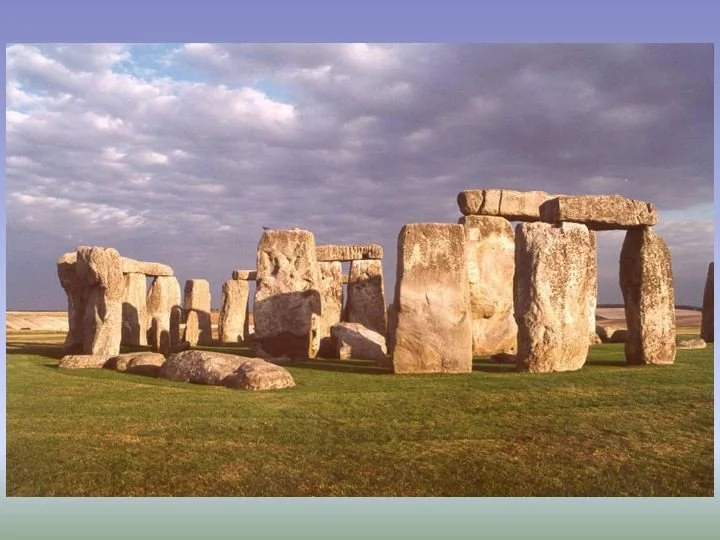
Stonehenge
He writes that you don’t necessarily plan a trip to a thin place—you often stumble upon one unexpectedly. But he offers some advice for increasing the odds of encountering thinness. First, have no expectations—they can get in the way of a genuine experience. Do not rely on guidebooks or others’ recommendations, for “one person’s thin place is another’s thick one.”
If God transcends time and space and is everywhere, or, as the Australian Aboriginal peoples say, “everywhen,” then why are some places thin while others are not? Weiner suggests that perhaps we are too thick to recognize them. “Maybe thin places offer glimpses not of heaven but of earth as it really is, unencumbered. Unmasked.”
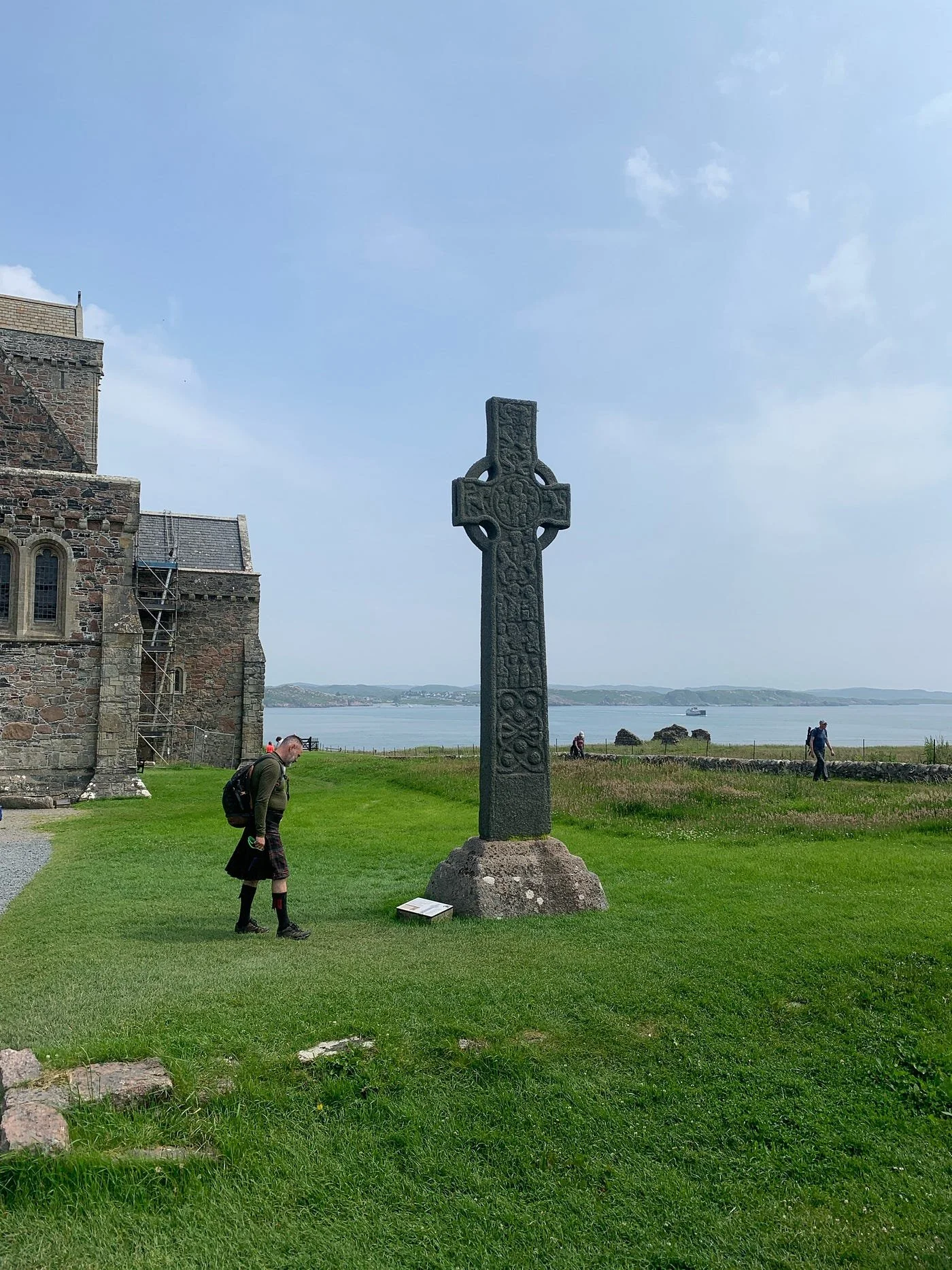
Isle of Iona
The Rev. Dr. Mark D. Roberts writes on patheos.com that “the purpose of thin places is to help us realize that all places can be thin. Or, better yet, perhaps the purpose of a thin place is to train us to make the other places in our lives thinner. Moreover, when we realize that the Spirit of God dwells within us, we will come to believe that we are called to be thin places, as God makes his presence known through us.”
This reflection is adapted from Circle of Days: A Church Year Primer – Year A by Paula Franck and Isabel Anders, available in print and ebook from circleofdayspublishing.com or amazon.com.
Paula Franck, Isabel Anders
Joanna joannaseibert.com