Nouwen, Wallace: what we read and do on Memorial Day

 Henri Nouwen, Henry Wallace: Spiritual writing, what we read

“Spiritual reading is food for our souls. As we slowly let the words of the Bible or any spiritual book enter into our minds and descend into our hearts, we become different people. Henri Nouwen, Henri Nouwen Society Daily Meditation, from Bread for the Journey, Harper SanFrancisco 1997.

roosevelt-wallace-poster-set.jpg

For most of my life, I have daily read spiritual material primarily nonfiction. However, the “spiritual” material I presently read sounds more like fiction. I am reading editorials in our nation’s major newspapers and magazines about what is going on in our country and I listen to one news program every night. I don’t ever remember doing this or ever hearing what is being said.

 As I am now neglecting my traditional spiritual nourishment, is my soul really being fed by this different kind of fuel?  Last year I remember reading for the third time an article from May 12, 2017, New York Times, “America Fascism, in 1944 and Today” by Henry Scott Wallace, the grandson of Henry A. Wallace, one of Roosevelt’s vice presidents. I was initially turned off by the title, “Fascism,” but when several spiritual friends kept sending me the piece, I decided to read it.  Seventy-three years ago, Wallace’s grandfather wrote an article in the Times on the subject of the dangers of thinking nationally instead of globally and the dangers of populist leaders promising they alone can save the country, while abusing power for their own wealth and calling for opponents to be jailed.

I think on this Memorial Day of the many who gave their life for the freedoms we enjoy in this country. How do I best honor them today and their sacrifice?

Frederick Buechner writes that God calls us to “the place where our deep gladness meets the world’s great need.” In recent months, I have been trying to discern how I am best to serve my country and the world’s great need. I have this intense need to be more informed. I know my spiritual readings from the past have taught me to “bloom where I am planted,” to be a presence for those in need in my own backyard, so to speak. I locally go to marches, I make phone calls when I know it will not make any difference, I join and contribute to organizations that support those who have no support. I sign petitions, something I vowed I would never do. I talk to people hoping they will run for political office and support the poor, immigrants, those without health care, children, women’s health issues, LGBT rights, those who have no rights.

The information in material we are reading and hearing is certainly changing us. The question is does what we hear and see move us to stay connected to God or does it block us from staying connected to God?  My answer to people in direction is that if love is a part of any action, if seeing and listening and caring for Christ in others is in any action, we have a chance of keeping that connection to the God of love who constantly calls us to love one another and to listen to one another.

Joanna  joannaseibert.com  
Hope: Ruby

Hope
by Victoria Safford

“Our mission is to plant ourselves at the gates of hope — not the prudent gates of Optimism, which are somewhat narrower; nor the stalwart, boring gates of Common Sense; nor the strident gates of self-righteousness, which creak on shrill and angry hinges; nor the cheerful, flimsy garden gate of ‘Everything is gonna be all right,’ but a very different, sometimes very lonely place, the place of truth-telling, about your own soul first of all and its condition, the place of resistance and defiance, the piece of ground from which you see the world both as it is and as it could be, as it might be, as it will be; the place from which you glimpse not only struggle, but joy in the struggle — and we stand there, beckoning and calling, telling people what we are seeing, asking people what they see.”

 The Rev. Victoria Safford, “The Gates of Hope,” Stanford Social Innovation Review, August 19, 2015, from Parker Palmer’s column On Being with Krista Tippett, September 19, 2017.

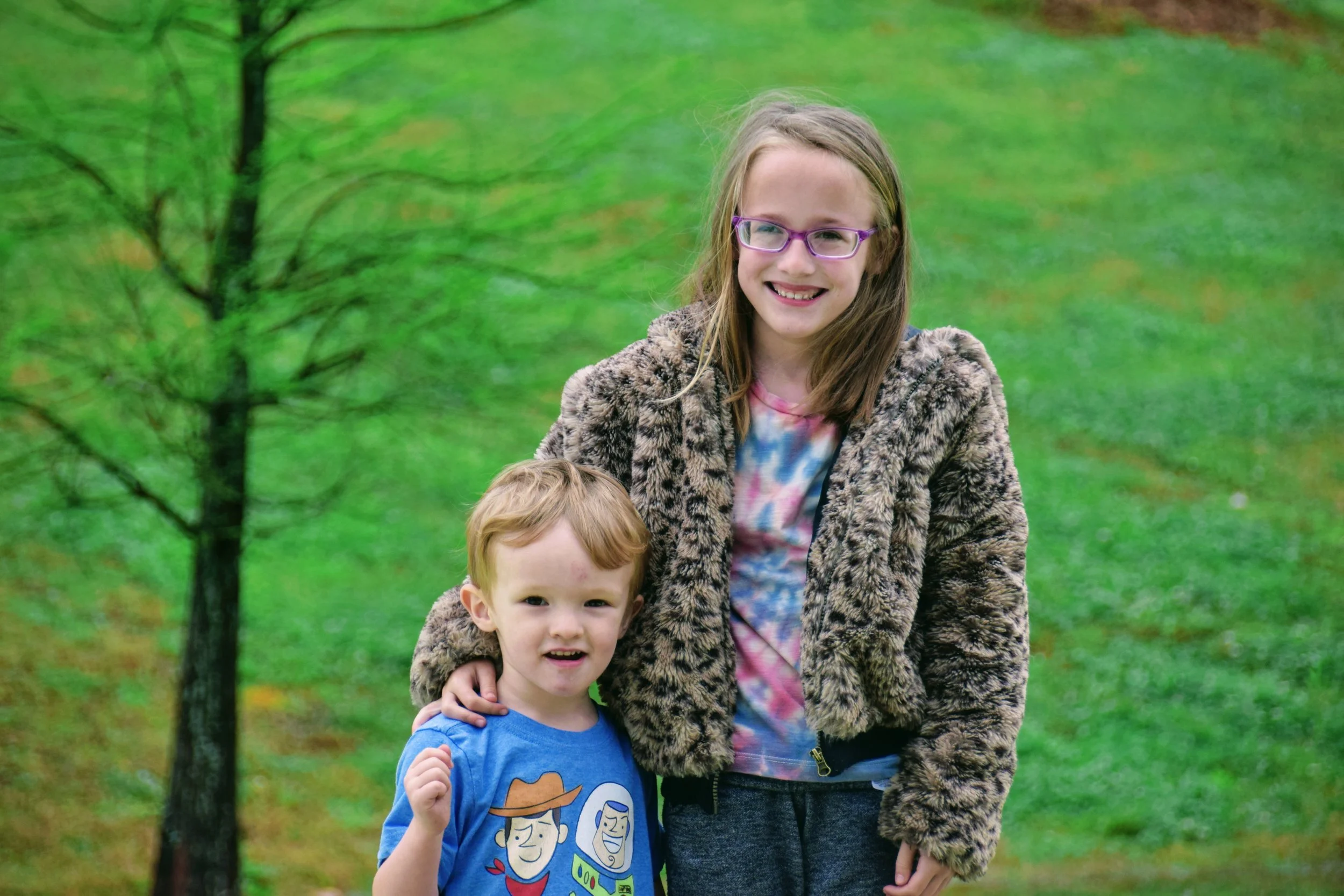
Ruby and her younger brother, another miracle, another story

Ruby and her younger brother, another miracle, another story

Ruby

I am now retired from a medical pediatric radiology subspecialty where one of my very special interests was caring for sick newborns, trying to help neonatologists know what was going on inside those delicate bodies. Towards the end of my career I become connected to one baby girl named Ruby because of a work association with one of Ruby’s uncle. I think my major contribution was connecting Ruby to one of the best neonatologist teams I have worked with for over forty years at Children’s Hospital.  I am sharing a little of Ruby’s story of hope from her father. 

 Normal gestation for a baby is 40 weeks. Ruby was born at 24 weeks, a little over half the time a baby should stay with her mother. Ruby weighed in at one pound six ounces or 624 grams. If we could have held her, she would have fit into one hand. She had almost every complication a premature baby can have. Her parents gave up their life dreams, their careers and were at her side day and night. They weathered the constant ups and downs of her medical existence for months and months where sudden changes would bring on a storm where before all was calm.

Ruby was in the hospital for six months. She was on the ventilator for four of those months, had three intestinal surgeries, one heart surgery, three airway procedures, retinopathy of prematurity with a detached retina, and a bleed in the head, all of which resolved. Her father describes it as “quite a minefield she made her way through.”

Yesterday was Ruby’s ninth birthday which her parents will celebrate with a block party with her younger brother on his birthday this weekend. Her father writes, “Today, our beautiful, intelligent, creative 9-year-old daughter is a testament to the power of families to overcome difficult circumstances, if they have the support they need from their communities.”

I know not every story about a premature baby is like this, but I share this story of hope with many who feel hopeless. Even if their story is very different, it is important to share it so that in community we can identify with the struggles and the joy and the hope.

Joanna  joannaseibert.com

Nouwen, Rohr: Choices

Nouwen, Rohr: Choices

 “Choices make the difference. Two people are in the same accident and severely wounded. They did not choose to be in the accident. But one of them chose to live the experience in bitterness, the other in gratitude. We have very little control over what happens in our lives, but we have a lot of control over how we integrate and remember what happens.” Henri Nouwen, Henri Nouwen Society Daily Meditation, from Bread for the Journey by Henri Nouwen 1997 HarperSanFrancisco.

thanksgiving dinner 2016 copy.jpg

Henri Nouwen speaks to me with this mediation. It defines my life, and I share with others when the time seems right. When people come and talk about a great tragedy in their life, my job as their spiritual director is just to listen, listen, listen actively, but when the time is right, some distance from the tragedy, I ask them to keep looking for the blessing, the gold which may have come out of this awful situation.

This is resurrection, looking for resurrection from a Good Friday experience. God always redeems us. I then share a little of my story.  On a rainy January night, Friday, the 13th when I was a junior in medical school, I was in a car accident. I was driving a little red VW bug and was hit by a drunk driver in a black Cadillac. I sustained multiple injuries to my knees, back, and ankles that have left me with significant mobility issues then and still almost fifty years later.  My blessing: I had to recover and leave medical school for six months and then drop back into a class where I later met my husband Robert. We never would have known each other if the accident had not happened. Words do not describe what a blessing he is in my life. My injuries are minor compared to the blessing of his love and care and presence as well as for our three children and six grandchildren.

Richard Rohr says it better than I: “The trajectory of history is positive. God is saving history, not just individuals. Inside this evolutionary trajectory, we can see that even ‘evil’ and suffering will be used for good; they are the friction against which evolution’s wheels turn toward wholeness and new forms of life.” (Adapted from Richard Rohr, A Spring Within Us: A Book of Daily Meditations (CAC: 2016), 110-111.)

Joanna    joannaseibert.com