Scripture: Ignatian Exercises

Scripture: Ignatian Exercises

“Take a passage from scripture that you enjoy. Ignatius invites you to enter into the scene by ‘composing the place’ by imagining yourself in the story with as much detail as you can muster.”  James Martin. SJ,  The Jesuit Guide to Almost Everything, p. 147. 2010 HarperOne.

jesuit guide to almost everything.jpg

Ignatius  practices spirituality by taking those he is guiding and himself deep into the story of scripture in their imagination.  We start with the senses, seeing, hearing, smelling, tasting, feeling. As we live inside the story, Ignatius asks us to pay attention to what insights might come. Soon in our imaginary journey, we can travel in time and find ourselves back in the scripture with a different understanding than when we are just intellectualizing the story in our head.

At the front of the refectory at the College of Preachers at the National Cathedral, in stain glassed was written, “if you do not dramatize the message, they will not listen.”  You can see this from many angles, but what it came to mean to me was that my job as teacher and  preacher was to help myself as well as those in the congregation “experience” the scripture, usually the gospel, as Ignatius is asking us to do. My experience is I can best do this by taking myself and all who would like to make a journey into the story, be one of the characters, feel that person’s feelings, know his or her hopes and fears, their frustrations, their loves, their passions, their humanness.

The same is true for advice to spiritual friends whose study of scripture has become stale. It is hard to become dry when we actually go into a story in scripture and become a part of it. With each new journey we will hear voices we have never heard before.

I was first exposed to this Ignatian exercises and this method of studying scripture in a small purple book, The Spiritual Exercises of St. Ignatius in the Image Classics.  I know there are now so many more. A priest I work with, Michael McCain, recommends this one by James Martin as well.

Joanna   joannaseibert.com
 

Other Traditions

Other traditions

“What can I learn from a spiritual tradition different from my own? Over the years I have had an open border policy when it comes to faith. I have never felt nervous about the need to guard my frontiers of belief. I have been deeply informed, matured and blessed by such diversity. I have learned more about myself by learning more about others.” Bishop Steven Charleston Daily Facebook.

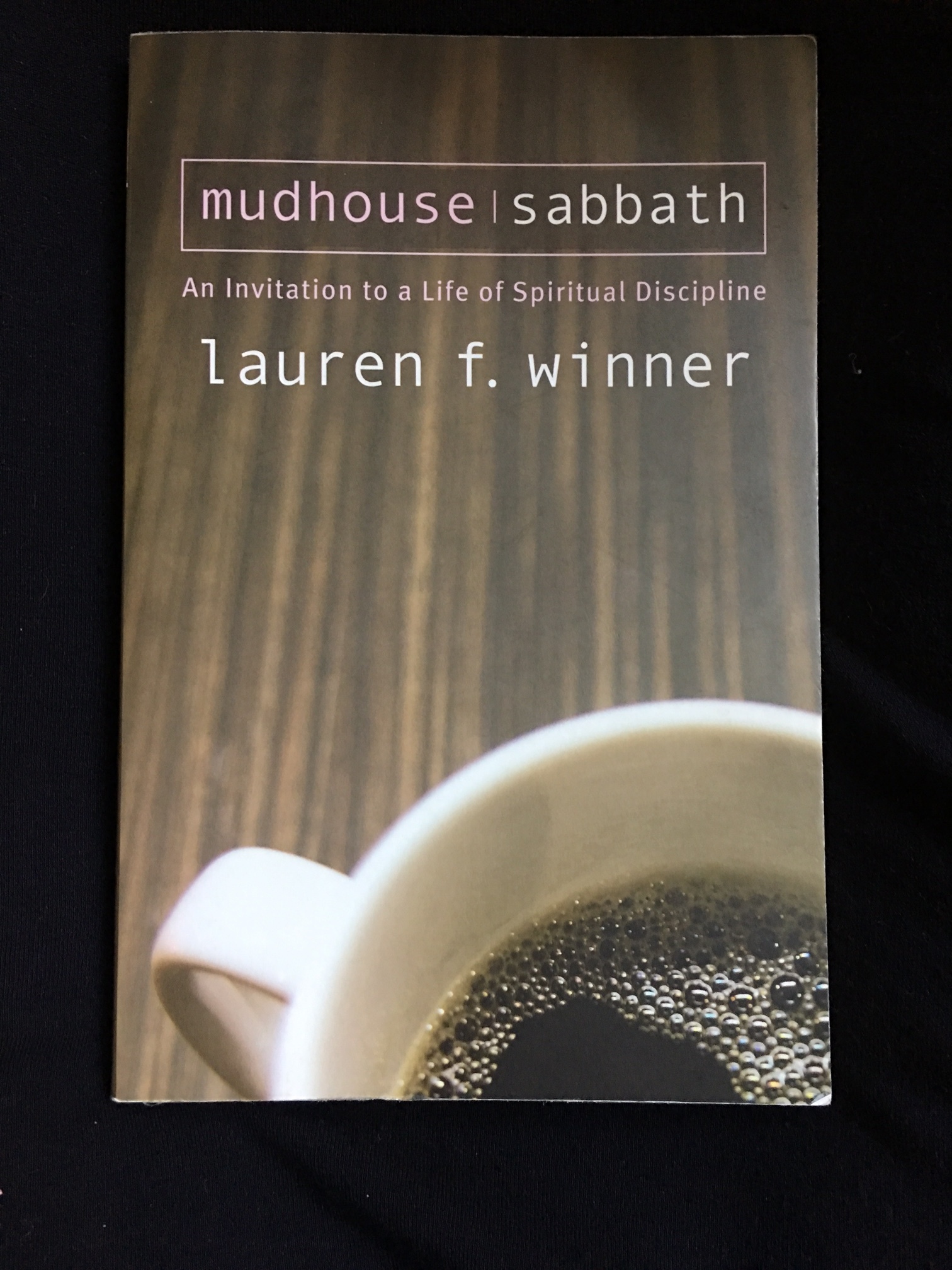
mudhouse sabbath.JPG

What richness we can gain from other traditions.  An Episcopal priest and well-known author, Lauren Winner, introduces us in her book, Mudhouse Sabbath, An Invitation to a Life of Spiritual Discipline, to many Jewish practices that she grew up with that could enrich other traditions. Jewish spiritual practices around the death of a loved one honor the one who died but also compassionately honor the grieving left behind in time honored rituals through that first hard year after a death, the initial seven days of mourning when friends bring food and sit with you, the next 30 days when you sit initially in a different place in the synagogue, the prayers you say twice a day with a community of at least ten people for the next year. You cannot say the prayers alone in your house. Every year at the anniversary of the death of a loved one you light a candle and say the prayers in the synagogue.

We have had the privilege of celebrating Passover with Jewish friends.

We have learned from Muslim friends about the honoring of a fast at Ramadan.

The Eastern Orthodox tradition has given us the gift of icons as a spiritual practice. 

Other Eastern religions have taught us about yoga and contemplative prayer.

The Catholic monastic tradition has given us the gift of chanting and developing a rule of life.

Exploring other traditions can only enlarge our image of God and our God language. They help us take God out of the tidy box our traditions have a tendency to cloister our God in.  

Joanna   joannaseibert.com


12/24/68 and Love

12/24/68 and love

“But the greatest of these is love.”  1 Corinthians 13:13

Earthrise seen from Apollo 8 Christmas Eve 1968

Earthrise seen from Apollo 8 Christmas Eve 1968

If you were alive on December 24, Christmas Eve, 1968, to see this picture from Apollo 8, do you remember what else you were doing? I remember much but also remember so little. My husband and I were interns at John Gaston City of Memphis Hospital working  that night so we missed the traditional Christmas Eve services. Instead we went to the quieter Christmas Day services at St. Mary’s Cathedral that next morning. We were not married until the next year, but it was a special Christmas, the first holiday we were able to be together. I do not remember the patients I took care of that night or what presents we gave each other for Christmas. I do remember that our best friend, Charles Stallings, taught us how to make gold and red Christmas ornament balls that we hung on that first tree.  We still have some of the large balls, and we try to tell our grandchildren, Zoe and Turner, about them as they traditionally help us hang them or occasionally have fun almost throwing the decorative balls on our tree each year.

The most memorable part, however, of that Christmas was that I was invited to meet Robert’s parents for Christmas dinner that night at their home. I don’t remember what we ate but, I do remember the red dress I wore. I was so nervous.  I was damaged goods, and I feared that they would not be able to like or much less love me. I had been divorced, and Robert was in the process of being divorced. I remember how they accepted me with open arms and treated me as if I were a lovable person from the start. Their unconditional love and care never ended. I still feel their presence today even though they have been dead for some time.

The only way I can continue to return that love is pay it forward today to my children and their children and their spouse’s families. I remember when Elizabeth died that I would pray that if she would continue to watch over her grandchildren that I would care for her husband, Bob. I didn’t keep up my part of the bargain as well as she did. I could always have done more.

I know that love never dies. Bob and Elizabeth have taught me that. I still feel the unconditional love they showed to me in so many ways even today almost fifty years later. It is a presence. It is a feeling. It is knowledge.  It is present in their only son who also knows much more about unconditional love than I do. I also see it in their three grandchildren whom they loved so dearly. I know love can change the world, one person, one family at a time. I have seen it.

Joanna joannaseibert.com