De Mello: Ignatian Exercises and More

De Mello: Ignatian Exercises and More

“This is the spirit in which we embark upon Ignatian contemplations. Through the simple childlike use of our fantasy we attain a truth far beyond fantasy, the truth of mystery, the truth of the mystics.” —Anthony de Mello in Sadhana: A Way to God (Image Books, 1978).
ignatius.jpg

De Mello offers many awareness exercises enabling us to know and feel the presence of Christ, especially in prayer. In one exercise, we imagine that Jesus is sitting in an empty chair beside us. He reminds us that we can start our prayer in our head. But our prayers will become stale and dry if we do not move to our senses and heart—out of a place of thinking and talking into a place of feeling, sensing, loving, and intuiting.

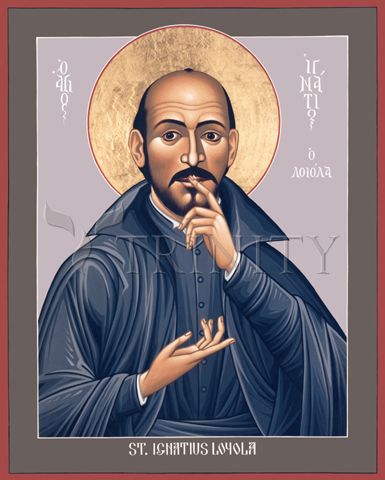
De Mello suggests Ignatian contemplation to help us become a part of a scene from Christ’s life, in order to enhance our reading of Scripture and our prayer life. He reminds us of others who experienced God using Ignatian contemplation. Francis of Assisi in contemplation took Jesus down from the cross and knew his Lord was no longer dead. Teresa of Avila felt closest to Christ when she was present with him as he agonized in the garden. Ignatius of Loyola became a servant accompanying Mary and Joseph to Bethlehem.

Learning how to enter into the truth of the mystics can transform our own experience of living in God’s presence.

Joanna. joannaseibert.com

small.jpg

Purchase a copy of a Spiritual Rx for Lent and Easter from me joannaseibert@me.com, Wordsworth Books in Little Rock or on Amazon. Proceeds go for Hurricane relief in the Diocese of the Central Gulf Coast.

Growing in Benedictine Spirituality

Growing in Benedictine Spirituality

“Together [the three vows] are not, as they might seem at first glance, about negation, restriction, and limitation. ... They involve us in the need to face a number of very basic demands: the need not to run away, the need to be open to change, the need to listen... And yet the paradox is that they bring freedom, true freedom.” —Esther de Waal in Seeking God: The Way of St. Benedict (The Liturgical Press, 1984), p. 55.

sail boat.JPG

Last year I had the privilege of reviewing The Rule of Benedict with an amazing group from St. Nikolas and St. Peter’s Episcopal Churches who were learning to be pastoral caregivers through a program called Community of Hope. Following a rule of Benedictine spirituality involves taking a vow to seek spiritual growth by connecting to three areas of support in our lives: conversion, obedience, and stability. Stability speaks to our connecting to a certain community, at work, at a place of worship, within a family, in a recovery group, in the world. Obedience speaks to seeking the Christ in everyone we meet, especially in our community. Conversion or change occurs as we seek the Christ in others in our community, and they in turn begin to see and reflect the Christ in us. This mutual exchange then leads us to growth.

A priest I worked with, Peggy Bosmyer, compared this concept to a sailing ship. We get into the boat. We make a commitment to be in the boat. That is stability. How we direct our boat is the rudder. That is obedience, being diligent in attempting to see the Christ in others. The Holy Spirit, the wind, then moves the sails, bringing about conversion—a change in movement as we begin to see and feel the Christ in ourselves. Seeing the Christ in our neighbor leads to and reflects back the Christ within us, a process that leads to transformation into new life.

Joanna joannaseibert.com

small.jpg

Purchase a copy of a Spiritual Rx for Lent and Easter from me joannaseibert@me.com, Wordsworth Books in Little Rock or on Amazon. Proceeds go for Hurricane relief in the Diocese of the Central Gulf Coast.
Benedictine Life

Benedictine Life

“Listen, my child, with the ear of your heart.” —Prologue, The Rule of Benedict.

benedictine books.JPG

I keep returning to The Rule of Benedict. Listen “with the ear of your heart” is in the first line of the Prologue to this pattern for living in community written by St. Benedict of Nursia. It was composed in the sixth century during the dark ages, and is still used by Benedictines fifteen centuries later. The Rule is a balanced model of life that offers a radical alternative to a culture out of control. It was written for monastic life, but is also applicable for anyone seeking a spiritually disciplined rule for living in the world. The Benedictine day is organized around regular periods of private and communal prayer, sleep, work, recreation, hospitality, and study.

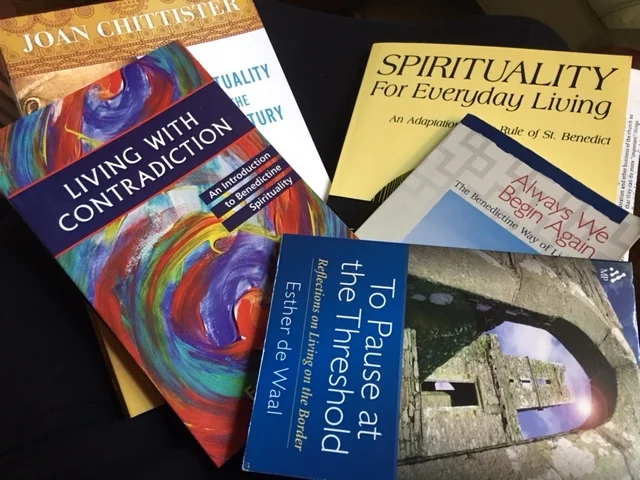
Joan Chittister’s book, The Rule of Benedict: A Spirituality for the 21st Century, is used by the Community of Hope International, a program equipping and supporting lay pastoral caregivers who minister to people in all conditions. The Community of Hope International emphasizes developing skills and spiritual practices through immersing ministers in Benedictine spirituality in community. Chittister’s book can be used privately or in group discussions of the Rule. She writes a very helpful meditation and interpretation after each selected part of the Rule that can be read in daily segments.

Memphis lawyer John McQuiston has written another concise modern interpretation of The Rule of Benedict called Always We Begin Again. It is pocket sized, so it is easily carried with you during the day.

A third book I recommend is Spirituality for Everyday Living: An Adaptation of the Rule of St. Benedict by Brian C. Taylor. This is another offering to help those outside the monastery experience Benedict’s rule of obedience and stability in relationships with others. It promotes living in the balanced tension of the paradox of turning our lives over to a higher power, while continuing to stay in relationship with others. The aim is to keep from becoming stagnant in order to be able to change and grow.

Esther de Waal focuses on this aim, even in the title of her book of reflections or meditations on Benedict’s Rule: Living with Contradiction. She also gives us, in her book To Pause at the Threshold, numerous Benedictine and Celtic reflections and prayers to practice when we cross a threshold from one room to another. She invites us to say a short prayer, trying to leave behind the “baggage” in our heads so that we are open to a new experience. This can be especially helpful when visiting the sick or homebound, as we enter their hospital room or front door.

There are so many other books on Benedictine spirituality; but these are five that have made a difference in my life, and the ones I give to people seeking a spiritual rule of life. Again, I would love to hear from you about the books on Benedictine spirituality that have made a difference in your life.

Joanna joannaseibert.com

small.jpg

Purchase a copy of a Spiritual Rx for Lent and Easter from me joannaseibert@me.com, Wordsworth Books in Little Rock or on Amazon. Proceeds go for Hurricane relief in the Diocese of the Central Gulf Coast.