Who is my neighbor?

“And who is my neighbor?” —Luke 10:29.

wp-content%2Fuploads%2F2015%2F04%2FShake-1.jpg%2Foriginal.jpg

Ken Burns’ television series on the Civil War describes a remarkable scene that takes place on the fiftieth anniversary of the Battle of Gettysburg, July 3, 1913, when what is left of the two armies stages a reenactment of Pickett’s Charge. The old Union veterans on the ridge take their places among the rocks, and the old Confederate veterans start marching toward them across the field below—and then something extraordinary happens. As the old men among the rocks rush down at the old men coming across the field, a great cry goes up—except that instead of doing battle, as they had a century earlier, this time they throw their arms around each other and embrace and openly weep.

In 1914, during World War I, German, British, Belgian, and French troops in the trenches mingled with each other along the western front during a brief Christmas truce and even sang “Silent Night” and other carols in solidarity. Recently we have observed something similar at World War II memorials such as Normandy, where German, English, French, and American soldiers have wept together and shared their stories. We have seen it also when American soldiers return to Vietnam to share stories with those they once bitterly fought against.

This repeated action of shared love and story can tell us something about war. Many of those who have fought on foreign fields can be our strongest advocates against war. They know what they themselves—and those who once were their enemies—have lost. They share a common life-altering experience that only someone who has been there can understand.

Those in recovery of any kind also know how awful their life of obsession was before their healing from addictions to alcohol, drugs, sex, food, etc. They can relate to those who remain trapped in their addiction. Most of all, they can minister to those who are still suffering and offer them hope that their life can be different. They do this by sharing their story of what their life was like in addiction, contrasted to what it is like now in recovery.

Those who have overcome mental illness can become advocates for others who suffer from this common disease as well. People who were once homeless themselves can offer a restorative hope to those on the street. Cancer survivors can encourage and pray for others recently diagnosed and give them strength and support.

This story goes on and on and on. We are healed as we reach out of ourselves and share our story and listen to sufferers in situations we know all too well. We begin to realize “who IS our neighbor.” Some call this becoming wounded healers.

Joanna. Joannaseibert.com
Burton: Life After Death

“So, what do you think about life after death?”

Guest Writer: Larry Burton

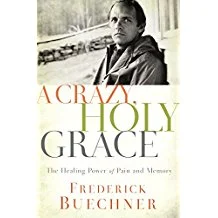
buchner  life after death crazy holy.jpeg

As an Episcopal priest, I have heard that question, or others like it, more times than I care to count. I’ve come to think that the Resurrection event may not cover the question of what happens when we die, like I would have thought it did. “But,” a friend said, “that was Jesus. This is me.” Fair enough.

A group of us have been reading Frederick Buechner’s A Crazy, Holy Grace. Buechner, now ninety-two, is a prolific author and theologian for whom many of us have great admiration. In part of this book he imagines a conversation with his beloved grandmother who has been dead for more than forty years. She tells him that death is like stepping off a trolley car. Life doesn’t stop, but rather continues as a further deepening of understanding of God’s grace and love.

That imagined conversation stopped me in my tracks. For most of my life as a theologian I have thought (and taught) something similar, but it was far more abstract, and ultimately not quite satisfying. Buechner has his grandmother put humanity on my abstractness, and offers an image of continuity in God that, as I said, stopped me flat. Did I believe what I had been teaching? Yes. No question. But now the abstract has taken on a form that both challenges and delights.

So, I had my own conversation with my preacher father and stepmother. Both are dead. But they were delighted to talk with me. “Sorry you had to wait so long to understand,” Dad said after I told him about Buechner’s book. (My father was a Buechner fan, and so he was clearly way ahead of me.) My stepmother added her two cents’ worth: “I always thought suddenly I’d ‘get it,’ but it didn’t happen that way. There are always new layers or new heights, and my heart! My heart just continues to open wider and wider.”

My words in their mouths? Or, their words in my mouth? Buechner’s grandmother challenges her grandson, just as I am challenged. Buechner’s major point is that memory can be an astounding portal into the wonders of God. So, what do I think about life after death? I am more convinced than ever that as a beloved child of God, access to the reality of God’s love is far more cosmic, mysterious, and wondrous than I had imagined. It is more than Resurrection; it is a continuing transformation moving toward God’s very heart.

Larry Burton

Frederick Buechner’s birthday is today, July 11.

Lamott: Prayer

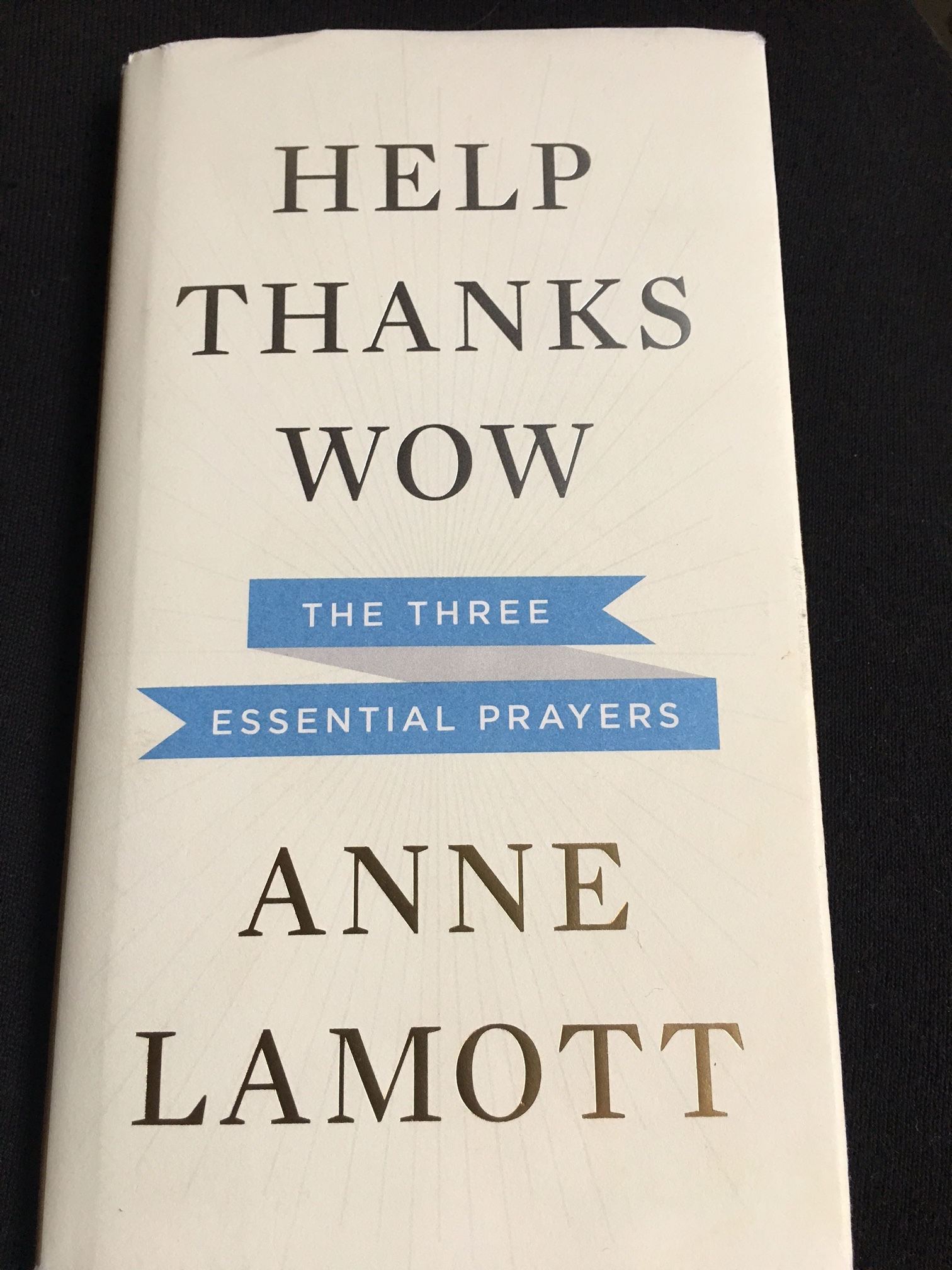
“So prayer is our sometimes real selves trying to communicate with the Real, with Truth, with the Light. It is us reaching out to be heard, hoping to be found by a light and warmth in the world, instead of darkness and cold. Even mushrooms respond to light—I suppose they blink their mushroomy eyes, like the rest of us.”

—Anne Lamott in Help, Thanks, Wow: The Three Essential Prayers (Hodder & Stoughton, 2001).

help thanks wow.JPG

When spiritual friends are having difficulty praying, we talk about our present prayer life and what kind of prayer discipline has helped in the past. We discuss the multitude of ways to pray: walking and praying, praying in silence, using prayer books, Ignatian prayers, Centering Prayer, prayer with beads, praying in color, praying the hours.

Anne Lamott’s book, Help, Thanks, Wow, is a realistic, humorous, short down-to-earth discourse on praying with three subject lines: giving thanks, asking for help, and praising. The book is filled to the brim with simple “one liners” to remember and guide us through the day. One of my favorites is, “If one person is praying for you, buckle up. Things can happen.” Another is, “The difference between you and God is that God never thinks he is you.” She reminds us that gratitude is not lifting our arms and waving our hands on television but rather picking up trash, doing what is required, reaching out to others in need. When we breathe in gratitude we breathe it out.

Lamott’s section on “Wow” likens that kind of prayer to a child seeing the ocean for the first time. I still remember standing just inside the National Cathedral as a group of fifth graders walked in. I will not forget one small boy who looked up at the high, vaulted gray stone ceilings and exclaimed: “WOW!” These are upper-case wows. There are also lower-case wows, such as getting into bed between clean sheets. Lamott suggests that poetry is “the official palace language of Wow.” She also reminds us of C. S. Lewis’ view of prayer, that we pray not to change God, but to change ourselves.

My experience is that Lamott always stimulates us into new practices of faith or reminds us about those we have forgotten that can make all the difference.

Joanna. Joannaseibert.com