The True Prophet

“How do we tell the false prophet from the true prophet? The true prophet seldom predicts the future. The true prophet warns us of our present hardness of heart, our prideful presuming to know God’s mind. The final test of the true prophet is love. A mark of the true prophet in any age is humility, self-emptying so there is room for God’s Word.” —Madeleine L’Engle in A Stone for a Pillow (Shaw Books, 2000).

Wrinkle2.jpg

We owe so much to Madeleine L’Engle and her books for children—which are even better for adults. Perhaps what I will remember the most, however, is the fact that her award-winning 1963 Newbery selection, A Wrinkle in Time, was rejected twenty-six times before it was published and became an instant science fiction classic!

L’Engle is telling us how we recognize authentic prophets and also how we know we are speaking with a prophetic voice. But there is more. I never know with any certainty when I am doing God’s will at the time; but I can sometimes realize afterwards that something was God’s will.

L’Engle’s thoughts can be helpful here. If my action is all about me, I must ponder if this is really God’s will. We are most likely to hear the voice of God when we are in a place of humility, of self-emptying. If an action of mine is done in love or flows from love, that is a good sign that it may express God’s will. But Madeleine L’Engle is telling us most of all that if we think we are doing God’s will—especially if we feel pride that we are on the right track—we need to stop and reconsider.

So, it’s a great mystery. If we think we have it, we don’t. If we don’t think we have it, we may. I keep remembering that previous helpful quote: “The opposite of faith is not doubt, but certainty.”

Joanna. Joannaseibert.com
adventfront copy.png

Just in time for the holidays

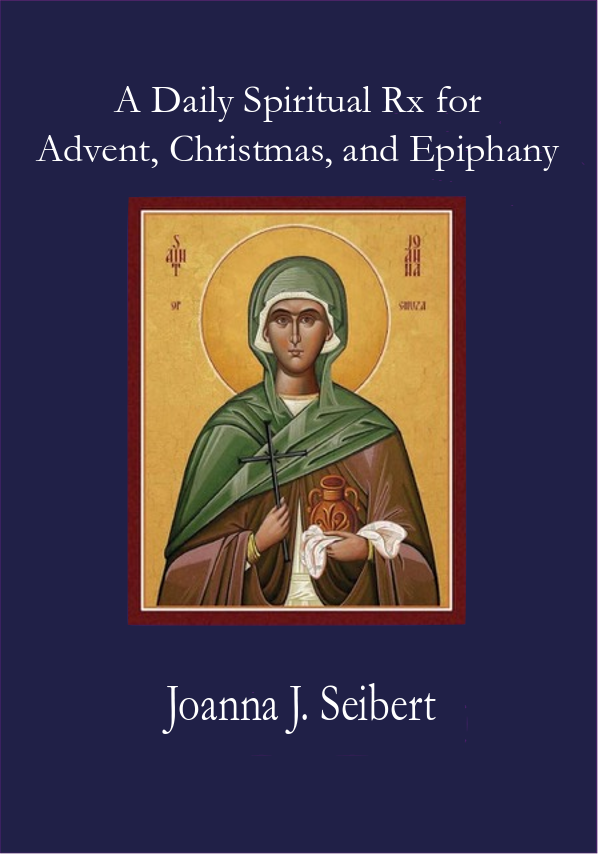
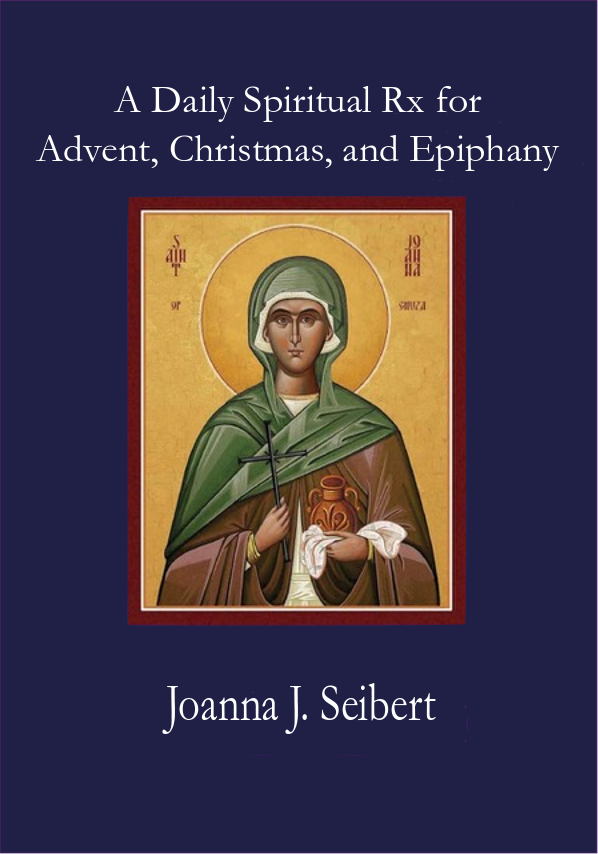
A Spiritual Rx for Advent Christmas, and Epiphany

The Sequel to A Spiritual Rx for Lent and Easter

Both are $18

All Money from sale of the books goes either to Camp Mitchel Camp and Conference Center in Arkansas or Hurricane Relief in the Diocese of Central Gulf Coast

Contact: joannaseibert@me.com


Tony Jones: Spiritual Practices

“We all might long for the spiritual direction that Adam received when he walked with God in the Garden…but we live east of Eden.”

Tony Jones in The Sacred Way: Spiritual Practices for Everyday Life (Zondervan 2005)

tony jones.jpg

Tony Jones has compiled an easily readable compendium of spiritual practices that help us connect to God. The secret of the book is in the subtitle, Spiritual Practices for Everyday Life. We do not need to live in a monastery to practice these disciplines. Jones also brings in interesting notes about the history of how each practice began and developed. His book is first divided into contemplative practices such as silence, reading, the Jesus Prayer, centering prayer, meditation, Ignatian exercises, icons, spiritual direction, and the daily office. The second half of the book talks about active bodily spiritual practices such as the labyrinth, stations of the cross, pilgrimages, fasting, bodily prayers, Sabbath, and service. Lastly, he writes about developing a rule of life and gives us a short readable bibliography for each practice as well as a list of Christian spiritual classics.

I use Jones’ book as a reference especially when I am feeling disconnected from God. I first reread the sections in the book about the spiritual practices I am using in my rule of life to see something I have been missing. Next, I read in Tony’s book about a spiritual discipline that I am presently not using to try during this dry period. I also look over his list of books about the disciplines and the classics and pick out one to read. I have recommended the book as a way for someone to become immersed in the spiritual disciplines.

The Sacred Way can be a guide to tasting each practice perhaps a week or a month at a time. My favorite chapters keep changing. Today I identify most with the section on the Jesus prayer, “Lord Jesus Christ, Son of God, have mercy on me a sinner.” The prayer has been my constant mantra when I am fearful or impatient or meeting with someone with whom I am having difficulty. I identify with Tony Jones when he writes, “the Jesus Prayer has become very significant to me, maybe more than any other practice I’ve investigated, and it’s an important part of my Rule of Life.”

Joanna joannaseibert.com

adventfront copy.png


Jones: Doubt

“The opposite of faith is not doubt, but certainty.” —Alan Jones.

desert way of spirituality.jpg

I first heard this quote attributed to Alan Jones, former dean of Grace Cathedral, San Francisco, at a Trinity Wall Street conference at Kanuga in 2001. It warmed my heart when I heard Jones affirm this, and I have shared it with so many others since. Anne Lamott is also a writer and speaker to whom many attribute the quote. Theological friends tell me it is actually from Paul Tillich’s work, Systematic Theology, Vol. 1, pp. 116-117! I will stop here at tracking it down; but I am certain the sentence is scriptural in its wisdom as well. I share it with so many who come for spiritual direction in regard to their doubts.

Jones, in his book, Soul Making: The Desert Way of Spirituality, writes about doubt and the finding and nurturing of the soul according to the spirituality of the Desert Fathers. The spirituality of the desert involves encountering God; but subsequently feeling God’s absence; and then experiencing the divine joy of God’s presence again. Jones describes this threefold experience of soul making after an awakening with the first conversion that entails self-knowledge, often with tears; the second conversion, in which things seem to fall apart; and the third conversion, that occurs when we enter the life of contemplation.

These awakening periods have recurred for me at so many times along the way: at church camps; when I suddenly decided to go to medical school; during my discernment process for the diaconate; and at Cursillo.. The conversion of self-knowledge with tears came to me, as well as the falling apart, when I decided my only hope was to enter a 12-step program. It also came when people close to me: my grandfather, my mother, my father, and my brother died—and it applies now, as my mobility becomes more and more limited.

Often only at the death of a loved one do we recognize clearly the nature of true love. Jones describes the tears that come as like the breaking of waters of the womb before the birth of a child. The task of love as it is experienced in the “desert” is to free us of our well-built-up exoskeleton.

Soul making is paying attention to things invisible that do not lend themselves to manipulation and control. It requires receptivity to the life of the mystic rather than that of being the problem solver. Too often we instead spend most of our energy building up our frail ego by setting before it dozens and dozens of small situations—while the life of the soul is aborted. If the world is to change, then we must change first; and that happens when we live more deeply into our questions and doubts. Sharing our doubt can sometimes bring us together more effectively than sharing our faith, as our faith often then eventually becomes stronger. It is a paradox.

Joanna. Joannaseibert.com

adventfront copy.png

Just in time for the holidays

A Spiritual Rx for Advent Christmas, and Epiphany

The Sequel to A Spiritual Rx for Lent and Easter

Both are $18

All Money from sale of the books goes either to Camp Mitchel Camp and Conference Center in Arkansas or Hurricane Relief in the Diocese of Central Gulf Coast

Contact: joannaseibert@me.com