Leonard Cohen

Leonard Cohen

“You let me sing, you lifted me up, you have my soul a beam to travel on. You folded your distance back into my heart. You drew the tears back to my eyes. You hid me in the mountain of your word. You gave the injury a tongue to heal itself. You covered my head with my teacher’s care, you bound my arm with my grandfather’s strength. O beloved speaking, O comfort whispering in the terror, unspeakable explanation of the smoke and cruelty, undo the self-conspiracy, let me dare the boldness of joy.”―Leonard Cohen, “Poem 19,” Book of Mercy, 1984.

My husband and I recently watched a remarkable documentary about Leonard Cohen’s song Hallelujah and its 80 to 180 verses he wrote during his lifetime. Indeed, the music and its verses documented the Canadian poet and songwriter’s life. The story of the life of Hallelujah was just as fascinating. It took Cohen five years to write the song.

 Cohen initially released Hallelujah in an album rejected by a major record company in this country, and it was released only in England in 1984, where it was minimally successful. Only when other popular singers, John Cale and Jeff Buckley, began performing Hallelujah did its widespread popularity get its start. Amazingly, the use of Cale’s Hallelujah in the animated movie Shrek in 2001 skyrocketed the song. Then, with Cohen’s death in November 2016, the music reached international prominence again.

I remember first being moved by Hallelujah when k.d. lang performed it at the Opening Ceremonies of the Winter Olympics in Vancouver, Canada, in 2010. She was dressed in white on a high stage, singing the anthem with all her heart.

Lang described the verses as the struggle between human desire and spiritual wisdom. The early verses have biblical references to Samson and Delilah, as well as King David and Bathsheba. Many see the music and lyrics swaying between blessings and losses. This history of the anthem and its lyrics seem to be a remarkable timeline for the spiritual autobiography of Cohen’s life.

What music could each of us write to share the timeline of our spiritual autobiography?

Mary Dwyer: Forgiveness

Mary Dwyer: Forgiveness

"Forgiveness is not forgetting, not condoning, not a form of absolution, not a pretense, not a once and for all decision, and not a sign of weakness but of strength."—Mary Dwyer, One Day Retreat of Contemplative Outreach, Learning to Forgive, February 10, 2018, St. Mark's.

At a forgiveness workshop with Mary Dwyer from Contemplative Outreach, Ltd., at St. Mark's, we learned some basics to start the journey of forgiveness. She reminds us that forgiveness is the only conditional part of the Lord's Prayer, "forgive our sins, as we forgive others."

Reconciliation involves both parties. Forgiveness involves only one party.

 Mary cautioned us about forgiving too soon.

She used the process from Fr. William A. Meninger's book, The Process of Forgiveness. The first stage of beginning to forgive involves claiming the hurt, often by writing about it.

 Telling our story is also a big part of Bishop Tutu's book, The Book of Forgiving. In the second stage of healing, we feel guilty that maybe we did something wrong for the harm to happen. Here, we are healed by comforting our inner child.

In the third stage, we see ourselves as the victim. Mary gave examples of how so many people get stuck in this stage. Their whole life centers around some hurt many years ago. Support groups help in this stage, as we see we are not the only ones who have been harmed. 

In the fourth stage, we become angry about the hurt. Anger brings with it a tremendous energy and clarity. If we can transform that energy, we can start healing as we release this energy and become whole again.

What helps me the most is knowing that the person who has harmed me is still hurting me as long as I cannot forgive them. 

Mary then described a process of active imagination with God and the person who has harmed us called the Forgiveness Prayer. After a period of Centering Prayer, we imagine our own sacred space with God very close to us. She imagines she is sitting in God's lap. My sacred space would be sitting on the white sandy beach by the ocean, watching the waves come gently in as the seagulls fly in and out at the water's edge. We then invite someone who has harmed us to come into our space. We tell them all that they have done to hurt us. Then we ask them if we have hurt them, and then ask them for forgiveness.

Sometimes, having a picture of the person who harmed us may help us speak to them. This is not a one-time event but may require many encounters. The Forgiveness Prayer is helpful for me when the person who harmed me refuses to talk about it. The Prayer allows us to speak to that person in a safe place where we cannot be injured again and acknowledge our mistakes.

Mary also recommends praying daily for the person who has harmed us until we are ready to forgive.

another sacred space

Owensby: Changing our Perspective

Owensby: Changing our perspective

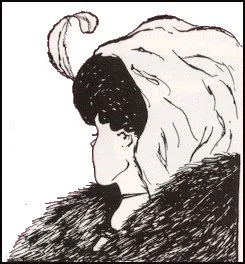
“A gestalt shift is a visual switch of perspective. While looking at an unchanging image, we see first one thing and then another. For instance, in the picture below, you can see an older woman or a young woman.”—Jake Owensby in Looking for God in Messy Places, https://jakeowensby.com, March 3, 2018.

In his weekly blog, Looking for God in Messy Places, the fourth bishop of the Episcopal Diocese of Western Louisiana talks about how we interpret what we see before seeing it. He challenges us to look at some things we think are familiar in another way. His story is about how Jesus changed his ideas about God.

Gestalt shifts involve changing our minds about something.

I see Gestalt shifts in spiritual direction as well. Spiritual direction is about caring for the soul. Spiritual friends help us put on a new pair of glasses, so we can see God at work in their lives when we did not perceive God before.

Spiritual friends ask questions like, “How is your heart?” instead of “How are you doing?”

Spiritual friends follow a rule of life where we “bend the knee of the heart”1 and “listen with the ear of the heart.”2

Spiritual friends help us find our own sacred space inside of each of us, and find sacred spaces outside of us in the world. As a result, we begin to see the concepts Barbara Brown Taylor describes in her book, An Altar in the World.

The Gestalt shift of spiritual friends is that we look beyond the surface and see the Christ in each other, especially in the person we previously had difficulty with.

We begin to see them in a new light, often significantly wounded, just like the rest of us.

1 Prayer of Manasseh, Book of Common Prayer, p. 91.

2 Prologue to The Rule of Benedict.

Joanna joannaseibert.com

 Bishop Owensby’s recent book is Looking for God in Messy Places.